Care Care Hair Products: Complete Guide for Beautiful Hair
Healthy-looking hair is not only about appearance. A good hair-care routine can help maintain softness, manageability, shine, and a comfortable scalp. With so many shampoos, conditioners, oils, masks, and styling products available today, choosing the right products can sometimes feel confusing.
Care Care hair products is a keyword people may use when looking for hair-care solutions designed to cleanse, moisturize, condition, protect, and improve the overall appearance of their hair. The most important step, however, is matching a product to your individual hair type and scalp needs rather than choosing something simply because it is popular.
This guide explains how to choose hair-care products, what ingredients to look for, how to build a simple routine, and which mistakes to avoid.
What Are Care Care Hair Products?
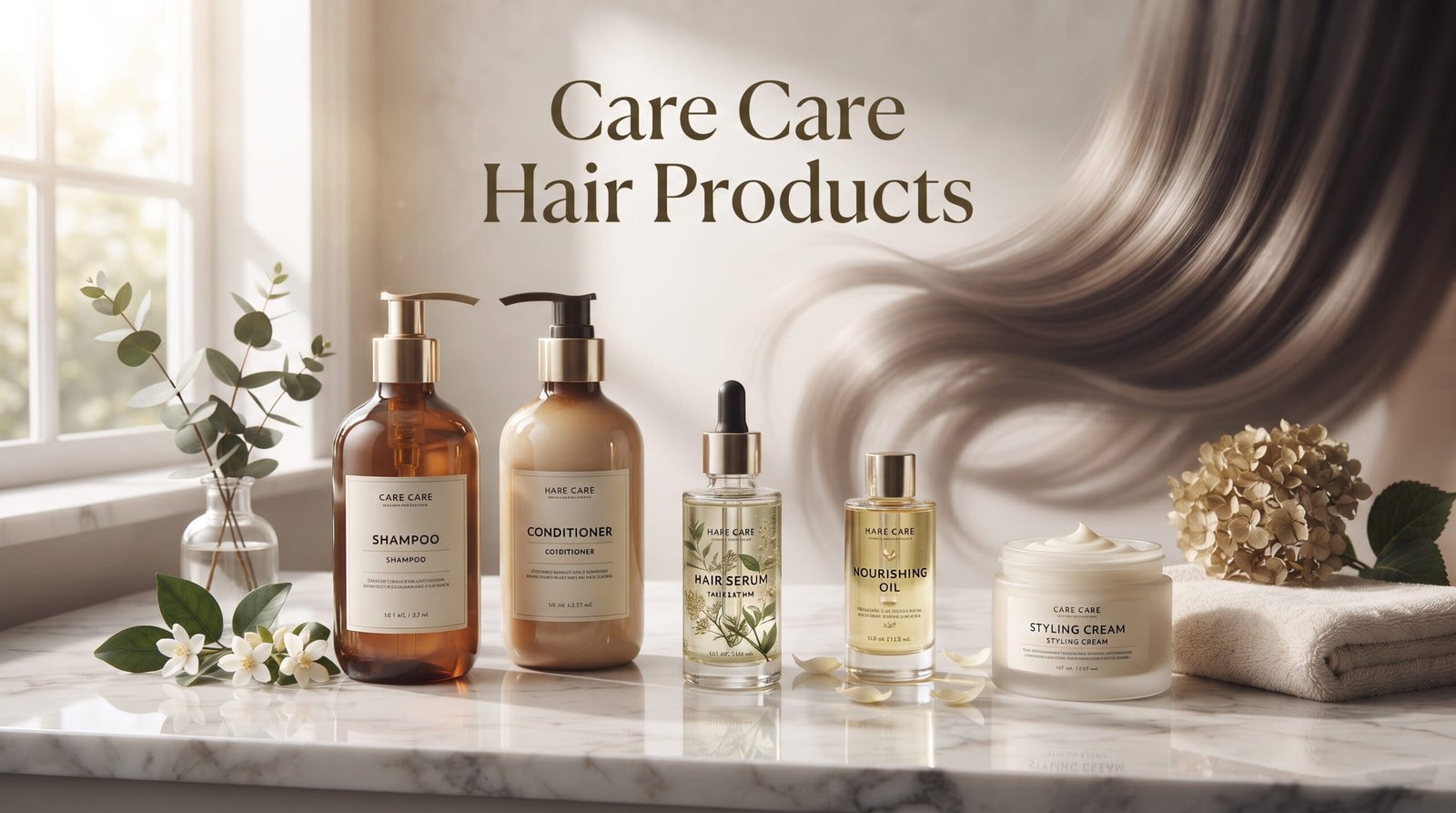
Care Care hair products can broadly refer to products intended to support everyday hair maintenance, including shampoos, conditioners, hair oils, masks, serums, and styling products.
Different products have different purposes. Shampoo primarily cleanses the scalp and hair, conditioner improves softness and manageability, while masks and leave-in products can provide additional conditioning depending on the formula.
Modern hair-care collections commonly offer products for concerns such as dryness, frizz, damaged hair, oily scalps, curls, and color-treated hair.
Why Choosing the Right Hair Products Matters
Your hair can be affected by frequent washing, heat styling, coloring, chemical treatments, environmental exposure, and humidity. Using products that suit your hair can make daily maintenance easier.
A good routine generally focuses on three areas:
- Cleansing the scalp and hair
- Conditioning the lengths and ends
- Protecting hair from unnecessary damage
Hair products also contain different types of ingredients that perform specific functions, including cleansing, conditioning, preserving, moisturizing, and improving texture.
Types of Care Care Hair Products
Shampoo
Shampoo is designed primarily to remove excess oil, sweat, dirt, and styling-product residue from the scalp and hair.
The best shampoo depends on your scalp and hair characteristics. Someone with an oily scalp may prefer a stronger cleansing formula, while someone with dry or chemically treated hair may prefer a gentler cleanser.
Avoid assuming that one shampoo is perfect for everyone.
Conditioner
Conditioner is especially useful for improving softness and reducing friction between individual hair fibers.
Apply conditioner mainly to the mid-lengths and ends if your roots become oily easily. People with very dry or curly hair may benefit from conditioning closer to the roots, depending on their individual needs.
Hair Masks
Hair masks are typically richer conditioning products designed to provide more intensive care than a regular conditioner.
They may be particularly useful for:
- Dry hair
- Rough hair
- Chemically treated hair
- Heat-damaged hair
- Frizzy hair
A mask does not necessarily need to be used every day. Frequency depends on the formula and your hair’s condition.
Hair Oils
Hair oils can help improve the feel and appearance of dry or rough hair. Different oils have different characteristics, so the amount and frequency of application should depend on your hair type.
Using too much oil can make fine or oily hair appear greasy.
Leave-In Conditioners and Serums
Leave-in products stay on the hair after washing and may help with detangling, smoothness, frizz control, or styling.
Serums can also provide a smoother finish and improve the appearance of dry ends.
How to Choose Care Care Hair Products for Your Hair Type
For Dry Hair
If your hair feels rough, tight, or lacks softness, consider products focused on hydration and conditioning.
Look for:
- Moisturizing shampoos
- Rich conditioners
- Hair masks
- Lightweight oils
- Leave-in conditioners
Avoid excessive cleansing and frequent high-temperature styling.
For Oily Hair
If your scalp becomes greasy quickly, focus on appropriate cleansing rather than applying heavy products directly to the scalp.
A lightweight conditioner can be applied mainly to the lengths and ends.
For Curly Hair
Curly hair often benefits from products that support moisture, definition, and reduced friction.
A routine may include:
- Gentle shampoo
- Moisturizing conditioner
- Leave-in conditioner
- Curl-enhancing product
- Occasional hair mask
The ideal routine depends on curl pattern, porosity, density, and scalp condition.
For Damaged Hair
Hair that has been repeatedly bleached, colored, straightened, or exposed to heat may feel brittle or rough.
Consider a routine containing conditioning and protective products. Reducing excessive heat and chemical processing is equally important.
For Fine Hair
Fine hair can become weighed down easily. Lightweight shampoos, conditioners, and styling products are often more practical than very heavy formulas.
Use oils and rich masks sparingly if they make your hair look flat.
Important Ingredients to Understand
Reading the ingredient list can help you understand what a product is designed to do.
Cleansing Ingredients
Shampoos contain surfactants that help remove oil and dirt. Different surfactants vary in cleansing strength and mildness.
Gentler cleansing agents may be preferable for some people with dry, damaged, or color-treated hair.
Conditioning Ingredients
Conditioning ingredients can help improve softness, detangling, and manageability.
Common examples include various conditioning polymers, fatty alcohols, and conditioning agents.
Oils and Plant Extracts
Ingredients such as coconut oil, argan oil, almond oil, aloe vera, and other botanical extracts are commonly found in hair products.
However, “natural” does not automatically mean better for every person. Ingredient suitability depends on concentration, formulation, individual sensitivity, and the intended use.
Preservatives
Preservatives play an important role in many cosmetic products because they help prevent microbial growth and maintain product stability.
Therefore, seeing a preservative on an ingredient list does not automatically mean a product is unsafe.
How to Build a Simple Hair-Care Routine
You do not need dozens of products to maintain healthy-looking hair.
Step 1: Cleanse
Use an appropriate shampoo according to your scalp’s needs. Concentrate shampoo primarily on the scalp rather than aggressively scrubbing the lengths.
Step 2: Condition
Apply conditioner to the areas that need softness and manageability, especially the lengths and ends.
Step 3: Add Targeted Care
If necessary, add a hair mask, leave-in conditioner, serum, or oil according to your hair’s needs.
Step 4: Protect Your Hair
If you use heat-styling tools, consider a suitable heat-protection product and avoid unnecessarily high temperatures.
Step 5: Adjust Your Routine
Your hair can change with seasons, coloring, styling habits, and other factors. A routine that works today may need adjustment later.
Care Care Hair Products for Damaged Hair
Damaged hair generally benefits from reducing the causes of damage rather than relying on a single product.
Common contributors include:
- Frequent straightening
- Curling irons
- Excessive blow-drying
- Repeated bleaching
- Frequent chemical treatments
- Rough brushing
- Tight hairstyles
Conditioning products can improve the cosmetic feel of damaged hair, but preventing further damage remains an important part of hair care.
Are Expensive Hair Products Always Better?
Not necessarily.
A higher price does not automatically mean a product is more effective for your particular hair. Ingredients, formulation, concentration, product purpose, and compatibility with your hair all matter.
Instead of choosing based only on price, consider:
- Your hair type
- Your scalp condition
- The product’s purpose
- Ingredient list
- Your styling habits
- How your hair responds after use
Common Hair-Care Mistakes to Avoid
Washing With Extremely Hot Water
Very hot water may leave some people’s scalp and hair feeling dry or uncomfortable. Lukewarm water is generally a better choice for routine washing.
Applying Too Much Product
More product does not always mean better results. Excess shampoo, conditioner, oil, or styling product can cause buildup or make hair look greasy.
Ignoring the Scalp
Healthy-looking hair starts with appropriate scalp care. Persistent itching, scaling, redness, or significant hair loss may require evaluation by a healthcare professional.
Overusing Heat
Frequent high-temperature styling can contribute to hair damage. Use heat protection and reduce unnecessary heat exposure.
Changing Products Too Frequently
Give a product enough time to show how your hair responds unless it causes irritation or another obvious problem.
When Should You See a Dermatologist?
Hair products can improve the appearance and manageability of hair, but they cannot treat every scalp or hair condition.
Consider speaking with a dermatologist if you experience:
- Sudden or significant hair loss
- Persistent dandruff
- Severe scalp itching
- Painful scalp bumps
- Redness or inflammation
- Recurrent scalp infections
- Bald patches
- Hair loss that continues despite routine changes
A dermatologist can help determine whether the problem is related to hair-care practices or an underlying scalp or medical condition.
Final Thoughts
Choosing the right Care Care hair products should start with understanding your own hair and scalp rather than following every new hair-care trend. Shampoo, conditioner, masks, oils, and leave-in products each have different purposes, and the best routine is usually one that is simple, consistent, and suited to your needs.
Pay attention to ingredients, avoid excessive heat and chemical processing, and adjust your routine when your hair changes. If you develop persistent scalp symptoms or unusual hair loss, professional advice is more appropriate than simply adding more cosmetic products.
FAQs About Care Care Hair Products
1. What are Care Care hair products?
Care Care hair products can refer to hair-care products such as shampoos, conditioners, oils, masks, serums, and other products intended for cleansing, conditioning, moisturizing, and styling hair.
2. Which hair products are best for dry hair?
Dry hair often benefits from moisturizing shampoos, conditioners, masks, and leave-in products. Choose products according to how dry, damaged, or textured your hair is.
3. Can I use hair oil every day?
It depends on your hair type and the specific oil. Fine or oily hair may become greasy with daily oiling, while very dry hair may tolerate more frequent use.
4. How often should I use a hair mask?
Many people use hair masks once or occasionally each week, but the ideal frequency depends on the formula and your hair’s condition.
5. Are natural hair products always better?
No. Natural ingredients can be useful, but natural does not automatically mean safer or more effective for everyone. Both natural and synthetic ingredients can have specific benefits and safety considerations.
6. What products are useful for frizzy hair?
Conditioners, leave-in products, smoothing serums, and appropriate oils can help improve the appearance and manageability of frizzy hair.
7. Should conditioner be applied to the scalp?
It depends on your hair and the product. If your scalp becomes oily easily, applying conditioner mainly to the lengths and ends may work better.
8. Can hair products stop hair loss?
Cosmetic hair products may improve the appearance and condition of hair, but persistent or significant hair loss can have many causes and may require professional diagnosis and treatment.
9. How do I know if a hair product is right for me?
Consider your scalp condition, hair texture, dryness, oiliness, damage, styling habits, and the product’s ingredient list. Your hair’s response after consistent use is also important.
10. How can I create a simple hair-care routine?
Start with three basics: an appropriate shampoo, a conditioner, and protection from excessive heat. Add a mask, leave-in conditioner, oil, or styling product only when your hair needs it.