Hair Care Keratin: Benefits, Treatment, Risks, and Aftercare
Healthy, smooth, and manageable hair is a common beauty goal, especially for people dealing with frizz, dryness, rough texture, or difficult-to-style hair. Hair care keratin has become popular because keratin-based products and salon treatments can make hair appear smoother, shinier, and easier to manage.
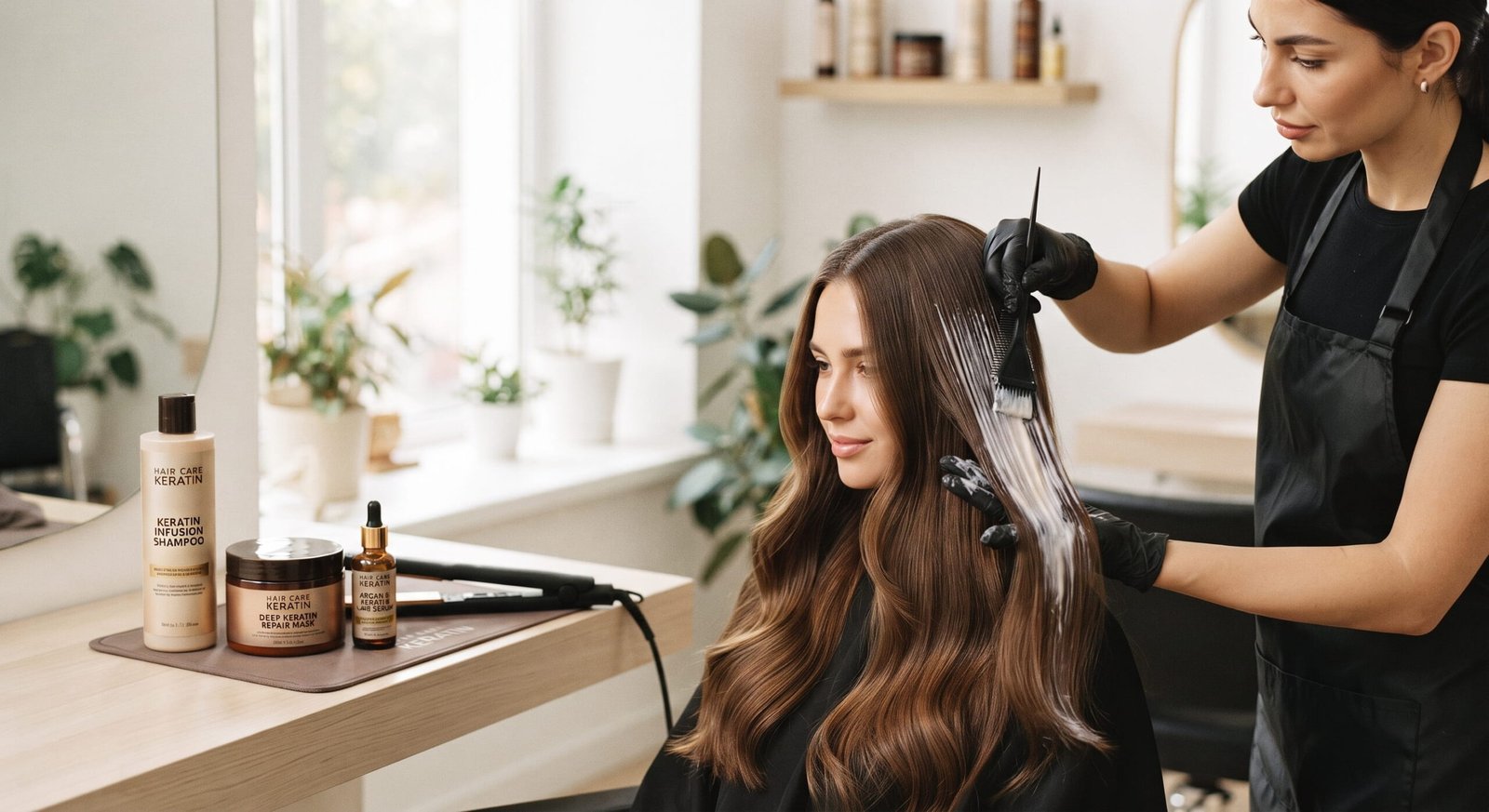
Keratin is a naturally occurring structural protein found in hair, skin, and nails. Keratin hair treatments are different from ordinary shampoos or conditioners because salon smoothing treatments generally involve applying a chemical formulation to the hair and then using heat to seal or smooth the hair shaft.
However, not every keratin treatment is the same. Some formulations may contain or release formaldehyde when heated, which is why understanding the ingredients, salon ventilation, and proper application is important before choosing a treatment.
What Is Keratin?
Keratin is a protein that forms an important structural component of human hair. It contributes to the strength and physical structure of the hair shaft.
Hair can become dry, brittle, rough, or frizzy because of factors such as:
- Frequent heat styling
- Chemical treatments
- Excessive washing
- UV exposure
- Environmental factors
- Mechanical damage
- Repeated coloring or bleaching
Keratin-containing hair products and professional treatments are designed to improve the appearance and manageability of the hair.
What Is a Keratin Hair Treatment?
A keratin hair treatment is a salon-based smoothing procedure designed to reduce frizz and create a smoother, shinier appearance.
A typical professional treatment may involve:
- Washing the hair with a cleansing shampoo.
- Drying the hair.
- Applying a keratin-based solution in sections.
- Blow-drying the hair.
- Using a flat iron to seal the treatment into the hair.
The exact process varies according to the product and salon. Heat is an important part of many smoothing treatments because it helps the formulation interact with the hair shaft.
Benefits of Keratin Hair Care
1. Reduces Frizz
One of the biggest reasons people choose keratin treatments is to make frizzy hair look smoother.
The treatment can help smooth the outer surface of the hair, producing a sleeker appearance.
2. Adds Shine
Keratin treatments can make hair look glossy and polished. Smoother hair surfaces can reflect light more evenly, contributing to a shiny appearance.
3. Makes Hair Easier to Manage
People with thick, coarse, curly, or frizzy hair may find that their hair becomes easier to style following a professional smoothing treatment.
4. May Reduce Blow-Drying Time
Some people find that smoother hair takes less time to dry and style. Cleveland Clinic notes that keratin treatments can reduce blow-drying time and make hair easier to manage.
5. Creates a Smoother Appearance
Keratin treatments can give hair a sleek appearance without necessarily producing completely straight hair. The final result depends on the individual’s hair type and the particular formulation used.
Does Keratin Straighten Hair?
Keratin treatments are primarily smoothing treatments, but many can also make hair appear straighter.
The result depends on:
- Natural hair texture
- Treatment formulation
- Heat application
- Processing time
- Hair condition
- Styling technique
Some people may experience significantly straighter hair, while others mainly notice reduced frizz and improved manageability.
Keratin Treatment for Curly Hair
People with curly or wavy hair often use keratin treatments to reduce frizz and make their hair easier to style.
However, a smoothing treatment can alter the appearance of natural curls. Cleveland Clinic notes that keratin treatments may affect or damage a person’s natural curl pattern.
If maintaining your natural curl pattern is important, discuss the expected result with your stylist before treatment.
Keratin Treatment for Dry and Damaged Hair
Keratin treatments can make damaged hair look smoother, but a temporary improvement in appearance does not necessarily mean that severely damaged hair has been biologically repaired.
Hair that has already been weakened by bleaching, coloring, or excessive heat may be particularly fragile.
The American Academy of Dermatology recommends reducing practices that cause hair damage, including excessive heat, harsh handling, and unnecessary pulling or tugging.
If your hair is severely breaking or thinning, it is better to determine the underlying cause rather than relying solely on a cosmetic smoothing treatment.
How Long Does a Keratin Treatment Last?
The duration varies according to the treatment, hair type, washing frequency, and aftercare.
Some professional keratin treatments may last for several months. Cleveland Clinic reports that results can last around six months when the hair is not washed too frequently.
Frequent shampooing and exposure to factors that affect the hair can cause the smoothing effect to gradually decrease.
Keratin Treatment Aftercare
Proper aftercare can help maintain the cosmetic effect of a keratin treatment.
Avoid Excessive Washing
Washing your hair very frequently may cause the treatment effect to wear away more quickly.
Choose Appropriate Hair Products
Your stylist may recommend specific shampoos and conditioners for treated hair. Follow the product-specific instructions rather than assuming every keratin treatment requires exactly the same routine.
Minimize Heat Damage
Although the original treatment uses heat, excessive heat styling afterward can still contribute to hair damage.
Use heat-protective products when appropriate and avoid unnecessarily high temperatures.
Protect Your Hair
Gentle brushing, reduced friction, and avoiding aggressive pulling can help minimize breakage.
The AAD recommends gentle hair care practices because damaged hair is more fragile and more likely to break.
Is Keratin Treatment Safe?
The answer depends heavily on the specific product and how it is used.
One of the biggest safety concerns involves formaldehyde and formaldehyde-releasing ingredients.
The FDA warns that some hair smoothing and straightening products release formaldehyde gas when heated. Ingredients that may indicate the presence or release of formaldehyde include:
- Formaldehyde
- Formalin
- Methylene glycol
Not every keratin product contains formaldehyde, so checking the ingredient list is important.
Formaldehyde and Keratin Treatments
When a smoothing product containing formaldehyde or a related ingredient is heated, formaldehyde can be released into the surrounding air.
Exposure can cause symptoms such as:
- Watery or irritated eyes
- Nose and throat irritation
- Coughing
- Wheezing
- Headache
- Dizziness
- Skin irritation
- Nausea
The FDA also identifies formaldehyde as a known human carcinogen based on its classification by the International Agency for Research on Cancer.
This does not mean every keratin treatment carries the same risk. Formulations vary considerably, which is why ingredient checking and proper salon safety procedures matter.
How to Choose a Safer Keratin Treatment
If you are considering a professional keratin treatment, ask the salon:
- What product will be used?
- Can I see the ingredient list?
- Does it contain formaldehyde, formalin, or methylene glycol?
- Is the salon properly ventilated?
- Is the stylist trained to use the product?
- What precautions are used during heating?
- Are there alternatives that do not release formaldehyde when heated?
The FDA specifically recommends using a licensed professional rather than applying hair-smoothing products yourself and emphasizes the importance of proper ventilation.
Can You Do Keratin Treatment at Home?
At-home keratin and smoothing products are available, but caution is important.
Professional salon treatments involve chemicals and high heat, and incorrect application can cause scalp irritation, hair damage, or unnecessary chemical exposure.
The FDA discourages consumers from using certain hair-smoothing products themselves and recommends carefully checking labels and ingredients.
If you choose an at-home product, follow the manufacturer’s instructions exactly and avoid products that do not provide an appropriate ingredient list.
Keratin Hair Treatment vs Keratin Shampoo
These are not the same thing.
Keratin Shampoo
Keratin shampoos contain keratin-derived or hydrolyzed keratin ingredients and are primarily designed for routine hair cleansing.
Research cited by Cleveland Clinic indicates that shampoos and conditioners containing keratin hydrolysates may improve the appearance and feel of hair, including softness and shine.
Professional Keratin Treatment
A salon treatment is a chemical smoothing procedure that usually involves heat and can produce a more noticeable temporary change in hair texture.
Therefore, a keratin shampoo should not be expected to produce the same result as a professional smoothing treatment.
Who May Benefit From Keratin Hair Care?
Keratin-based hair care may appeal to people who want:
- Reduced frizz
- Smoother-looking hair
- Increased shine
- Easier styling
- More manageable hair
- A temporary reduction in unwanted volume
- A polished appearance
However, people with severely damaged hair, scalp problems, or unexplained hair loss may need professional evaluation before undergoing a chemical treatment.
Who Should Be More Cautious?
Extra caution is appropriate if you have:
- A sensitive scalp
- Previous reactions to hair products
- Allergic contact dermatitis
- Severely damaged or breaking hair
- Scalp irritation
- Respiratory sensitivity
- A history of reactions to chemical hair treatments
Cleveland Clinic specifically advises caution for people with sensitive skin or allergic contact dermatitis.
Pregnancy is another situation where discussing chemical hair-smoothing treatments with a healthcare professional is advisable.
Signs of a Bad Reaction
Stop using a product and seek medical advice if you develop significant:
- Burning
- Rash
- Swelling
- Severe itching
- Eye irritation
- Breathing problems
- Persistent coughing
- Scalp pain
The FDA advises consumers who experience a bad reaction to stop using the product and contact a healthcare professional.
Tips for Healthier Hair After Keratin
A keratin treatment should be considered a cosmetic procedure rather than a replacement for healthy hair-care habits.
For better overall hair care:
- Wash the scalp gently.
- Avoid excessive heat styling.
- Use conditioner regularly.
- Detangle hair gently.
- Avoid tight hairstyles that pull on the hair.
- Limit unnecessary chemical processing.
- Protect hair from excessive environmental exposure.
- Follow your stylist’s aftercare recommendations.
The American Academy of Dermatology emphasizes gentle washing, conditioning, careful detangling, and reducing practices that can damage fragile hair.
Final Thoughts
Hair care keratin can be useful for people who want smoother, shinier, and more manageable hair. Keratin-based products such as shampoos and conditioners may improve the feel and appearance of hair, while professional keratin treatments can provide a more dramatic temporary smoothing effect.
However, keratin treatments are not completely risk-free. Some hair-smoothing formulations can release formaldehyde when heated, making ingredient selection, professional application, and proper ventilation important safety considerations.
The best approach is to choose a treatment based on your hair’s condition, understand exactly what product will be applied, and maintain gentle hair-care habits afterward.
FAQs About Hair Care Keratin
1. What is keratin hair care?
Keratin hair care refers to hair products and treatments containing keratin or keratin-derived ingredients that are intended to improve the appearance, smoothness, strength, or manageability of hair.
2. What are the benefits of a keratin hair treatment?
Common cosmetic benefits include reduced frizz, increased shine, smoother-looking hair, and easier styling.
3. How long does a keratin treatment last?
The results can last for several months, depending on the formulation, hair type, washing routine, and aftercare. Some professional treatments may last around six months.
4. Does keratin permanently straighten hair?
No. Keratin treatments are generally temporary smoothing treatments. Their effect gradually decreases as the hair is washed and grows.
5. Can keratin damage hair?
The treatment itself involves chemicals and heat, so improper application or excessive processing can contribute to hair damage. Existing fragile hair may require extra caution.
6. Does keratin treatment contain formaldehyde?
Some hair-smoothing products contain formaldehyde or ingredients such as formalin or methylene glycol that can release formaldehyde when heated. Not every keratin product contains these ingredients.
7. Is keratin treatment good for frizzy hair?
It can reduce the appearance of frizz and make hair smoother and easier to manage.
8. Can I use keratin treatment on curly hair?
Yes, but the treatment may alter your natural curl pattern. Discuss the desired result with your stylist before treatment.
9. Can I do a keratin treatment at home?
Some products are sold for home use, but professional chemical smoothing treatments are safer when performed by a trained professional in a properly ventilated environment.
10. How can I maintain keratin-treated hair?
Follow the specific aftercare instructions for your treatment, avoid excessive washing and heat, use suitable hair products, and handle the hair gently to reduce breakage.