Color Depositing Conditioner: Benefits, and How to Use It
Introduction
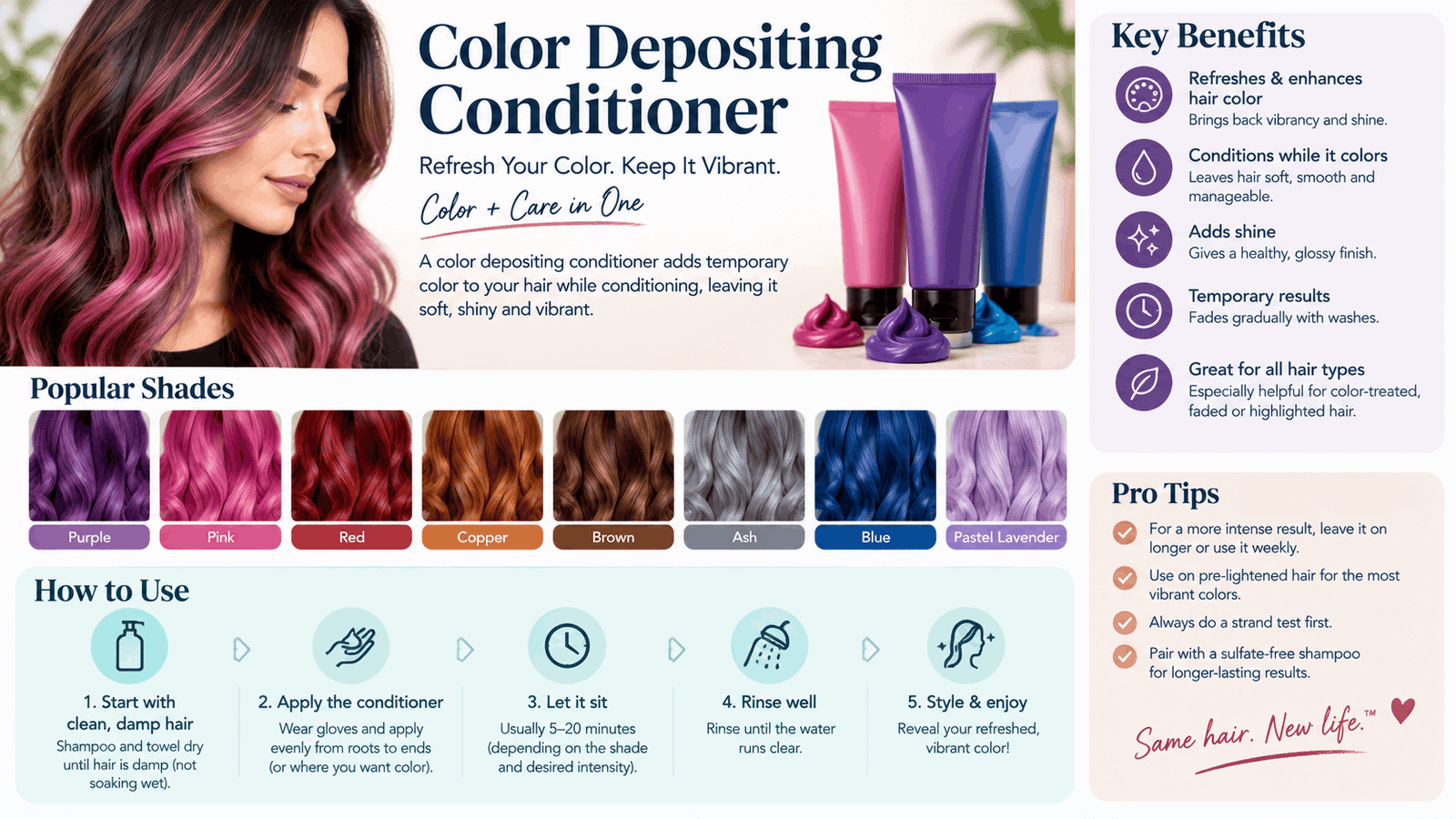
Maintaining beautiful hair color between salon appointments can be challenging. Regular washing, heat styling, sunlight, and everyday environmental exposure can gradually make dyed hair look dull or faded. A color depositing conditioner offers a convenient way to refresh your shade while conditioning your hair at the same time.
Unlike traditional conditioners that mainly soften and detangle strands, this product contains color pigments that temporarily deposit onto the hair’s surface. It can help revive faded color, enhance shine, maintain a particular tone, or experiment with a new look without committing to permanent dye.
These conditioners are available in shades such as blonde, brown, copper, red, black, pink, purple, and blue. The right product depends on your existing hair color, the result you want, and the condition of your hair.
In this guide, you’ll learn how color depositing conditioners work, their benefits, how to use them correctly, and how to choose the best shade for your hair.
What Is a Color Depositing Conditioner?
A color depositing conditioner is a hair-care product that combines conditioning ingredients with temporary color pigments. When applied, the pigments adhere to the hair’s outer surface, adding or refreshing color without the same chemical process used by permanent hair dyes.
Most formulas are designed to improve the appearance of existing color rather than dramatically lighten natural hair. They can be especially useful for maintaining fashion colors, refreshing copper or red shades, and reducing unwanted yellow tones in blonde hair.
Depending on the product, the formula may contain moisturizing ingredients that improve softness, reduce tangling, and make the hair easier to style.
The color gradually fades with washing. However, how long it lasts depends on the pigment, hair porosity, starting shade, and frequency of washing.
It is important to understand that these products do not usually lighten hair. For example, a purple conditioner may help neutralize yellow tones in blonde hair, but it will not turn naturally dark brown hair platinum blonde.
How Does Color Depositing Conditioner Work?
Color depositing conditioners work by placing colored pigments onto the hair shaft. Unlike many permanent dyes, they generally do not rely on the same oxidative process to change the hair’s natural pigment.
The deposited color changes how the existing hair shade looks. On light hair, pigments may appear more noticeable, while dark hair may show only a subtle reflection or tint.
The process generally involves three steps:
- Pigment application: The conditioner spreads color pigments across the hair strands.
- Conditioning: Emollients and other conditioning ingredients help soften the hair and improve manageability.
- Gradual fading: Washing and everyday wear gradually remove the deposited pigments.
The result is usually temporary, although highly porous or previously bleached hair can retain some pigments longer than expected.
Benefits of Color Depositing Conditioner
Using the right formula can make maintaining colored hair easier and more convenient.
1. Refreshes Faded Hair Color
Hair dye gradually loses vibrancy, especially with frequent washing. A pigmented conditioner can restore some of the richness between coloring appointments.
For example, a copper conditioner may revive faded copper hair, while a red formula can make red-colored strands look more vibrant.
2. Helps Maintain Blonde Hair
Blonde hair can develop yellow or brassy tones over time. Purple pigments can help neutralize yellow tones, while some blue-based products are designed to counter orange tones in suitable hair shades.
The key is selecting the right pigment for the unwanted tone. Using the wrong product can create an undesirable color cast.
3. Adds Temporary Fashion Color
If you want to experiment with pink, purple, blue, or another vivid shade, a depositing conditioner can offer a less permanent alternative to conventional dye.
Results vary according to the starting color. Pastel shades generally show up more clearly on light or pre-lightened hair.
4. Improves Softness and Manageability
Many formulas contain conditioning ingredients that help reduce friction between strands. This can make hair easier to detangle and style.
However, the conditioning benefits depend on the formula. Not every product will provide the same level of moisture or repair.
5. Supports Color Maintenance Between Salon Visits
Regular use, according to the product instructions, can help maintain a more consistent appearance between professional appointments.
This may be particularly useful for people with red, copper, brunette, or vivid fashion-colored hair that loses intensity over time.
6. Offers a Convenient Alternative to Frequent Dyeing
Because the color is temporary, some people prefer depositing conditioners for small color adjustments rather than repeatedly applying permanent dye.
They are not a complete substitute for every coloring service, but they can be a practical addition to a hair-care routine.
Different Types of Color Depositing Conditioner
Choosing a product begins with understanding which pigment works best for your current shade.
Purple Color Depositing Conditioner
Purple conditioner is commonly used on blonde, silver, platinum, and some highlighted hair.
Purple pigments can help neutralize yellow tones, making blonde hair appear cooler. The effect depends on the existing color and how much unwanted warmth is present.
It does not permanently remove brassiness, and excessive use may leave a violet tint on very light or porous strands.
Blue Color Depositing Conditioner
Blue formulas are generally designed to help neutralize orange tones in suitable brown or dark blonde hair.
They may be helpful for people whose highlighted or colored brunette hair develops an orange appearance. However, the formula should match the underlying tone to avoid unwanted results.
Brown Color Depositing Conditioner
Brown conditioners can refresh chocolate, chestnut, and other brunette shades.
They are useful when dyed brown hair looks faded or less rich than desired. Different products may offer warm, neutral, or cool brown pigments.
Red Color Depositing Conditioner
Red conditioners help refresh red-colored hair, which can lose vibrancy with repeated washing.
Depending on the formula, the shade may lean toward cherry, burgundy, or a warmer red.
Copper Color Depositing Conditioner
Copper formulas are suitable for refreshing copper and ginger shades. They can help restore warmth when the original color becomes muted.
Because copper pigments can stain porous hair, apply the product carefully and follow the recommended timing.
Black Color Depositing Conditioner
Black conditioners may enhance the appearance of faded black or very dark hair. Some formulas produce a cool or blue-black effect, while others are more neutral.
Check the shade description carefully because black pigments can be difficult to remove completely from light or porous strands.
Pink, Purple, and Blue Fashion Conditioners
Fashion-color formulas provide temporary vivid shades for people who want to experiment with creative looks.
Pink, purple, and blue pigments tend to be more visible on light or pre-lightened hair. On darker hair, the result may be subtle or barely noticeable without prior lightening.
How to Choose the Right Shade
Selecting a suitable product is easier when you consider your current hair color and the result you want.
For Blonde Hair
Choose purple when the primary concern is unwanted yellow tones. If you want a warmer golden blonde, a purple formula may reduce the warmth more than you prefer.
For Brown Hair
Brown depositing conditioners can refresh brunette color, while blue formulas may help address certain orange tones. Choose based on the specific color issue rather than simply selecting the darkest product.
For Red or Copper Hair
Look for a shade that closely matches your existing color. A copper product can refresh ginger hair, while a red formula may be better for cherry or deeper red shades.
For Bleached Hair
Bleached hair can absorb pigments unevenly because its porosity may vary along the strands.
Use a product designed for your target shade, start with the shortest recommended application time, and perform a strand test before applying it to your entire head.
For Gray or Silver Hair
Purple or silver-enhancing conditioners may help maintain a cooler appearance. However, results vary depending on whether the hair is natural gray, dyed silver, or highlighted blonde.
How to Use Color Depositing Conditioner Correctly
Using the product according to its instructions helps you achieve a more even result and reduces the chance of staining or unwanted color changes.
Step 1: Read the Instructions
Check whether the formula should be applied to wet, towel-dried, or dry hair. Different products have different application requirements.
Step 2: Prepare Your Hair
Some products work best after shampooing, while others have their own recommended routine. Remove excess water if the instructions call for towel-dried hair.
Wear gloves when recommended, especially with strong red, brown, blue, or fashion-color pigments.
Step 3: Apply Evenly
Divide your hair into manageable sections. Distribute the conditioner carefully from roots to ends, following the product directions.
Pay attention to areas that need color refreshing, but avoid applying excessive product to sections that are already very dark or strongly pigmented.
Step 4: Leave It on for the Recommended Time
Follow the stated application time. Leaving the conditioner on longer than recommended can result in a darker or more intense color than expected.
If you are unsure how your hair will respond, perform a strand test first.
Step 5: Rinse Thoroughly
Rinse according to the product instructions until the water runs clear or the recommended rinsing process is complete.
Avoid getting the product into your eyes. If contact occurs, rinse thoroughly with water.
Step 6: Dry and Evaluate the Result
Dry your hair and check the color in natural lighting. Wet hair can appear darker, so evaluate the final shade once it is dry.
If the result is too subtle, consult the product directions before adjusting your next application.
How Often Should You Use It?
There is no single schedule that works for every product or hair type.
Some people use a depositing conditioner once a week, while others need it less frequently. Follow the manufacturer’s recommendations and adjust according to the result.
Consider these factors:
- Hair porosity: Highly porous hair may absorb more pigment.
- Washing frequency: Frequent washing can cause temporary color to fade sooner.
- Desired intensity: Vivid colors may require more frequent refreshing than subtle tonal adjustments.
- Hair condition: Dry or damaged hair may need additional conditioning care.
- Product strength: Highly pigmented formulas may be unsuitable for daily use.
Avoid repeated applications simply because the color appears subtle while your hair is wet. Check the dry result first.
Color Depositing Conditioner vs. Regular Conditioner
Although both products can improve softness, their main purposes are different.
| Feature | Depositing conditioner | Regular conditioner |
| Main purpose | Refresh or add temporary pigment | Soften and detangle hair |
| Contains color pigments | Usually yes | Usually no |
| Changes appearance of hair color | Yes, depending on the formula | Generally no |
| Helps with detangling | Often | Often |
| Can fade with washing | Yes | Not applicable to color deposition |
| Best suited for | Maintaining or experimenting with shades | Routine hair conditioning |
A depositing conditioner can serve both purposes, but it should not automatically replace every other product in your routine. If your hair needs intensive conditioning, you may still benefit from a separate treatment.
Color Depositing Conditioner vs. Hair Dye
These products differ in how they change the appearance of hair.
Color Depositing Conditioner
This product usually adds temporary pigment to the hair’s surface. It is often chosen for refreshing existing shades, enhancing tone, or trying a temporary color.
Permanent Hair Dye
Permanent dye uses an oxidative process to create a longer-lasting color change. Depending on the formula, it can alter natural pigment, cover gray hair, or create a different shade.
Semi-Permanent Hair Dye
Semi-permanent dye deposits color without the same oxidative process used by most permanent dyes. It gradually fades with washing.
A depositing conditioner is often convenient for maintenance, while permanent color may be more appropriate when you want a longer-lasting transformation or specific gray coverage.
Common Mistakes to Avoid
Choosing a Shade That Does Not Match Your Hair
A purple conditioner is not the right solution for every form of brassiness. Match the pigment to the unwanted tone and follow the manufacturer’s shade guidance.
Leaving the Product on Too Long
Excessive application time can produce a darker, more intense, or uneven result. Follow the instructions rather than assuming that a longer application will always improve the color.
Ignoring Hair Porosity
Bleached or damaged sections may absorb pigment more quickly than healthier hair. Test the product on a small, hidden section before treating all your hair.
Applying Without Gloves
Some pigments can temporarily stain hands, nails, towels, and bathroom surfaces. Use gloves and protect surfaces when appropriate.
Expecting It to Lighten Dark Hair
Depositing conditioners generally add pigment rather than lighten natural hair. A light pink or silver conditioner will not turn dark brown hair pale blonde.
Skipping a Strand Test
A small test section can reveal how strongly your hair absorbs the pigment and whether the shade looks right before you apply it everywhere.
Tips for Maintaining Vibrant Color
A consistent hair-care routine can help your color look fresher for longer.
Use suitable shampoo. Choose products appropriate for colored hair and your scalp needs.
Limit excessive heat styling. High temperatures can contribute to dryness and make colored hair look less vibrant. Use a heat protectant when styling.
Condition regularly. Choose a conditioner that supports your hair’s moisture and detangling needs.
Protect hair from prolonged sun exposure. Hats and suitable hair-care products can help when spending extended periods outdoors.
Avoid unnecessary chemical treatments. Repeated bleaching or coloring can damage hair, especially when lightener overlaps previously processed sections.
Follow a balanced routine. Color maintenance should not come at the expense of scalp health or hair strength.
Is Color Depositing Conditioner Safe for All Hair Types?
Many people can use these products, but suitability depends on the formula, scalp condition, hair history, and ingredients.
Curly, straight, wavy, thick, and fine hair may all benefit from a suitable product. However, fine hair can sometimes become weighed down by rich formulas, while very porous hair may absorb too much pigment.
If you have a sensitive scalp, irritated skin, or a history of reactions to hair-color products, review the ingredient list and seek professional advice before use. Stop using the product if irritation occurs.
Follow all product safety instructions. If the formula requires an allergy alert test, perform it as directed. A strand test assesses color results but does not replace an allergy test.
Pregnant or breastfeeding individuals who have questions about a particular formula should discuss ingredient concerns with a qualified healthcare professional.
Conclusion
Color depositing conditioner is a practical option for refreshing faded hair color, maintaining blonde tones, enhancing brunette shades, and experimenting with temporary fashion colors. Its combination of pigments and conditioning ingredients can make it a useful addition to a hair-care routine.
The best results depend on choosing the right shade for your existing color, following application instructions, and considering your hair’s porosity and condition. Purple and blue formulas serve different tonal purposes, while brown, copper, red, and fashion shades help maintain or enhance particular colors.
Although these products can refresh color, they generally cannot lighten naturally dark hair or replace every type of salon color service. A strand test, appropriate application time, and consistent aftercare can help you achieve a more predictable result.
With the right formula and realistic expectations, you can maintain beautiful-looking color between salon visits while keeping your hair manageable and well-conditioned.
Frequently Asked Questions (FAQs)
1. What is a color depositing conditioner?
It is a conditioning product containing temporary color pigments that refresh existing hair color, enhance certain tones, or add a temporary tint while helping improve softness and manageability.
2. Does color depositing conditioner damage hair?
Many formulas are designed to condition rather than chemically lighten hair. However, results depend on the ingredients and your hair’s condition. Follow the instructions and avoid using unsuitable products on irritated skin.
3. How long does color depositing conditioner last?
The color may last for several washes or longer, depending on the formula, pigment, hair porosity, and washing routine. Highly porous or bleached hair may retain some shades longer than expected.
4. Can I use it on natural hair?
Yes, many formulas can be used on natural hair. The result depends on the product and starting shade. Pigments are generally more visible on lighter hair than on dark brown or black hair.
5. Does purple conditioner lighten blonde hair?
No. Purple pigments can help neutralize unwanted yellow tones, making blonde hair appear cooler, but they do not bleach or permanently lighten the hair.
6. Can color depositing conditioner cover gray hair?
It may tint or blend some gray strands, depending on the formula, but it generally does not provide the same reliable coverage as a suitable permanent dye.
7. Can I use color depositing conditioner every day?
Daily use is not necessary for most products and may lead to excessive pigment buildup or an unwanted color cast. Follow the manufacturer’s directions and adjust frequency according to your results.
8. Should I apply it to wet or dry hair?
This depends on the product. Some formulas are intended for freshly washed, damp hair, while others specify a different method. Follow the instructions on the label.
9. Can I use color depositing conditioner on bleached hair?
Yes, some formulas are suitable for bleached hair. Because lightened hair can absorb pigment unevenly, perform a strand test and begin with the recommended application time.
10. Is color depositing conditioner better than hair dye?
Neither is universally better. A depositing conditioner is useful for temporary color refreshing, while permanent dye is generally more appropriate for longer-lasting changes, lightening with a suitable formula, or specific gray-coverage needs.