Natural Hair Care Products: Complete Guide for Healthy Hair
Introduction
Choosing the right natural hair care products can make a noticeable difference in how your hair looks, feels, and behaves. From plant-based shampoos and botanical oils to natural conditioners, scalp treatments, and styling products, there are many options available for people who prefer simpler or naturally derived ingredients.
However, natural hair care is not simply about choosing products with words like “natural,” “organic,” or “herbal” on the label. The most important consideration is whether a product is appropriate for your hair type, scalp condition, and specific concerns.
Dermatologists recommend choosing hair products according to your hair type and adjusting your routine based on how oily, dry, curly, straight, fine, or coarse your hair is.
What Are Natural Hair Care Products?
Natural hair care products generally refer to hair products that contain ingredients derived partly or primarily from natural sources, such as plants, minerals, seeds, fruits, herbs, or botanical extracts.
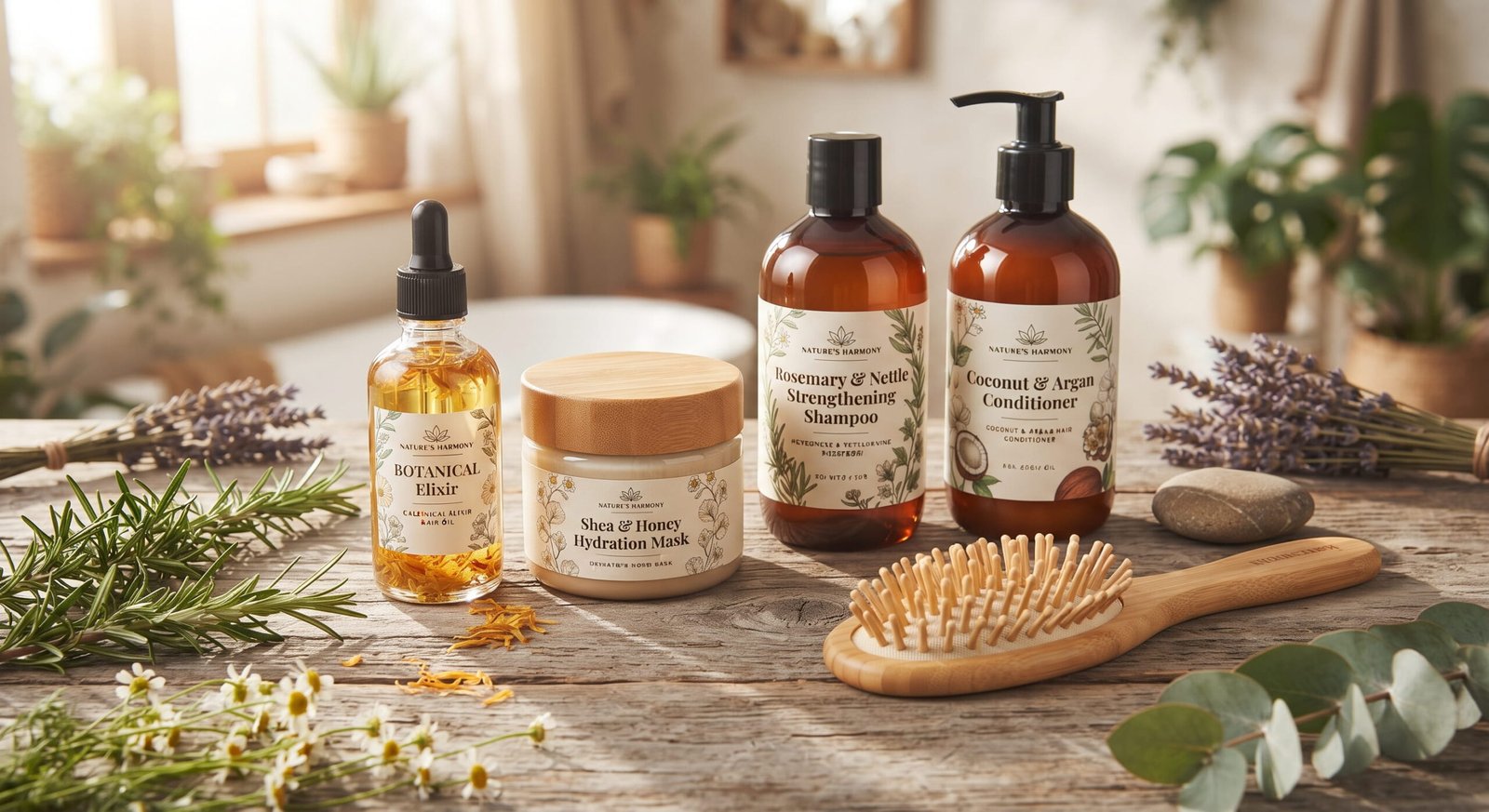
Common categories include:
- Natural shampoos
- Botanical conditioners
- Hair oils
- Herbal scalp treatments
- Natural hair masks
- Leave-in conditioners
- Plant-based styling products
- Natural curl creams
- Botanical serums
- Natural hair treatments
There is an important distinction, however: “natural” does not have one universal regulatory definition for cosmetics in the United States. The FDA states that it has not established a specific regulatory definition for the term “natural” in cosmetic labeling.
Therefore, reading the complete ingredient list is more useful than relying only on front-label marketing.
Why Are Natural Hair Care Products Popular?
Natural hair care has become popular for several reasons.
Greater Ingredient Awareness
Many consumers want to understand exactly what they are applying to their hair and scalp.
Preference for Botanical Ingredients
Plant-derived ingredients such as aloe vera, coconut oil, jojoba oil, shea butter, rosemary extracts, and botanical oils are commonly found in natural hair products.
Simpler Hair Routines
Some people prefer minimalist routines with fewer products and fewer styling steps.
Different Hair Types Need Different Care
Curly, coily, straight, fine, thick, and chemically treated hair can all require different approaches. Choosing products specifically designed for your hair type is more important than simply choosing a product because it is labeled natural.
Popular Ingredients in Natural Hair Care Products
Natural hair care products can contain many different ingredients. Some of the most common include:
Aloe Vera
Aloe vera is frequently included in shampoos, conditioners, and scalp products because of its lightweight, soothing feel.
Coconut Oil
Coconut oil is commonly used as a conditioning ingredient in hair oils, masks, and treatments.
Because oils can make some hair feel heavy, people with fine or oily hair may need to use smaller amounts.
Jojoba Oil
Jojoba oil is a popular ingredient in scalp and hair products because of its lightweight texture.
Shea Butter
Shea butter is a rich emollient frequently found in products designed for dry, coarse, curly, or coily hair.
Argan Oil
Argan oil is widely used in hair serums, conditioners, and styling products designed to improve softness and shine.
Rosemary
Rosemary and rosemary-derived ingredients are commonly included in botanical hair products. However, consumers should distinguish between cosmetic claims about appearance and medical claims about treating hair loss.
The FDA notes that claims intended to restore hair growth or treat a disease can change how a product is regulated.
Natural Hair Care Products for Dry Hair
Dry hair often needs gentle cleansing and adequate conditioning.
When choosing products for dry hair, look for formulas containing moisturizing or conditioning ingredients such as:
- Shea butter
- Plant oils
- Aloe vera
- Glycerin
- Plant-derived conditioners
- Rich moisturizing agents
Avoid washing excessively if frequent cleansing leaves your hair feeling dry or rough.
A conditioner can help improve manageability and reduce friction during detangling.
Natural Hair Care Products for Oily Hair
Oily hair requires a different approach.
If your scalp becomes oily quickly, choose a shampoo designed for your scalp rather than applying heavy oils directly to the roots.
Useful habits include:
- Washing according to your scalp’s oil production
- Applying conditioner mainly to the lengths when appropriate
- Avoiding excessive scalp oiling
- Rinsing products thoroughly
- Cleaning styling-product buildup regularly
The American Academy of Dermatology recommends washing hair according to how often it becomes dirty or oily rather than following one fixed schedule for everyone.
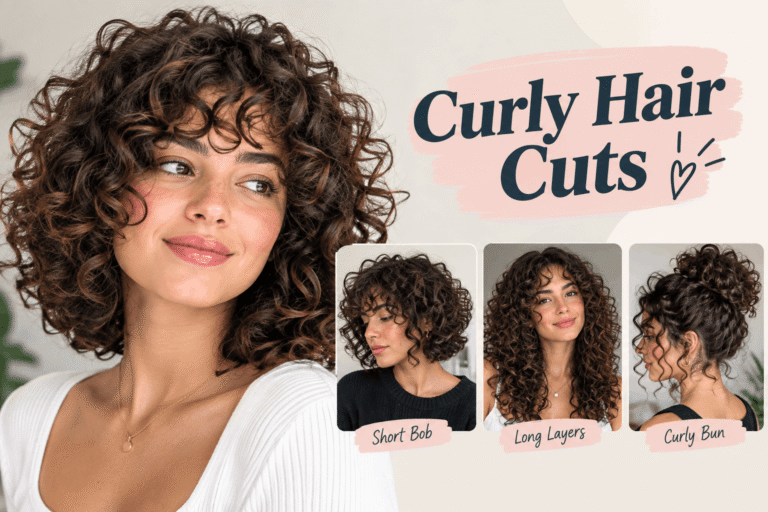
Natural Hair Care Products for Curly Hair
Curly hair often needs careful moisture management and gentle handling.
A basic routine can include:
- Gentle shampoo
- Moisturizing conditioner
- Leave-in conditioner
- Curl cream or styling product
- Lightweight oil or serum if needed
Avoid aggressive brushing when curls are dry because mechanical manipulation can contribute to frizz and breakage.
For curly hair, applying conditioner and detangling carefully can help maintain the natural curl pattern.
Natural Hair Care Products for Coily Hair
Coily and tightly textured hair can be particularly vulnerable to dryness and breakage.
A suitable routine may include:
- Gentle cleansing
- Rich conditioning
- Leave-in hydration
- Careful detangling
- Protective styling
- Minimal unnecessary manipulation
The AAD notes that tightly textured and Black hair can be fragile, making appropriate hair-care techniques particularly important for minimizing damage.
Natural Hair Care Products for Fine Hair
Fine hair can easily become weighed down by heavy oils and rich creams.
If your hair is fine, consider:
- Lightweight shampoo
- Lightweight conditioner
- Small amounts of leave-in products
- Lightweight serums
- Minimal scalp oiling
Apply richer products primarily where they are needed instead of automatically coating the entire head.
Natural Hair Care Products for Damaged Hair
Hair can become damaged from frequent heat styling, coloring, bleaching, chemical treatments, friction, and excessive manipulation.
Natural ingredients may improve the feel and appearance of damaged hair, but a product marketed as natural cannot reverse every type of structural hair damage.
A better approach is to reduce the source of damage.
The AAD recommends minimizing practices that can make hair brittle, frizzy, or more prone to breakage, including excessive heat and damaging styling techniques.
Natural Shampoo vs. Conventional Shampoo
The choice between natural and conventional shampoo depends on your scalp and hair needs.
A good shampoo should effectively cleanse the scalp without leaving your hair excessively dry or irritated.
The word “natural” does not automatically determine whether a shampoo is gentle or effective.
Some natural ingredients can cause irritation or allergic reactions, while some synthetic ingredients can be well tolerated.
The FDA advises consumers to read the entire cosmetic label, including ingredients, warnings, and usage directions.
Natural Hair Oils
Hair oils are among the most popular natural hair care products.
Common options include:
- Coconut oil
- Jojoba oil
- Argan oil
- Olive oil
- Avocado oil
- Castor oil
- Sweet almond oil
Different oils have different textures and may work better for different hair types.
How to Use Hair Oil
You can apply a small amount to:
- Hair ends
- Mid-lengths
- Dry areas
- Before shampooing, depending on the product
Avoid assuming that more oil means better results. Excessive oil can make hair greasy and may also transfer onto facial skin.
The AAD notes that oily hair products can contribute to clogged pores and breakouts around the hairline, forehead, and neck in some people.
Natural Hair Masks
Hair masks are concentrated conditioning treatments that can be used periodically.
Popular natural-inspired mask ingredients include:
- Aloe vera
- Coconut oil
- Shea butter
- Avocado
- Honey
- Plant oils
- Botanical extracts
However, homemade masks should be used carefully. Food ingredients are not automatically formulated or preserved for cosmetic use, and some can irritate the scalp.
For convenience and predictable formulation, a properly manufactured hair mask may be preferable to a homemade mixture.
Natural Hair Care for a Healthy Scalp
Healthy-looking hair starts with appropriate scalp care.
A basic scalp routine should include:
- Regular cleansing
- Avoiding excessive product buildup
- Gentle massage rather than aggressive scratching
- Washing according to oil production
- Avoiding irritating products
- Seeking professional advice for persistent scalp problems
If you develop persistent itching, scaling, redness, sores, or unusual hair shedding, a dermatologist can help identify the underlying cause.
Are Natural Hair Care Products Better?
Not necessarily.
The source of an ingredient does not automatically determine its safety or effectiveness. The FDA specifically states that natural or organic ingredients are not automatically safer than ingredients from other sources.
For example, some naturally occurring plant substances can trigger allergic reactions, while synthetic ingredients may be well tolerated.
Instead of asking only, “Is this product natural?” consider:
- Is it suitable for my hair type?
- Is it suitable for my scalp?
- What are the ingredients?
- Does the product have clear directions?
- Is the manufacturer transparent?
- Does it address my specific concern?
Natural Does Not Always Mean Organic
“Natural” and “organic” are not interchangeable terms.
A product may contain naturally derived ingredients without being certified organic.
The FDA explains that USDA requirements apply to certain organic claims, while cosmetics remain subject to applicable FDA requirements for safety and labeling.
Always check what a brand actually means when it uses terms such as natural, organic, botanical, plant-based, or clean.
How to Choose the Best Natural Hair Care Products
1. Know Your Hair Type
Determine whether your hair is:
- Straight
- Wavy
- Curly
- Coily
- Fine
- Medium
- Thick
Your hair type can influence which products work best.
2. Identify Your Main Concern
Your primary concern could be:
- Dryness
- Frizz
- Breakage
- Oily scalp
- Dandruff
- Tangling
- Lack of definition
- Product buildup
Choose products according to the actual problem rather than buying multiple products at once.
3. Read the Ingredient List
Ingredients on retail cosmetic products are generally listed using their common or usual names, with the list generally arranged in descending order of predominance.
4. Avoid Unnecessary Marketing Assumptions
Don’t assume “natural,” “chemical-free,” or “organic” automatically means safer.
Everything in a formulated cosmetic is made of chemicals in the scientific sense; what matters is the identity, concentration, formulation, exposure, and safety of the ingredients.
5. Introduce New Products Gradually
Using several new products simultaneously makes it difficult to determine which one is helping or causing irritation.
Start with one product and monitor how your hair and scalp respond.
How to Build a Natural Hair Care Routine
A simple routine is often easier to maintain.
Step 1: Cleanse
Use a shampoo appropriate for your scalp and hair type.
Step 2: Condition
Apply conditioner to the hair, particularly the lengths and ends when appropriate.
Step 3: Detangle
Use gentle techniques to minimize pulling and breakage.
Step 4: Moisturize
Apply a leave-in conditioner or suitable moisturizing product if your hair needs additional hydration.
Step 5: Style
Use a natural or naturally derived styling product according to your preferred hairstyle.
Step 6: Protect
Limit excessive heat and mechanical stress.
The AAD recommends tailoring products to your hair type and using healthy washing and styling techniques to reduce damage.
Common Mistakes With Natural Hair Care Products
Using Too Much Oil
Heavy oil application can leave hair greasy and may contribute to clogged pores around the hairline in some people.
Overwashing
Frequent washing can make some hair types feel dry or rough.
Underwashing the Scalp
On the other hand, people with oily scalps may need more frequent cleansing.
Trying Too Many Products
A large number of products can create buildup and make it difficult to identify which formula works best.
Assuming Natural Means Hypoallergenic
Natural ingredients can still cause allergic reactions. The FDA also notes that “hypoallergenic” itself does not have a defined FDA standard guaranteeing that a product cannot cause an allergic reaction.
When Should You See a Dermatologist?
Natural hair care products are designed primarily for cosmetic care. Persistent medical problems should not be treated solely by changing hair products.
Consider seeing a dermatologist if you experience:
- Sudden or significant hair loss
- Bald patches
- Persistent scalp itching
- Severe dandruff or scaling
- Painful scalp bumps
- Redness or inflammation
- Repeated allergic reactions
- Hair breakage that continues despite changing your routine
The FDA has received reports of hair loss, breakage, itching, and rash associated with some hair-cleansing products, although reports alone do not establish that a particular ingredient caused every event.
Final Thoughts
Natural hair care products can be a useful part of a healthy hair routine, especially for people who prefer botanical or naturally derived ingredients. But the word “natural” should not be the only factor guiding your purchasing decision.
The best products are those that suit your hair type, scalp condition, lifestyle, and specific concerns. Read ingredient lists carefully, introduce products gradually, avoid excessive heat and manipulation, and pay attention to how your hair responds.
A simple, consistent routine is often more useful than a shelf full of products. Whether your hair is straight, wavy, curly, coily, fine, or thick, choosing products based on your individual needs can help you maintain healthier-looking hair.
FAQs About Natural Hair Care Products
1. What are natural hair care products?
Natural hair care products are hair products that contain ingredients derived partly or primarily from natural sources such as plants, minerals, herbs, fruits, and botanical extracts.
2. Are natural hair care products better?
Not automatically. A product’s safety and effectiveness depend on its complete formulation and how it is used, not simply whether its ingredients are natural.
3. What are the best natural ingredients for hair?
Commonly used ingredients include aloe vera, coconut oil, jojoba oil, argan oil, shea butter, and botanical extracts. The best ingredient depends on your hair type and concern.
4. Are natural hair products good for curly hair?
They can be. Curly hair often benefits from gentle cleansing, adequate conditioning, careful detangling, and appropriate styling products.
5. Can natural hair oils cause acne?
Yes, some oily hair products can contribute to clogged pores around the hairline, forehead, or neck in susceptible people.
6. Is natural hair care the same as organic hair care?
No. Natural and organic are separate concepts, and “natural” does not automatically mean that a product is certified organic.
7. Can natural products cause allergies?
Yes. Natural ingredients, including botanical ingredients, can cause irritation or allergic reactions in some people.
8. How often should I wash my hair?
There is no universal schedule. The AAD recommends washing based on how quickly your scalp becomes dirty or oily and considering your hair type.
9. Are homemade natural hair masks safe?
Not always. Homemade ingredients may irritate the scalp, and mixtures made at home generally lack the preservation and formulation controls of commercial products.
10. What should I look for when buying natural hair care products?
Check the complete ingredient list, choose products suited to your hair type, consider your scalp condition, follow the instructions, and avoid assuming that “natural” automatically means safer or more effective.