Hair Botox Treatment: Benefits, Results, Cost, and Aftercare
Introduction
Dry, frizzy, dull, and damaged-looking hair can be difficult to manage, especially when regular conditioning products do not provide the smooth finish you want. Hair Botox treatment has become a popular salon option for people looking to improve hair softness, reduce frizz, and achieve a shinier appearance without necessarily choosing a traditional chemical straightening service.
Despite its name, hair Botox does not contain the botulinum toxin used in cosmetic injections. Instead, it is a cosmetic hair treatment that typically uses conditioning ingredients, proteins, amino acids, and other ingredients intended to improve the appearance and feel of the hair. The exact formula varies between brands and salons.
Some treatments focus mainly on conditioning, while others combine smoothing ingredients with blow-drying and flat-ironing techniques. As a result, the final appearance can range from softer, more manageable hair to a noticeably smoother finish.
This guide covers how hair Botox works, its potential benefits, different treatment options, expected results, possible risks, cost considerations, and the best ways to care for treated hair.
What Is Hair Botox Treatment?
Hair Botox is a marketing term for a deep-conditioning or smoothing treatment designed to improve the cosmetic appearance of the hair. It is not a standardized medical procedure, and different products sold under this name may have very different ingredients and application methods.
Many formulas contain combinations of conditioning agents, proteins, amino acids, oils, or other ingredients that help hair feel smoother and look shinier. Some products also require heat styling to achieve their intended finish.
The treatment may be used on hair that looks dry, rough, frizzy, or difficult to style. It can temporarily improve softness and manageability, but it does not permanently repair split ends or restore severely damaged hair to its original condition.
It is also important to distinguish hair Botox from injectable Botox. The two are unrelated treatments, and hair Botox does not involve injecting botulinum toxin into the scalp or hair strands.
How Does Hair Botox Work?
Hair Botox works primarily through cosmetic conditioning and smoothing rather than the biological mechanisms associated with medical Botox.
The ingredients coat or interact with the hair’s surface, helping improve smoothness, reduce friction, and make the strands easier to manage. Depending on the formula, some ingredients may also help the hair retain moisture or temporarily improve the appearance of damaged areas.
A typical salon service involves the following steps.
1. Hair and Scalp Assessment
The stylist examines the hair’s texture, porosity, thickness, and condition. They should ask about previous bleaching, coloring, relaxing, and other chemical treatments.
This assessment helps determine whether the product is appropriate and how much heat the hair can safely tolerate.
2. Shampooing
The hair may be washed with a clarifying or preparatory shampoo to remove buildup. The exact shampoo and preparation method depend on the product being used.
3. Applying the Treatment
The formula is applied to sections of the hair, with the stylist following the manufacturer’s instructions regarding quantity, placement, and processing time.
The product should not be allowed to contact the eyes or irritated skin. Application near the scalp depends on the specific formulation.
4. Processing
The product remains on the hair for the recommended period. Processing times vary, so the stylist should follow the instructions rather than assuming that a longer application will produce better results.
5. Rinsing and Heat Styling
Depending on the formula, the hair may be rinsed before blow-drying, or the product may require a different sequence. Some services use a flat iron to create a smoother finish.
Heat should be adjusted according to the product directions and the hair’s condition. Excessive heat can cause breakage, especially in bleached or fragile hair.
6. Final Styling
After the treatment is completed, the stylist styles the hair and explains the appropriate washing and aftercare routine.
Not every product follows the same process, so the salon should be able to identify the formula and explain its instructions.
Benefits of Hair Botox Treatment
1. Helps Reduce Frizz
One of the most commonly desired results is a reduction in visible frizz. Conditioning ingredients can help the hair surface feel smoother, making flyaways less noticeable.
The degree of improvement depends on the formula, hair texture, humidity, and styling technique. No treatment can guarantee completely frizz-free hair in every environment.
2. Improves Hair Softness
Hair that feels rough or dry may become softer after a conditioning service. Ingredients that reduce friction can make the strands feel more flexible and easier to handle.
This improvement is primarily cosmetic and does not mean that all underlying damage has been reversed.
3. Adds Shine
Smoother hair surfaces can reflect light more evenly, creating a glossy appearance. This effect may be especially noticeable on dull or frizzy hair.
The final shine also depends on the hair’s natural color, texture, condition, and styling method.
4. Makes Hair Easier to Manage
Hair that tangles easily may become easier to brush and style after treatment. Reduced friction can help simplify everyday grooming.
People with long, thick, or dry hair may particularly appreciate improved manageability, although results differ from person to person.
5. May Reduce Styling Time
When hair becomes easier to control, blow-drying and styling may take less time. The amount of time saved depends on how much frizz the treatment reduces and how the hair behaves naturally.
6. Improves the Appearance of Dry Hair
Conditioning treatments can make dry-looking strands appear smoother and healthier. This can be useful for hair affected by environmental exposure, frequent heat styling, or cosmetic processing.
However, severely damaged hair may still need trimming and a gentler styling routine.
7. Can Enhance Hair Smoothness
Some hair Botox formulas are designed to provide a noticeable smoothing effect. When heat styling is part of the process, the finished hair may appear straighter or more uniform.
The amount of straightening varies by product. People who want to preserve their natural curls should tell the stylist before treatment.
8. Offers a Temporary Cosmetic Refresh
Hair Botox may provide a temporary improvement in texture and appearance without committing to a permanent haircut or a major color change.
It can be an option for someone who wants a smoother finish, provided the product’s ingredients and heat requirements are suitable.
Hair Botox Before and After: What Results Can You Expect?
Results vary because hair Botox is not one standardized formula. The starting condition of the hair and the salon’s application technique can also influence the outcome.
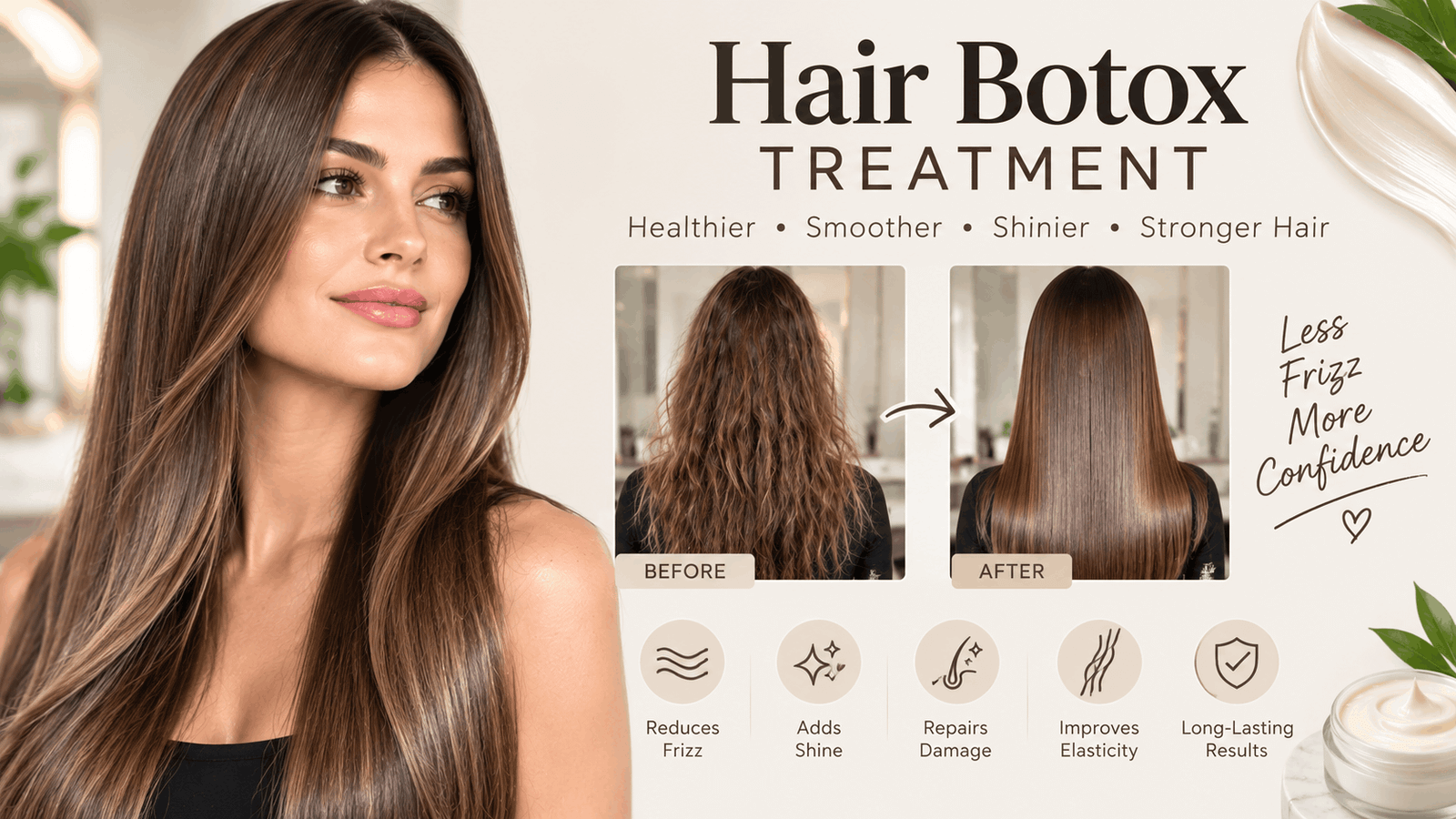
Before treatment, hair may appear frizzy, dull, rough, or difficult to style. After treatment, it may look shinier, feel softer, and be easier to comb or blow-dry.
Some people experience a significant reduction in frizz, while others notice a more subtle conditioning effect. Hair may also appear straighter when the treatment includes heat styling, but this does not mean every formula permanently changes the hair’s structure.
Before-and-after photographs can be helpful, but lighting, styling, brushing, and camera angles may influence the apparent difference. Ask the salon to explain what the product can realistically achieve on your hair type.
Hair Botox vs. Keratin Treatment
Hair Botox and keratin treatments are often discussed together because both may be marketed for frizz control and smoother-looking hair. However, they are not interchangeable.
Hair Botox generally refers to a conditioning or smoothing treatment. Formulas vary widely, and some primarily improve softness and shine.
Keratin treatments are salon smoothing services that may use different chemical formulations and often involve heat. Certain products can release formaldehyde or related chemicals during application or heating.
Neither label guarantees a particular ingredient list or safety profile. The actual formula and application method matter more than the name.
If your main goal is conditioning, a deep-conditioning treatment may be enough. If you want a stronger smoothing effect, ask the stylist about the ingredients, the degree of straightening, and possible exposure to irritating fumes.
Hair Botox vs. Deep Conditioning
A deep-conditioning mask and a hair Botox service can both improve the feel of dry hair, but they generally differ in their intended results and application methods.
Deep-conditioning products are usually designed for routine home care. They can temporarily soften hair, improve slip, and make detangling easier.
Hair Botox services may involve more intensive salon application, longer processing, or heat styling. Depending on the formula, they may create a more noticeable smoothing effect.
A deep conditioner is often a sensible starting point for people who mainly want softness and less tangling. A salon service may be considered when routine conditioning does not provide the desired cosmetic result.
Is Hair Botox Suitable for Different Hair Types?
Straight Hair
People with straight hair may choose the treatment to improve shine, soften rough ends, or reduce flyaways. The change in texture may be subtle because the hair is already relatively smooth.
Wavy Hair
Wavy hair may become easier to manage and less frizzy. Some formulas and heat-styling techniques may loosen the natural wave pattern, so discuss your preferences with the stylist.
Curly Hair
Curly hair can benefit from improved conditioning and reduced friction. However, the treatment may affect the curl pattern, depending on the ingredients and heat involved.
If you want to retain your curls, choose a product specifically appropriate for that goal and avoid assuming that every treatment marketed as hair Botox is curl-friendly.
Coily Hair
Coily hair often benefits from careful conditioning and gentle handling. A smoothing service may help manageability, but the stylist should have experience working with the specific texture and should assess the risk of heat damage.
Color-Treated Hair
Some formulas may be suitable for colored hair, but the product must be compatible with the existing treatment. Color-treated hair can be more vulnerable to dryness and breakage, especially after bleaching.
Tell the stylist about previous chemical services before proceeding.
How Long Does Hair Botox Treatment Last?
The results may last several weeks, and some services may remain noticeable for a few months. The exact duration depends on the product, washing frequency, hair texture, environmental exposure, and styling routine.
Frequent washing, harsh cleansing products, and repeated heat styling may reduce the longevity of the cosmetic effect.
New hair growth is not treated, and the improvement gradually fades as the product’s effects diminish. A salon should provide a realistic estimate based on the exact formula rather than promising a fixed duration for every client.
Hair Botox Treatment Cost
The price varies by salon, location, stylist experience, hair length, thickness, and the product used. Long or thick hair may require more product and a longer appointment.
Some salons include shampooing, blow-drying, and finishing in the quoted price, while others charge for these services separately.
When comparing prices, ask for the exact product name, ingredients, application steps, and aftercare instructions. A low price is not necessarily a better deal if the salon cannot explain what is being applied to your hair.
Is Hair Botox Safe?
Safety depends on the product’s ingredients, the way it is applied, heat exposure, and individual sensitivity. The term “hair Botox” is not a guarantee that a formula is harmless or free from strong chemicals.
Ingredient Safety
Some products may contain conditioning ingredients, while others may include smoothing chemicals or ingredients that can release irritating fumes when heated. Do not assume that a product is safe simply because it is advertised as natural, organic, or formaldehyde-free.
Ask to review the ingredient list and product safety information before the service.
Heat-Related Damage
Repeated high-temperature styling can weaken the hair, particularly when it is already bleached, brittle, or chemically treated. The stylist should use appropriate temperatures and follow the manufacturer’s instructions.
Skin and Scalp Irritation
Some ingredients can irritate the scalp or trigger allergic reactions. Avoid applying products to broken or inflamed skin, and follow the manufacturer’s patch-testing instructions where applicable.
Respiratory Irritation
If a product produces strong fumes during heating, eye, nose, throat, or respiratory irritation may occur. Appropriate ventilation is important. Leave the area if you experience significant irritation or breathing difficulty and seek medical advice when necessary.
Pregnancy and Breastfeeding
Because formulations differ and exposure may occur during application or heating, anyone who is pregnant or breastfeeding should discuss the treatment with a healthcare professional before proceeding. A salon’s marketing claims alone are not sufficient to establish safety.
Possible Side Effects of Hair Botox
Although many people tolerate conditioning services well, possible problems include:
- Scalp itching or irritation.
- Allergic reactions to individual ingredients.
- Dryness or breakage from excessive heat.
- Changes in natural curl or wave patterns.
- Hair feeling heavy or coated if too much product is used.
- Respiratory or eye irritation from certain heated formulas.
If you develop a rash, significant burning, swelling, or persistent discomfort, stop using the product and seek appropriate medical advice. Severe breathing difficulty or swelling involving the lips or throat requires emergency medical attention.
Hair Botox Aftercare
1. Choose a Suitable Shampoo
Use a gentle shampoo that is compatible with the product used. Some treatments recommend specific cleansing products, while others have fewer restrictions.
Follow the salon’s instructions rather than assuming every hair Botox service requires a sulfate-free shampoo.
2. Condition Regularly
Apply conditioner after washing to improve softness and reduce friction. A moisturizing hair mask may also help if your hair feels dry.
Choose products according to your hair texture and scalp needs to avoid unnecessary buildup.
3. Avoid Excessive Heat
Use a heat protectant when blow-drying or using styling tools. Limit repeated passes with a flat iron, and choose a lower temperature whenever possible.
4. Follow Washing Instructions
Some formulas have a waiting period before washing, while others can be rinsed immediately. Ask your stylist for the exact instructions for your treatment.
5. Handle Wet Hair Gently
Wet hair can be more vulnerable to stretching and breakage. Use a wide-tooth comb when appropriate and detangle gradually, starting at the ends.
6. Protect Hair During Sleep
A smooth pillowcase and a loose hairstyle may reduce friction and tangling overnight. Avoid tight ponytails or hairstyles that pull on fragile strands.
7. Avoid Unnecessary Repeat Treatments
Do not repeat a smoothing service automatically whenever the results fade. Assess the hair’s condition and ask whether routine conditioning or a trim may be a better option.
How Often Should You Get Hair Botox?
There is no universal schedule because products and formulas differ. Some services are intended to last several weeks, while others may provide a longer-lasting cosmetic effect.
The best time for a repeat appointment depends on the product instructions, your hair’s condition, and how much of the original result remains.
Repeated heat or chemical processing can increase the risk of damage. If your hair becomes brittle, breaks easily, or feels unusually dry, postpone further smoothing and focus on gentle care.
Can You Do Hair Botox at Home?
Some products marketed as hair Botox are designed for home use, while others are intended for professional application. These products may differ substantially in concentration, ingredients, processing time, and heat requirements.
For home care, a conditioning mask, leave-in conditioner, or smoothing serum may provide a temporary improvement in softness and manageability.
Do not attempt to recreate a professional chemical service by increasing processing time or applying excessive heat. Always follow the product’s directions, and avoid products with unclear ingredients or inadequate safety information.
Common Mistakes to Avoid
Assuming all formulas are identical: Products sold under the same name may contain different ingredients and deliver different results.
Expecting permanent repair: Conditioning can improve appearance and feel, but it cannot permanently restore severely damaged hair.
Ignoring ingredient information: Always check the formula and ask questions about safety, especially if heat is required.
Using too much heat: Excessive temperatures may increase dryness and breakage rather than improve the result.
Neglecting aftercare: Gentle washing, conditioning, and heat protection help preserve hair manageability.
Repeating the treatment too frequently: Frequent processing may weaken the hair over time.
Conclusion
Hair Botox treatment is a cosmetic conditioning or smoothing service designed to improve softness, shine, and manageability. Depending on the formula, it may reduce frizz and create a smoother finish, but the results are temporary and vary between individuals.
Before booking an appointment, review the ingredients, discuss your hair history, and make sure the stylist explains the expected outcome and safety precautions. The name alone does not tell you whether a product is a simple conditioning treatment or a more intensive smoothing formula.
With suitable product selection, careful heat use, and consistent aftercare, you can make an informed choice about whether this service fits your hair-care goals.
Frequently Asked Questions
1. What is hair Botox treatment?
Hair Botox is a cosmetic conditioning or smoothing service intended to improve hair softness, shine, and manageability. It does not involve injections and is unrelated to medical Botox.
2. Does hair Botox straighten hair?
Some formulas mainly reduce frizz, while others produce a smoother or straighter appearance. The result depends on the ingredients, heat-styling process, and natural hair texture.
3. How long does hair Botox last?
Results may remain noticeable for several weeks or a few months, depending on the product and hair-care routine. The effect gradually fades with washing and time.
4. Is hair Botox better than keratin treatment?
Neither is automatically better. Hair Botox generally refers to conditioning or smoothing products, while keratin treatments may use different chemical formulations. Compare the ingredients, expected results, and safety information before choosing.
5. Can hair Botox damage hair?
The treatment may contribute to dryness or breakage if it involves excessive heat or unsuitable chemicals. The risk can be higher for bleached, brittle, or heavily processed hair.
6. Is hair Botox suitable for curly hair?
It may improve softness and reduce frizz, but some formulas can loosen curls. Tell the stylist whether preserving your natural curl pattern is important.
7. Can I wash my hair immediately after hair Botox?
That depends on the product. Some treatments allow immediate washing, while others require a waiting period. Follow the specific manufacturer’s instructions.
8. Does hair Botox contain actual Botox?
No. Hair Botox is a cosmetic marketing term and does not refer to injections of botulinum toxin. The ingredients vary by product.
9. Can I use hair Botox on colored or bleached hair?
Some products may be suitable, but the hair’s condition and product compatibility should be assessed first. Bleached hair is often more vulnerable to heat and chemical damage.
10. What is the best aftercare for hair Botox?
Use compatible shampoo and conditioner, minimize excessive heat styling, handle wet hair gently, and follow the product-specific washing instructions. Avoid repeating the service if the hair shows signs of damage.