Professional Hair Care Products: Complete Guide for Hair
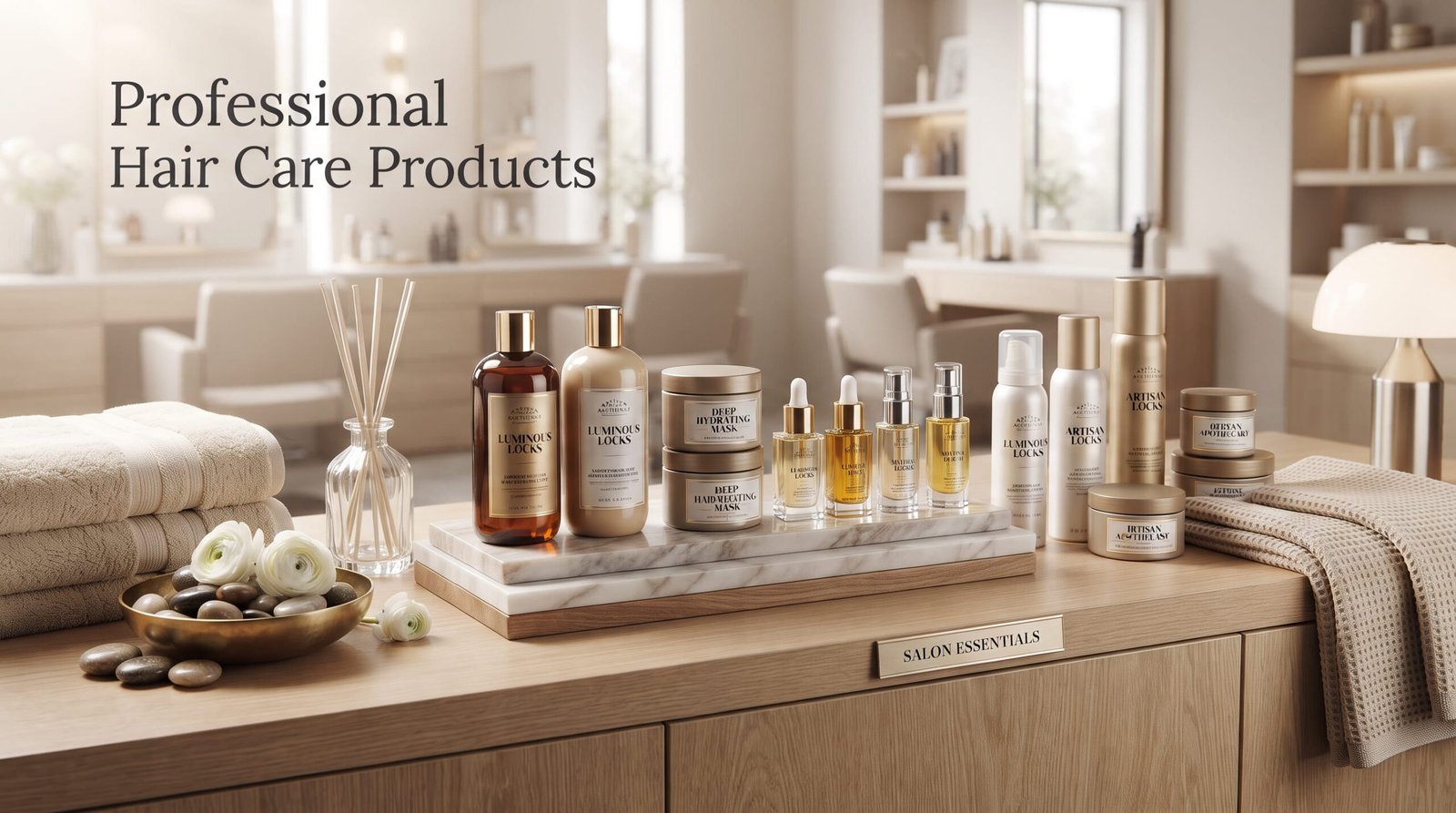
Healthy-looking hair depends on more than shampooing regularly. The right combination of shampoo, conditioner, treatments, styling products, and heat protection can help improve the appearance and manageability of your hair while reducing unnecessary damage.
Professional hair care products are commonly associated with salon-quality formulas designed for specific hair concerns, textures, and styling needs. They may include shampoos, conditioners, masks, leave-in treatments, serums, oils, heat protectants, styling creams, and products designed for color-treated or chemically treated hair.
However, a professional label does not automatically mean a product is right for everyone. Your hair type, scalp condition, styling routine, and the ingredients in a product all matter when choosing hair care. The American Academy of Dermatology recommends selecting products according to your hair type and adjusting washing and conditioning habits to your individual needs.
What Are Professional Hair Care Products?
Professional hair care products are hair and scalp products commonly used or recommended by salon professionals and designed to address specific hair-care needs.
Unlike a basic one-product routine, professional hair care often focuses on targeted concerns such as:
- Dry or brittle hair
- Frizz
- Split ends
- Hair breakage
- Color-treated hair
- Chemically treated hair
- Curly or textured hair
- Fine or thinning-looking hair
- Heat-damaged hair
- Scalp buildup
- Lack of shine
The category includes both products used by hairstylists and products consumers can purchase for home maintenance.
Types of Professional Hair Care Products
There are many categories of professional hair care products. Choosing the right combination is usually more important than purchasing the largest number of products.
Professional Shampoo
Shampoo primarily cleans the scalp and removes excess oil, sweat, dirt, and product buildup.
The best shampoo depends on your scalp and hair. Someone with an oily scalp may need more frequent cleansing, while someone with dry, curly, or textured hair may need a gentler washing routine.
The AAD recommends applying shampoo mainly to the scalp rather than aggressively rubbing it through the entire length of the hair.
Professional Conditioner
Conditioner helps smooth and detangle the hair, making it easier to manage.
For fine or straight hair, conditioner may work best mainly on the lengths and ends. Dry or curly hair may benefit from conditioning throughout more of the hair length.
Using conditioner after shampooing can also help reduce friction and make detangling easier.
Deep Conditioning Treatments
Deep conditioners and hair masks are designed to provide more intensive conditioning than a standard rinse-out conditioner.
They can be useful for hair that feels:
- Dry
- Rough
- Tangled
- Brittle
- Frizzy
- Chemically treated
- Frequently exposed to heat
A deep-conditioning treatment can be incorporated into a routine according to the needs of the hair rather than being used excessively.
Leave-In Conditioners
Leave-in conditioners remain on the hair after washing.
Dermatologists note that leave-in conditioners can be especially useful for curly, dry, long, color-treated, permed, heat-styled, tangled, or frizzy hair. They can make hair easier to comb and may reduce breakage associated with difficult detangling.
For fine hair, a lightweight leave-in product may be preferable because heavier formulas can make the hair look limp or greasy.
Hair Serums
Hair serums are commonly used to improve the appearance of frizz, dryness, and lack of shine.
Depending on the formula, a serum may help smooth the outer surface of the hair and create a more polished finish.
Serums should generally be applied according to the product directions and used sparingly, especially on fine hair.
Hair Oils
Hair oils can provide conditioning and shine, but they are not universally necessary.
A few drops may be useful for dry ends or textured hair, while applying too much can make the hair appear greasy.
If hair products containing oils repeatedly touch the forehead, temples, or neck, they may also contribute to clogged pores in some people. The AAD notes that oily hair products can cause acne along the hairline, forehead, and neck.
Heat Protectants
Heat protectants are designed for people who regularly use:
- Blow dryers
- Flat irons
- Curling irons
- Heated brushes
- Other thermal styling tools
Some leave-in conditioners also provide heat protection when the packaging specifically indicates this function.
Using the correct product does not eliminate the risk of heat damage, so controlling temperature and limiting unnecessary heat exposure remain important.
Professional Hair Care Products for Different Hair Types
There is no single professional hair care routine that works for everyone.
Fine Hair
Fine hair can become weighed down easily.
Look for lightweight:
- Shampoos
- Conditioners
- Leave-in sprays
- Volumizing products
- Lightweight styling products
Avoid applying large amounts of heavy oils or creams near the roots unless the product is specifically designed for that purpose.
Thick Hair
Thick hair may need more conditioning and detangling support.
Cream conditioners, masks, leave-in conditioners, and carefully selected oils may help improve manageability.
However, the scalp still needs appropriate cleansing to prevent excessive product buildup.
Curly Hair
Curly hair often benefits from moisture-focused products that help reduce dryness and improve manageability.
Useful categories may include:
- Moisturizing shampoo
- Rich conditioner
- Leave-in conditioner
- Curl cream
- Styling gel
- Hair mask
Curly hair can require more conditioning than straight hair, according to dermatologist guidance from the AAD.
Coily and Textured Hair
Textured hair can be particularly vulnerable to dryness and breakage. Gentle handling and appropriate conditioning can help minimize unnecessary damage.
The AAD notes that Black hair tends to be fragile and provides specific recommendations for reducing damage associated with styling and hair practices.
Color-Treated Hair
Color-treated hair may benefit from products formulated specifically for chemically treated hair.
A routine can include:
- Gentle cleansing
- Conditioning
- Leave-in protection
- Heat protection
- Occasional treatment or mask
Reducing excessive heat and harsh styling can also help maintain the appearance of treated hair.
Professional Hair Care Products for Damaged Hair
Hair damage can result from repeated chemical processing, heat styling, tight hairstyles, rough handling, and environmental exposure.
Damaged hair may look:
- Dry
- Rough
- Frizzy
- Dull
- Split
- Brittle
Professional products may improve the cosmetic appearance and manageability of damaged hair, but products cannot permanently restore already-damaged hair fibers to their original condition.
The AAD recommends gentle hair care practices, including using conditioner after shampooing and avoiding aggressive rubbing or brushing that can increase breakage.
How to Build a Professional Hair Care Routine
You do not necessarily need a large collection of products.
A simple routine can start with four basic categories:
Step 1: Cleanse
Choose a shampoo appropriate for your scalp and hair type.
Step 2: Condition
Apply conditioner after shampooing to improve softness and manageability.
Step 3: Treat
Use a leave-in conditioner, mask, serum, or other targeted treatment according to your hair’s needs.
Step 4: Protect
Use heat protection if you regularly use thermal styling tools.
This basic structure can then be adjusted for curly, dry, oily, fine, thick, or chemically treated hair.
How Often Should You Wash Your Hair?
There is no universal washing schedule.
The AAD recommends washing according to how oily or dirty your scalp becomes. People with straight, oily hair may need more frequent shampooing, while dry, textured, curly, or thick hair may require less frequent washing.
Your washing routine should therefore be based on your scalp rather than copying someone else’s schedule.
Professional vs. Regular Hair Care Products
The word “professional” can make a product sound automatically superior, but the label alone does not determine whether a formula is appropriate for your hair.
A good professional product should still be evaluated based on:
- Ingredients
- Hair type
- Scalp condition
- Intended use
- Product directions
- Personal tolerance
- Styling needs
The FDA notes that cosmetic products and ingredients generally do not undergo FDA premarket approval, although companies are responsible for product safety and labeling under applicable law.
How to Read Hair Product Ingredients
Learning to read the ingredient list can help you make better choices.
Look at the ingredients in relation to the product’s purpose rather than automatically avoiding or choosing an ingredient simply because it sounds unfamiliar.
For example, conditioning products may contain ingredients designed to improve softness and detangling, while styling products may use film-forming or conditioning ingredients to provide hold or smoothness.
The FDA requires ingredient declarations for many retail cosmetics, allowing consumers to review what is included in the product.
Are Professional Hair Products Safe?
Most cosmetic hair products are intended to be safe when used according to their labeling and customary conditions of use, but individual reactions can occur.
The FDA has received reports involving certain hair-cleansing products and symptoms such as itching, rash, hair breakage, and hair loss. These reports do not automatically prove that a particular ingredient caused the problem, but they highlight the importance of paying attention to unusual reactions.
Always follow the product’s directions and discontinue a product if you develop a significant reaction.
Be Careful With Hair Smoothing Treatments
Some professional salon treatments are different from ordinary shampoo and conditioner.
Certain hair-smoothing products can release formaldehyde gas when heated. The FDA provides specific safety information for these products and recommends paying attention to ingredients, product instructions, ventilation, and salon safety practices.
If you are considering a chemical straightening or smoothing service, discuss the product and ingredients with your stylist beforehand.
Professional Hair Care for Hair Loss
Hair-care products can improve the appearance and manageability of hair, but they should not be confused with medical treatment for hair loss.
If you are experiencing:
- Sudden hair shedding
- Noticeable thinning
- Bald patches
- Persistent scalp itching
- Scaling or inflammation
- Significant hair breakage
consider speaking with a dermatologist.
A dermatologist can determine whether the problem is related to hair damage, scalp disease, nutritional factors, medication, hormonal changes, or another medical condition.
Common Mistakes When Using Professional Hair Products
Even high-quality products may cause problems when used incorrectly.
Common mistakes include:
- Using too much product
- Applying heavy products to the scalp unnecessarily
- Shampooing the entire hair length aggressively
- Skipping conditioner
- Excessive heat styling
- Using products unsuitable for your hair type
- Layering too many styling products
- Ignoring scalp irritation
- Keeping old products longer than recommended
- Assuming expensive always means better
A simpler routine with the right products is often more useful than a complicated routine with products that do not match your needs.
How to Choose the Best Professional Hair Care Products
Before buying a product, identify your primary concern.
If your main issue is dryness, prioritize conditioning and moisture.
If your concern is frizz, consider conditioning products and appropriate styling products.
Hair is color-treated, look for products specifically intended for treated hair.
If your hair is fine, lightweight formulas may be more suitable.
If you have scalp symptoms rather than simply cosmetic hair concerns, consider professional medical advice instead of relying only on cosmetic products.
Final Thoughts
Professional hair care products can be valuable additions to a well-planned hair routine. Shampoos, conditioners, masks, leave-in treatments, serums, oils, styling products, and heat protectants can each serve different purposes.
The best routine is not necessarily the most expensive or the one containing the largest number of products. Instead, choose products according to your hair type, scalp needs, styling habits, and specific concerns.
Gentle washing, regular conditioning, careful detangling, limited damaging heat, and appropriate product selection can all contribute to healthier-looking hair. If persistent hair loss, scalp irritation, or significant breakage occurs, a dermatologist can help identify the underlying cause.
FAQs About Professional Hair Care Products
1. What are professional hair care products?
Professional hair care products are shampoos, conditioners, treatments, styling products, and other hair products designed for specific hair types, concerns, or professional salon use.
2. Are professional hair products better than regular products?
Not necessarily. The best product depends on your hair type, scalp, ingredients, and individual needs. A professional label alone does not guarantee better results.
3. What professional products are best for dry hair?
Dry hair may benefit from moisturizing shampoo, conditioner, leave-in conditioner, hair masks, and carefully selected oils or serums.
4. What professional products are good for curly hair?
Curly hair often benefits from moisturizing shampoo, rich conditioner, leave-in conditioner, curl cream, and styling products designed to improve definition and manageability.
5. Should I use professional hair products every day?
It depends on the product. Shampoo frequency should be based largely on how oily or dirty your scalp becomes, while styling products should be used according to their directions and your hair’s needs.
6. Can professional hair products repair damaged hair?
They can improve the appearance, softness, and manageability of damaged hair, but cosmetic products cannot permanently reverse structural hair damage.
7. Can hair products cause acne?
Yes. Some oily hair products can contribute to clogged pores and breakouts around the hairline, forehead, and neck.
8. Is leave-in conditioner useful for damaged or dry hair?
Yes. Dermatologists note that leave-in conditioners can help with detangling, frizz, manageability, and breakage, particularly for dry, curly, long, chemically treated, or heat-styled hair.
9. Are professional hair smoothing treatments safe?
Safety depends on the specific product, ingredients, application, and ventilation. Some hair-smoothing products can release formaldehyde when heated, so salon safety and ingredient information are important.
10. When should I see a dermatologist for hair problems?
See a dermatologist if you have persistent hair loss, sudden shedding, bald patches, significant breakage, or ongoing scalp itching, scaling, redness, or inflammation.