Mid Taper Fade: Best Haircuts, Styles, Tips & Complete Guide
Introduction
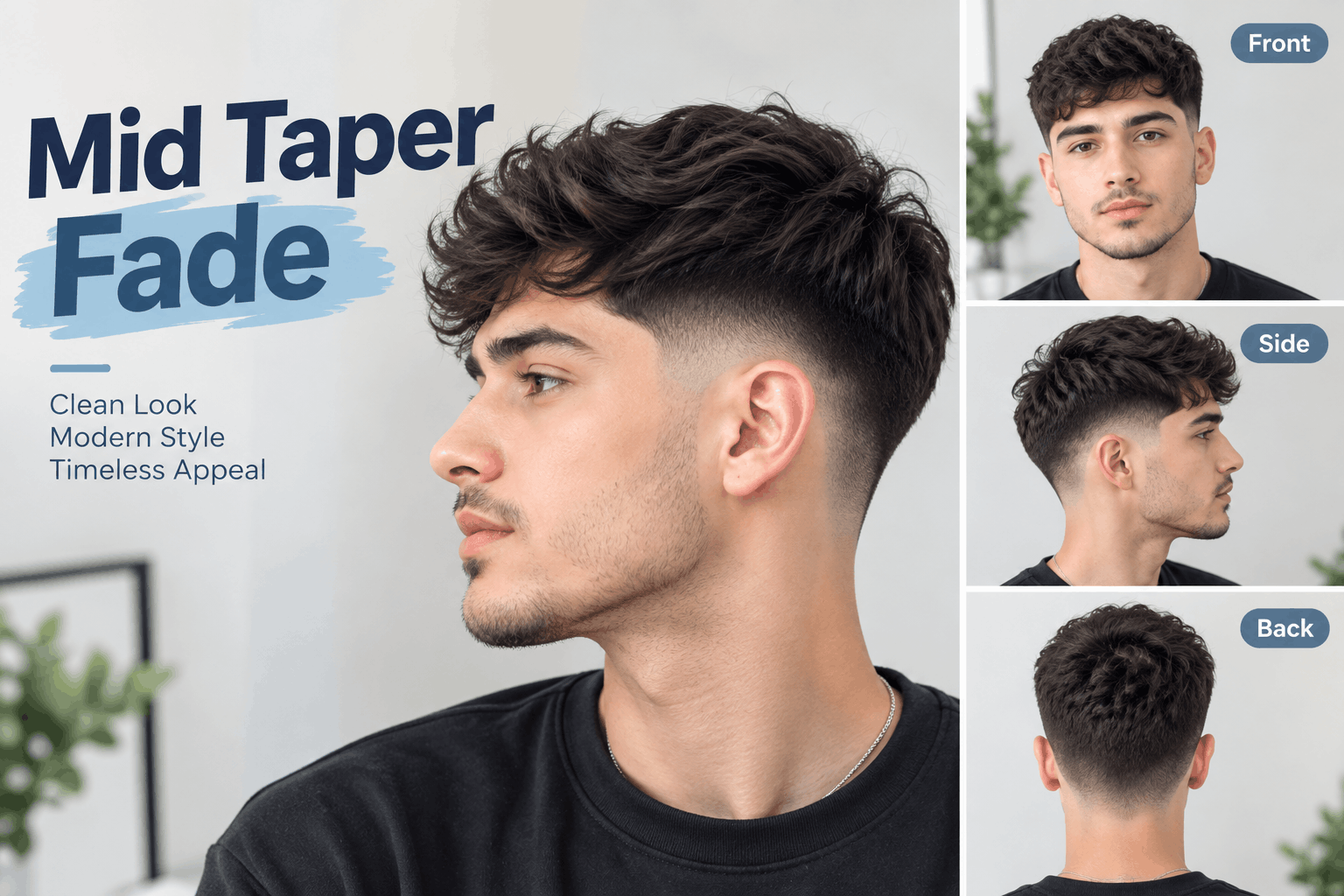
The mid taper fade is one of the most versatile men’s haircuts for anyone who wants a clean, modern appearance without going too extreme. It combines gradually shorter hair around the temples, sideburns, and neckline with more length on top, creating a balanced transition between a low taper and a high fade.
One reason this haircut continues to attract attention is its flexibility. A mid taper can be paired with a textured crop, quiff, comb over, curls, waves, buzz cut, side part, or longer top. It can also be adapted to straight, wavy, curly, and coily hair. Current hairstyle guides continue to highlight its versatility and balanced placement.
Whether you want a professional haircut for work or a sharper style for everyday wear, the mid taper fade offers plenty of ways to personalize your look.
What Is a Mid Taper Fade?
A mid taper fade is a haircut in which the hair gradually becomes shorter around the middle portion of the sides, particularly around the temples, sideburns, and neckline.
Unlike a full fade that may remove much of the hair along the sides, a taper concentrates the shortening around specific areas while preserving more weight elsewhere.
The result is a clean outline with a natural transition.
The exact height can vary between barbers, so showing a reference photo is often more useful than relying only on the phrase “mid taper fade.”
Why Is the Mid Taper Fade So Popular?
The appeal of a mid taper comes from its balance.
A low taper can look very subtle, while a high fade creates stronger contrast. The mid taper sits between these approaches, giving the haircut noticeable structure without making the sides look excessively bare.
Other advantages include:
- Works with many hair textures
- Can be paired with short or longer hair
- Looks suitable for casual and professional settings
- Creates a clean appearance around the ears and neckline
- Offers many styling possibilities
- Can be customized according to face shape
- Does not require one specific top hairstyle
Modern haircut guides consistently describe the mid taper as a flexible option across different textures and top styles.
15 Best Mid Taper Fade Haircuts for Men
1. Classic Mid Taper Fade
The classic version keeps the top relatively natural while the sides and neckline are gradually tapered.
It is an excellent choice if you want a haircut that looks polished without appearing overly styled.
A small amount of matte styling product can enhance the top while keeping the overall appearance natural.
2. Mid Taper Fade With Textured Crop
A textured crop gives the traditional taper a younger and more contemporary appearance.
The top is cut into short, textured layers and generally styled forward or slightly toward the forehead.
This option works especially well for men who want a haircut that does not require extensive daily styling.
3. Mid Taper Fade With Quiff
A quiff adds height and volume at the front while the mid taper keeps the sides controlled.
This combination can create the appearance of a longer, more structured face.
Use a lightweight styling product and a blow dryer if additional height is needed.
4. Mid Taper Fade Comb Over
The comb-over is a classic pairing for a mid taper.
The top is kept long enough to sweep toward one side, while the tapered sides create a clean contrast.
It can be styled neatly for professional environments or given a more relaxed finish for casual occasions.
5. Mid Taper Fade Side Part
A defined side part gives the haircut a more traditional and polished character.
The part can be natural or emphasized with a clipper or razor line, depending on the desired appearance.
Straight or slightly wavy hair can make the part particularly easy to define.
6. Mid Taper Fade With Curly Hair
Curly hair and a mid taper make a strong combination because the shorter sides allow the natural curls on top to become the focal point.
The top can be left longer to preserve curl definition.
Rather than flattening the curls, use products designed to maintain moisture and definition.
7. Mid Taper Fade With Waves
For men with naturally wavy hair, the mid taper can create a sharp contrast between the textured top and cleaner sides.
The waves can be worn naturally or enhanced with a light styling cream.
This is particularly useful for someone who wants texture without sacrificing a neat outline.
8. Mid Skin Taper Fade
A skin version takes the taper closer to the scalp in selected areas, creating stronger contrast.
Because skin exposure is more noticeable, this variation has a sharper appearance than a traditional shadow taper.
It is ideal for people who want a more defined and contemporary haircut.
9. Mid Taper Fade With Buzz Cut
A buzz cut combined with a mid taper is simple, masculine, and relatively low maintenance.
The short top requires little styling, while the taper prevents the haircut from looking completely uniform.
This can be an excellent option for men who prefer practical hairstyles.
10. Mid Taper Fade With French Crop
The French crop features a short textured top and forward fringe.
Combining it with a mid taper creates a compact haircut with a clean perimeter.
It can work particularly well for someone who wants a modern style without needing several minutes of styling every morning.
11. Mid Taper Fade With Slick Back
A slick-back variation requires more length on top.
The hair is directed backward using a comb and styling product, while the mid taper keeps the sides and neckline controlled.
This combination can transition easily from formal to evening styling.
12. Mid Taper Fade With Afro or Coily Hair
The mid taper can be adapted to tightly coiled hair while keeping the natural texture prominent on top.
The tapered sides help create a cleaner silhouette around the temples and neckline.
The top can remain natural, shaped, or combined with other styling techniques depending on hair length.
13. Mid Taper Fade With Beard
A beard can be incorporated into the haircut by carefully blending the sideburn area into the facial hair.
This creates a continuous transition from the head to the beard.
The beard itself can be short and professional or fuller for a stronger contrast.
14. Mid Taper Fade Middle Part
A middle-part style needs enough length on top for the hair to separate naturally.
The taper keeps the sides controlled while the longer top falls toward both sides of the face.
This variation has become another popular interpretation of the mid taper and works especially well with straight or wavy hair.
15. Mid Taper Fade With Long Textured Top
Men who prefer longer hair can keep substantial length on top while using the mid taper to clean up the sides and neckline.
The top can be worn messy, swept backward, parted, or styled with natural texture.
This creates more versatility than a very short haircut.
Mid Taper Fade for Different Hair Types
Straight Hair
Straight hair makes the taper transition easy to see.
Popular options include:
- Side part
- Comb over
- Slick back
- Textured crop
- Middle part
- Quiff
A matte clay or styling cream can provide texture without making the hair appear overly greasy.
Wavy Hair
Wavy hair provides natural movement.
Instead of trying to completely straighten it, allow the texture to remain visible on top. A lightweight cream can help control frizz while maintaining movement.
Curly Hair
Curly hair can look particularly striking with tapered sides because the curls become more prominent.
Keep the curls moisturized and avoid excessive brushing, which can disturb curl definition.
Coily Hair
The mid taper works well with natural coily textures when the barber understands how to preserve the shape and density of the hair.
The taper can be combined with waves, an afro, curls, twists, or other natural styles.
Thin Hair
Men with thinner hair can also wear a mid taper, but the top should be selected carefully.
Keeping some texture and avoiding excessive length may help create a fuller appearance.
A lightweight volumizing product can be more useful than a heavy pomade.
Mid Taper Fade and Face Shape
Oval Face
An oval face is highly adaptable to different hairstyles.
A mid taper fade can be combined with almost any suitable top style, from textured crops to longer styles.
Round Face
Adding some height or texture on top can help create a more elongated appearance.
A quiff or textured top may work particularly well.
Square Face
A square face already has strong angles, so a clean mid taper can emphasize the natural structure.
Short textured styles and side parts can both work well.
Heart-Shaped Face
A balanced amount of volume on top can help complement a narrower chin.
Avoid creating excessive height if it makes the upper portion of the face look disproportionately wide.
Oblong Face
If your face is longer, excessive height on top may make it appear even longer.
A textured crop, side-swept style, or moderate-length top can provide better visual balance.
Mid Taper Fade vs. Low Taper Fade
The main difference is where the taper begins.
A low taper starts lower around the ears and neckline and generally produces a more subtle effect.
A mid taper starts higher, around the middle of the temple and side area, creating more visible contrast.
Choose a low taper if you want something understated.
Choose a mid taper if you want the haircut to look cleaner and more defined while still retaining plenty of hair on the sides.
Mid Taper Fade vs. High Fade
A high fade begins considerably higher on the sides and produces a stronger contrast between the top and sides.
A mid taper provides a softer middle ground.
If you want a bold, high-contrast appearance, a high fade may be preferable.
If you want noticeable structure without removing too much side volume, the mid taper is often a better option.
Mid Taper Fade vs. Mid Fade
These terms are sometimes used interchangeably, but there can be a practical difference.
A mid fade generally removes more hair across the side of the head at the mid level.
A mid taper concentrates the transition around the temples, sideburns, and neckline while preserving more side weight.
Because barber terminology varies, clearly describing how much hair you want removed is important.
How to Ask Your Barber for a Mid Taper Fade
Instead of simply saying, “Give me a mid taper,” explain the details.
You can say:
“I want a mid taper around the temples and neckline, with a smooth blend. Keep the top at its current length and preserve some weight on the sides.”
Then specify:
- Desired top length
- Whether you want a skin finish or shadow
- How much texture you want
- Whether you want a hard part
- How you want the neckline finished
- Whether the taper should blend into your beard
A reference photograph can eliminate much of the ambiguity because taper height and terminology can vary between barbers.
How to Style a Mid Taper Fade
The styling routine depends on the top hairstyle.
Step 1: Start With Clean, Damp Hair
Wash or rinse your hair as appropriate, then gently towel-dry it.
Step 2: Apply a Small Amount of Product
Choose a product based on your hair type and desired finish.
For natural texture, try a matte clay or lightweight cream.
For shine and control, a pomade may be more appropriate.
Step 3: Shape the Top
Use your fingers or a comb to create the desired direction.
quiff, lift the front.
comb over, direct the hair sideways.
textured crop, work the product through the top with your fingers.
Step 4: Finish the Sides
Avoid applying excessive product to the tapered areas.
The clean transition should remain visible.
How Often Should You Maintain a Mid Taper Fade?
The taper generally looks sharpest when the edges are regularly refreshed.
Many men choose to visit their barber every 2–3 weeks, although the ideal schedule depends on how quickly the hair grows and how precise they want the fade to remain. Current haircut guides commonly recommend this general maintenance range.
If you prefer a softer, natural appearance, you may be able to wait longer.
For a very crisp finish, more frequent appointments may be necessary.
Common Mid Taper Fade Mistakes
Choosing the Wrong Taper Height
A taper that is too high or too low can change the overall balance of the haircut.
Removing Too Much Side Weight
If you want a traditional taper rather than a full fade, tell your barber to preserve weight on the sides.
Ignoring the Top
The taper is only one part of the haircut. The top should complement your hair texture and face shape.
Overusing Styling Products
Heavy products can make textured hair look greasy or flat.
Skipping Maintenance
Even an excellent fade eventually loses its sharpness as the hair grows.
Copying Someone Else’s Haircut Exactly
A style that looks excellent on one person may need adjustments for another person’s hair density, texture, or facial proportions.
Is the Mid Taper Fade Low Maintenance?
The answer depends on the top.
A short crop, buzz cut, or short curls can require very little daily styling.
A long quiff, slick back, or middle part requires more effort.
The taper itself is relatively straightforward, but keeping it crisp requires regular barber visits.
Final Thoughts
The mid taper fade has earned its popularity because it offers a useful balance between subtle and bold. It creates a clean transition around the temples and neckline while allowing the top to remain highly customizable.
Whether you prefer a textured crop, quiff, comb over, curls, waves, middle part, buzz cut, or longer textured hairstyle, there is a mid taper variation that can complement your look. The haircut can also be adapted to different hair textures and face shapes, making it a practical choice for many men.
The best result comes from communicating clearly with your barber. Specify how high you want the taper, how much side weight you want to preserve, whether you want skin or shadow at the shortest point, and how you want the top styled.
Ultimately, the most flattering mid taper fade is not necessarily the trendiest one—it is the version that works naturally with your hair, face shape, lifestyle, and personal style.
FAQs About Mid Taper Fade
1. What is a mid taper fade?
A mid taper fade gradually shortens the hair around the middle of the temples, sideburns, and neckline while leaving more length on the top and surrounding sides.
2. Is a mid taper fade good for all hair types?
It can be adapted to straight, wavy, curly, and coily hair. The top style and taper technique should be adjusted according to the hair’s natural texture.
3. How long does a mid taper fade last?
Most people maintain the haircut every two to three weeks for a consistently sharp appearance, although individual growth rates vary.
4. Is a mid taper better than a low taper?
Neither is universally better. A mid taper creates more visible contrast, while a low taper provides a subtler transition.
5. Can I get a mid taper fade with curly hair?
Yes. A mid taper can make natural curls more prominent by keeping the sides and neckline cleaner while preserving texture on top.
6. Does a mid taper fade have to reach the skin?
No. A mid taper can finish with a short shadow or go closer to the skin depending on the look you want.
7. What should I tell my barber?
Explain that you want a mid taper around the temples and neckline, then specify the top length, desired side weight, skin or shadow finish, and preferred styling direction.
8. Is a mid taper fade good for a round face?
It can work well, particularly when paired with some height or texture on top. The exact top style should be selected according to your facial proportions.
9. Can a mid taper fade be combined with a beard?
Yes. The taper can be blended into the sideburn and beard area to create a smooth transition between the haircut and facial hair.
10. What is the difference between a mid taper and a mid fade?
A mid taper generally concentrates the shortening around the temples, sideburns, and neckline, while a mid fade usually creates a broader fade across the sides. Terminology can vary between barbers, so a reference image is helpful.