Ozempic Face: Causes, Prevention, Treatment & Complete Guide
Introduction
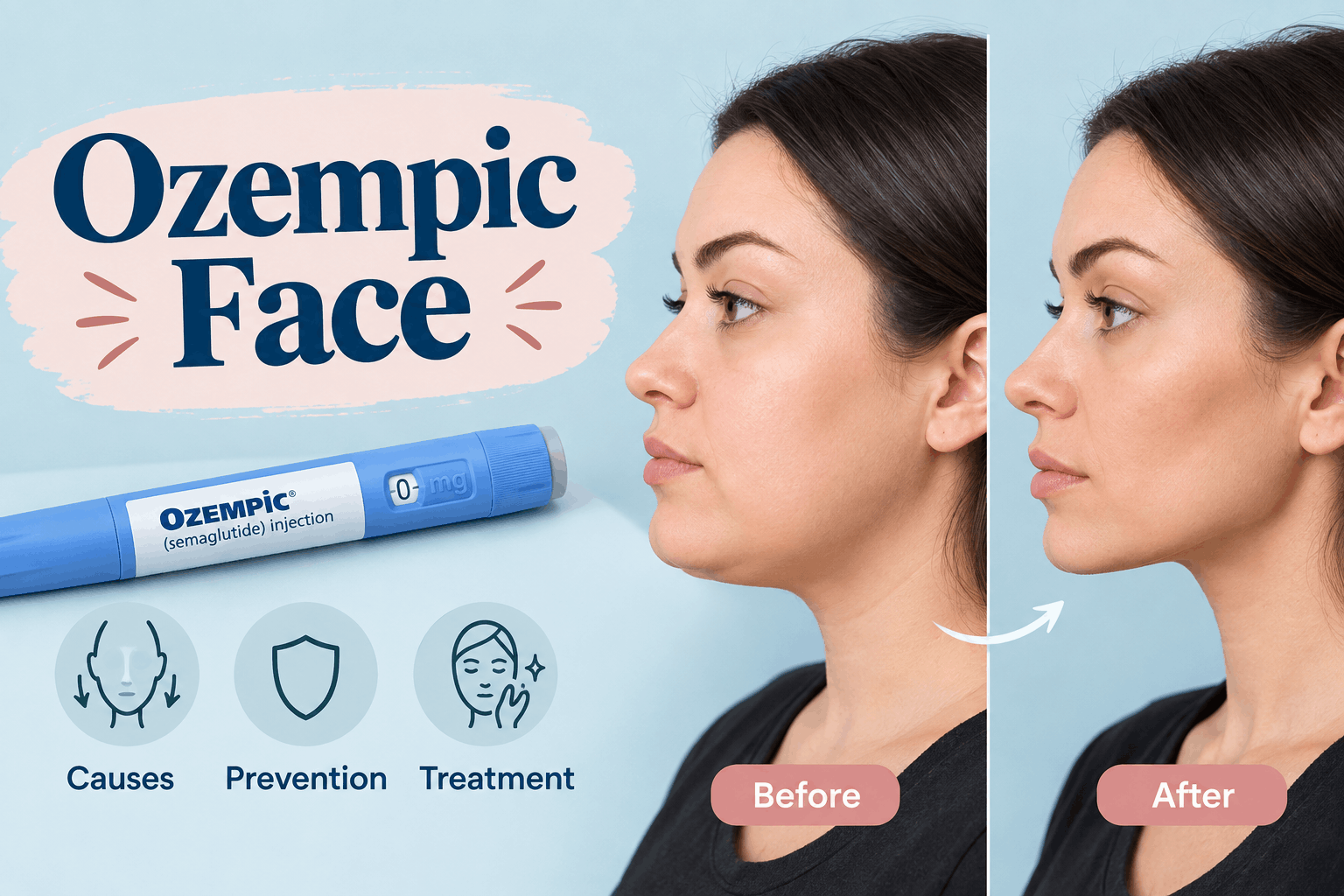
Ozempic face is a popular term used to describe facial changes that may occur after significant or rapid weight loss while using GLP-1 medications such as semaglutide. These changes can include reduced facial fullness, hollow-looking cheeks or temples, loose skin, more noticeable wrinkles, and a generally more aged appearance.
Importantly, Ozempic itself does not selectively “eat away” facial fat. The appearance is primarily associated with weight loss and changes in facial fat and soft-tissue support. Dermatologists also recognize that GLP-1 medications may have effects on skin, hair, and other tissues, although the exact mechanisms behind facial aging are still being studied.
As GLP-1 medications have become increasingly common for diabetes and weight management, concern about facial volume loss has also increased. Current research suggests that the extent of facial change can vary considerably from person to person.
What Is Ozempic Face?
“Ozempic face” is not a medical diagnosis. It is an informal term describing facial changes noticed by some people following substantial weight loss associated with GLP-1 receptor agonist treatment.
Common features may include:
- Hollow or sunken cheeks
- Reduced fullness around the temples
- More visible under-eye hollows
- Looser facial skin
- Deeper nasolabial folds
- More noticeable marionette lines
- Fine lines and wrinkles
- Reduced facial definition
- A thinner or more aged-looking appearance
The American Academy of Dermatology notes that people taking GLP-1 medications may notice less facial plumpness, sagging, wrinkles and crepey skin. Dermatologists attribute these changes partly to rapid weight loss.
What Causes Ozempic Face?
Rapid Weight Loss
The most important factor is often loss of subcutaneous fat.
When a person loses a substantial amount of body weight, fat is lost from multiple areas. The face is not exempt. Loss of facial fat can reduce the fullness that previously supported the skin.
Research published in 2026 describes facial changes after GLP-1-associated weight loss as involving several structural layers, including superficial fat loss, changes in deeper support and increased skin laxity.
Reduced Facial Volume
Facial fat is naturally distributed among different compartments. These compartments contribute to youthful contours and smooth transitions between different areas of the face.
When volume decreases, areas such as the cheeks, temples and under-eye region may become more hollow.
Skin Laxity
Skin that has previously stretched over fuller facial tissues may not immediately contract after substantial weight loss.
This can make looseness, folds and wrinkles more visible.
Age-Related Changes
Age is another important factor. As people age, collagen, elastin, bone structure and facial fat distribution naturally change.
Rapid weight loss can make some of these pre-existing changes more noticeable.
Possible Skin-Level Effects
Researchers are also investigating whether GLP-1 receptor agonists may influence skin cells and connective tissue directly. Current evidence suggests possible effects involving fibroblasts, adipose-derived stem cells and collagen-related pathways, but these mechanisms remain an active area of research.
Therefore, it is too simplistic to say that every facial change caused by a GLP-1 medication is directly produced by the drug itself.
What Does Ozempic Face Look Like?
There is no single appearance that defines Ozempic face.
One person may notice mainly hollow cheeks, while another may experience loose skin around the jawline or deeper wrinkles.
Common visible changes include:
Hollow Cheeks
Loss of cheek fat can make the midface appear flatter or more angular.
Temple Hollowing
Reduced volume around the temples may create a more sunken appearance.
Under-Eye Hollows
Loss of surrounding soft-tissue volume can make the tear-trough or under-eye area appear more prominent.
Loose Skin
Reduced underlying volume may leave more visible skin around the cheeks, jawline and neck.
More Noticeable Wrinkles
When facial support decreases, existing lines and folds can become more apparent.
A 2026 review describes midface volume loss, temple and infraorbital hollowing, skin laxity and accentuation of wrinkles as characteristic concerns among people experiencing significant GLP-1-associated weight loss.
Does Everyone Taking Ozempic Get Ozempic Face?
No.
Not everyone who uses Ozempic or another GLP-1 medication develops noticeable facial volume loss.
The appearance can depend on several factors, including:
- Amount of weight lost
- Speed of weight loss
- Age
- Genetics
- Starting facial volume
- Skin elasticity
- Duration of obesity before weight loss
- Nutrition
- Hydration
- Sun exposure
- Smoking
- Previous facial aging
Recent research also suggests that the degree of reported dermatologic changes increases with greater weight loss. In one 2026 study, people reporting more than 20% body-weight loss were more likely to report skin sagging and decreased facial volume than those reporting less weight loss.
Can Ozempic Face Be Prevented?
Complete prevention is not always possible, but certain strategies may help reduce the severity of facial changes.
1. Avoid Unnecessarily Rapid Weight Loss
Rapid weight reduction can produce more noticeable changes in facial volume and skin laxity.
Weight loss should follow an appropriate medical plan rather than trying to lose weight as quickly as possible.
Do not change or stop a prescribed GLP-1 medication simply because of cosmetic concerns without discussing it with your healthcare professional.
2. Maintain Adequate Protein Intake
Adequate nutrition is important during weight loss.
Protein provides amino acids needed for maintaining muscle and supporting normal tissue function. Individual protein requirements vary, so people undergoing substantial weight loss should discuss nutrition with their doctor or a registered dietitian.
3. Stay Hydrated
Dehydration can make skin appear drier and less healthy.
Adequate fluid intake is particularly important when appetite and food intake decrease during weight-loss treatment.
4. Protect Your Skin From the Sun
UV exposure contributes to premature skin aging.
Daily broad-spectrum sunscreen, protective clothing and sensible sun avoidance can help reduce cumulative photoaging.
5. Follow a Consistent Skincare Routine
A simple skincare routine can support skin quality during weight loss.
Useful ingredients may include:
- Moisturizers
- Sunscreen
- Retinoids when appropriate
- Antioxidant ingredients
- Gentle cleansers
Skincare cannot replace lost facial fat, but it can improve hydration, texture and the overall appearance of the skin.
How Can Ozempic Face Be Treated?
Treatment depends on whether the primary problem is volume loss, skin laxity, wrinkles, or a combination of these issues.
There is no single treatment that works for everyone.
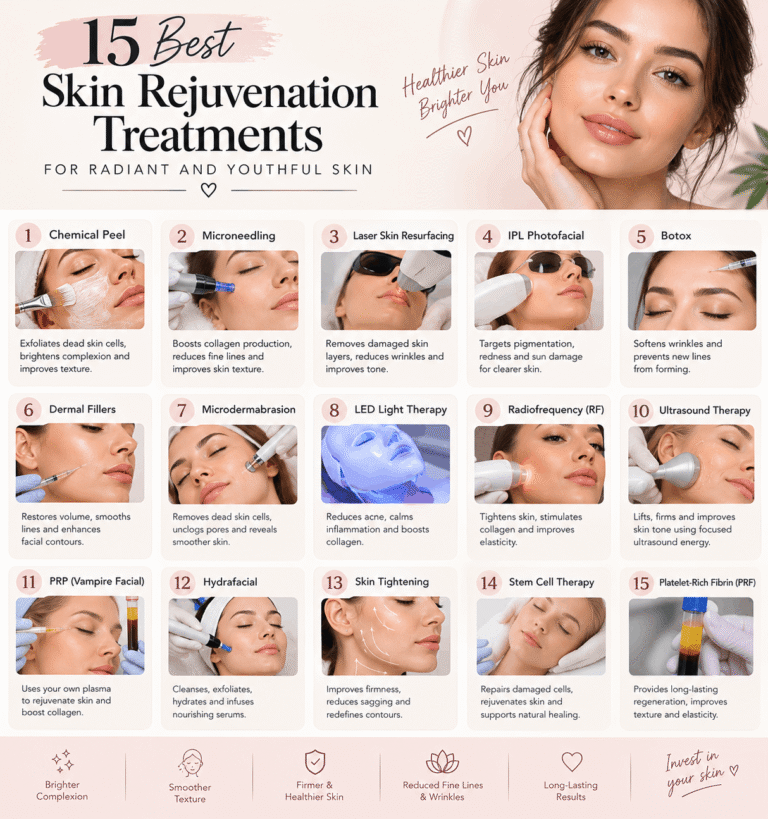
Dermal Fillers
Hyaluronic acid fillers can restore selected areas of lost facial volume.
They may be used strategically in areas such as the cheeks or temples when appropriate.
The goal should be restoration rather than simply adding large amounts of volume.
A 2026 dermatologic review describes selective HA filler treatment as one possible approach to structural facial volume loss following medical weight loss.
Biostimulatory Treatments
Collagen-stimulating treatments may be considered when the main concern is reduced skin quality and support rather than simple volume deficiency.
Depending on the patient, dermatologists may consider different collagen-stimulating injectable or energy-based approaches.
Treatment should be individualized according to facial anatomy and the amount of remaining soft-tissue volume.
Skin-Tightening Treatments
Energy-based treatments may be considered when laxity is a major concern.
Depending on the patient’s skin and goals, treatment options may include selected radiofrequency, ultrasound or laser technologies.
These treatments generally aim to improve skin quality and tightening rather than replace significant lost fat volume.
Fat Transfer
For selected patients, autologous fat transfer can restore facial volume using fat harvested from another part of the body.
This can provide a more substantial volume-restoration approach, but it is a surgical procedure and has its own risks, recovery requirements and limitations.
The AAD lists both soft-tissue fillers and fat transfer among cosmetic approaches that dermatologists may use for facial volume loss following GLP-1-associated weight loss.
Laser and Other Skin-Quality Treatments
Laser treatments may be useful when wrinkles, pigmentation or overall skin texture are major concerns.
However, lasers generally cannot completely replace lost facial volume.
Should You Stop Ozempic Because of Ozempic Face?
Not without medical advice.
Ozempic (semaglutide) is a prescription medication used for specific medical indications, and the benefits of appropriate treatment can be substantial.
If facial changes become concerning, talk with the healthcare professional managing your weight or diabetes. A dermatologist or qualified aesthetic physician can separately evaluate facial volume, skin laxity and skin quality.
The American Academy of Dermatology recommends discussing skin, hair and nail changes associated with GLP-1 medications with a medical team and dermatologist when needed.
Can Skincare Reverse Ozempic Face?
Skincare can improve skin quality, but it cannot fully replace significant loss of facial fat.
A moisturizer can improve hydration. Retinoids can help with certain aspects of photoaging and fine lines. Sunscreen helps protect against additional UV-related damage.
However, if the primary problem is structural volume loss, topical skincare alone is unlikely to recreate the lost volume.
Interestingly, a small 2026 study investigated a topical volumizing formulation in people who had experienced rapid weight loss, including GLP-1/GIP-associated weight loss. The study reported improvements in wrinkle appearance, hydration and measured skin characteristics after 12 weeks, but it was a small study and should not be interpreted as proof that topical products can fully reverse facial volume loss.
Ozempic Face vs. Normal Aging
It can be difficult to distinguish Ozempic face from ordinary facial aging.
Normal aging can cause:
- Collagen loss
- Elastin changes
- Skin thinning
- Fat redistribution
- Bone remodeling
- Wrinkles
- Skin laxity
Significant weight loss can occur at the same time and make these changes more noticeable.
This is why a professional facial assessment is more useful than relying on photographs or social-media comparisons.
How Long Does Ozempic Face Last?
There is no fixed timeline.
Some facial changes may become less noticeable after weight stabilizes, while significant loss of facial volume or skin laxity may persist.
The long-term course varies according to:
- Total weight loss
- Weight stability
- Age
- Skin elasticity
- Genetics
- Facial anatomy
- Nutritional status
- Treatment choices
Because research on GLP-1-associated facial aging is still developing, there is not yet a reliable universal timeline for complete facial recovery.
When Should You See a Dermatologist?
Consider a dermatology consultation if you notice:
- Significant facial volume loss
- New or worsening facial laxity
- Deepening wrinkles after weight loss
- Persistent skin dryness or irritation
- Concerns about treatment options
- Uncertainty about whether a cosmetic change is related to medication or aging
A dermatologist can distinguish between volume loss, skin laxity, pigmentation, dehydration and other conditions that may look similar.
A Practical Approach to Managing Ozempic Face
A sensible approach can be divided into several stages.
First, prioritize health. Do not compromise medically appropriate weight management solely to maintain facial fullness.
Second, stabilize weight appropriately. Discuss the rate and target of weight loss with your healthcare professional.
Third, optimize nutrition and hydration. Adequate protein, fluids and overall nutritional intake are important during substantial weight loss.
Fourth, protect skin quality. Use sunscreen, moisturizer and evidence-based skincare.
Fifth, assess the face after meaningful weight changes. Treatment decisions may be more predictable once the weight-loss trajectory is clearer.
Finally, choose targeted cosmetic treatment if necessary. A combination of volume restoration and skin-quality treatments may be more appropriate than relying on one procedure.
Current expert literature increasingly supports an individualized, anatomy-driven approach rather than treating every patient with the same procedure.
Conclusion
Ozempic face is a commonly used term for facial volume loss, hollowing, skin laxity and other visible facial changes that can occur after significant weight loss associated with GLP-1 medications.
The most important point is that Ozempic does not specifically target facial fat. Much of the change appears to be related to overall weight loss, particularly reductions in facial fat and soft-tissue support. Researchers are also studying possible direct effects of GLP-1 medications on skin and connective tissue, but these mechanisms are not yet fully established.
Prevention focuses on medically appropriate weight loss, good nutrition, hydration, sun protection and maintaining skin health. Once facial changes occur, treatment can include skincare, skin-tightening procedures, collagen-stimulating treatments, dermal fillers or, for selected patients, fat transfer.
The best treatment depends on the individual’s anatomy, degree of weight loss, age, skin quality and cosmetic goals. Anyone concerned about significant facial changes should consult a qualified healthcare professional rather than stopping a prescribed medication independently.
FAQs About Ozempic Face
1. What is Ozempic face?
Ozempic face is an informal term describing facial changes such as hollow cheeks, reduced facial fullness, wrinkles and loose skin that may become noticeable after significant weight loss associated with GLP-1 medications.
2. Does Ozempic directly cause facial fat loss?
Not necessarily. Much of the facial change is believed to be related to overall weight loss and reduced facial fat. Researchers are also investigating possible direct effects of GLP-1 receptor agonists on skin and connective tissue.
3. Does everyone taking Ozempic develop Ozempic face?
No. Facial changes vary widely. The amount and speed of weight loss, age, genetics, baseline facial volume and skin elasticity can all influence the result.
4. Can Ozempic face be prevented?
It cannot always be completely prevented. Medically appropriate weight-loss pacing, adequate nutrition, hydration, sun protection and good skincare may help support healthier skin during weight loss.
5. Will Ozempic face go away after stopping Ozempic?
Not necessarily. Some changes may become less noticeable after weight stabilizes, but lost facial volume or significant skin laxity may persist. Stopping medication should only be discussed with the prescribing healthcare professional.
6. Can fillers treat Ozempic face?
Dermal fillers, particularly hyaluronic acid fillers, may restore selected areas of lost facial volume. Treatment should be individualized and performed by an appropriately qualified medical professional.
7. Can exercise reverse Ozempic face?
Exercise is valuable for overall health and maintaining muscle during weight loss, but facial exercises cannot reliably replace substantial facial fat loss. Resistance exercise and adequate nutrition can nevertheless be important components of healthy weight management.
8. Can skincare reverse Ozempic face?
Skincare can improve hydration, texture and some signs of aging, but topical products generally cannot replace substantial lost facial volume. More significant volume loss may require professional treatment.
9. What is the best treatment for Ozempic face?
There is no single best treatment. Depending on the individual, options may include skincare, energy-based skin tightening, collagen-stimulating treatments, dermal fillers or fat transfer. A professional assessment is important before choosing a procedure.
10. Should I stop Ozempic because of facial changes?
Do not stop a prescribed medication on your own. Discuss facial changes with the clinician managing your treatment and consider a dermatology consultation if the cosmetic changes are significant.