Glycerin: Benefits, Uses, Skin Care, Hair Care, and Safety
Introduction
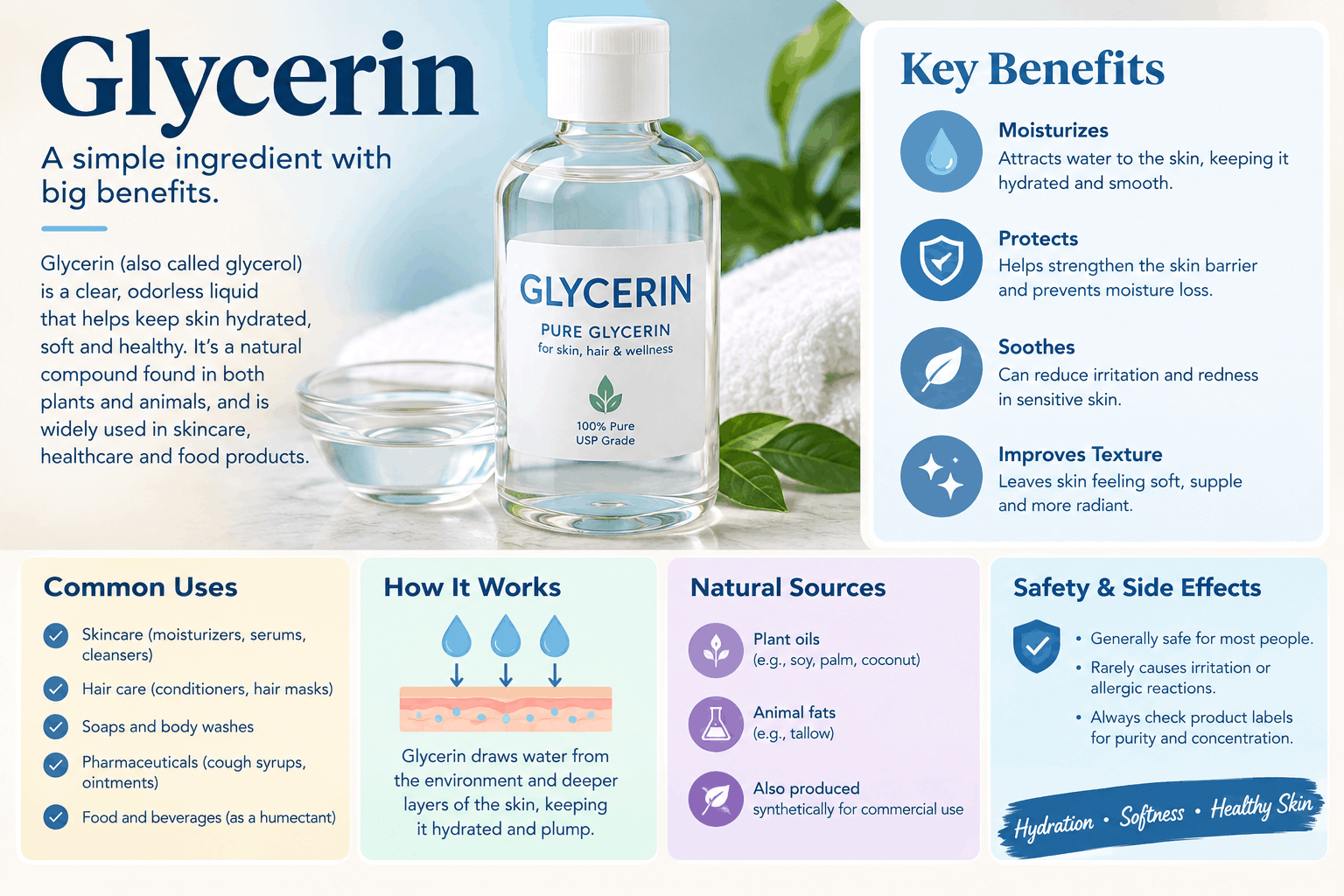
Glycerin is a versatile ingredient widely used in skin care, hair care, cosmetics, pharmaceuticals, and personal care products.
Also known as glycerol, It is a clear, colorless, odorless liquid with a naturally smooth texture. When applied appropriately, it can help support the skin’s moisture barrier and reduce the feeling of dryness.
What Is Glycerin?
Glycerin, or glycerol, is a type of alcohol compound that has strong water-attracting properties. In skin care, it is classified as a humectant.
Humectants attract water and help increase the water content of the outer layer of the skin.
How Does Glycerin Work?
Glycerin works primarily by attracting water to the skin’s outer layer. This can help make the skin feel softer, smoother, and more hydrated.
When combined with other moisturizing ingredients, It can become part of a broader approach to supporting the skin barrier.
Its effectiveness can depend on the overall formulation of a product rather than It alone.
Benefits of Glycerin for Skin
1. Helps Hydrate the Skin
One of the best-known benefits of glycerin is its ability to attract moisture. This makes it useful in products formulated for dry or dehydrated skin.
2. Supports the Skin Barrier
Healthy skin needs an effective barrier to help retain moisture and protect against environmental factors. It can support skin hydration and contribute to maintaining a healthy barrier.
3. Helps Soften Rough Skin
Regular use of glycerin-containing moisturizers may make dry, rough areas feel smoother and more comfortable.
4. May Reduce Dryness
It can help improve the appearance and feel of dry skin by increasing hydration in the outermost layer.
5. Suitable for Many Skin Types
However, the complete product formulation matters, especially for people with sensitive or acne-prone skin.
Glycerin for Dry Skin
Dry skin often lacks sufficient moisture and may feel tight, rough, flaky, or uncomfortable.
A moisturizer containing can help attract water to the outer layer of the skin.
Applying moisturizer after cleansing can help maintain hydration.
Glycerin for Oily Skin
Oily skin can still become dehydrated. Having excess oil does not necessarily mean that the skin contains enough water.
Lightweight products containing It can provide hydration without necessarily feeling heavy or greasy. People with oily or acne-prone skin may prefer formulations labeled non-comedogenic.
Glycerin for Sensitive Skin
Glycerin is generally considered a gentle moisturizing ingredient and is commonly included in products formulated for sensitive skin.
However, sensitive skin can react to many different ingredients. If you are trying a new It-containing product, applying a small amount to a limited area first can help identify potential irritation.
Glycerin for Lips
It can help improve the feel of dry lips when used as part of a properly formulated lip product.
Glycerin for Hair
It may be included in:
- Conditioners
- Hair masks
- Leave-in products
- Shampoos
- Styling products
Glycerin can help hair feel softer and more moisturized when used in an appropriate formulation.
Glycerin for Curly Hair
Curly hair can be particularly prone to dryness because its structure may make the movement of natural oils along the hair shaft more difficult.
It-containing products may help some people maintain moisture and softness. However, results can vary according to humidity, hair porosity, product formulation, and individual hair characteristics.
Glycerin in Skin Care Products
It can be found in many types of products, including:
- Facial moisturizers
- Body lotions
- Hand creams
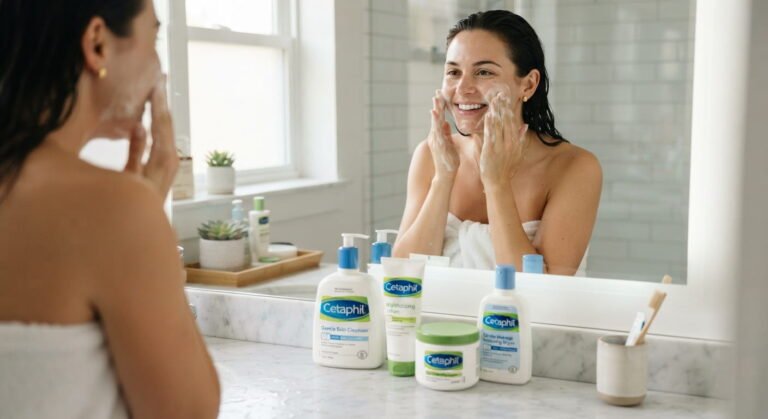
- Facial cleansers
- Serums
- Soaps
- Shaving products
- Lip balms
- Masks
Can You Apply Glycerin Directly to the Skin?
Pure or highly concentrated glycerin may feel sticky and is not necessarily the best choice for direct application.
For everyday use, a properly formulated moisturizer or skin care product containing It is generally more practical.
If using a DIY mixture, avoid applying unknown combinations of ingredients to irritated or damaged skin.
Glycerin and Acne-Prone Skin
It itself is primarily a moisturizing ingredient and is not an acne treatment.
However, maintaining adequate hydration can be useful for people with acne-prone skin, particularly when acne treatments cause dryness or irritation.
Choose products that are appropriate for acne-prone skin and avoid assuming that glycerin alone will clear acne.
Glycerin for Skin Brightening
It is not a skin-lightening agent. Its main role is hydration.
For concerns such as dark spots or uneven pigmentation, ingredients specifically intended for those concerns may be more appropriate.
Glycerin and Skin Barrier Health
The skin barrier helps keep moisture inside the skin and provides protection against external irritants.
Possible Side Effects of Glycerin
It is generally well tolerated when used in appropriately formulated products. However, irritation or sensitivity can occur with any cosmetic ingredient.
Possible reactions may include:
- Mild redness
- Itching
- Burning
- Irritation
- Rash
If significant irritation develops, discontinue the product and seek professional advice if symptoms persist.
How to Use It in a Skin Care Routine
If glycerin is included in your moisturizer or serum, it can be incorporated into a normal skin care routine.
Morning
- Cleanse gently.
- Apply a hydrating product if needed.
- Use moisturizer.
- Finish with broad-spectrum sunscreen.
Evening
- Remove makeup and sunscreen.
- Cleanse the skin.
- Apply a glycerin-containing hydrating product.
- Follow with moisturizer if needed.
The exact routine should be adjusted according to your skin type and other active ingredients.
Glycerin vs. Hyaluronic Acid
Both glycerin and hyaluronic acid are humectants, meaning they can help attract water.
However, they are chemically different ingredients and can work differently depending on the formulation.
Many skin care products contain both ingredients to provide hydration through complementary mechanisms.
Glycerin vs. Petroleum Jelly
Both perform different roles.
Glycerin is a humectant that helps attract water.
Petroleum jelly is an occlusive that helps reduce water loss from the skin.
Tips for Choosing a Glycerin Product
When choosing a It-containing product, consider:
- Your skin type
- The product’s complete ingredient list
- Whether the formula is fragrance-free if you have sensitive skin
- Whether it is suitable for acne-prone skin
- The texture you prefer
- The specific purpose of the product
A product containing It does not automatically make it suitable for every skin concern.
Final Thoughts
Glycerin is a widely used moisturizing ingredient valued for its ability to attract and retain water. As a humectant, it can help improve skin hydration, soften rough areas, and support the skin barrier.
However, It is primarily a hydrating ingredient rather than a treatment for conditions such as acne or pigmentation.
For the best results, choose a well-formulated product that matches your skin or hair needs. If you have persistent dryness, irritation, or another skin concern, a dermatologist can help identify the underlying cause and recommend an appropriate routine.
Frequently Asked Questions
1. What is glycerin?
Glycerin, also called glycerol, is a moisturizing ingredient that attracts water and is commonly used in skin care, hair care, cosmetics, and pharmaceutical products.
2. Is glycerin good for dry skin?
Yes. Glycerin can help attract moisture to the outer layer of the skin and is commonly used in products designed for dry skin.
3. Can glycerin be used on oily skin?
Yes. Lightweight glycerin-containing products can provide hydration without necessarily feeling greasy.
4. Does glycerin brighten the skin?
Glycerin primarily hydrates the skin. It may make skin look smoother and healthier but is not specifically a skin-lightening ingredient.
5. Is glycerin good for hair?
Glycerin is used in many hair care products because of its ability to attract moisture and may help hair feel softer and more hydrated.
6. Can glycerin cause acne?
Glycerin itself is not an acne-causing ingredient for most people. However, the complete formulation of a product matters, particularly for acne-prone skin.
7. Can I use glycerin every day?
Glycerin is commonly included in products intended for daily use. The appropriate frequency depends on the specific product and your skin’s needs.
8. Is glycerin safe for sensitive skin?
Glycerin is generally considered a gentle moisturizing ingredient, but sensitive individuals can react to any ingredient. A suitable formulation and patch testing may be helpful.
9. Is glycerin the same as hyaluronic acid?
No. Both are humectants that can attract water, but they are different ingredients with different chemical structures and properties.
10. Can glycerin be used directly on the face?
Glycerin is commonly used in formulated skin care products. Highly concentrated or pure glycerin may feel sticky, so a properly formulated moisturizer or serum is often a more practical option.