Pimple Patches: How They Work, Benefits, Uses and Results
Introduction
A single pimple can be surprisingly distracting, especially when it appears just before an important day. Many people instinctively touch, squeeze, or repeatedly check the spot in the mirror, but these habits can irritate the skin and sometimes make the blemish more noticeable.
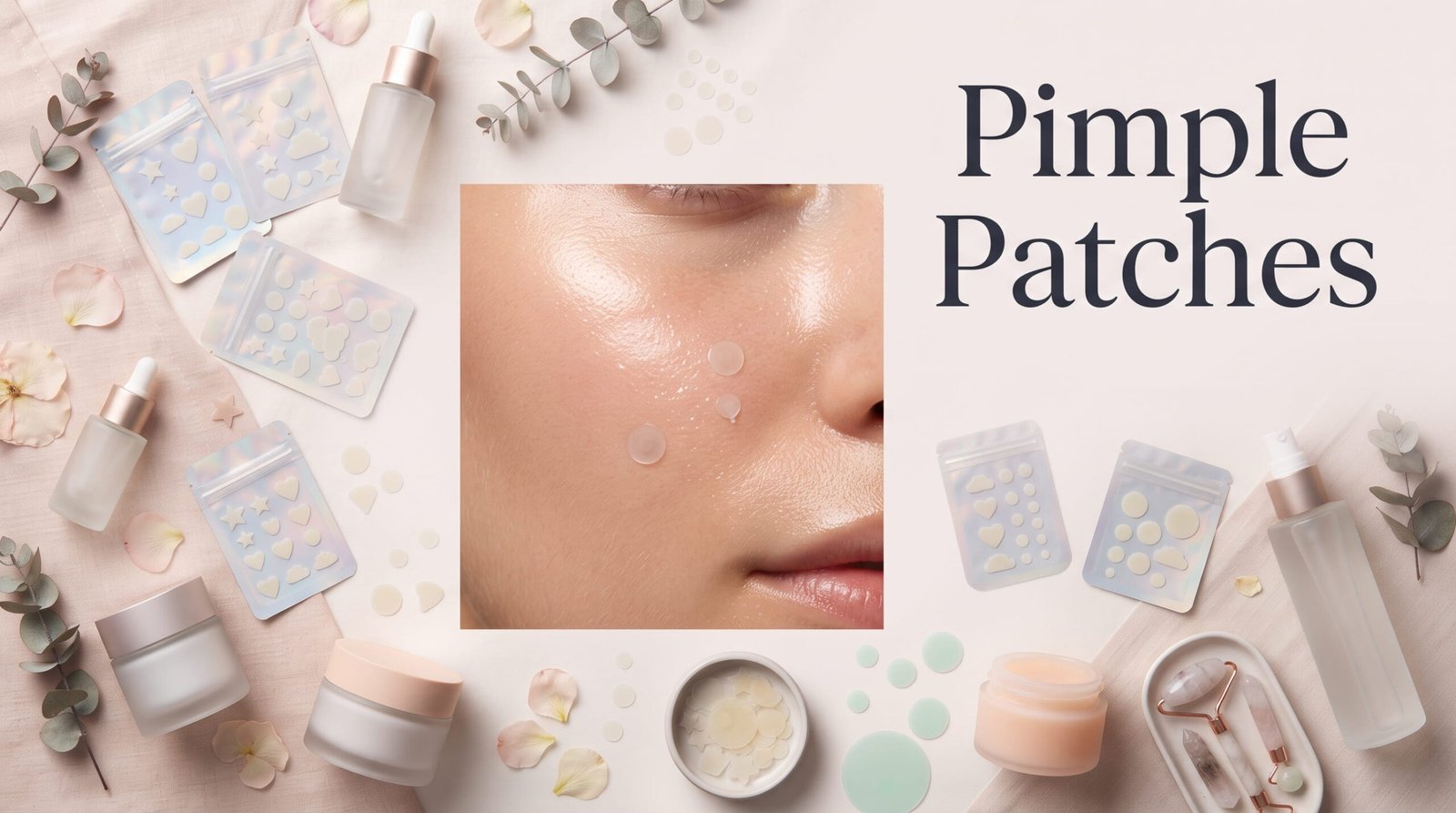
Pimple patches offer a simple alternative. These small adhesive patches are placed directly over individual blemishes and are designed to protect the area while supporting the skin’s healing process. Some patches mainly use hydrocolloid, while newer formulas may contain ingredients such as salicylic acid or other acne-focused ingredients.
Although pimple patches can be useful, they are not a universal treatment for every type of acne. Their effectiveness depends greatly on what kind of blemish you are dealing with.
What Are Pimple Patches?
Pimple patches are small adhesive skincare products designed to be placed over individual acne spots.
Traditional patches are commonly made with hydrocolloid, a material that can absorb fluid from certain surface-level pimples. Once applied, the patch creates a protective covering between the blemish and the outside environment.
Some modern patches are designed as more than simple hydrocolloid dressings. They may contain ingredients intended to address acne-related concerns, including:
- Salicylic acid
- Tea tree oil
- Niacinamide
- Centella-based ingredients
- Microneedle or dissolving-needle systems
- Other acne-focused compounds
The formulation varies from one product to another, so checking the ingredient list is important.
How Do Pimple Patches Work?
The mechanism depends on the type of patch.
Hydrocolloid Patches
Hydrocolloid absorbs moisture and fluid from a suitable surface-level blemish. As the patch absorbs material, it may become cloudy or develop a white appearance.
The patch also creates a physical barrier that can reduce touching, rubbing and picking.
Medicated Patches
Some patches contain active ingredients that are intended to address acne more directly.
For example, salicylic acid can help loosen dead skin cells and reduce clogged pores. However, concentrated acne ingredients can also irritate sensitive skin, particularly when used too frequently.
Microneedle Patches
Certain specialized patches use tiny projections designed to deliver ingredients closer to the surface of a blemish.
These products are different from ordinary hydrocolloid patches and should be used according to their specific instructions.
What Kind of Pimples Do Pimple Patches Work Best On?
Pimple patches tend to be most useful for surface-level pimples, particularly blemishes that have come to a head or contain fluid.
They may be less useful for deep, painful lesions underneath the skin.
Whiteheads
Hydrocolloid patches can be particularly useful for whiteheads because these blemishes may contain fluid that the material can absorb.
Small Pustules
Some superficial pustules may also respond well to a patch, especially when the main goal is protecting the spot from picking.
Opened Pimples
A patch may provide a protective covering after a blemish has been accidentally opened, provided the skin is cleaned appropriately and there are no signs of significant infection.
Deep Cystic Acne
Large, painful acne nodules or cysts usually do not respond dramatically to ordinary pimple patches because the inflammation is located deeper beneath the skin.
Persistent deep acne may require professional treatment.
Can Pimple Patches Make Acne Go Away Overnight?
A patch can sometimes make a superficial pimple look noticeably calmer by the following morning, but overnight results are not guaranteed.
If the blemish contains fluid, a hydrocolloid patch may absorb some of it and reduce the visible swelling.
However, acne develops through processes involving oil production, clogged follicles, inflammation and other biological factors. A patch cannot instantly reverse all of these processes.
It is better to view pimple patches as spot-care products, rather than overnight cures for acne.
Benefits of Pimple Patches
Pimple patches can offer several practical benefits.
They Discourage Picking
One of their biggest advantages is physical protection.
When a patch covers a blemish, it becomes harder to scratch or squeeze the area.
This can be particularly useful for people who frequently touch their face without realizing it.
They Protect the Blemish
The patch creates a barrier between the spot and environmental contact.
It can reduce friction from fingers, masks or other sources of irritation depending on where the pimple is located.
They Can Absorb Fluid
Hydrocolloid can absorb fluid from appropriate surface-level blemishes.
This may make the spot look flatter or less inflamed.
They Are Convenient
Pimple patches are easy to carry and can be incorporated into a simple skincare routine.
Some are almost transparent and can be worn during the day, while others are designed primarily for overnight use.
They Can Support Better Habits
Even when a patch does not dramatically change the acne itself, preventing repeated picking can be valuable.
How to Use Pimple Patches Correctly
Using a patch is straightforward, but small details can make a difference.
Step 1: Clean the Skin
Wash your face with a gentle cleanser and rinse thoroughly.
Step 2: Dry Completely
The skin should be dry before applying the patch. Excess moisturizer, oil or water can interfere with adhesion.
Step 3: Choose the Correct Size
Select a patch large enough to cover the entire blemish.
Step 4: Apply Directly
Place the patch over the pimple without applying additional skincare underneath unless the product instructions specifically allow it.
Step 5: Leave It in Place
Keep the patch on for the period recommended by the manufacturer.
Hydrocolloid patches are often worn for several hours, frequently overnight.
Step 6: Remove Gently
Peel the patch away slowly rather than pulling aggressively at the skin.
Should You Put a Pimple Patch on Before or After Moisturizer?
The patch generally works best on clean, completely dry skin.
Applying moisturizer or facial oil directly underneath can prevent the adhesive from sticking properly.
A practical routine is:
Cleanser → dry skin → pimple patch → moisturizer around the area if needed
If you are using a medicated patch, follow its individual instructions because formulations differ.
Can You Wear Pimple Patches During the Day?
Yes.
Some patches are designed to be discreet enough for daytime use. Transparent versions can be less noticeable on the skin.
Daytime use may be especially helpful when the main goal is preventing touching or picking.
If the patch becomes loose, dirty or visibly saturated, replace it according to the product directions.
Can You Sleep With a Pimple Patch On?
Many hydrocolloid patches are designed for overnight use.
Applying one before bed can protect the blemish from touching and allow the hydrocolloid material to work for several hours.
Always follow the recommended wear time on the package.
Are Pimple Patches Good for Sensitive Skin?
They can be, but not every patch is equally suitable for sensitive skin.
A simple hydrocolloid patch may contain fewer active ingredients than a medicated version.
People with easily irritated skin may want to be cautious with products containing multiple acids, essential oils or strong acne ingredients.
If burning, significant redness, itching or swelling develops, remove the patch and discontinue the product.
Can Pimple Patches Prevent Acne Scars?
They cannot guarantee that a scar will not develop.
However, patches may indirectly help by reducing the temptation to squeeze or repeatedly touch a blemish.
Picking acne can increase inflammation and raise the risk of prolonged discoloration or scarring.
Therefore, a patch can be helpful as part of a don’t-pick strategy, but it should not be considered a scar-prevention treatment by itself.
Do Pimple Patches Work on Blackheads?
Traditional hydrocolloid patches are not usually the best solution for blackheads.
A blackhead is a clogged pore containing oxidized material, rather than a fluid-filled surface lesion.
Ingredients such as salicylic acid may be more relevant to clogged pores, although persistent blackheads may require a broader acne routine.
Trying to physically extract blackheads with aggressive squeezing can irritate the skin.
Do Pimple Patches Work on Cystic Acne?
Ordinary pimple patches generally have limited ability to treat deep cystic acne.
Cystic or nodular lesions form deeper within the skin and can be painful.
A patch may still provide a protective barrier, but it is unlikely to resolve the underlying inflammation on its own.
Frequent deep acne should be evaluated by a dermatologist because early treatment can reduce the risk of long-lasting scars.
Hydrocolloid vs. Medicated Pimple Patches
These two categories serve somewhat different purposes.
| Feature | Hydrocolloid Patch | Medicated Patch |
| Main purpose | Absorb fluid and protect | Target acne with active ingredients |
| Best suited to | Surface-level blemishes | Certain active pimples or clogged areas |
| Picking protection | Excellent | Excellent |
| Active ingredients | Often minimal | Usually included |
| Sensitive-skin risk | Often lower | Depends on formula |
| Deep acne | Limited | Usually limited |
Neither type is automatically better. The appropriate option depends on the type of blemish and your skin’s tolerance.
Common Mistakes When Using Pimple Patches
Applying Them Over Dirty Skin
Oil, makeup and skincare residue can interfere with adhesion.
Putting Heavy Cream Under the Patch
Rich products can prevent the adhesive from gripping the skin.
Using One Patch for Too Long
Follow the manufacturer’s recommended wear time.
Expecting It to Treat All Acne
Patches are mainly spot treatments and are not a complete solution for widespread acne.
Popping the Pimple First
Squeezing can increase inflammation and damage surrounding tissue.
Using Too Many Active Ingredients
Combining a medicated patch with several strong acne products may increase irritation.
Pimple Patches vs. Acne Creams
Pimple patches and acne creams are not direct substitutes.
A patch is convenient for targeting a single visible blemish and protecting it from picking.
Acne medications such as retinoids, benzoyl peroxide or salicylic acid products may be more useful for managing broader acne patterns.
Someone with frequent breakouts may need a complete routine rather than relying on patches every time a new pimple appears.
When Should You See a Dermatologist?
Consider professional evaluation if you have:
- Frequent cystic or nodular acne
- Painful deep pimples
- Acne scars
- Persistent dark marks
- Widespread breakouts
- Acne that does not improve with basic skincare
- Breakouts that significantly affect confidence or daily life
A dermatologist can determine whether the acne is caused by ordinary clogged pores or whether another condition may be contributing.
How to Choose a Pimple Patch
When comparing products, consider:
Blemish Type
Hydrocolloid is generally more useful for superficial pimples, while specialized products may target other concerns.
Skin Sensitivity
If your skin reacts easily, a simpler formula may be preferable.
Patch Size
Choose a size that completely covers the blemish.
Day or Night Use
Clear daytime patches and thicker overnight versions serve different practical purposes.
Ingredients
Read the ingredient list rather than choosing a product simply because it is popular online.
Conclusion
Pimple patches can be a useful addition to a skincare routine, particularly when you are dealing with an individual surface-level blemish and want to stop yourself from touching or squeezing it.
Hydrocolloid patches can absorb fluid from appropriate pimples while providing a protective covering. Medicated and specialized patches offer additional approaches, but they may not be suitable for every skin type.
The key is having realistic expectations. A patch can support the management of a single blemish, but it does not replace an acne treatment plan when breakouts are frequent, deep or widespread.
If acne continues to appear regularly, especially in painful or scarring forms, consulting a dermatologist is a better long-term strategy than repeatedly treating individual spots.
Frequently Asked Questions
1. What are pimple patches used for?
They are designed to cover individual blemishes, protect them from touching and, in the case of hydrocolloid patches, absorb fluid from suitable surface-level pimples.
2. Can I leave a pimple patch on overnight?
Yes. Many hydrocolloid patches are specifically designed for overnight use. Follow the wear-time instructions provided with the product.
3. Do pimple patches really work?
They can be helpful for certain superficial pimples, particularly those containing fluid. Their effect is more limited on deep acne.
4. Can pimple patches remove acne scars?
No. They do not remove established acne scars. Their main benefit is spot protection, and avoiding picking may help reduce additional skin trauma.
5. Can I put moisturizer under a pimple patch?
It is usually better to apply the patch to clean, dry skin because moisturizer can interfere with adhesion.
6. Are pimple patches suitable for cystic acne?
Ordinary hydrocolloid patches generally have limited effect on deep cystic acne. Painful or recurrent cysts may require professional acne treatment.
7. Can pimple patches be used every day?
They can be used repeatedly according to the product’s instructions, but they should not replace a broader skincare or acne-treatment routine when frequent breakouts are present.
8. Can I wear a pimple patch with makeup?
Some thin patches are designed for daytime wear and can be relatively discreet. Makeup compatibility depends on the individual product.
9. Do pimple patches work on blackheads?
Traditional hydrocolloid patches are usually not very effective for blackheads because blackheads are clogged pores rather than fluid-filled surface pimples.
10. When should I stop using a pimple patch?
Stop using it if you develop significant burning, itching, swelling or worsening irritation. Persistent or severe acne should be assessed by a dermatologist.