Facial Steamer: Benefits, Uses, Types, and How to Use It Safely
Introduction
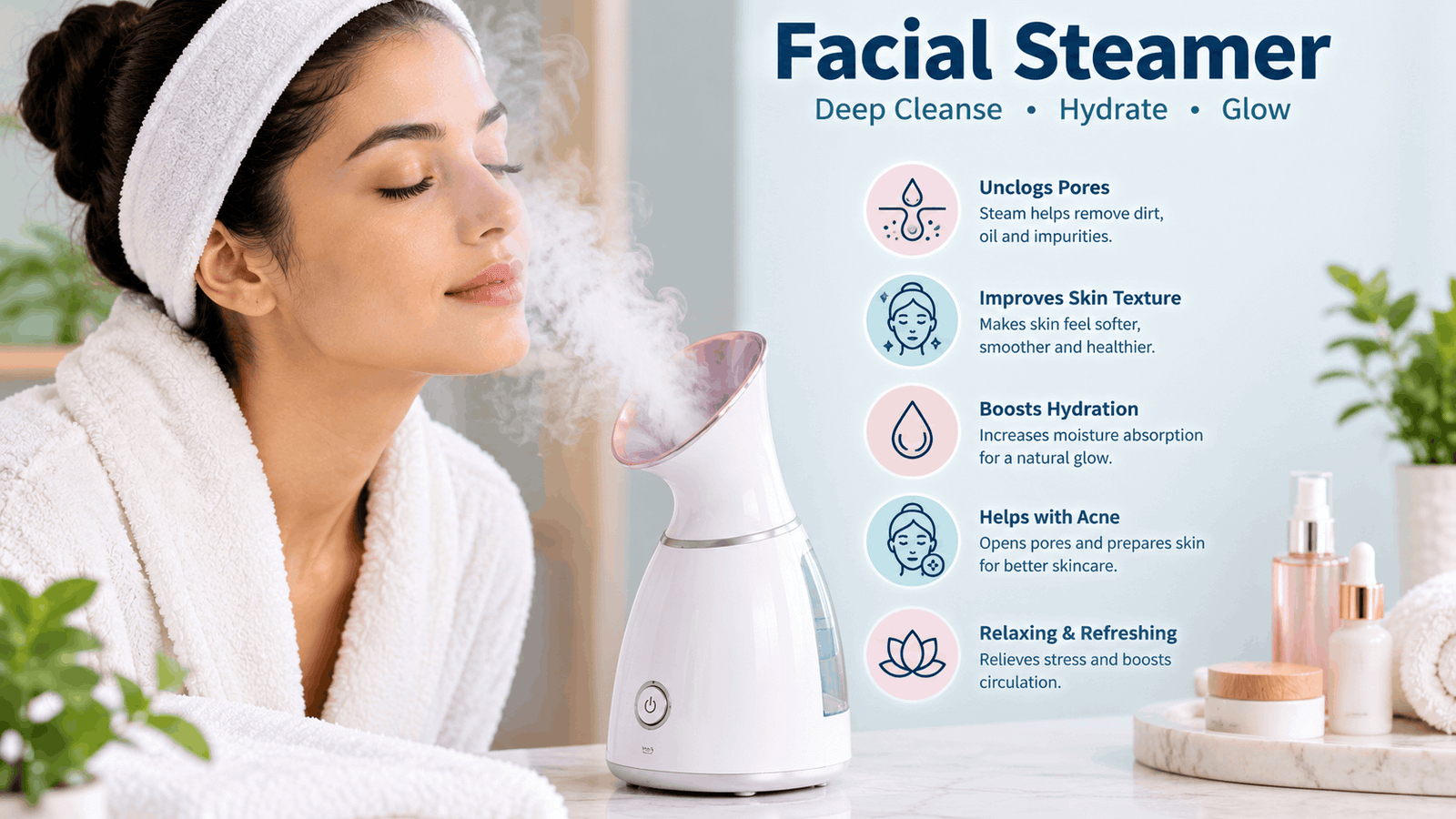
A facial steamer is a skincare device that releases warm water vapor toward the face. It is commonly used in home skincare routines and professional facials to provide a relaxing experience and soften the skin’s surface before cleansing or other treatments. Facial steamers come in different designs, from compact tabletop devices to professional equipment used in beauty salons and skincare clinics.
Although facial steaming can make the skin feel softer and temporarily improve hydration at the surface, it is important to understand what it can and cannot do. Steam does not permanently shrink pores, remove all blackheads, or cure acne. Excessive heat may also worsen redness, irritation, and certain skin conditions.
Choosing the right device and using it carefully can help you enjoy facial steaming while reducing the risk of burns and skin irritation.
What Is a Facial Steamer?
A facial steamer is an electronic skincare appliance that heats water and releases vapor. The vapor is directed toward the face for a short period, usually before cleansing or another skincare step.
Many modern devices use ultrasonic or other vapor-producing technologies to create a fine mist. Some models include adjustable steam settings, automatic shutoff features, or attachments designed for different uses.
Professional facial steamers may be used during facials to soften surface debris and prepare the skin for gentle cleansing. At home, people often use them as part of a relaxing skincare routine.
However, a facial steamer is not essential for healthy skin. A gentle cleanser, moisturizer, and daily sunscreen generally provide more important long-term benefits.
Benefits of Using a Facial Steamer
1. Temporarily Softens the Skin
Warm vapor can soften the outermost layer of the skin and make it feel more supple. This may be helpful before gentle cleansing, especially when the skin feels dry or rough.
The effect is temporary, and steaming does not replace a moisturizer or other treatments designed to support the skin barrier.
2. Helps Prepare Skin for Cleansing
Some people find that gentle steaming makes it easier to cleanse the skin comfortably. It may loosen surface oils and debris, allowing them to be removed during a normal cleansing routine.
However, steam does not deeply clean pores or remove all trapped oil. Use a mild cleanser rather than scrubbing aggressively after steaming.
3. Provides a Relaxing Skincare Experience
A short facial steaming session may feel soothing and can become a relaxing part of a self-care routine. The warmth may help some people feel comfortable after a long day.
The water should remain at a safe distance from the face, and the steam should never feel painfully hot.
4. May Temporarily Improve Surface Hydration
Water vapor can temporarily increase moisture at the skin’s surface. However, heat can also increase water loss from the skin, particularly when steaming lasts too long.
Applying a moisturizer after cleansing helps retain moisture and supports the skin barrier.
5. Can Complement a Professional Facial
In some professional treatments, a steamer is used before selected cleansing procedures. A trained skincare professional may decide whether it is appropriate based on the person’s skin type and condition.
Steaming is not necessary for every facial, and it should be avoided when heat or moisture may aggravate an existing skin problem.
Does a Facial Steamer Remove Blackheads?
A facial steamer may soften surface oils and debris, but it does not remove blackheads on its own. Blackheads form when a pore becomes clogged with oil and dead skin cells, and the material darkens after exposure to air.
For blackhead management, ingredients such as salicylic acid may be more useful because they help exfoliate inside the pore. The appropriate product depends on skin sensitivity and other skincare treatments.
Avoid squeezing blackheads forcefully after steaming. This can cause irritation, broken blood vessels, scarring, or infection. Persistent clogged pores may benefit from advice from a dermatologist.
Can a Facial Steamer Help With Acne?
Facial steaming is not a proven treatment for acne. Although warm vapor may temporarily soften surface debris, it does not address the underlying processes that contribute to acne, including excess oil production, clogged follicles, inflammation, and acne-associated bacteria.
For some people, heat and humidity can make facial redness or inflammatory acne feel worse.
Evidence-based acne treatments may include benzoyl peroxide, topical retinoids, salicylic acid, or prescription medications, depending on the type and severity of acne. Introduce active ingredients gradually and seek professional advice if acne is painful, persistent, or causing scars.
If you have active inflamed pimples, avoid using steam as a way to force them to open.
Types of Facial Steamers
Different models offer different features and levels of convenience.
1. Nano-Ionic Facial Steamer
Nano-ionic models are marketed as producing very fine water droplets or mist. Manufacturers may claim that the mist penetrates the skin more effectively, but strong evidence that these devices provide superior skincare results is limited.
Choose a device based on safety, reliability, and ease of cleaning rather than marketing claims alone.
2. Traditional Facial Steamer
Traditional models heat water and direct the resulting vapor toward the face. They are available for home use and in professional settings.
These devices should be used cautiously because hot vapor can cause burns if the face is too close to the outlet.
3. Portable Facial Steamer
Portable devices are small and designed for convenience. Some produce a fine mist rather than a strong stream of hot vapor.
Check the manufacturer’s instructions to determine whether the product is intended for facial use and how it should be cleaned.
4. Professional Facial Steamer
Professional devices may include adjustable arms, timers, and controls for use during salon or clinic treatments.
Their use should be guided by appropriate training and a skin assessment. Professional equipment does not eliminate the risk of burns or irritation.
5. Facial Steamer With a Humidifying Function
Some devices combine facial misting with humidifying features. These functions are not necessarily equivalent to a traditional facial steamer, so follow the product’s intended use rather than assuming that every misting device is suitable for direct facial treatment.
How to Choose the Best Facial Steamer
When comparing devices, focus on practical safety features rather than the number of settings.
Adjustable output: A controllable setting may help you avoid excessive heat or an uncomfortable stream of vapor.
Automatic shutoff: This feature can reduce the risk of overheating when the water reservoir becomes empty.
Stable design: A sturdy base and secure water tank help reduce the chance of spills.
Easy cleaning: Mineral deposits and standing water can affect performance and hygiene. Choose a device that can be cleaned according to the manufacturer’s instructions.
Appropriate water requirements: Some devices specify distilled or purified water. Follow the manual to avoid damaging the appliance.
Reliable manufacturer: Look for clear safety instructions, warranty information, and accessible customer support.
Convenient size: A compact device may be easier to store, while professional models may be more suitable for trained skincare providers.
Avoid choosing a device solely because it claims to detoxify skin, eliminate acne, or permanently shrink pores. Such claims should be viewed cautiously.
How to Use a Facial Steamer at Home
If your skin tolerates gentle warmth and your device is designed for facial use, follow these general steps.
Step 1: Cleanse Your Face
Wash your face with a gentle cleanser to remove makeup, sunscreen, and surface impurities. Pat your skin dry without rubbing.
Step 2: Prepare the Device
Place the steamer on a stable, heat-resistant surface. Fill it with the type and amount of water specified in the manufacturer’s instructions.
Never add essential oils, fragrances, or other substances to the reservoir unless the manufacturer specifically permits them.
Step 3: Position Yourself Safely
Follow the manufacturer’s recommended distance. Keep your face well away from the steam outlet and never lean directly over boiling water.
The vapor should feel comfortably warm, not hot or painful. If your skin starts to sting or become very red, stop immediately.
Step 4: Keep the Session Short
Use the device only for the duration recommended by its manufacturer. If you are new to facial steaming, choose a conservative session and stop if you experience discomfort.
Longer sessions are not necessarily more effective and can increase irritation and moisture loss.
Step 5: Apply Suitable Skincare Products
Afterward, gently pat the skin dry and apply a moisturizer suited to your skin type. During the daytime, finish with broad-spectrum sunscreen.
Avoid combining steaming with aggressive scrubs, strong exfoliating treatments, or irritating products in the same session.
Step 6: Clean the Device
Switch off and unplug the appliance, allow it to cool, and empty the reservoir as directed. Clean and dry it according to the manufacturer’s instructions.
Do not handle or move a hot device while it contains hot water.
How Often Should You Use a Facial Steamer?
There is no medically established schedule that works for everyone, and regular steaming is not necessary for healthy skin.
If you choose to use a facial steamer, follow the device instructions and pay attention to how your skin responds. Frequent sessions may increase dryness, redness, or irritation, particularly in sensitive skin.
Stop using the device if your skin becomes persistently uncomfortable. People with skin conditions that react to heat should consult a dermatologist before trying facial steaming.
Is a Facial Steamer Suitable for Every Skin Type?
Dry Skin
Warm vapor may temporarily soften dry skin, but excessive heat can worsen dryness. If you choose to steam, keep the exposure brief and apply a moisturizer afterward.
A consistent routine with gentle cleansing and barrier-supporting moisturizers is generally more important than steaming.
Oily Skin
People with oily skin may enjoy the temporary softening effect, but steam does not regulate oil production. A suitable cleanser and non-comedogenic skincare products are more useful for ongoing oil management.
Combination Skin
Combination skin includes areas with different levels of oiliness and dryness. A gentle approach is important because heat may affect dry areas differently from oily areas.
Sensitive Skin
People with sensitive skin may experience stinging, flushing, or irritation from heat. Avoid facial steaming if it consistently triggers symptoms.
Acne-Prone Skin
Steaming does not cure acne and may worsen redness in some people. Consider established acne treatments rather than relying on heat to clear blocked pores.
Mature Skin
Facial steaming may temporarily soften the skin’s surface, but it does not reverse wrinkles or stimulate clinically meaningful collagen production through ordinary home use. Moisturizer and sunscreen are more reliable parts of a basic skin-aging routine.
Who Should Avoid Facial Steaming?
Facial steaming may not be appropriate for people with certain skin conditions or a history of heat sensitivity.
Consider avoiding it or seeking medical advice first if you have:
- Rosacea or frequent facial flushing.
- Eczema or an impaired skin barrier on the face.
- Active irritation, sunburn, or inflamed skin.
- Broken capillaries that worsen with heat.
- A condition that causes reduced sensation or increases burn risk.
- A tendency to develop symptoms when exposed to hot or humid environments.
Children should not use hot-steam facial devices unsupervised. People with very sensitive skin should not assume that a lower setting is automatically safe.
Common Mistakes to Avoid
Holding Your Face Too Close
Steam can cause burns. Always follow the manufacturer’s distance instructions and never position your face directly over boiling water.
Steaming for Too Long
Extended exposure can increase redness, dryness, and irritation. More steam does not mean better results.
Using Steam to Force Out Blackheads
Trying to squeeze pores after steaming may damage the skin. Use appropriate skincare ingredients or seek professional extraction when necessary.
Adding Essential Oils Without Checking Instructions
Essential oils can irritate the skin and may damage devices that are not designed for them. Only use additives if the manufacturer specifically permits them.
Skipping Moisturizer
Even if the skin initially feels hydrated, moisture can be lost afterward. Apply a suitable moisturizer to help maintain skin comfort.
Ignoring Persistent Redness
Redness that continues after a session may indicate irritation or heat injury. Stop steaming and seek medical advice if symptoms are significant, persistent, or accompanied by blistering.
Facial Steamer vs. Facial Sauna
The terms facial steamer and facial sauna are sometimes used interchangeably. Both may expose the face to warm vapor, but the design and intensity can vary between products.
A facial steamer usually directs vapor from a dedicated outlet, while a facial sauna often uses a bowl-like or enclosed structure to create a warm, humid environment around the face.
Neither method is essential for healthy skin, and both carry a risk of heat-related irritation or burns. Avoid leaning over bowls of boiling water, as spills can cause serious scald injuries.
Conclusion
A facial steamer can be an optional addition to a skincare routine for people who enjoy the temporary softening and relaxing effects of warm vapor. It may help prepare the skin for gentle cleansing, but it does not permanently shrink pores, eliminate blackheads, cure acne, or replace evidence-based skincare.
The safest approach is to use a device specifically designed for facial use, follow its instructions, avoid excessive heat, and moisturize afterward. People with rosacea, eczema, sensitive skin, or other heat-triggered conditions may need to avoid steaming.
For long-term skin health, focus on gentle cleansing, appropriate moisturization, daily sun protection, and treatments tailored to your skin’s needs.
Frequently Asked Questions
1. What does a facial steamer do?
A facial steamer releases warm water vapor toward the face. It can temporarily soften the skin’s surface and provide a relaxing experience, but it is not essential for a healthy skincare routine.
2. Does facial steaming open pores?
Pores do not open and close like doors. Warm vapor may soften surface oils and debris, but it does not permanently enlarge or shrink pores.
3. Is a facial steamer good for acne?
Not necessarily. Steam does not treat the underlying causes of acne and may worsen redness or inflammation in some people. Evidence-based acne treatments are generally more useful.
4. Can facial steaming remove blackheads?
Steaming may soften surface debris but does not remove blackheads by itself. Ingredients such as salicylic acid may help manage clogged pores when used appropriately.
5. How often should I use a facial steamer?
There is no universal recommended frequency. Follow the manufacturer’s instructions, avoid prolonged exposure, and stop if you notice dryness, redness, or irritation.
6. Should I wash my face before or after steaming?
Gentle cleansing before steaming helps remove makeup and surface impurities. Afterward, pat the skin dry and apply a suitable moisturizer.
7. Can I add essential oils to my facial steamer?
Only if the manufacturer specifically states that the device supports them. Essential oils may irritate the skin or damage equipment that is not designed for additives.
8. Is a facial steamer suitable for sensitive skin?
It may not be. Heat can trigger redness, stinging, or irritation. People with sensitive skin, rosacea, or eczema should be particularly cautious and may need to avoid steaming.
9. Does a facial steamer help with wrinkles?
There is insufficient evidence that ordinary home facial steaming meaningfully reduces wrinkles or increases collagen production. Sunscreen, moisturizers, and appropriate skincare treatments are more useful for long-term skin care.
10. Is a facial steamer better than steaming over a bowl of hot water?
A purpose-built device may offer more controlled use when operated correctly, but it can still cause burns. Avoid leaning over boiling water because spills and steam can cause serious injuries.