Brow Lamination: Benefits, Process, Aftercare, and What to Expect
Well-shaped eyebrows can make the entire face look more polished, but not everyone naturally has brows that stay in the desired direction. Brow lamination has become a popular beauty treatment for creating fuller-looking, lifted, and neatly arranged eyebrows without permanent changes.
The treatment works by temporarily relaxing and reshaping the brow hairs so they can be brushed into a more uniform position. The result can range from a soft, natural finish to a bold, brushed-up appearance depending on the technique and styling.
If you’re considering brow lamination, understanding how the procedure works, how long the results last, possible risks, and proper aftercare can help you decide whether it suits your brows.
What Is Brow Lamination?
Brow lamination is a semi-permanent eyebrow styling treatment that changes the direction in which brow hairs sit.
A professional applies specialized solutions that soften and reshape the hair, followed by products that help set the brows into their new position.
Unlike microblading, brow lamination does not create pigment beneath the skin. It works with your existing eyebrow hairs.
How Does Brow Lamination Work?
A typical brow lamination appointment involves several stages.
1. Brow Preparation
The eyebrow area is cleaned to remove makeup, oil, and skincare residue.
2. Lifting Solution
A professional applies a chemical solution designed to soften the brow hairs so they can be repositioned.
3. Brow Shaping
The hairs are brushed into the desired direction. This is where the final style begins to take shape.
4. Setting Solution
Another solution is applied to help the hairs hold their new position.
5. Conditioning
A moisturizing or conditioning product may be applied afterward to help reduce dryness.
6. Optional Tinting
Some salons combine brow lamination with eyebrow tinting. Tinting adds color, while lamination changes the direction and appearance of the hairs.
What Does Brow Lamination Look Like?
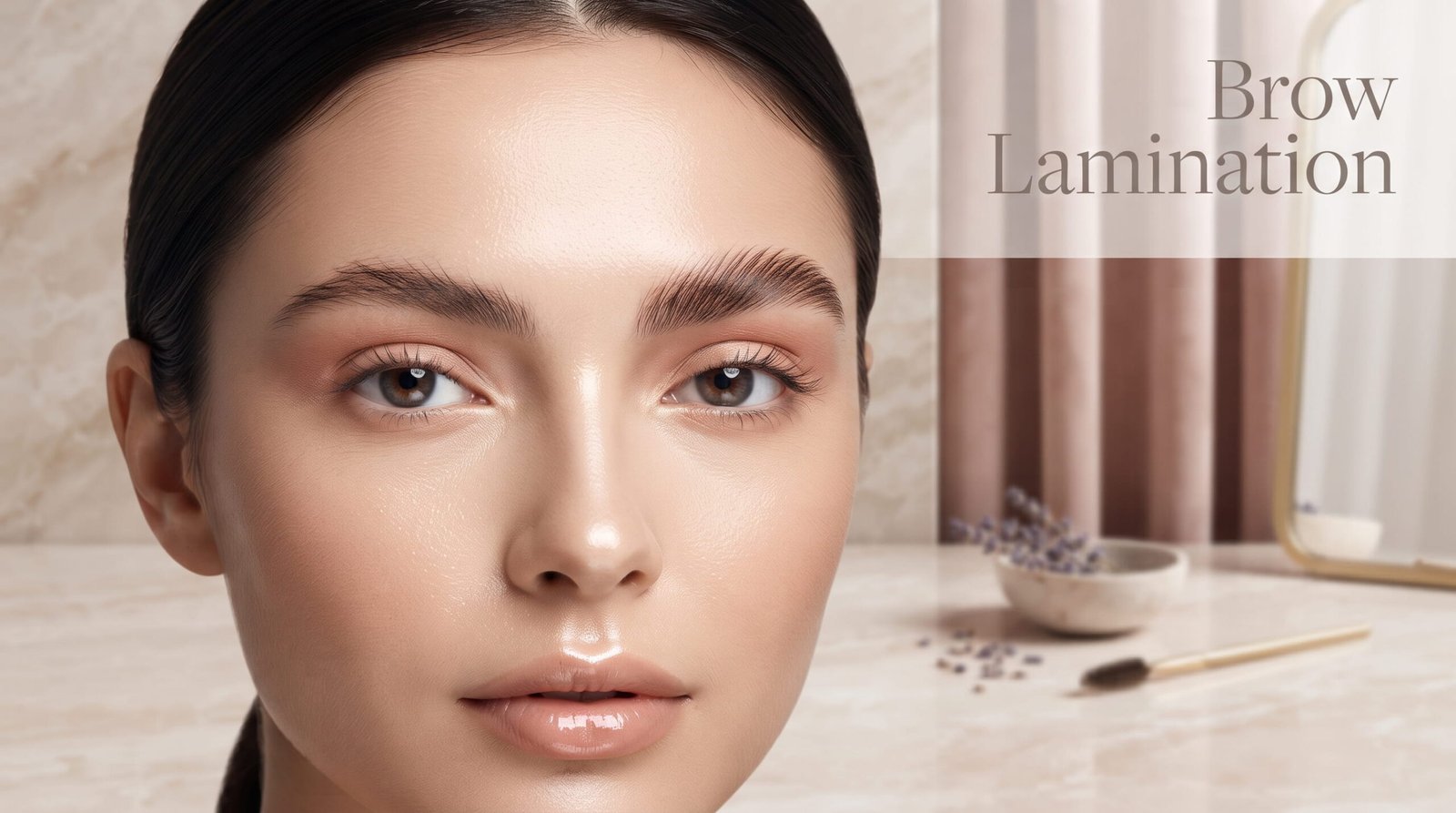
The finished appearance depends on your natural brows and the styling technique.
A laminated brow can appear:
- Fuller
- More defined
- Fluffier
- More lifted
- More symmetrical
- More groomed
People with naturally thick brows may achieve a dramatic brushed-up effect, while those with sparse brows may get a more structured appearance but cannot create hair where none exists.
Brow Lamination Before and After
The difference is mainly in hair direction and definition.
Before treatment, eyebrow hairs may point in different directions or appear difficult to control. After lamination, they are brushed into a more consistent pattern.
The treatment can make existing hairs appear more noticeable because they are positioned upward or outward rather than lying flat.
Results vary considerably depending on natural hair density, length, growth pattern, and the technician’s technique.
Benefits of Brow Lamination
Creates a Fuller-Looking Appearance
Repositioning individual hairs can make the brows look more substantial without adding artificial hair.
Helps Control Unruly Hairs
If your eyebrow hairs grow in several directions, lamination can temporarily make them easier to style.
Gives a Lifted Look
Brushing the hairs upward can create a more open and defined brow appearance.
Lowers Daily Styling Time
After the treatment, some people find that they need less brow gel or daily brushing.
No Need for Permanent Pigment
Unlike microblading, brow lamination doesn’t involve tattooing or implanting pigment into the skin.
Who Is Brow Lamination Best For?
Brow lamination can work particularly well for people who have:
- Medium to thick brow hairs
- Long eyebrow hairs
- Unruly brows
- Downward-growing hairs
- Brows that lose their shape during the day
- A preference for a fluffy or brushed-up look
It can also be used on relatively fine brows, although the result may be more subtle.
Can Brow Lamination Make Sparse Brows Look Fuller?
It can create the appearance of fuller brows by repositioning existing hairs.
However, lamination cannot increase the number of eyebrow hairs. If significant hair loss or very sparse brows is the concern, another approach may be more appropriate.
Sudden eyebrow thinning should also be discussed with a dermatologist because hair loss can sometimes be associated with underlying skin or medical conditions.
Brow Lamination vs Microblading
These treatments are quite different.
Brow lamination: Reshapes existing eyebrow hairs.
Microblading: Uses pigment implanted into the skin to create hair-like strokes.
Lamination is temporary and does not add pigment beneath the skin. Microblading is a form of cosmetic tattooing and requires different considerations.
Brow Lamination vs Brow Tinting
Tinting and lamination can be performed separately or together.
Brow tinting changes the color of the brow hairs.
Brow lamination changes their direction and creates a styled appearance.
Someone with naturally light brows may prefer tinting, while someone with thick but unruly brows may benefit more from lamination.
How Long Does Brow Lamination Last?
Results commonly last for several weeks, although the exact duration varies.
Factors that can influence longevity include:
- Natural hair growth cycle
- Hair texture
- Skincare routine
- Exposure to water
- Oils and cosmetic products
- Treatment technique
- Aftercare
As new brow hairs grow and treated hairs gradually return toward their natural pattern, the laminated effect fades.
Is Brow Lamination Safe?
When performed correctly by a trained professional using suitable products, brow lamination can be well tolerated.
However, the treatment involves chemical solutions being used close to the eyes, so irritation and allergic reactions are possible.
Improper application, excessive processing time, or unsuitable products can increase the risk of brow-hair damage or skin irritation.
Possible Side Effects
Temporary side effects may include:
- Redness
- Mild irritation
- Itching
- Dryness
- Skin sensitivity
- Brow-hair dryness or brittleness
More serious irritation or an allergic reaction is less common but requires attention.
Because the treatment occurs close to the eyes, eye exposure should be avoided.
Who Should Avoid Brow Lamination?
It may be better to postpone brow lamination if the skin around the eyebrows is:
- Irritated
- Sunburned
- Broken
- Inflamed
- Recently exfoliated
- Experiencing an active rash
People with known allergies to ingredients used in brow products should tell the professional beforehand.
A patch test may be recommended according to the product manufacturer’s instructions and local salon practices.
Brow Lamination Aftercare
Aftercare can help maintain the result and minimize irritation.
Your technician may recommend keeping the brows away from excessive moisture for an initial period after treatment.
Other useful habits include:
- Avoid rubbing the eyebrow area.
- Don’t aggressively brush the hairs.
- Avoid strong exfoliants around the brows.
- Use gentle skincare near the treated area.
- Follow the technician’s specific product instructions.
- Condition the brow hairs if recommended.
Aftercare instructions can vary depending on the products used, so follow the professional’s guidance.
Can You Wear Makeup After Brow Lamination?
It’s generally sensible to avoid immediately applying unnecessary makeup or skincare products to freshly treated brows.
Once the recommended initial aftercare period has passed, brow makeup can usually be incorporated into your routine according to your technician’s instructions.
A clear brow gel can also be used when you want additional hold between appointments.
Can Brow Lamination Damage Eyebrows?
Repeated chemical processing may contribute to dryness or brittleness, particularly when treatments are performed too frequently or incorrectly.
If your brow hairs become noticeably dry, weak, or break easily, give them time to recover before another chemical treatment.
Spacing appointments appropriately and choosing a trained professional can help reduce unnecessary damage.
How Often Should You Get Brow Lamination?
Because eyebrow hairs need time to recover and grow naturally, brow lamination shouldn’t be repeated excessively.
Many professionals recommend waiting several weeks between treatments, with the exact timing depending on the condition of your brows and the product system being used.
Your technician can recommend an appropriate schedule based on your hair texture and previous treatments.
Can You Laminate Brows at Home?
Home brow-lamination kits are available, but DIY treatment carries additional risks.
The products are chemical formulations being used close to the eyes and on delicate facial skin. Incorrect timing or application can cause irritation, chemical burns, or hair damage.
Professional treatment is generally the safer choice, particularly for first-time users.
How Much Does Brow Lamination Cost?
The cost varies widely depending on location, salon, technician experience, and whether tinting or shaping is included.
Some salons offer brow lamination as part of a package that includes waxing, threading, or tinting.
Before booking, ask exactly what the quoted price includes.
How to Choose a Brow Lamination Professional
Look for someone who:
- Has appropriate training
- Uses reputable products
- Maintains good hygiene
- Explains the procedure clearly
- Checks for allergies or sensitivities
- Shows examples of their work
- Gives detailed aftercare instructions
Be cautious of unusually cheap treatments when the provider cannot explain their products, training, or hygiene practices.
How to Get a Natural Brow Lamination Look
Lamination doesn’t have to mean extremely high, stiff-looking brows.
For a softer appearance, ask for:
- Moderate lift
- Natural direction
- Less dramatic separation
- A shape that follows your facial features
- Minimal tint if color is being added
The goal should be to enhance your natural brow pattern rather than completely overpower it.
Brow Lamination for Different Brow Types
Thick Brows
Thick brows often show a dramatic difference because there are more hairs to reposition.
Fine Brows
Lamination can improve direction and definition, but it cannot add density where hair is absent.
Curly Brows
A professional can sometimes use lamination to make irregular growth patterns appear more organized.
Long Brows
Long hairs can be especially suitable for creating a fluffy, lifted appearance.
Common Brow Lamination Mistakes
Avoid:
- Laminating damaged brows
- Repeating treatments too frequently
- Ignoring patch-test recommendations
- Using unsuitable home products
- Rubbing freshly treated brows
- Applying harsh exfoliants immediately afterward
- Choosing an overly dramatic shape without considering facial proportions
A good brow treatment should complement your face rather than simply follow the strongest social-media trend.
Conclusion
Brow lamination is a temporary styling treatment that reshapes existing eyebrow hairs to create a fuller, lifted, and more organized appearance. It can be especially useful for thick, long, or unruly brows that are difficult to control.
The treatment doesn’t permanently alter the skin and doesn’t add new hair, which makes it different from procedures such as microblading. Results typically fade gradually as the treated hairs grow and return toward their natural pattern.
For the best outcome, choose a trained professional, follow appropriate aftercare, and give your brows enough time between chemical treatments. If you have sensitive or irritated skin around the eyebrows, consider postponing treatment until the area has recovered.
10 Frequently Asked Questions About Brow Lamination
1. What is brow lamination?
Brow lamination is a semi-permanent eyebrow treatment that softens and reshapes brow hairs so they can be styled in a lifted or more uniform direction.
2. How long does brow lamination last?
Results commonly last several weeks, although longevity varies according to hair growth, aftercare, and individual brow characteristics.
3. Does brow lamination make brows look thicker?
It can make existing hairs appear fuller by repositioning them, but it cannot create new eyebrow hairs.
4. Is brow lamination the same as microblading?
No. Lamination reshapes existing hair, while microblading deposits cosmetic pigment into the skin.
5. Can you combine brow lamination and tinting?
Yes. Many salons offer both treatments together. Lamination changes hair direction while tinting adds color.
6. Does brow lamination hurt?
The procedure is generally not considered painful, although some people may experience temporary tingling or skin sensitivity.
7. Can brow lamination damage eyebrow hair?
Repeated or incorrectly performed chemical treatments can contribute to dryness or brittleness. Proper technique and adequate spacing between treatments are important.
8. Can I laminate my eyebrows at home?
Home kits exist, but DIY chemical treatments around the eyes carry risks. Professional treatment is generally a safer option.
9. How often should brow lamination be done?
It should not be repeated too frequently. Allow treated hairs time to recover and follow the recommended interval from your brow professional.
10. What should I do if my skin reacts after brow lamination?
Stop using potentially irritating products around the area and seek medical advice if irritation is severe, persistent, spreading, or associated with swelling or eye symptoms.