Ombre Eyebrows: Benefits, Procedure and Aftercare
Introduction
Well-shaped eyebrows can make the face look more balanced and polished. However, filling in sparse areas with pencils, powders, or gels every day can take time. Ombre eyebrows offer an alternative for people who want fuller-looking brows with a soft, makeup-inspired finish.
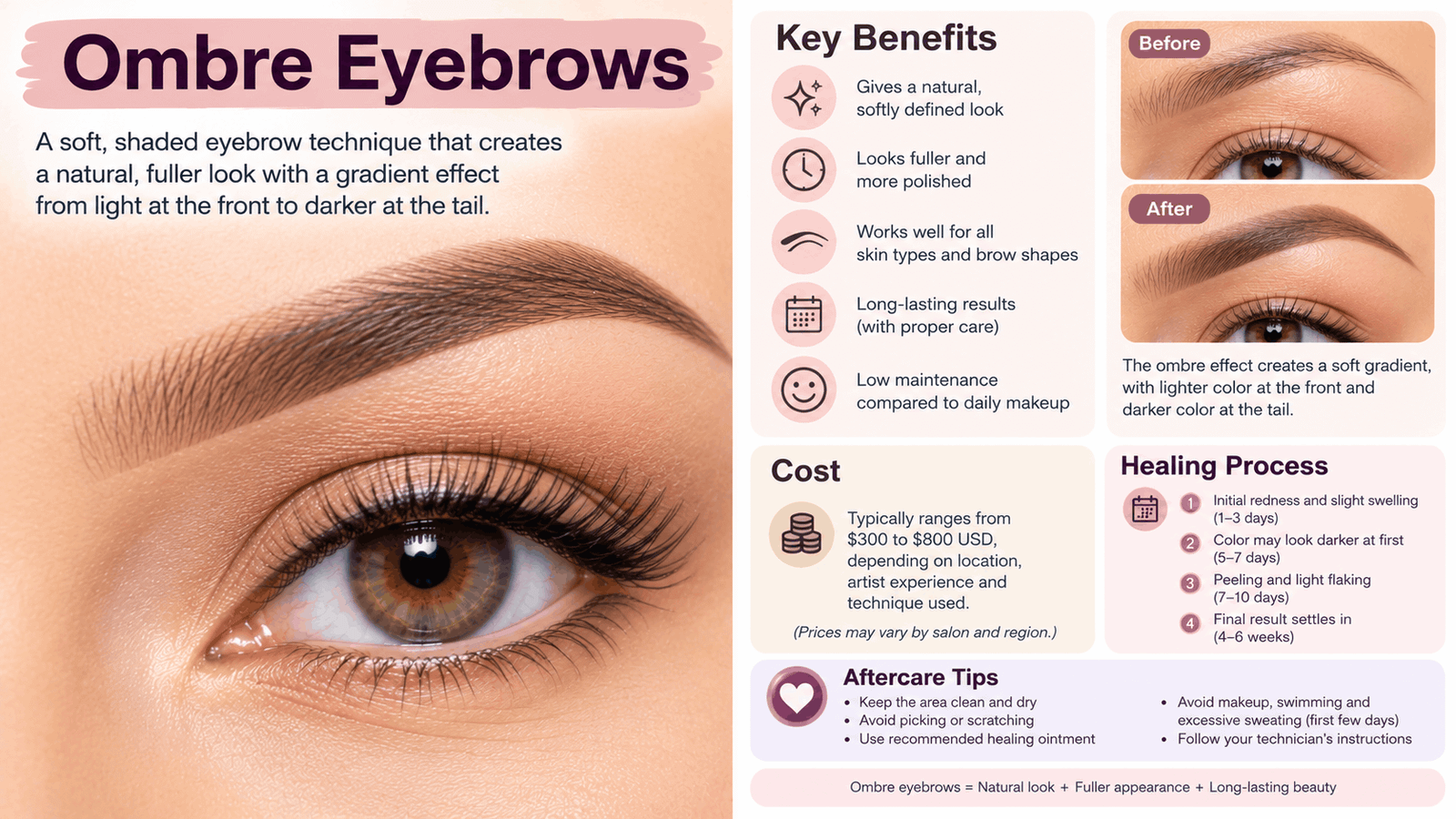
This semi-permanent cosmetic technique creates a gradual color effect, with a lighter front and a more defined tail. The result can look subtle and natural or more dramatic, depending on the chosen shape and pigment intensity.
Before booking an appointment, it is helpful to understand how the treatment works, what healing involves, how long the results may last, and which precautions can help protect your skin.
What Are Ombre Eyebrows?
Ombre eyebrows, often called ombre powder brows, are created by placing cosmetic pigment into the upper layers of the skin using a specialized tattooing device. The artist builds up tiny dots of pigment to produce a soft, shaded appearance similar to brow powder.
The front of the brow is generally kept lighter, while the arch and tail become gradually darker and more defined. This blending effect helps avoid the solid, sharply outlined appearance that some people dislike.
Although the treatment is often described as semi-permanent makeup, it is a form of cosmetic tattooing. The pigment fades over time, but it may not disappear completely, and removal can be difficult.
How Does the Ombre Technique Work?
The procedure usually begins with a consultation. The brow artist discusses your preferred style, examines your natural brow hair, and considers your facial proportions and skin characteristics.
The general process includes:
- Brow mapping: The artist measures and outlines the brows to create a balanced shape.
- Color selection: A pigment shade is selected to complement your natural coloring and desired result.
- Skin preparation: The treatment area is cleaned, and a topical numbing product may be used when appropriate.
- Pigment application: A cosmetic tattoo machine deposits pigment in small, controlled layers.
- Final assessment: The artist checks the shape and shading, then provides individualized aftercare instructions.
The appointment length varies by practitioner and the complexity of the design. A follow-up session may be recommended after the initial healing period to assess pigment retention and refine the result.
Benefits of Ombre Powder Brows
1. A Soft, Blended Finish
The gradual transition from a lighter brow front to a darker tail creates a powder-like effect. This can provide definition without making the eyebrows appear like one solid block of color.
2. Fuller-Looking Brows
People with naturally sparse, uneven, or lightly colored eyebrows may appreciate the added appearance of density. The technique creates shading rather than relying entirely on individual hair-like strokes.
3. Less Daily Makeup
Once the skin has healed, many people find they need less time to fill and shape their brows each morning. Some may still prefer to use brow gel or pencil for additional definition.
4. Customizable Shape and Color
The shape, arch, and intensity can be adjusted to suit different facial features and personal preferences. A skilled practitioner should discuss realistic options rather than promising identical results for every client.
5. Suitable for Different Makeup Styles
The finish can be designed to look understated or more defined. A lighter front and softly blended edges generally create a gentler effect, while deeper shading produces a bolder makeup-inspired appearance.
6. Gradual Fading
Unlike a daily brow product, the pigment remains in the skin for an extended period. It gradually fades, although the speed and pattern of fading vary considerably from person to person.
Ombre Brows vs. Microblading
Both treatments enhance the appearance of eyebrows, but they create different visual effects.
| Feature | Ombre powder brows | Microblading |
| Main effect | Soft, shaded finish | Fine strokes resembling brow hairs |
| Technique | Cosmetic tattoo machine | Handheld blade-like tool |
| Appearance | Similar to brow powder | Designed to imitate individual hairs |
| Best suited for | People who prefer filled-in definition | People seeking a hair-stroke effect |
| Healing and fading | Varies by skin and aftercare | Varies by skin and aftercare |
Neither technique is automatically better for everyone. Your natural brow hair, skin condition, medical history, and desired result should guide the choice. Some practitioners offer combination techniques, but these also require careful assessment.
Who May Consider This Treatment?
Ombre powder brows may appeal to people who:
- Have sparse or uneven-looking eyebrows.
- Prefer a soft, filled-in makeup effect.
- Want to reduce the time spent applying brow products.
- Like a defined arch and tail.
- Understand that the result requires healing and may need future maintenance.
The procedure is not suitable for everyone. Anyone with an active skin infection, rash, or irritation around the eyebrows should postpone treatment until the area has recovered. People with a history of keloid scarring, pigment allergies, certain skin conditions, or immune-related health concerns should seek appropriate medical advice before proceeding.
If you are pregnant, breastfeeding, taking medication that affects bleeding or healing, or have a condition that may influence recovery, discuss the risks with a qualified healthcare professional. Do not stop prescribed medication without the prescriber’s guidance.
How to Prepare for Your Appointment
Good preparation starts with a consultation rather than simply choosing a photograph from social media.
Choose a Qualified Practitioner
Look for appropriate training, experience, clean equipment, and a studio that follows local hygiene requirements. Ask how needles and other single-use items are handled and whether reusable equipment is properly sterilized.
Review healed results, not only photographs taken immediately after treatment. Freshly completed brows can appear much darker than the final result.
Discuss Your Desired Shape
Explain whether you prefer a natural, soft, or bold finish. Your practitioner should map the brows and let you review the outline before pigment is applied.
Share Relevant Health Information
Tell the practitioner about allergies, skin sensitivities, previous cosmetic tattooing, relevant medical conditions, and medications. If there is uncertainty about whether treatment is appropriate, obtain medical advice first.
Follow Individualized Pre-Care Advice
Avoid arriving with sunburned, irritated, or peeling skin. Ask your practitioner which skincare products and activities to avoid before treatment. Do not independently discontinue prescribed topical or oral medication.
What Happens During the Procedure?
After the brow shape and pigment have been agreed upon, the treatment area is cleaned and prepared. A numbing product may be applied if appropriate, although it cannot guarantee a completely pain-free experience.
The practitioner uses a cosmetic tattoo device to place pigment in small deposits. You may notice pressure, vibration, scratching, or mild stinging. Sensitivity varies depending on the person and the area being treated.
Once the shading is complete, the practitioner reviews the result and explains how to care for the skin. The brows often look darker, sharper, or more intense immediately afterward. This is not necessarily the final appearance.
Ombre Eyebrows Healing Process
Healing takes place gradually, and the exact timeline differs between individuals.
Days 1–2: Darker Appearance
The brows may look more defined than expected. Mild redness, tenderness, or swelling can occur after the procedure. Follow the practitioner’s cleaning instructions and avoid unnecessary touching.
Days 3–7: Dryness and Flaking
The treated skin may feel dry or itchy, and small flakes may develop. The color can look uneven during this phase. Avoid scratching, rubbing, or pulling away flakes, as doing so may interfere with healing and pigment retention.
Days 7–14: Gradual Softening
Much of the visible flaking may settle during this period, but the skin may not be fully healed. The pigment can temporarily appear lighter or patchy as the surface recovers.
Weeks 4–6: Color Assessment
The brows generally become easier to assess after several weeks. Your practitioner may recommend a follow-up appointment once the skin has healed sufficiently. Any additional treatment should be based on the condition of the skin and the amount of pigment retained.
These stages are general estimates, not a guarantee. Follow your practitioner’s instructions, especially if your healing differs from what was expected.
Aftercare Tips for Better Healing
Aftercare is important because the skin has been treated with a cosmetic tattooing device.
- Wash your hands before touching the area for any permitted care.
- Follow the practitioner’s specific cleaning and product instructions.
- Avoid picking, scratching, rubbing, or peeling the treated skin.
- Avoid applying makeup directly over healing brows.
- Temporarily avoid swimming, saunas, steam rooms, and activities that cause heavy sweating, according to your aftercare plan.
- Keep direct sunlight away from the healing area.
- Avoid exfoliating acids, retinoids, chemical peels, and other irritating treatments near the brows until healing is complete and your practitioner confirms they can be resumed.
- Do not apply unapproved creams, oils, or home remedies to the treated skin.
After complete healing, sun protection may help slow pigment fading. The exact products and timing should be chosen with your practitioner, particularly if your skin is sensitive.
Potential Risks and Side Effects
Ombre eyebrows involve breaking the skin barrier, so they should not be treated as risk-free beauty services. Possible complications include:
- Infection from contaminated equipment or inadequate hygiene.
- Allergic reactions to pigments or topical products.
- Persistent redness, itching, or inflammation.
- Scarring or changes in skin texture.
- Uneven pigment, an unwanted shape, or a color that changes as it fades.
- Difficulty removing pigment if you later dislike the result.
Choose a practitioner who uses sterile, single-use needles where appropriate, follows local safety regulations, and explains the limits of the treatment. A patch test may be discussed, although it cannot rule out every possible allergic reaction.
Seek medical attention if you develop worsening pain, spreading redness, increasing warmth or swelling, pus, fever, or another concerning symptom. Severe or persistent itching, blistering, or swelling also deserves prompt assessment.
How Much Do Ombre Eyebrows Cost?
The price depends on the location, practitioner’s experience, studio standards, pigment quality, and whether a follow-up session is included.
Before booking, ask for a clear breakdown of the total cost. Confirm whether the initial appointment includes brow mapping, numbing, aftercare products, and a touch-up. A low price should not outweigh hygiene, training, or the quality of the consultation.
Costs can differ substantially between cities and studios, so it is best to request a current quote from qualified local practitioners rather than relying on a single advertised price.
How Long Do Ombre Brows Last?
Results are often described as semi-permanent and may remain visible for a year or longer. However, there is no guaranteed lifespan. Skin type, sun exposure, skincare habits, pigment choice, technique, and individual healing all affect how quickly the color fades.
Oily skin, frequent exfoliation, and repeated sun exposure may influence pigment retention. Some people choose periodic refresh appointments, while others prefer to allow the color to fade without further treatment.
Keep in mind that fading does not always mean complete disappearance. Residual pigment may remain, and removal can require specialist treatment with variable results.
How to Choose the Right Brow Shape and Color
A flattering design should complement your facial features rather than copy a trend exactly. The front of the brow can be kept soft, while the arch and tail provide structure.
When choosing a shade, consider your natural brow hair, skin undertone, usual makeup, and how much contrast you want. Very dark pigment can look stronger than expected during the early healing period, so discuss the healed appearance with your practitioner before making a decision.
Ask to see examples of healed results on people with similar brow density and skin characteristics. This offers a more realistic idea of what the technique may achieve.
Conclusion
Ombre eyebrows can provide a soft, defined, makeup-inspired finish for people who want fuller-looking brows without filling them in every day. The technique offers flexibility in shape and intensity, but results depend on the practitioner’s skill, individual healing, and careful aftercare.
Before booking, compare qualified practitioners, discuss your health history, understand the risks, and review healed results. Because cosmetic brow tattooing changes the skin and may leave lasting pigment, a thoughtful decision is more important than following a beauty trend.
Frequently Asked Questions
1. What are ombre eyebrows?
They are brows enhanced with cosmetic pigment using a shading technique that creates a gradual transition from a lighter front to a more defined tail.
2. Are ombre powder brows permanent?
They are generally considered semi-permanent, but some pigment may remain after the visible color fades. Removal is not always simple or complete.
3. How long does the procedure take?
The appointment time depends on the practitioner, consultation, brow mapping, and amount of shading required. Ask the studio for its expected duration.
4. Are ombre eyebrows painful?
Some people experience mild stinging, scratching, or pressure. Sensitivity varies, and a topical numbing product may be used when appropriate.
5. How long does healing take?
Visible flaking often settles within about one to two weeks, but the skin and pigment may take several more weeks to stabilize. Follow-up assessment is commonly planned after healing.
6. Can I wear makeup after the procedure?
Avoid applying makeup directly to the treated area until it has healed and your practitioner says it is safe to resume.
7. Can people with oily skin get ombre brows?
Some people with oily skin may prefer the shaded effect, but suitability depends on individual skin characteristics. Discuss your skin type and expectations during the consultation.
8. How often do ombre brows need a touch-up?
There is no universal schedule. A follow-up may be recommended after the initial healing period, while later refresh appointments depend on fading and personal preference.
9. What should I avoid during healing?
Avoid picking or scratching the brows, applying makeup to the healing skin, excessive sweating, swimming, steam rooms, and unapproved skincare products. Follow the specific aftercare plan provided by your practitioner.
10. Are ombre eyebrows safe for everyone?
No cosmetic tattooing procedure is risk-free. Infection, allergic reactions, scarring, and unwanted pigment results are possible. People with relevant medical or skin concerns should seek professional advice before treatment.