Balayage Hair: Color Ideas, Styles, Benefits & Complete Guide
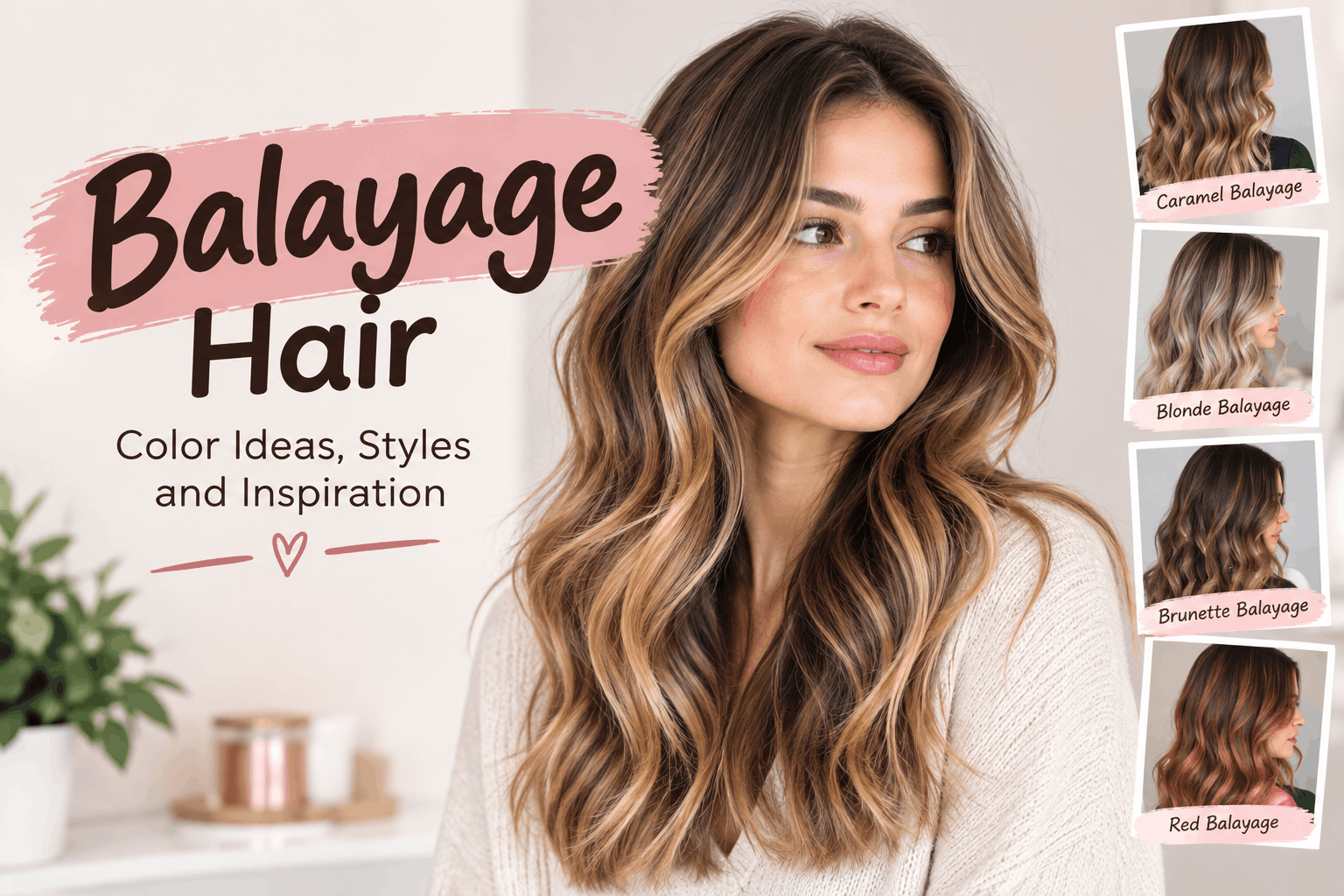
Balayage hair remains one of the most popular ways to add dimension, brightness, and movement without creating the obvious stripe-like appearance associated with traditional highlights. The technique involves painting lighter color onto selected sections of the hair to create a soft, blended transition from the natural or darker base into brighter lengths and ends.
The beauty of balayage is its flexibility. It can be subtle or dramatic, warm or cool, blonde or brunette, and can be customized for short, medium, or long hair. Current hair-color trends are also moving toward healthier-looking, glossy, natural-looking shades, making softly blended balayage particularly relevant in 2026.
What Is Balayage Hair?
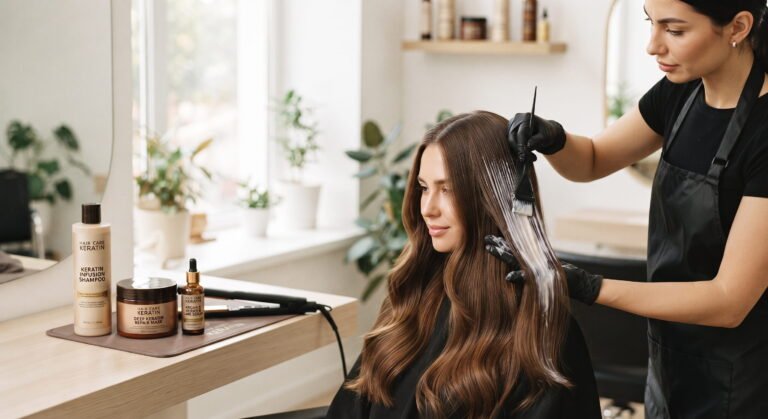
Balayage is a hair-coloring technique in which lighter shades are strategically painted or swept onto sections of the hair. The French word balayage means “to sweep,” reflecting the freehand approach used by colorists.
Rather than creating an identical pattern throughout the hair, a professional colorist can place lighter pieces where they complement the haircut, face shape, natural base color, and desired level of brightness.
The finished result is generally designed to look blended and dimensional rather than sharply striped.
Why Is Balayage So Popular?
One of the biggest attractions of balayage is its customizable appearance.
Unlike a single-process color, balayage can create several shades within the hair. A brunette might add caramel ribbons, while someone with blonde hair may choose champagne or beige pieces.
It can also be adapted to someone who wants only a subtle change rather than a dramatic color transformation.
Another advantage is that the transition from darker roots to lighter lengths can make regrowth less obvious than a traditional all-over color.
Best Balayage Hair Color Ideas
There are countless ways to customize balayage hair. Here are some of the most wearable ideas for inspiration.
1. Honey Blonde Balayage
Honey blonde balayage combines warm blonde tones with a deeper base. It creates a soft, luminous finish that works particularly well when the goal is warmth without an extremely bright blonde.
2. Caramel Balayage
Caramel balayage is especially attractive on medium and dark brown hair. Warm caramel pieces can add visible dimension while keeping the overall look brunette.
3. Golden Blonde Balayage
Golden blonde balayage creates a sun-kissed effect through warm blonde ribbons. It can be particularly effective on naturally dark blonde or light brown hair.
4. Ash Blonde Balayage
For those who prefer cooler tones, ash blonde balayage can create a muted, sophisticated appearance.
A toner may be used after lightening to help achieve the desired cool result.
5. Beige Balayage
Beige balayage sits between strongly warm and strongly cool blonde. The result can look soft, neutral, and understated.
6. Chocolate Brown Balayage
Chocolate balayage adds subtle lighter brown pieces to a deeper brunette base. It is a good choice for someone who wants dimension without becoming noticeably blonde.
7. Caramel and Honey Blend
Combining caramel and honey tones can create multiple levels of warmth throughout the hair.
This approach is particularly useful when you want movement rather than a single flat highlight shade.
8. Bronde Balayage
Bronde combines brunette and blonde tones. It offers a middle ground for people who want lighter-looking hair without committing to a full blonde transformation.
9. Copper Balayage
Copper balayage can introduce warm reddish-orange dimension while keeping the natural base visible.
For a more subtle result, copper pieces can be concentrated through the mid-lengths and ends.
10. Golden Hour Balayage
Warm, glossy brunette shades with delicate honey and caramel highlights are especially relevant in 2026. Current trends favor dimensional color that catches light while maintaining a healthy, natural-looking finish.
Balayage for Dark Hair
Balayage works particularly well for dark hair because strategically placed lighter pieces can create contrast without requiring the entire head to be lightened.
Popular options include:
- Caramel balayage
- Mocha balayage
- Honey highlights
- Chocolate brown balayage
- Copper balayage
- Warm chestnut balayage
- Cool beige-brown balayage
The starting color matters. Very dark hair may require more lightening to achieve a significantly brighter result, and the process should be planned carefully to protect hair condition.
Balayage for Brunettes
Brunettes have many options because balayage can be kept relatively close to the natural base.
For a subtle transformation, consider:
- Espresso and chocolate
- Mocha and caramel
- Chestnut and honey
- Dark brown and beige
- Cocoa and copper
If you want something more noticeable, lighter caramel or golden ribbons can be placed around the face and throughout the lengths.
Balayage for Blonde Hair
Blonde balayage does not necessarily mean making every section lighter.
A colorist can blend different blonde tones to create dimension, including:
- Champagne
- Beige
- Honey
- Golden blonde
- Creamy blonde
- Soft ash
- Wheat blonde
Current 2026 trends are favoring softer, organic-looking blondes rather than overly harsh or artificial-looking highlights.
Balayage for Black Hair
Black or very dark brown hair can also be customized with balayage.
Because the contrast between black hair and lighter color can be strong, many people prefer shades such as:
- Espresso
- Chocolate
- Chestnut
- Caramel
- Copper
- Deep honey
A gradual transition generally creates a more seamless result than extremely bright pieces throughout the entire head.
Face-Framing Balayage
Face-framing balayage concentrates lighter pieces around the front sections of the hair.
This can brighten the appearance of the hairstyle and draw attention toward the face without requiring extensive lightening throughout the rest of the hair.
The placement can be subtle or bold depending on the desired result.
Balayage on Short Hair
Balayage is not limited to long hair.
On short cuts, strategically placed color can emphasize:
- Layers
- Texture
- Waves
- Face-framing pieces
- Movement around the crown
- Ends of a bob or lob
Because there is less length to work with, placement becomes especially important.
Balayage on Long Hair
Long hair provides plenty of space for color transitions.
A colorist can blend several tones from the roots toward the ends to create a gradual progression. Waves and curls can make the dimension particularly noticeable because the different tones catch light across the movement of the hair.
Balayage on Curly Hair
Curly and textured hair can look beautiful with dimensional color because curls naturally create shadows and highlights.
Instead of applying color uniformly, a colorist can consider the curl pattern and strategically place lighter pieces where they will enhance movement.
For curly hair, maintaining moisture and minimizing unnecessary chemical stress is particularly important.
Balayage vs. Traditional Highlights
Balayage and traditional highlights are not exactly the same technique.
Traditional highlights are often created using foils, with sections of hair separated and lightened in a more structured pattern.
Balayage generally uses a freehand painting approach designed to create a softer transition.
Neither method is automatically better. The right choice depends on your desired color, starting shade, haircut, maintenance preferences, and hair condition.
Balayage vs. Ombre
Balayage describes how the color is applied, while ombré generally describes a color effect in which the hair transitions from darker at the roots to lighter toward the ends.
The two techniques can overlap.
A stylist can use balayage techniques to help create an ombré-inspired result.
Is Balayage Low Maintenance?
Balayage is often considered lower maintenance than some traditional highlighting or all-over color techniques because the roots can remain relatively natural.
However, “low maintenance” does not mean maintenance-free.
Your color may eventually need:
- Gloss or toner refreshes
- Conditioning treatments
- Trim appointments
- Occasional lightening
- Root adjustments depending on the chosen style
How often you need salon appointments depends on how quickly your hair grows and how dramatic the contrast is between your natural color and balayage.
How to Care for Balayage Hair
Use Color-Friendly Hair Products
Choose products designed for colored or chemically treated hair. A gentle cleansing routine can help maintain the appearance of the color.
Condition Regularly
Lightening can leave hair feeling drier or more fragile. Regular conditioning and occasional deep-conditioning treatments can help improve manageability.
Limit Excessive Heat
Frequent high-temperature styling can contribute to dryness and breakage.
Use heat protection when using blow dryers, straighteners, or curling tools.
Protect Hair From the Sun
Extended sun exposure can affect the appearance of dyed hair. Protective products and physical protection such as hats can be useful when spending long periods outdoors.
Don’t Overwash
Washing frequency should depend on your hair type and scalp needs, but unnecessarily frequent washing may make maintaining a fresh-looking color more difficult.
Does Balayage Damage Hair?
Balayage itself is not automatically damaging, but lightening hair involves chemical processing that can weaken the hair fiber.
The amount of potential damage depends on factors such as:
- Starting hair color
- How much lighter you want to go
- Previous chemical treatments
- Hair condition
- Developer and lightener used
- Processing technique
- Aftercare
Going from very dark hair to a very light blonde generally requires more intensive processing than adding a few subtle caramel pieces.
Can You Do Balayage at Home?
Professional balayage is difficult to reproduce accurately at home.
The final result depends heavily on placement, saturation, timing, sectioning, color theory, and the condition of the hair. Vogue’s professional guidance specifically cautions against attempting blonde balayage at home because uneven or overly processed results can lead to patchiness, brassiness, or breakage.
For a significant color change, working with an experienced colorist is the safer approach.
How to Choose the Right Balayage Shade
When selecting your color, consider these factors:
Your Natural Hair Color
A shade that works beautifully on light brown hair may require a very different process on black hair.
Your Desired Maintenance
If you want fewer salon appointments, staying relatively close to your natural base can make regrowth easier to manage.
Your Skin Undertone
Warm, cool, and neutral undertones can influence which color families you prefer, although there are no strict rules.
Your Hair Condition
If your hair is already heavily bleached, chemically processed, or breaking, additional lightening may not be appropriate until its condition improves.
Your Haircut
Color placement should work with the way your haircut moves. Layers, curls, bobs, and long hair can all benefit from different balayage placement.
2026 Balayage Hair Trends
Hair-color trends in 2026 are leaning toward polished, healthy-looking, dimensional hair rather than color that looks overly processed. Warm brunettes, soft golden tones, caramel highlights, beige blondes, and lived-in color are particularly relevant.
At the same time, more creative highlight placement is appearing alongside classic balayage. This means balayage does not have to look exactly like the traditional sun-kissed style associated with the technique.
The modern approach is increasingly personalized: the color is adapted to the person’s natural depth, haircut, texture, and preferred maintenance level.
Conclusion
Balayage hair is a versatile coloring technique that can create soft dimension, brightness, and movement while keeping the natural depth of the hair visible. From honey blonde and caramel to chocolate, copper, beige, and bronde, there is a wide range of shades to customize the look.
The best balayage is not simply about choosing a trendy color. Placement, starting hair color, hair condition, haircut, and maintenance expectations all influence the final result.
For 2026, the overall direction is toward glossy, healthy-looking, blended color with warmth and natural dimension. Whether you want a subtle refresh or a more noticeable transformation, bringing reference photos to an experienced colorist can help communicate exactly what you want.
Frequently Asked Questions
1. What is balayage hair?
Balayage is a freehand hair-coloring technique in which lighter shades are painted onto selected sections to create a soft, blended and dimensional result.
2. Is balayage better than highlights?
Neither is universally better. Balayage generally creates a softer, more customized transition, while traditional highlights can provide more consistent and structured brightness.
3. How long does balayage last?
The appearance can remain attractive for several months because the natural root is often preserved. However, glossing, toning, or other maintenance may be needed depending on the color.
4. Is balayage good for dark hair?
Yes. Dark hair can be paired with caramel, chocolate, honey, chestnut, copper, or other carefully selected shades.
5. Does balayage damage hair?
The lightening process can cause dryness or damage, particularly when significant lifting is required. Professional application and appropriate aftercare can help manage the risk.
6. Can balayage cover gray hair?
Balayage can blend with gray hair and add dimension, but it may not provide complete gray coverage. If full coverage is the goal, a different coloring approach may be more appropriate.
7. Is balayage low maintenance?
It can be lower maintenance than some traditional coloring techniques because the roots can remain natural. However, the exact maintenance schedule depends on the color and desired appearance.
8. What is the most popular balayage color?
Popular choices include honey blonde, caramel, beige blonde, chocolate brown, bronde, and golden tones. Current 2026 trends also emphasize warm, glossy and natural-looking color.
9. Can I get balayage on curly hair?
Yes. Balayage can work beautifully with curly and textured hair when the color is strategically placed according to the natural curl pattern.
10. Can I do balayage myself at home?
Professional balayage is generally preferable, especially when significant lightening is involved. Uneven application can result in patchy color, unwanted brassiness, or hair damage.
Meta Description:
Balayage hair adds soft, natural-looking dimension with customized color. Explore popular shades, styles, maintenance tips, care advice and 2026 trends.