Hair Color Chart: Guide to Tones and Choosing Perfect Color
Introduction
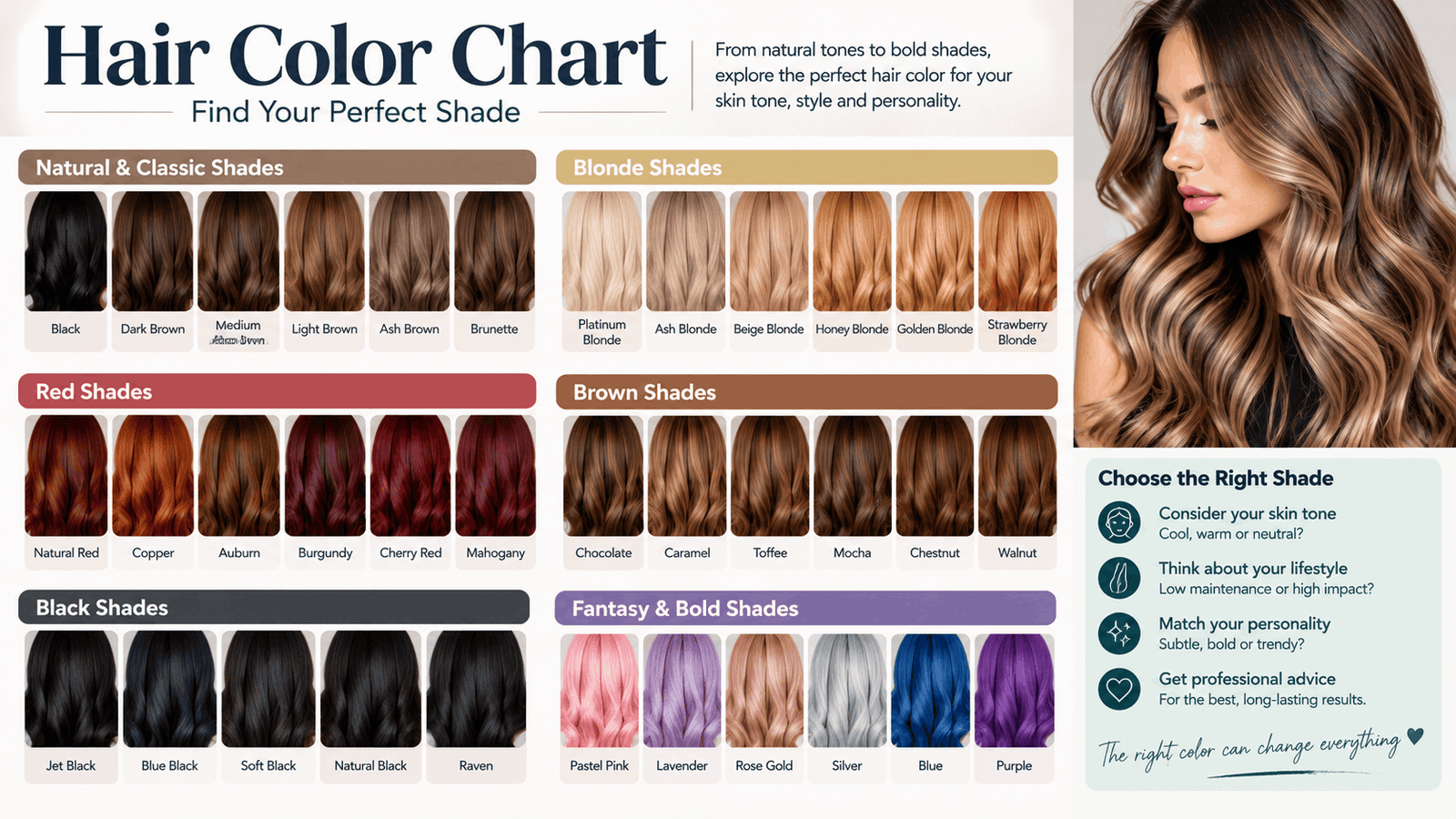
Choosing the right hair color can transform your appearance, enhance your natural features, and give your hairstyle a fresh, beautiful look. However, with so many shades of blonde, brown, red, black, and fashion colors available, finding the right option can feel confusing. A hair color chart makes the process easier by organizing shades according to their depth, tone, and overall appearance.
Whether you want a subtle change, a natural-looking color, or a bold transformation, understanding hair color levels and undertones can help you make a more confident decision. Your natural hair color, skin undertone, eye color, hair condition, and maintenance preferences all influence which shade may suit you best.
This guide explains how hair color charts work, explores popular shades, and shares practical tips for selecting and maintaining a color that complements your personal style.
What Is a Hair Color Chart?
A hair color chart is a visual reference that displays different hair shades, usually arranged from the darkest colors to the lightest. Professional colorists use these charts to understand a client’s starting color and determine the shade needed to achieve the desired result.
Most professional color systems use a numerical scale from 1 to 10, although some brands use additional levels or different numbering systems.
The number generally represents the depth of the color, while letters or numbers following it may describe the tone. The exact system depends on the manufacturer.
For example, a shade labeled 6.1 might represent a dark blonde or light brown with an ash tone in some color systems. However, numbering is not universal, so always check the brand’s chart before purchasing a product.
A color chart helps you compare shades, communicate with your hairstylist, and understand how warm, cool, or neutral tones may affect your final look.
Understanding Hair Color Levels
Hair color levels describe how light or dark a shade appears. Learning these levels is useful when choosing a new color or discussing a color service with a professional.
Level 1: Black
Level 1 is usually the darkest shade on the chart. It creates a dramatic, rich appearance and can look particularly striking on naturally dark hair.
Level 2: Very Dark Brown
Very dark brown offers a softer alternative to black. It provides depth and richness while retaining a natural appearance.
Level 3: Dark Brown
Dark brown is a classic option for people who want a deep brunette shade without the intensity of black.
Level 4: Medium Brown
Medium brown is versatile and works well for natural-looking color transformations. Depending on the undertone, it can appear chocolatey, golden, or cool.
Level 5: Light Brown
Light brown introduces more brightness while maintaining a brunette appearance. It can be a good option for subtle changes.
Level 6: Dark Blonde
Dark blonde sits near the transition between brown and blonde. It is often selected for natural-looking highlights, balayage, and dimensional color.
Level 7: Medium Blonde
Medium blonde offers noticeable brightness without being extremely light. Beige, honey, and ash variations are popular within this level.
Level 8: Light Blonde
Light blonde provides a brighter appearance and can be customized with warm or cool tones.
Level 9: Very Light Blonde
Very light blonde is a pale shade that may require significant lightening when starting with dark hair.
Level 10: Lightest Blonde
Level 10 represents one of the lightest shades in many professional systems. Achieving it from dark hair can require multiple sessions and careful attention to hair condition.
Remember that a color level describes depth rather than the exact final result. Your natural pigment, previous color treatments, and the formula used all influence the outcome.
Popular Hair Color Chart Shades
Different shades create different effects, from understated elegance to bold, eye-catching transformations.
1. Black Hair Color
Black hair is timeless, rich, and dramatic. It can make hair appear glossy and emphasize the contrast between hair, skin, and eyes.
Popular variations include:
- Natural black
- Soft black
- Blue-black
- Neutral black
- Black-brown
Natural black often looks softer than blue-black, which can create a cooler, more dramatic finish.
Before choosing permanent black dye, consider the future maintenance required. Removing very dark artificial pigment can be challenging if you later decide to become blonde or light brown.
2. Brown Hair Color
Brown is one of the most versatile hair color families because it includes many natural-looking shades.
Popular options include:
- Dark chocolate brown
- Espresso brown
- Chestnut brown
- Mocha brown
- Ash brown
- Caramel brown
- Mushroom brown
- Light brown
Chocolate and chestnut shades generally create a warm, rich appearance. Ash and mushroom brown offer cooler alternatives.
Caramel brown is particularly popular for highlights because it adds dimension without requiring the entire head to be colored.
3. Blonde Hair Color
Blonde shades range from deep, natural-looking blonde to very pale platinum.
Common choices include:
- Dark blonde
- Honey blonde
- Golden blonde
- Beige blonde
- Ash blonde
- Champagne blonde
- Strawberry blonde
- Platinum blonde
- Pearl blonde
- Creamy blonde
Honey and golden blonde create warmth, while ash and pearl blonde generally offer cooler finishes. Beige blonde sits somewhere between warm and cool, depending on the formula.
Platinum blonde creates a striking, light appearance but often requires substantial lightening and regular maintenance.
4. Red Hair Color
Red shades can range from subtle copper tones to deep burgundy.
Popular red options include:
- Copper red
- Auburn
- Strawberry red
- Cherry red
- Burgundy
- Mahogany
- Ginger
- Deep wine red
Copper and ginger shades produce a warm, vibrant effect. Auburn and mahogany offer a more understated appearance, while burgundy and cherry shades create richer, deeper results.
Red pigments may fade relatively quickly, so color-safe products and appropriate washing habits can help preserve vibrancy.
5. Fashion Hair Colors
Fashion colors are ideal for people who want a more expressive look.
Popular choices include:
- Pastel pink
- Lavender
- Blue
- Teal
- Silver
- Rose gold
- Smoky purple
- Bright magenta
Many vivid and pastel shades require a light base to appear as intended. Dark hair may need to be lightened before applying them, which can increase the risk of damage.
A professional consultation is especially useful when planning a dramatic transformation.
Warm, Cool, and Neutral Hair Tones
Hair color is not determined by depth alone. Undertones influence whether a shade appears golden, reddish, ashy, or balanced.
Warm Hair Tones
Warm shades contain golden, copper, red, or honey-like qualities.
Examples include:
- Golden blonde
- Honey blonde
- Copper red
- Warm chocolate brown
- Caramel brown
- Golden chestnut
These shades can add warmth and dimension to the hair.
Cool Hair Tones
Cool shades often contain ash, violet, blue, or smoky qualities.
Examples include:
- Ash blonde
- Cool brown
- Mushroom brown
- Icy blonde
- Pearl blonde
- Blue-black
Cool shades are sometimes selected to reduce the appearance of unwanted orange or yellow tones, depending on the starting color and formulation.
Neutral Hair Tones
Neutral shades balance warm and cool qualities.
Examples include:
- Natural brown
- Neutral dark blonde
- Beige blonde
- Soft chocolate brown
Neutral shades are useful when you want a balanced result rather than an obviously golden or ashy appearance.
Keep in mind that hair undertones and skin undertones are different. A person with warm skin can still wear cool hair colors successfully. Personal preference, contrast, and the specific shade matter more than rigid rules.
How to Choose the Right Hair Color for Your Skin Tone
Selecting a complementary shade can help create a harmonious appearance, but there is no single color that everyone with a particular skin tone must wear.
Hair Colors for Fair Skin
Fair skin can work beautifully with a variety of shades.
Consider:
- Beige blonde
- Strawberry blonde
- Light ash brown
- Soft copper
- Chocolate brown
- Natural black for a high-contrast appearance
If your skin has noticeable redness, a neutral or slightly cool shade may create the effect you prefer. However, warm colors can also look beautiful when chosen carefully.
Hair Colors for Medium Skin
Medium skin tones can complement both warm and cool shades.
Consider:
- Caramel brown
- Chestnut
- Mocha
- Honey blonde
- Auburn
- Rich chocolate brown
Balayage and subtle highlights can add dimension while maintaining a natural-looking base.
Hair Colors for Olive Skin
Olive skin may have green, golden, or neutral undertones. Many people with olive skin enjoy brunette shades because they create a balanced, polished appearance.
Consider:
- Espresso brown
- Mushroom brown
- Rich chocolate
- Neutral dark blonde
- Burgundy
- Caramel highlights
The most flattering result depends on your individual undertone and preferred contrast.
Hair Colors for Deep Skin
Deep skin tones can look striking with both rich dark colors and carefully selected lighter shades.
Consider:
- Jet black
- Espresso
- Dark chocolate
- Burgundy
- Copper brown
- Honey highlights
- Golden caramel
- Warm auburn
The goal is to choose a shade that makes you feel confident rather than following a strict skin-tone rule.
How to Choose a Hair Color Based on Eye Color
Eye color can also help guide your choice, especially when you want to emphasize natural contrast.
Brown eyes: Chocolate, espresso, chestnut, caramel, and auburn can complement brown eyes beautifully.
Blue eyes: Ash blonde, beige blonde, cool brown, and some copper shades can create attractive contrast.
Green eyes: Copper, auburn, warm brown, and strawberry blonde may emphasize green tones.
Hazel eyes: Caramel, honey brown, chestnut, and golden blonde can highlight the different colors within hazel eyes.
These are suggestions rather than fixed rules. Your natural hair color, skin undertone, and personal style remain important factors.
Hair Color Chart for Highlights and Balayage
Highlights and balayage introduce lighter or contrasting shades without requiring a single uniform color throughout the hair.
Highlights
Traditional highlights are applied to selected sections of hair, often using foils. They can brighten the overall appearance and create contrast.
Popular combinations include:
- Dark brown with caramel highlights
- Chocolate brown with honey highlights
- Dark blonde with beige highlights
- Black-brown with subtle chestnut highlights
- Medium brown with golden blonde highlights
Balayage
Balayage is a freehand coloring technique that creates a graduated, blended effect. It can produce a natural-looking transition from darker roots to lighter ends.
Popular options include:
- Brunette balayage
- Caramel balayage
- Honey blonde balayage
- Ash brown balayage
- Copper balayage
- Beige blonde balayage
Balayage often allows for softer regrowth than traditional full-head highlights, although maintenance depends on the placement, contrast, and desired appearance.
Ombre Hair Color
Ombre creates a more noticeable transition between darker roots and lighter ends. It can be subtle or dramatic, depending on the color difference.
Chocolate-to-caramel and brown-to-blonde combinations are common choices.
How to Read a Professional Hair Color Chart
Professional hair color charts may include both a numerical level and a tonal designation.
A simplified example is shown below. Exact labels and numbering vary by brand.
| Example level | General depth | Possible shade description |
| 1 | Black | Natural black |
| 2 | Very dark brown | Deep brunette |
| 3 | Dark brown | Dark chocolate |
| 4 | Medium brown | Classic brown |
| 5 | Light brown | Light brunette |
| 6 | Dark blonde | Dark blonde |
| 7 | Medium blonde | Natural blonde |
| 8 | Light blonde | Light golden or ash blonde |
| 9 | Very light blonde | Pale blonde |
| 10 | Lightest blonde | Very pale blonde |
In many professional systems, letters such as A for ash, G for gold, or C for copper may appear in the shade name. Other brands use numbers after a decimal point to indicate the tone.
Always consult the manufacturer’s own guide because the same code may mean something different across brands.
Can You Change Your Hair Color at Home?
Home coloring can work well for certain simple changes, but the result depends on your starting shade, the product, and your previous color history.
Before applying dye, follow these steps:
- Read the product instructions carefully.
- Perform the allergy alert test according to the manufacturer’s directions, commonly 48 hours before use.
- Carry out a strand test to assess the color and how your hair responds.
- Choose a shade appropriate for your starting color.
- Use gloves and follow the specified application time.
- Avoid mixing different products unless their instructions explicitly allow it.
Do not apply hair dye to irritated or damaged scalp skin. Never use hair dye on eyebrows or eyelashes unless a product is specifically intended and approved for that purpose.
If your hair has been previously bleached, relaxed, permed, or colored very dark, seek professional advice before making a major change.
Hair Color Mistakes to Avoid
Choosing a shade from a chart is helpful, but several common mistakes can lead to disappointing results.
Choosing a Shade Based Only on the Box
Product images may not reflect your final result because natural hair color, lighting, and previous treatments influence the outcome.
Going Too Light in One Session
Dark hair often requires several carefully planned lightening sessions to reach a pale blonde shade. Trying to achieve the entire change at once can cause breakage.
Ignoring Undertones
A shade may be the correct depth but still appear too warm or too cool for your preference. Consider both level and tone.
Overlapping Bleach on Previously Lightened Hair
Repeatedly applying bleach to already lightened sections can cause severe damage. Professional application helps reduce unnecessary overlap.
Skipping Allergy Testing
Hair dye can cause allergic reactions, including reactions to ingredients such as para-phenylenediamine (PPD). Follow the product’s allergy-testing instructions every time they recommend it. A negative test does not eliminate all risk.
Using Too Much Heat
Frequent high-heat styling can make colored hair look dry and dull. Use a heat protectant and moderate styling temperatures.
How to Maintain Your Hair Color
Proper aftercare helps maintain shine, softness, and color quality between salon visits.
Use Color-Safe Products
Choose shampoos and conditioners formulated for colored hair. Some clarifying products can remove color more quickly, particularly with frequent use.
Reduce Excessive Washing
Washing less frequently, when appropriate for your scalp, may help reduce color fading. Use lukewarm water and avoid unnecessarily hot showers.
Protect Hair From Heat
Use a heat protectant before blow-drying or using hot styling tools. Excessive heat can contribute to dryness and changes in the appearance of some color-treated hair.
Protect Hair From Sun Exposure
Sunlight can contribute to fading and dryness. Hats and suitable hair-protection products can help when spending extended periods outdoors.
Schedule Touch-Ups Appropriately
Permanent color may require root touch-ups as new hair grows. Highlights and balayage may need less frequent salon visits, depending on their placement and contrast.
Maintain Hair Health
Conditioning treatments can improve manageability and reduce breakage. If your hair becomes unusually stretchy, brittle, or severely damaged after coloring, stop further chemical treatments and seek professional advice.
Permanent vs. Semi-Permanent Hair Color
Understanding the type of dye is just as important as selecting the shade.
Permanent Hair Color
Permanent color typically uses an oxidative process to change the hair’s pigment. Depending on the formula, it can cover gray hair and alter natural color. It does not simply wash out like temporary color, although it can fade over time.
Demi-Permanent Hair Color
Demi-permanent products generally deposit or deepen color with limited or no lightening of natural pigment, depending on the formulation. They can be useful for refreshing tones and blending some gray hair.
Semi-Permanent Hair Color
Semi-permanent color usually deposits pigment onto the hair without the same oxidative process used by permanent dyes. It gradually fades with washing and is often used to experiment with shades.
Temporary Hair Color
Temporary products, including colored sprays and some wash-out formulas, provide short-term color that may last until the next wash or a few washes.
Always check the product description, as terminology and performance vary among manufacturers.
Conclusion
A hair color chart is a useful tool for understanding the difference between light and dark shades, comparing warm and cool undertones, and selecting a color that matches your desired appearance. From classic black and chocolate brown to honey blonde, copper, burgundy, and creative fashion shades, there are options for many preferences and hair types.
The best choice depends on your starting hair color, skin undertone, desired contrast, hair condition, and willingness to maintain the result. A professional colorist can help you choose an appropriate shade and plan the process, especially when moving from dark hair to blonde or making a dramatic change.
Before coloring at home, read product instructions, perform the required allergy test, and assess the result on a small strand. With thoughtful shade selection and consistent aftercare, you can enjoy a beautiful color while protecting the health of your hair.
Frequently Asked Questions (FAQs)
1. What is a hair color chart?
A hair color chart displays shades arranged by their depth and tone. It helps people compare colors and allows hairstylists to select suitable formulas for a desired result.
2. Which hair color is the darkest?
In many professional color systems, level 1 represents black, while higher numbers generally indicate lighter shades. Exact systems vary by manufacturer.
3. Which hair color looks the most natural?
Natural black, dark brown, chocolate brown, chestnut, and dark blonde can all look natural when selected to complement the person’s starting color and desired result.
4. How do I choose the right hair color for my skin tone?
Consider your skin’s undertone, natural hair color, and preferred contrast. Warm, cool, and neutral shades can all work across a wide range of skin tones.
5. What is the difference between ash and golden hair color?
Ash shades generally have cool, smoky undertones, while golden shades have warmer, yellow or honey-like qualities. The best choice depends on the desired finish and starting color.
6. Can I go from black hair to blonde?
Yes, but the process may require multiple lightening sessions. A professional colorist can assess your hair history, set realistic expectations, and help minimize damage.
7. Which hair colors are best for covering gray hair?
Permanent brown, black, blonde, and other shades may provide gray coverage, depending on the formula. Some demi-permanent products can blend gray hair without fully covering it.
8. How long does hair color last?
Permanent color remains in the hair but can fade, while demi-permanent, semi-permanent, and temporary products fade at different rates. Washing habits, hair condition, and the formula influence longevity.
9. Is professional hair coloring better than coloring at home?
Professional coloring is particularly helpful for major changes, bleaching, color correction, and complex techniques. Home coloring may be suitable for simpler changes when product instructions are followed carefully.
10. How can I prevent my hair color from fading?
Use suitable color-care products, avoid excessive heat, protect hair from prolonged sun exposure, and follow an appropriate washing and conditioning routine.