Fine Line Tattoo: Meaning, Pain, Healing, and Aftercare
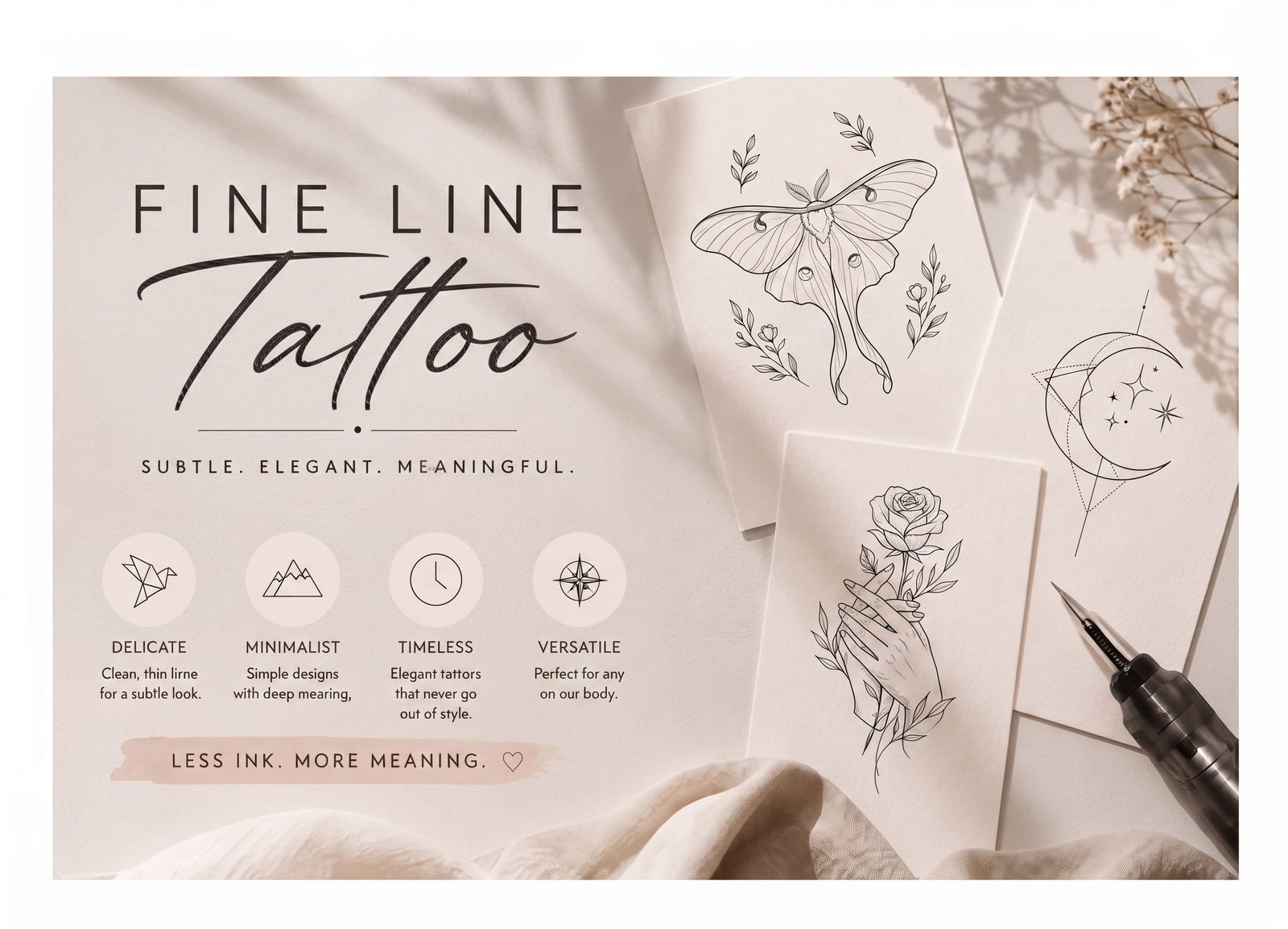
A fine line tattoo is a delicate tattoo style created with very thin lines, minimal shading, and precise details. Unlike traditional tattoos that often rely on thick outlines and heavy color, fine line tattoos have a softer and more understated appearance. They can look almost like a small drawing made directly on the skin.
Fine line tattoos have become increasingly popular for people who want elegant, subtle, and personal body art. Popular designs include flowers, names, dates, symbols, animals, celestial elements, minimalist portraits, and delicate lettering. The style can be beautiful, but because the lines are so thin, choosing an experienced tattoo artist and the right placement is particularly important.
What Is a Fine Line Tattoo?
A fine line tattoo uses a very small needle configuration to create thin, precise strokes. Some designs use a single needle, while others use small needle groupings.
The finished tattoo generally features:
- Thin outlines
- Minimal shading
- Fine details
- Soft visual contrast
- Small or medium-sized designs
- A minimalist appearance
Fine line tattoos can be completely black or may incorporate subtle gray or color details. The style is commonly used for botanical designs, script, geometric symbols, small animals, and delicate illustrations.
Why Are Fine Line Tattoos So Popular?
One reason for their popularity is their understated appearance. Someone who does not want a large, bold tattoo may prefer a small design that feels personal without immediately drawing attention.
Fine line tattoos can also be highly versatile. A small design can be placed on the wrist, forearm, upper arm, shoulder, ankle, ribs, or other areas depending on the design and personal preference.
Another attraction is the amount of detail that can be incorporated into a relatively simple-looking tattoo. However, very small designs need enough space between individual elements because tattoo ink naturally changes and spreads slightly as the tattoo ages.
Popular Fine Line Tattoo Designs
There are many ways to personalize this tattoo style.
Fine Line Floral Tattoo
Flowers are among the most popular choices. Roses, daisies, lavender, lilies, wildflowers, and botanical branches can all be adapted to fine line work.
A single flower can create a minimalist look, while a small botanical arrangement can provide more detail.
Fine Line Butterfly Tattoo
Butterflies work particularly well with delicate linework. They can represent transformation, growth, freedom, or a personal life change.
Fine Line Script Tattoo
Names, initials, dates, short words, and meaningful phrases are frequently requested in fine line styles.
However, extremely tiny lettering can become difficult to read as the tattoo ages. A skilled artist should help determine an appropriate size.
Fine Line Animal Tattoo
Small outlines of cats, dogs, birds, horses, and other animals can create a personalized tattoo without requiring heavy shading.
Fine Line Celestial Tattoo
Stars, moons, planets, constellations, and sun designs are popular choices for minimalist tattoos.
Fine Line Portraits
Some artists specialize in fine line or single-needle portraits. These designs require considerable technical skill because facial details must be represented using very limited line weight and shading.
Fine Line Tattoo Placement
Placement can affect both the appearance and longevity of a fine line tattoo.
Popular locations include:
- Inner forearm
- Outer forearm
- Upper arm
- Shoulder
- Collarbone
- Upper back
- Thigh
- Calf
- Rib area
- Wrist
- Ankle
- Behind the ear
Areas exposed to frequent friction, movement, or sunlight may be more challenging for delicate designs. Fingers, hands, feet, and some other high-friction areas can experience faster fading or changes in appearance.
Do Fine Line Tattoos Hurt?
A fine line tattoo can still hurt because tattooing involves repeatedly puncturing the skin.
Pain varies according to:
- Tattoo location
- Individual pain tolerance
- Tattoo size
- Session length
- Artist technique
- Amount of detail
Small fine line tattoos may take less time than large, heavily shaded tattoos, but this does not mean they are completely painless.
Areas with thinner skin or less natural padding, such as ribs, ankles, and certain parts of the wrist, may feel more sensitive.
Do Fine Line Tattoos Fade?
Yes. All tattoos change over time, and fine line tattoos can lose some of their original crispness because they contain relatively delicate lines and less visual redundancy than bold tattoos.
Sun exposure, body movement, friction, placement, tattoo technique, skin characteristics, and aftercare can influence how a tattoo ages. Fine line designs may soften or fade sooner than bold, heavily saturated designs.
This does not necessarily mean a fine line tattoo will become unattractive. Many people like the softer appearance that develops over time.
How Long Does a Fine Line Tattoo Last?
There is no exact lifespan for a fine line tattoo.
A well-executed tattoo can remain recognizable for many years, but its lines may gradually become softer, lighter, or less sharply defined.
The longevity depends on several factors:
- Artist’s technique
- Ink placement
- Tattoo size
- Design spacing
- Body location
- UV exposure
- Aftercare
- Skin characteristics
A tattoo placed in an area exposed to frequent sunlight or friction may change faster than one protected by clothing.
Fine Line Tattoo Healing Process
Immediately after getting a tattoo, the skin may appear red, swollen, or irritated. This is expected because tattooing creates controlled trauma to the skin.
During healing, you may notice:
First Few Days
The tattoo may feel tender and appear slightly red. Follow the tattoo artist’s instructions for cleaning and moisturizing.
First Week
The skin may begin to dry and peel. Avoid scratching or picking at the tattoo.
Following Weeks
The outer layer of skin continues to settle. The tattoo may temporarily appear lighter or less sharp while the skin heals.
Complete healing varies between individuals. Proper aftercare is important because poor care can contribute to infection, scarring, or changes in the final appearance.
Fine Line Tattoo Aftercare
Good aftercare helps the tattooed skin heal properly.
General aftercare includes:
- Follow the specific instructions provided by your tattoo artist.
- Keep the tattoo clean.
- Use an appropriate moisturizer as recommended.
- Avoid picking or scratching peeling skin.
- Avoid unnecessary friction.
- Avoid soaking a fresh tattoo in pools, hot tubs, or baths until it has healed.
- Protect the healed tattoo from excessive sun exposure.
Cleveland Clinic recommends keeping a healing tattoo clean and moisturized while avoiding activities such as soaking the area in water and exfoliating until the skin has healed.
Can You Put Sunscreen on a New Fine Line Tattoo?
Freshly tattooed skin should not be treated exactly like fully healed skin. During healing, follow your tattoo artist’s aftercare instructions and avoid direct sun exposure.
Once the tattoo has healed completely, sunscreen becomes important because UV exposure can contribute to fading and damage the appearance of tattoo pigment over time.
Fine Line Tattoo Risks
Although tattoos are common, they are not completely risk-free.
Potential complications include:
- Skin infection
- Allergic reactions to tattoo pigments
- Scarring
- Keloid formation in susceptible individuals
- Irritation
- Poor healing
- Ink spreading or “blowout”
Because tattooing breaks the skin, proper hygiene and sterile equipment are important. Unprofessional tattooing environments can also increase the risk of bloodborne infections.
If a tattoo becomes increasingly painful, very swollen, hot, severely red, or produces pus, medical evaluation may be appropriate.
How to Choose a Fine Line Tattoo Artist
Choosing an artist is one of the most important decisions when getting this style.
Look for an artist who:
- Specializes in fine line work
- Has consistent line quality
- Shows healed tattoo photographs
- Has experience with your desired design
- Maintains strict hygiene standards
- Can recommend an appropriate size and placement
Fresh tattoos often look sharper than healed tattoos. Therefore, seeing healed examples can give you a better idea of how the artist’s work actually ages.
Fine Line vs Traditional Tattoo
Fine line and traditional tattoos have very different aesthetics.
| Feature | Fine Line Tattoo | Traditional Tattoo |
| Line weight | Thin | Usually thick |
| Shading | Minimal or soft | Often heavier |
| Appearance | Delicate and subtle | Bold and noticeable |
| Detail | High-detail possible | Strong graphic detail |
| Aging | May soften faster | Generally more forgiving |
| Best for | Minimalist designs | Bold designs |
Neither style is universally better. The right choice depends on your desired appearance and how you want the tattoo to age.
How to Make a Fine Line Tattoo Last Longer
You cannot completely prevent a tattoo from changing with age, but you can help preserve its appearance.
Protect It From the Sun
UV exposure can contribute to tattoo fading. Once healed, use appropriate broad-spectrum sunscreen on exposed tattooed skin.
Avoid Picking During Healing
Picking flakes or scabs can interfere with normal healing and may affect the final appearance.
Choose the Right Size
Making a design extremely small may leave insufficient space between details. A slightly larger design can sometimes age more gracefully.
Choose a Suitable Placement
Low-friction areas may be more suitable for delicate designs than locations constantly exposed to rubbing or movement.
Consider Future Touch-Ups
Fine line tattoos may eventually benefit from a professional touch-up. This is not necessarily a sign that the original tattoo was poorly done; all tattoos change with time.
Is a Fine Line Tattoo Right for You?
Fine line tattoos may be a good option if you prefer:
- Minimalist body art
- Delicate designs
- Small tattoos
- Subtle lettering
- Botanical artwork
- Meaningful symbols
- Soft and elegant aesthetics
However, if you want a tattoo that remains highly bold and readable for decades with minimal maintenance, a heavier traditional style may be a better option.
Final Thoughts
A fine line tattoo combines delicate linework, minimal shading, and detailed artwork to create a subtle and elegant tattoo style. From tiny flowers and butterflies to meaningful words, dates, animals, and minimalist portraits, there are countless ways to personalize the look.
The most important considerations are not just the design but also the artist’s skill, tattoo size, placement, hygiene, and aftercare. Fine line tattoos naturally change as they age, so realistic expectations are important before booking an appointment.
If you choose this style, look for an experienced artist who can show healed fine line work and help adapt your design to a size and placement that gives it the best chance of aging well.
FAQs About Fine Line Tattoo
1. What is a fine line tattoo?
A fine line tattoo is a tattoo made with very thin lines and usually minimal shading, creating a delicate and minimalist appearance.
2. Do fine line tattoos fade quickly?
They can soften or fade more noticeably than bold tattoos, particularly with significant sun exposure, friction, or challenging placement.
3. Are fine line tattoos painful?
Yes, they can cause pain because tattoo needles penetrate the skin. However, the level of discomfort varies significantly depending on the person and tattoo location.
4. Are fine line tattoos permanent?
Yes. Fine line tattoos are permanent tattoos, although the lines can gradually become lighter and softer over time.
5. What is the best placement for a fine line tattoo?
Forearms, upper arms, shoulders, thighs, and other relatively stable areas can work well. Areas with frequent friction or movement may require more maintenance.
6. Can fine line tattoos be colored?
Yes. Although black and gray are common, fine line techniques can also be used with color.
7. Can I get a fine line tattoo on my finger?
It is possible, but fingers and hands experience considerable movement, friction, washing, and sun exposure, so tattoos in these areas can fade or change faster.
8. How should I care for a new fine line tattoo?
Follow your artist’s instructions, keep the tattoo clean and appropriately moisturized, avoid picking or scratching, and avoid soaking it in water while it heals.
9. Can fine line tattoos get blurry?
Yes. Ink can spread or lines can soften over time. Poor technique, unsuitable placement, aging, and other factors can contribute to loss of crispness.
10. How do I find a good fine line tattoo artist?
Look for someone who specifically specializes in fine line work and review both fresh and healed examples of their tattoos. Ask about their technique, hygiene practices, recommended placement, and aftercare instructions.