Pedicure: Complete Guide to Benefits, Process, and Aftercare
Introduction
A pedicure is more than just a beauty treatment for your feet. It is a complete foot-care routine that helps maintain healthy nails, remove dead skin, improve foot appearance, and provide relaxation. Our feet carry the weight of our entire body every day, yet they often receive less attention compared to other parts of the body.
Regular pedicure treatments can help keep your feet soft, clean, and refreshed. Whether you visit a professional salon or perform a pedicure at home, proper foot care can improve comfort, hygiene, and confidence.
In this complete guide, we will explore what a pedicure is, different types of pedicures, their benefits, the step-by-step process, and important aftercare tips.
What Is a Pedicure?
A pedicure is a cosmetic and therapeutic treatment designed specifically for the feet and toenails. It usually includes cleaning the feet, trimming and shaping toenails, removing dead skin, moisturizing, and applying nail polish if desired.
The main purpose of a pedicure is to improve foot hygiene while keeping nails healthy and feet smooth. Many people also choose pedicures as a relaxing self-care activity because foot massages included in many treatments can help reduce stress and tension.
A professional pedicure may include additional services such as:
- Foot exfoliation
- Callus removal
- Foot masks
- Nail treatments
- Moisturizing treatments
- Massage therapy
- Gel or acrylic nail application
Benefits of Getting a Pedicure
Regular pedicures offer several benefits beyond making your feet look attractive.
1. Improves Foot Hygiene
Feet can collect sweat, bacteria, and dead skin cells throughout the day. A pedicure helps clean the feet properly and reduces the buildup of dirt around toenails.
Keeping feet clean may help prevent unpleasant odors and common foot problems caused by poor hygiene.
2. Removes Dead Skin and Calluses
Walking, standing for long hours, and wearing uncomfortable shoes can cause rough skin and calluses on the feet.
During a pedicure, exfoliation and specialized tools help remove dead skin, leaving feet smoother and softer.
3. Promotes Healthy Toenails
Proper nail trimming and shaping are important parts of foot care. A pedicure helps maintain toenails and may reduce problems caused by improper nail cutting.
Healthy nail care includes:
- Cutting nails correctly
- Keeping nails clean
- Avoiding excessive cutting
- Moisturizing dry cuticles
4. Provides Relaxation and Stress Relief
A foot massage during a pedicure can help relax tired muscles and improve overall comfort.
Many people enjoy pedicures as a form of self-care because they provide a calming experience after a busy week.
5. Enhances Foot Appearance
Well-maintained feet can improve confidence, especially during summer when sandals and open shoes are popular.
A pedicure can make feet look:
- Cleaner
- Smoother
- More attractive
- Well maintained
Different Types of Pedicures
There are many types of pedicure treatments available depending on your needs and preferences.
1. Classic Pedicure
A classic pedicure is the most common type. It focuses on basic foot cleaning and nail care.
It usually includes:
- Foot soaking
- Nail trimming
- Cuticle care
- Exfoliation
- Foot massage
- Nail polish application
This option is suitable for regular maintenance.
2. Gel Pedicure
A gel pedicure uses gel nail polish that is cured under UV or LED light.
Benefits include:
- Long-lasting color
- Shiny finish
- Reduced chipping
- Professional appearance
Gel pedicures can usually last several weeks with proper care.
3. Spa Pedicure
A spa pedicure provides a more luxurious experience compared to a basic pedicure.
It may include:
- Aromatherapy oils
- Foot scrubs
- Hydrating masks
- Longer massage sessions
This type is popular among people looking for relaxation and premium foot care.
4. French Pedicure
A French pedicure creates a classic and elegant nail style. It usually features a natural-colored base with white tips.
This style works well for people who prefer a simple and timeless appearance.
5. Medical Pedicure
A medical pedicure focuses more on foot health rather than beauty.
It may help people dealing with:
- Nail problems
- Foot dryness
- Calluses
- Certain foot concerns
Medical pedicures are usually performed by trained professionals with knowledge of foot health.
6. Paraffin Pedicure
A paraffin pedicure uses warm wax treatment to deeply moisturize dry feet.
Benefits may include:
- Softer skin
- Improved moisture retention
- Relaxation
It is especially popular during colder months when feet become dry.
Step-by-Step Pedicure Process
A professional pedicure usually follows several important steps.
Step 1: Removing Old Nail Polish
The process begins by removing existing nail polish so the technician can properly examine and clean the nails.
Step 2: Foot Soaking
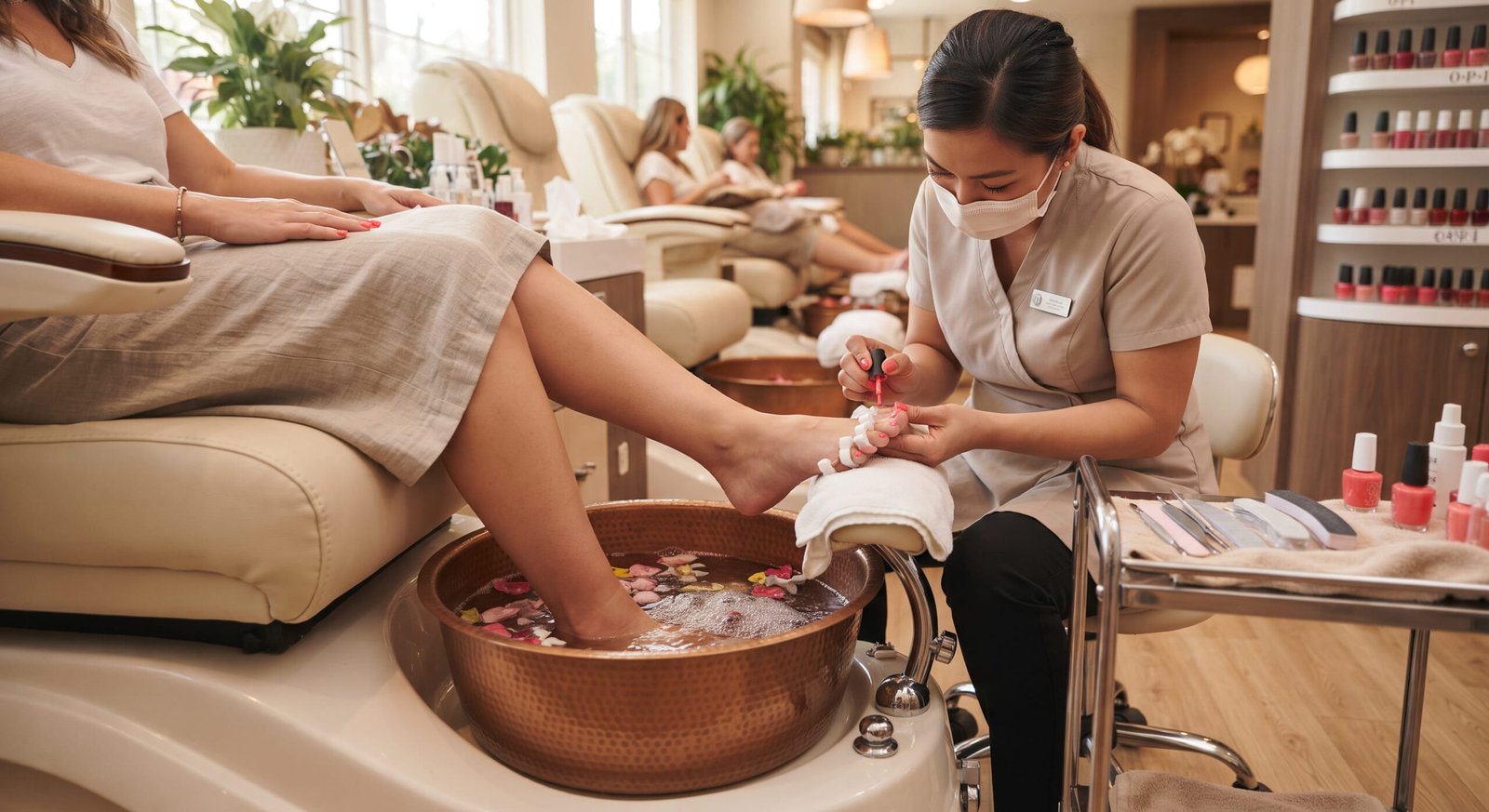
Feet are placed in warm water to soften the skin and relax the muscles.
Foot soaking helps make:
- Nail trimming easier
- Dead skin removal more effective
- Feet feel refreshed
Step 3: Nail Trimming and Shaping
Toenails are carefully trimmed and shaped according to healthy nail-care practices.
Avoid cutting nails too short because it may increase the risk of discomfort.
Step 4: Cuticle Care
Cuticles are cleaned and gently pushed back to improve nail appearance.
Proper cuticle care helps maintain a neat and polished look.
Step 5: Exfoliation
A scrub or exfoliating product is applied to remove dead skin cells.
Common areas treated include:
- Heels
- Soles
- Sides of feet
Step 6: Callus Removal
Hard skin areas may be treated using specialized tools.
This step helps improve foot softness and smoothness.
Step 7: Foot Massage
Many pedicures include a relaxing foot massage using moisturizing creams or oils.
Massage can help relieve tiredness and improve relaxation.
Step 8: Moisturizing Treatment
A moisturizer is applied to hydrate the skin and prevent dryness.
Step 9: Nail Polish Application
The final step may include applying:
- Regular nail polish
- Gel polish
- Nail art designs
How Often Should You Get a Pedicure?
The ideal frequency depends on your lifestyle, foot condition, and personal preference.
Many people schedule a pedicure every:
- 3–6 weeks for maintenance
- 2–4 weeks during special occasions or summer months
People with dry feet, frequent walking, or specific foot-care needs may require more regular attention.
Pedicure at Home: Simple Guide
You can perform a basic pedicure at home with the right tools.
Required Supplies:
- Nail cutter
- Nail file
- Foot scrub
- Foot soak bowl
- Moisturizer
- Cuticle stick
- Nail polish
Steps:
- Remove old nail polish.
- Soak feet in warm water.
- Trim and shape nails.
- Remove dead skin gently.
- Apply moisturizer.
- Paint nails if desired.
A home pedicure can be an affordable way to maintain foot care between professional visits.
Common Pedicure Mistakes to Avoid
Cutting Nails Too Short
Very short toenails can cause discomfort and increase the chance of nail problems.
Using Dirty Tools
Unclean tools may spread bacteria or infections. Always use properly sanitized equipment.
Ignoring Moisturization
Dry feet can become rough and cracked. Regular moisturizing keeps skin healthier.
Removing Too Much Skin
Aggressive scraping can damage healthy skin. Dead skin should be removed carefully.
How to Choose a Good Pedicure Salon
When selecting a salon, consider:
Cleanliness
A professional salon should maintain proper hygiene standards.
Tool Safety
Check whether tools are cleaned and sanitized before use.
Experience
Choose trained technicians who understand proper nail and foot care.
Customer Reviews
Reviews can help you understand service quality and customer experiences.
Pedicure Aftercare Tips
After your pedicure:
- Keep feet moisturized regularly
- Avoid tight shoes immediately after treatment
- Protect freshly painted nails
- Maintain proper foot hygiene
- Avoid picking at nail polish
Following aftercare instructions helps maintain results longer.
Frequently Asked Questions About Pedicure
1. How long does a pedicure take?
A basic pedicure usually takes around 30–60 minutes, while luxury treatments may take longer.
2. Is a pedicure good for your feet?
Yes, regular pedicures can support foot hygiene, nail care, and skin maintenance when performed properly.
3. How long does a gel pedicure last?
A gel pedicure often lasts several weeks depending on lifestyle and nail care habits.
4. Can men get pedicures?
Yes, pedicures are suitable for everyone. Many men choose pedicures for foot hygiene and comfort.
5. Can I do a pedicure at home?
Yes, a basic pedicure can be performed at home using proper tools and techniques.
6. What is the difference between manicure and pedicure?
A manicure focuses on hands and fingernails, while a pedicure focuses on feet and toenails.
7. Are pedicures only for beauty purposes?
No, pedicures also support cleanliness, comfort, and healthy foot maintenance.
Conclusion
A pedicure is an effective way to care for your feet while enjoying relaxation and improving appearance. From classic pedicures to spa and gel treatments, there are many options available for different needs.
Regular foot care helps maintain clean nails, smooth skin, and comfortable feet. Whether you choose a professional salon treatment or a simple home pedicure, making foot care part of your routine can contribute to better hygiene and confidence.