Can You Die From Acid Reflux in Your Sleep?
Introduction
Many people are concerned about their acid reflux when they sleep, especially those who are woken suddenly by symptoms such as heartburn, a choking sensation, coughing, or a bad taste in the mouth. This often causes the scary question, “Can you die from acid reflux in your sleep?”
The short answer is that acid reflux is not typically fatal and most people who have reflux at night do not have to worry about dying from that. Uncontrolled reflux can be bad for your health and can create some rare breathing problems caused by acid from the stomach going to the lungs, especially to those who have some certain conditions.
Knowing what happens when reflux happens at night, what to look for to know that is happening, and knowing how to minimize the symptoms will help you sleep better and be more healthy.
What Happens When You Have Acid Reflux at Night?
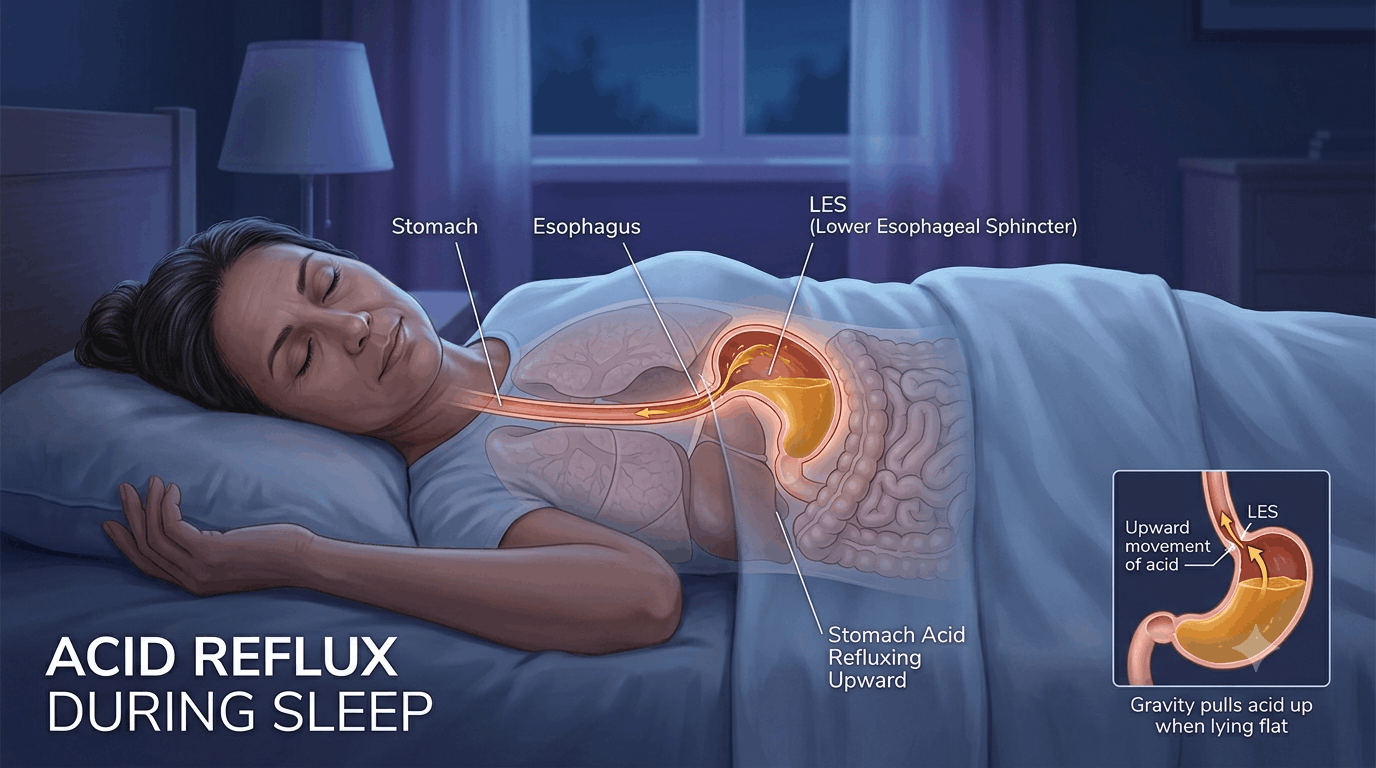
When you have acid reflux, stomach contents and acid flow back into the tube that connects the stomach to the mouth (the esophagus). The muscle that helps the stomach keep contents in it (the lower esophageal sphincter or LES) weakens or relaxes at the wrong moment.
It can feel even worse to have reflux while you sleep because:
- You are horizontal so it is easier for acid to reflux up.
- You swallow less, which helps clear some of the refluxed acid.
- Your body makes less saliva, which helps protect your esophagus from acid.
- If you eat a large meal before sleeping, that also helps acid reflux.
Some individuals wake up experiencing:
- Burning in the chest/throat
- Sour/bitter taste
- Coughing
- Choking sensation
- Hoarseness
- Brief difficulty breathing
Although these symptoms can be concerning, under normal circumstances, they are not signs that you are in life-threatening danger.
Can Sleeping Cause Acid Reflux And Kill You?
Acid reflux is not a typical cause of death during sleep for most individuals. The body has various protective functions that prevent the contents of the stomach from entering the lungs, including a cough and a swallow reflex.
Nonetheless, there are a few scenarios when reflux can cause serious problems.
1. Aspiration of Stomach Acid
Aspiration is when stomach contents enter the airway and lungs.
This is rare in healthy adults, but for individuals with any of the following, risks can be greater:
- A swallowing disorder
- A neurological disorder
- Are in a deep sedation
- Some lung disease
- Drink large amounts of alcohol right before bed
Aspiration can irritate the lungs and in some cases cause pneumonia and breathing difficulties.
2. Significant Problems with Breathing
Acid reflux can cause:
- Asthma
- Coughing
- Laryngospasm
Laryngospasm may feel like you cannot breath, but resolves in a few seconds.
3. Dangerous Health Problems in the Future
Although chronic untreated acid reflux typically does not cause death, it can cause:
- Esophagitis
- Repeated exposure to acid can damage the esophagus and cause pain and difficulty swallowing.
- Barrett’s Esophagus
Long-term exposure to acid reflux can change the structure of esophageal cells. Barrett’s Esophagus means a slightly greater risk of developing esophageal cancer.
Esophageal Cancer
This is almost unheard of, but continued chronic reflux can cause this.
Why is Acid Reflux Worse at Night?
Nighttime acid reflux can feel stronger, as you will experience it in silence and stillness.
Nighttime acid reflux can be caused by:
Eating Late
Going to bed soon after eating makes it easier for your food and stomach acid to travel upwards.
Foods that are large, fatty, spicy, or acidic can also worsen acid reflux.
Sleeping Flat
An even and flat position makes it easier for gravity to help your food and stomach acid travel upwards.
Less of the body’s Natural Helpers
During the day, the body’s movement and natural swallowing will help remove the acid reflux. At night this slacking will allow the acid to stay.
Signs Your Nighttime Acid Reflux Deserves More Attention
Occasional acid reflux and heartburn is normal. You should see a doctor if you have:
- Frequent acid reflux that happens more than twice a week.
- Difficulty swallowing.
- Losing weight without trying.
- Vomiting and having chest pain.
- Seeing blood in vomit and having black stool.
- Constantly coughing at night and choking while trying to sleep.
These symptoms show that you need a more serious assessment.
How to Help Decrease Acid Reflux While You Sleep
Nighttime acid reflux symptoms can be helped by making some lifestyle choices. These changes can help:
1. Don’t Eat Before Sleeping
Staying away from food for 2-3 hours before you go to sleep will help your stomach empty.
2. Sleep with Your Head Elevated
In an effort to control upward travel of acid, consider sleeping with the upper part of your body positioned higher than the rest.
This can be accomplished in several ways, including:
- – Using a wedge pillow
- – Elevating the head of your bed
- – Sleeping with your upper body slightly elevated
However, using multiple pillows may bend your body into an unnatural position that places additional pressure on your stomach, thus worsening the situation.
3. Sleeping on Your Left Side
Sleeping on your left side can decrease reflux episodes according to certain studies.
This position can also be helpful in reducing acid exposure by keeping the contents of the stomach from traveling higher.
4. Recognize Your Food Triggers
Identifying which foods increase reflux is an important step in controlling the problem.
Some of the foods that can trigger reflux are:
- – Fried foods
- – Spicy foods
- – Coffee
- – Alcohol
- – All forms of chocolate
- – Carbonated beverages
- – Tomato based foods
- – Citrus fruits
Reflux triggers are unique to every individual, thus keeping a food diary can be helpful to identify personal trigger foods.
5. Keep Your Weight Under Control
Acid reflux can be aggravated by excess weight, particularly around the middle.
The symptom may be managed with weight control alone.
Can Acid Reflux Cause You to Stop Breathing?
People with severe nighttime reflux report a sensation of choking or feeling like they can’t breathe.
Acid traveling to the upper regions of the body can irritate the throat and trigger a reflex to protect it.
Laryngospasm, a condition of the throat that can occur and prevent breathing for a short time, is also quite rare. Though it can feel like it is life threatening, it really is not.
Feeling like you wake up fighting for air is concerning and deserves a physician’s consultation to rule out:
- – Sleep Apnea
- – Asthma
- – Breathing Disorders
The following symptoms of acid reflux may seem like you’re having a heart attack:
- 1. Pressure or a squeezing pain in your chest
- 2. Pain that radiates from your chest to your arm, back, or neck
- 3. Shortness of Breath
- 4. Sweating
- 5. Nausea
- 6. Dizziness
Frequently Asked Questions(FAQs)
1. Can you die from sleeping with acid reflux?
No, sleeping with acid reflux is not a death sentence. There are rare complications like aspiration that are severe and breathing problems that can happen to a select small group of individuals.
2. Can you choke on acid reflux in your sleep?
Yes, acid reflux can cause choking and coughing when the acid reaches the throat.
3. Is nighttime acid reflux dangerous?
Infrequent nighttime acid reflux is generally not a health concern, though frequent reflux may be symptomatic of problems that could lead to health complications and need to be addressed.
4. Can acid reflux cause sudden death?
It is very uncommon for acid reflux to be the cause of a sudden death. Most symptoms of acid reflux are not severe or life threatening.
5. How can I stop acid reflux at night?
Preventing late night meals, raising the upper body, left side sleeping, avoiding acid reflux trigger foods, and maintaining a healthy body weight can help manage nighttime acid reflux.
6. Does drinking water help acid reflux at night?
Occasionally drinking small amounts of water may help acid reflux at night by washing acid down but does nothing to manage acid reflux.
7. Can acid reflux damage your lungs?
In rare situations, aspiration of stomach contents may irrit the lungs and cause pneumonia.
8. Why do I wake up choking from acid reflux?
Coughing and choking from acid reflux can irritate the airway and cause you to wake from sleep.
9. Should I worry if acid reflux happens every night?
Frequent nighttime acid reflux may mean you have uncontrolled GERD and should be evaluated by a healthcare professional.
10. Can sleeping position affect acid reflux?
Sleeping on your left side and elevating the upper body can help manage nighttime acid reflux.
Conclusion
So can you die from acid reflux in your sleep? Not likely. Acid reflux is uncomfortable and alarming, and though it is very rare for acid reflux to be fatal, it is generally not a life threatening condition. There are natural body responses that help protect against serious complications from acid reflux.
Frequent nighttime reflux is also a concern. Chronic symptoms can lead to erosion of the esophagus, impact sleep, or occasionally cause problems related to breathing. There are lifestyle modifications, sleeping aids to help elevate the head and reduce symptoms and in the more serious cases where symptoms still persist, see a medical professional.
Reflux is manageable with these strategies.
If you often wake up choking or have worsening chest pain, it is especially important to get evaluated.