Inspire Sleep: A complete guide to Inspire Therapy for Sleep Apnea
Introduction:
Good sleep is essential for your physical health, your mental focus, your energy and daily life. People with obstructive snoring may find it difficult to sleep peacefully and continuously. They may experience repeated breathing blockages during the night. This can lead to snoring and interrupted sleep.
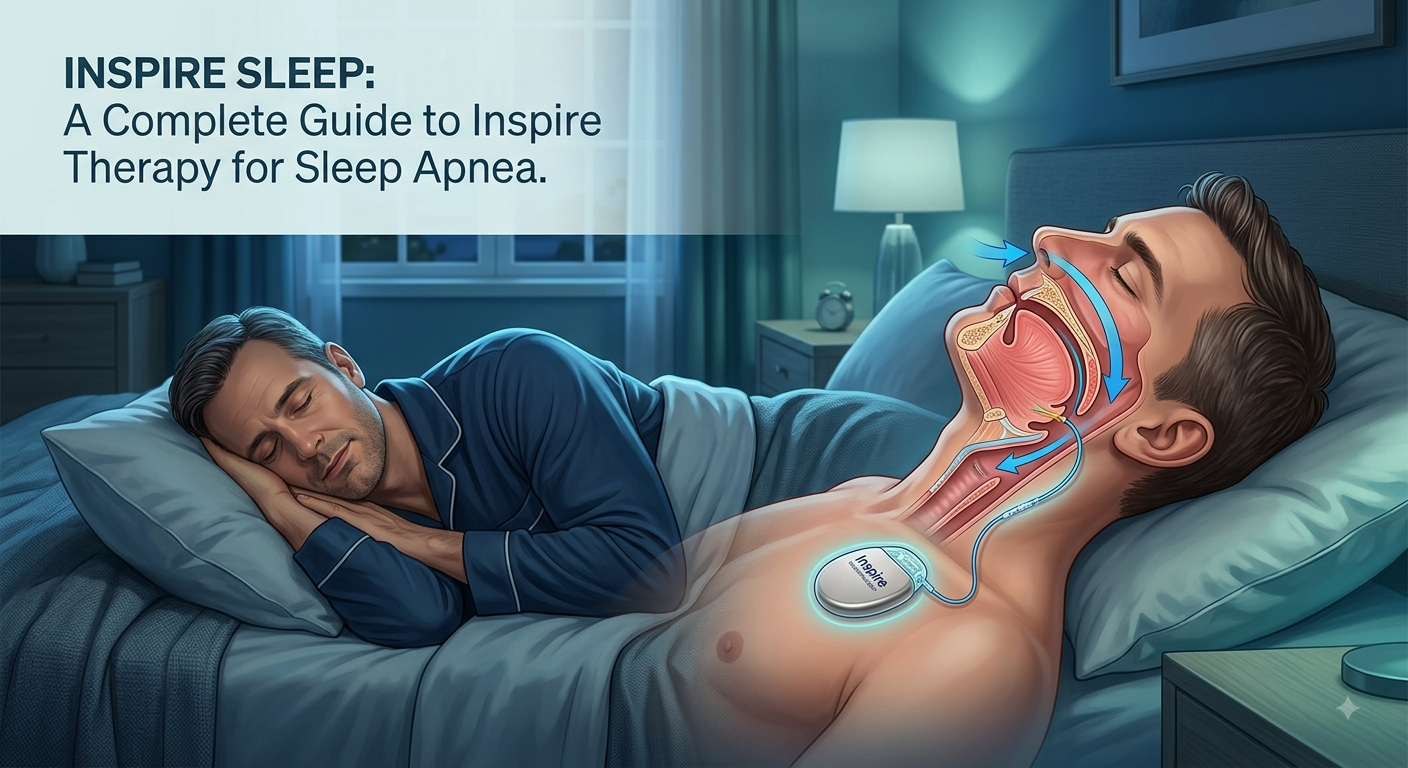
Inspire sleep therapy is one treatment that has gained increasing attention. Inspire differs from other sleep apnea treatment methods because it doesn’t require the patient to wear a mask during sleep. It uses an implanted system that stimulates the muscles of the airway to keep it open.
Inspire is a treatment option for some patients who are unable to tolerate CPAP therapy. It is not for everyone who has sleep apnea. The eligibility depends on a number of factors, including the severity and type of sleep apnea as well as previous experience using CPAP. A medical evaluation is also required.
This guide will explain what Inspire Sleep is, how it functions, who might qualify, what happens at the time of implantation, possible benefits and risks as well as recovery and costs. It will also discuss what patients should be aware of before deciding to undergo treatment.
What is Inspire Sleep Therapy (IST)?
Inspire Sleep Therapy is an implanted therapy for some people with Obstructive Sleep Apnea (OSA).. OSA is caused by the airway narrowing or closing repeatedly while sleeping. The airflow is temporarily reduced or stopped, even though the person is still trying hard to breathe.
CPAP or continuous positive pressure on the airways is often used as a first step in a traditional treatment. A CPAP device sends pressurized, heated air through a mask in order to prevent the airway from closing.
Inspire uses a different approach. Instead of forcing air through a face mask, this system uses upper-airway stimulation. The device is implanted surgically and it works with the natural breathing pattern of the patient.
The muscles that control the airway and tongue move when they receive stimulation. This helps to maintain airflow while sleeping. Normaly, the patient turns on the therapy before sleeping and switches it off when he wakes up.
Inspire is not just a device to reduce snoring. This is a medical device that treats obstructive snoring in selected patients.
What is Inspire Sleep?
Inspire’s basic concept is simple: it detects breathing and provides carefully timed stimulation in order to keep the airway wide open.
The implanted device includes components to monitor breathing and stimulate a nerve that controls tongue movement. The system provides mild stimulation when it detects the correct part of the breath cycle.
The tongue and other airway tissues are moved forward by this stimulation, which helps reduce obstruction.
The handheld remote is used by most patients to control their therapy. They activate the device before going to sleep. The system has a delay to allow the user time to fall asleep.
Under medical supervision, the stimulation level can also be adjusted. It may take some time to find a comfortable and effective setting, so it is important to schedule follow-up appointments.
Inspire Sleep vs. CPAP
CPAP is still a widely used and important treatment for obstructive Sleep Apnea. When used consistently, it works well for most people. Some patients may have difficulty with it.
Common CPAP problems include mask discomfort, air leakage and nasal irritation. Other common CPAP issues are claustrophobia or difficulties wearing the mask throughout the night.
Inspire does not require a mask or hose at night because the majority of the system is embedded inside the body.
It is not necessarily better than CPAP.
Inspire implantation is a surgical procedure. Inspire has additional eligibility requirements, as well as a follow-up program.
It is therefore up to the individual which treatment they choose. If CPAP is working well for you, don’t assume that an implant will be better just because it’s newer or easier to use.
Who is eligible for Inspire sleep?
Inspire therapy is not suitable for everyone who has sleep apnea. The treatment must be evaluated by a sleep specialist or other qualified healthcare professional.
Inspire is generally intended for patients with moderate-to-severe obstructive sleeping apnea, who are unable to tolerate or use positive airway pressure therapy.
Before recommending treatment, doctors may consider several factors. The doctor may consider the patient’s age and apnea/hypopnea (AHI) index, body mass index, prior CPAP use, airway anatomy, as well as whether central sleep apnea is a major contributor to breathing events.
Sleep studies are important to determine the type of sleep disorder.
Doctors can also perform a procedure known as Drug-induced Sleep Endoscopy (DISE).. The patient is sedated during this exam, and a doctor will examine the collapse of the airway. Inspire’s suitability can be affected by the pattern of obstruction.
As medical guidelines and regulatory approvals evolve, eligibility criteria may change. Patients should rely on the most recent evaluation and not older eligibility information.
What happens during Inspire Implant Surgery
Inspire is implanted by a surgeon if a patient meets the criteria and elects to use it.
The surgery is carried out by a surgeon who has been trained. The components are placed under the skin, connected and positioned so that the system can detect and stimulate the nerves.
Before surgery, patients receive instructions regarding medication, food, drink, transportation and preparation.
Some discomfort, swelling and soreness may occur after surgery around the incision area. Professionals in healthcare provide guidance on wound care, pain management, and activity.
Generally, the device is not used for full therapy right after implantation. First, the body must heal.
After healing is complete, the patient will return for activation. The therapy settings can be adjusted gradually based on comfort level and treatment response.
Recovery after Inspire Sleep Surgery
Recovery differs from patient to patient. Some patients return to normal activity relatively quickly while others require additional time.
Patients should carefully follow the instructions of their surgeon during the initial recovery period. It may be temporarily restricted to do heavy lifting or strenuous activities.
The incision site should also be kept clean, and any signs of complications must be observed.
After the initial healing phase, the device may be activated. The patients begin to adapt to the stimulation.
It is important to pay attention to the adjustment period. The first setting does not always represent the final setting. Doctors can change the stimulation intensity and other parameters gradually.
Sleep studies can be performed to check if the treatment is effective.
Benefits of Inspire Sleep Therapy
Inspire sleep offers a number of benefits, including the ability to treat sleep apnea without having to wear a CPAP every night.
This can be a great solution for people who struggle to get CPAP to work despite their best efforts.
A successful treatment can reduce the number of obstructive events and improve symptoms related to sleep. As sleep apnea is better controlled, some patients may notice less snoring or better functioning during the day.
Patients can also control the start of therapy. The system is turned on before sleeping and off when waking.
It is implanted beneath the skin so that there is no external device attached to the face when sleeping.
However, outcomes differ. Inspire is not a cure-all.
Risques and Side Effects
Inspire is associated with side effects and risks because it requires electrical stimulation and surgery.
The risks of surgery include infection, swelling, pain and scarring.
Some people may feel discomfort after activation. This could be due to irritation, tongue soreness or changes in the tongue’s movement. Sometimes, programming adjustments can improve these issues.
Problems with devices can also arise. Components can eventually need evaluation, repair or replacement.
Before making a final decision, patients should talk to their surgeon about both common and unusual risks. When comparing Inspire to non-surgical treatment, it is important to understand these risks.
Does Inspire Sleep Stop Snoring?
Some patients may benefit from Inspire therapy because both snoring and obstructive slumber apnea can be caused by a narrowing of upper airways.
Inspire is a non-cosmetic anti-snoring treatment.
Snoring does not mean that a person has obstructive apnea. Snoring may occur without breathing interruptions. Some people with sleep apnea are unaware of the severity of their breathing problems at night.
If you experience loud, chronic snoring or choking, have morning headaches, experienced breathing pauses during sleep, or are significantly sleepy, it is worth discussing with a health professional.
Sleep apnea can be diagnosed and treated with a proper sleep evaluation.
How effective is Inspire Sleep?
In clinical studies, upper airway stimulation has been shown to reduce the severity of obstructive sleeping apnea in patients who are appropriately selected.
The effectiveness of the treatment varies from person to person. While some patients see significant improvements, others may still have sleep apnea that requires additional treatment.
The success of the procedure also depends on patient selection, correct implantation, careful programming and regular follow-up.
It is important to continue sleep testing. Objective testing can reveal whether breathing events have decreased or not.
The patient should not expect the implant to eliminate all breathing events. Instead, they should discuss realistic treatment objectives with their sleep specialist.
Encourage sleep and lifestyle changes
The implanted device is not a substitute for all other aspects of sleep apnea treatment.
Even though lifestyle factors are important, they can be difficult to change. Doctors may suggest weight management, regular exercise, limiting alcohol before bedtime, quitting smoking or changing sleeping position, depending on the individual.
The weight changes of some patients can be particularly relevant, as excess tissue in the upper airway area may cause obstruction.
It is also important to have good sleep habits in general. Sleep quality can be improved by maintaining regular sleep hours, making the bedroom dark, comfortable and quiet, and limiting stimulation late at night.
The following habits are not intended to replace medical treatment of moderate or severe obstructive sleeping apnea. However, they can be used in conjunction with a treatment plan.
What is the cost of Inspire Sleep?
Inspire therapy costs can vary widely. The cost of Inspire therapy can vary significantly.
The insurance coverage is also different.
Inspire may be covered by some insurance plans if a patient meets certain medical criteria. Some patients may be responsible for any deductibles or copayments.
Patients should contact their insurance provider and medical provider before scheduling an implantation. Ask if prior authorization is needed and get an estimate of the expected out-of pocket expenses.
The price of an implant alone can be misleading, as the treatment process includes more than just the implant.
Living with an Inspire Implant
Inspire is more than just a surgical device.
Follow-up visits are necessary so that healthcare professionals can assess treatment and make adjustments as needed. Patients should inform their healthcare providers of the implanted device.
It is important to consider this before any medical procedures or imaging test. MRI compatibility is dependent on the Inspire system, and the conditions in which the imaging is done. The manufacturer’s latest guidelines should be followed and patients should inform the imaging staff of their implant.
The implanted battery is also limited in lifespan. It may become necessary to replace the implanted generator through a different procedure.
Many patients find it convenient to be able activate their treatment before bedtime, without having to wear a mask.
Before choosing Inspire Sleep, ask yourself these questions
Inspiring patients should discuss their concerns with their healthcare provider.
The important questions are whether the sleep apnea is eligible for CPAP, why CPAP did not work, what their sleep studies show, if their airway collapse patterns are suitable, and how much improvement they can expect.
Ask about the risks of surgery, recovery times, follow-up appointments, device programming and battery replacement.
Patients need to know what will happen if their treatment doesn’t reduce sleep apnea sufficiently.
It is safer to make a treatment decision based solely on testimonials or online reviews than on advertising, testimonials or advertisements.
Conclusion:
The Inspire Sleep Therapy offers an alternative to CPAP for people who are unable to tolerate or use CPAP. Instead of using a continuous air pressure mask, the implanted device monitors the breathing and stimulates a nerve that is related to the airway in order keep it open while sleeping.
Inspiration may be a good option for some people with sleep apnea, but it is not right for everyone. Treatment involves medical testing, surgery, recovery, activation of the device, programming and long-term monitoring.
Inspire is only for those who have consulted with a sleep specialist or surgeon. An evaluation will determine if the patient meets the current eligibility requirements, and if the benefits expected outweigh any possible risks.
Inspire is a great tool for managing obstructive snoring. It is not just about quieter sleep, but also safer breathing, improved quality of rest and effective control over sleep apnea.
Frequently Asked Questions(FAQs)
1. What is Inspire sleep?
Inspire is a device that uses upper airway stimulation to treat obstructive sleeping apnea in people who are unable to tolerate or use CPAP.
2. Is it necessary to wear a mask with Inspire Sleep?
No. Inspire does NOT use a CPAP style mask or hose. The majority of components are implanted surgically under the skin.
3. Inspire CPAP or Inspire?
Not necessarily. CPAP is very effective for many patients, and it does not require implantation. Inspire is intended to be an alternative treatment for patients who are unable to tolerate positive pressure therapy.
4. Does Inspire cure sleep apnea?
Inspire can reduce obstructive snoring in patients who are suitable, but should not be considered as a cure. Individual results may vary.
5. Does Inspire Sleep surgery hurt?
After implantation, patients may experience swelling, soreness and discomfort. The surgical team will provide recovery instructions. Discomfort levels and duration can vary.
6. Can Inspire help with Snoring?
Inspire may help reduce snoring for some patients, by increasing the airway opening. Inspire was designed to treat sleep apnea, not just snoring.
7. How can patients activate Inspire?
Patients usually use a handheld device to turn on the therapy prior to sleeping, and then turn it off when they wake up.
8. Is Inspire available to everyone with sleep apnea?
No. The eligibility depends on a number of medical factors including sleep apnea severity, CPAP tolerance, airway anatomy and other clinical findings.
9. Does Inspire have insurance coverage?
The coverage varies depending on the insurer, policy and medical eligibility. Patients should check with their insurers and treatment centers to confirm authorization requirements and out-of pocket costs.
10. Does Inspire require follow-up appointments?
Yes. The treatment is not complete without a follow-up. The device must be activated and programmed, and sleep tests may be conducted to determine its effectiveness.
Agar chahen main is article ke loye Meta title SEO, 150-160 character Meta description, and focus/secondary keyword.