Keratin Smoothing Treatment: Benefits, Results and Hair Care
Introduction
Frizzy, rough, and difficult-to-manage hair can make everyday styling frustrating. Humidity, heat styling, chemical treatments, and natural hair texture can all contribute to dryness, flyaways, and tangles. A keratin smoothing treatment is one salon option for making hair feel smoother, look shinier, and become easier to style.
This treatment is popular among people who want to reduce frizz without necessarily making their hair completely straight. Depending on the formula and application method, results can range from softer, more manageable waves to a noticeably straighter appearance.
However, not every keratin service works the same way. Some formulas contain ingredients that can release formaldehyde or related chemicals when heated, so understanding the treatment before booking an appointment is important.
This guide explains how keratin smoothing works, its potential benefits, possible risks, expected results, aftercare, and how to decide whether it is suitable for your hair.
What Is a Keratin Smoothing Treatment?
A keratin smoothing treatment is a salon hair service designed to reduce frizz, improve smoothness, and make hair easier to manage. Keratin is a structural protein naturally found in hair, skin, and nails. Hair products containing keratin or other conditioning ingredients may help improve the appearance and feel of damaged or rough strands.
During a professional smoothing service, a stylist applies a formulated product to the hair, processes it according to the manufacturer’s instructions, and may use a blow-dryer and flat iron to finish the treatment.
The result depends on the product’s ingredients, heat application, hair condition, and natural texture. Some treatments mainly reduce frizz, while others also loosen curls or produce a straighter finish.
It is important to understand that salon keratin treatments do not permanently repair damaged hair or restore every strand to its original condition. They primarily improve manageability and appearance for a limited period.
How Does a Keratin Smoothing Treatment Work?
The process varies between brands and formulas, but most salon services follow several general steps.
1. Hair Assessment
The stylist examines the hair’s texture, thickness, porosity, and overall condition. They should also ask about previous bleaching, coloring, relaxing, or straightening treatments.
This assessment helps determine whether the hair can tolerate the proposed service and what results are realistic.
2. Cleansing the Hair
Some treatments begin with a clarifying shampoo to remove product buildup and prepare the hair for application. Other formulas have different preparation instructions, so the stylist should follow the specific product guidelines.
3. Applying the Smoothing Formula
The product is applied section by section, usually with careful attention to even distribution. The stylist should avoid unnecessary contact with the scalp and skin.
Application time and technique depend on the formulation and the manufacturer’s directions.
4. Processing the Product
The product remains on the hair for the specified period. Processing times should never be guessed or extended simply to achieve a stronger result.
5. Blow-Drying and Heat Sealing
Some treatments require blow-drying and flat ironing to activate or seal the formula. Heat settings should be selected according to the product instructions and the hair’s condition.
High temperatures can cause additional damage to fragile or previously bleached hair. Adequate ventilation is also essential when a product may release irritating fumes.
6. Final Styling
Depending on the product, the hair may be rinsed or washed immediately, or the client may need to follow specific post-treatment instructions. There is no universal rule that applies to every keratin service.
Benefits of Keratin Smoothing Treatment
1. Helps Reduce Frizz
One of the main reasons people choose this treatment is to reduce the appearance of frizz. The hair may look smoother and more polished, particularly in humid conditions.
Results vary, and no treatment can guarantee completely frizz-free hair in every environment.
2. Improves Manageability
Hair that tangles easily or becomes difficult to style may feel easier to handle after a smoothing service. Brushing and detangling can become less time-consuming when the hair’s surface feels smoother.
3. Adds Shine
Smoothing treatments can help hair reflect light more evenly, creating a glossy appearance. This effect may be particularly noticeable on hair that previously looked rough or dull.
The shine is mainly a cosmetic improvement and does not necessarily mean the hair has become healthier internally.
4. May Reduce Daily Styling Time
People who regularly blow-dry or straighten their hair may find that styling takes less time after treatment. The amount of time saved depends on the original texture and the result achieved.
5. Softens the Feel of Hair
Conditioning ingredients may make the hair feel softer and more flexible. This can improve the cosmetic appearance of dry or coarse hair, although existing structural damage is not permanently reversed.
6. Can Make Hair Easier to Detangle
Smoother strands may experience less friction during brushing, which can help reduce tangling. Gentle detangling is still important, particularly for long, curly, or chemically treated hair.
7. Offers Customizable Results
Some treatments are designed mainly to control frizz, while others produce more noticeable straightening. The stylist may be able to adjust the technique to preserve some natural movement, depending on the product.
8. Helps Create a Polished Style
The treatment can make blowouts and sleek hairstyles easier to achieve. Hair may appear more uniform, with fewer visible flyaways.
Different Types of Keratin and Smoothing Treatments
Not every treatment marketed as keratin smoothing contains the same ingredients or delivers the same result.
Traditional Keratin Smoothing Treatments
These salon services commonly use a formulated smoothing product followed by heat styling. They may reduce frizz and loosen the appearance of curls for a period of time.
Some traditional formulas contain formaldehyde or chemicals that can release formaldehyde when heated. Product ingredients and workplace safety precautions should be checked carefully.
Formaldehyde-Free Smoothing Treatments
Some products are marketed as formaldehyde-free. They may use different acids, conditioning ingredients, or other smoothing agents.
However, the phrase “formaldehyde-free” does not automatically mean a product is harmless. Ingredients, heating requirements, ventilation needs, and potential irritation should still be evaluated.
Keratin-Infused Conditioning Treatments
Some masks, conditioners, and at-home products contain hydrolyzed keratin or related proteins. They can improve softness and the feel of the hair without necessarily producing the long-lasting smoothing effect of a salon treatment.
These products are generally different from chemical smoothing services and should not be expected to produce the same degree of straightening.
Express Smoothing Treatments
Some salons offer shorter services designed to reduce frizz or improve manageability. Their duration, application steps, and results vary by product.
Ask the stylist what the treatment is intended to achieve and how long the effect is expected to last.
At-Home Smoothing Products
Home-use products may include masks, leave-in conditioners, serums, and heat-activated styling products. These can be useful for temporary smoothing, but they are not necessarily equivalent to professional treatments.
Avoid attempting salon chemical processes at home unless the product is specifically designed and labelled for safe home use.
Keratin Smoothing Treatment vs. Keratin Straightening
The terms “keratin smoothing” and “keratin straightening” are sometimes used interchangeably, but the results can differ.
A smoothing treatment is usually intended to reduce frizz and improve manageability. Depending on the formula, it may leave some waves or curls intact.
A stronger straightening service aims to change the hair’s shape more noticeably. Some straightening treatments use different chemical mechanisms and may have different risks.
Before booking, ask whether the goal is frizz reduction, curl loosening, or straight hair. The name of the service alone does not guarantee a particular result.
Who May Benefit From a Keratin Smoothing Treatment?
A keratin smoothing treatment may suit people who:
- Experience frizz or flyaways in humid weather.
- Spend a lot of time blow-drying or straightening their hair.
- Want a smoother appearance without daily intensive styling.
- Have thick or coarse hair that is difficult to manage.
- Want more shine and easier detangling.
It may be less suitable for hair that is severely damaged, breaking, or highly fragile. People with sensitive skin, asthma, or a history of reactions to hair products should discuss potential exposure risks with a qualified professional before proceeding.
Anyone who is pregnant or breastfeeding should consult an appropriate healthcare professional about possible chemical exposure and avoid assuming that a product is safe simply because it is marketed as a salon treatment.
Is Keratin Smoothing Suitable for Every Hair Type?
Straight Hair
People with straight hair may choose smoothing treatments to reduce flyaways and improve shine. The change in texture may be subtle because the hair is already relatively straight.
Wavy Hair
Wavy hair may become smoother and easier to style. Some formulas may loosen the wave pattern, so discuss how much natural movement you want to preserve.
Curly Hair
Curly hair may experience reduced frizz and looser curls, depending on the product. A treatment may alter the natural curl pattern, sometimes unevenly, particularly if the hair has a history of chemical processing.
Coily Hair
People with coily hair should seek a stylist experienced with their particular texture and desired outcome. Some smoothing services may loosen curls, while others are designed for surface smoothness rather than major straightening.
Color-Treated Hair
Previously colored hair may be eligible for some treatments, but the stylist should assess its condition and check product compatibility. Heat and chemical exposure can affect color, dryness, and breakage.
Bleached or heavily highlighted hair deserves particular caution because it may be more vulnerable to damage.
How Long Does a Keratin Smoothing Treatment Last?
The duration depends on the specific product, washing routine, hair texture, and frequency of heat styling. Some professional treatments may last several weeks, while others can remain noticeable for a few months.
The result gradually diminishes as the hair is washed and new growth appears. It does not mean that newly growing hair has been treated.
Using suitable aftercare products may help preserve the cosmetic effect, but it cannot guarantee a particular duration. Follow the manufacturer’s recommendations rather than relying on a universal timeline.
What to Expect Before and After Treatment
Before the appointment, discuss your goals and show the stylist examples of the finish you want. Explain any previous chemical treatments, including bleaching, coloring, relaxing, and home straightening.
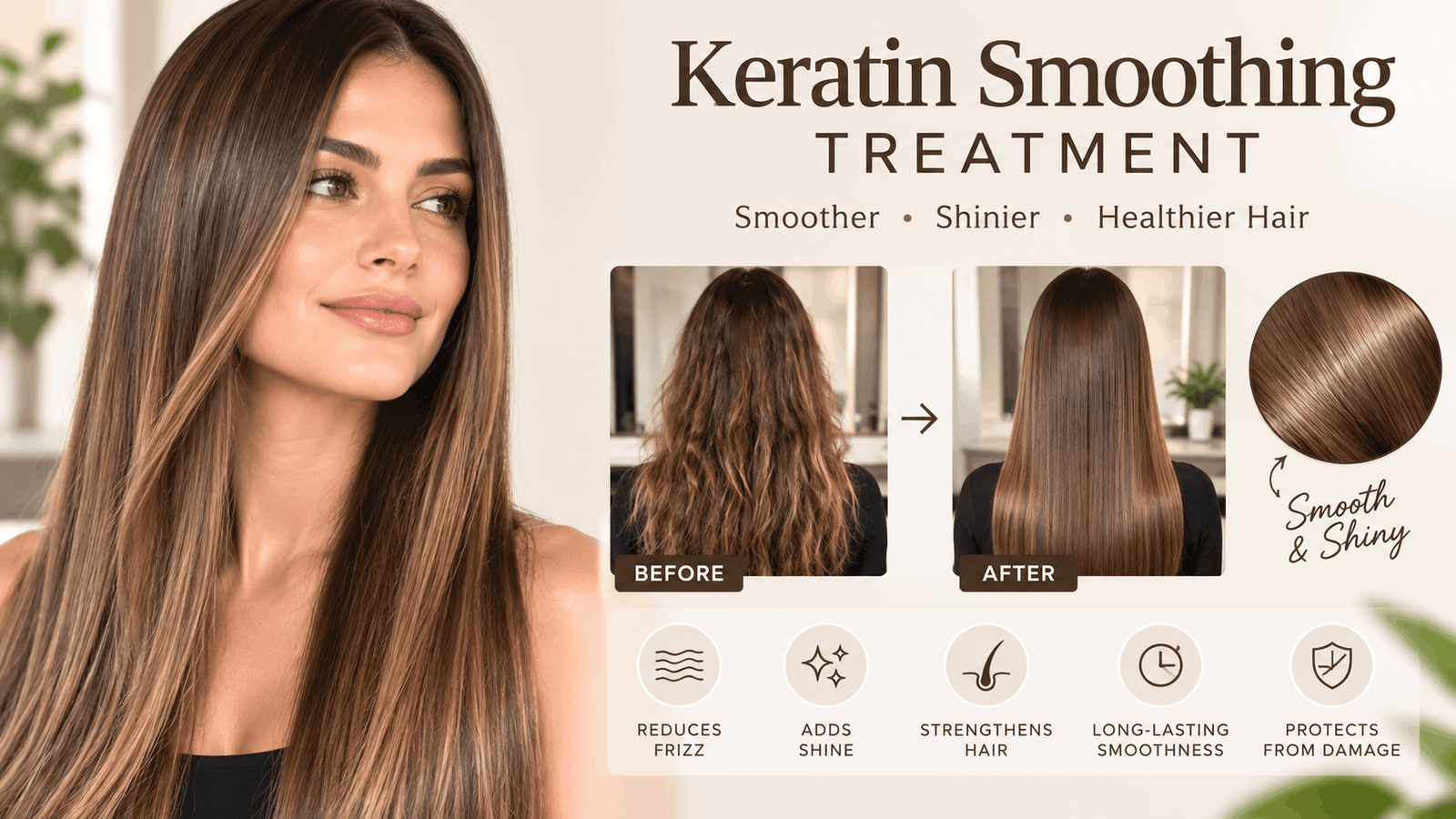
After treatment, hair may feel smoother and require less effort to style. However, the result can vary significantly depending on the formula and starting texture.
You may notice that your natural curls or waves are looser than before. This change can be temporary or longer-lasting, depending on the chemistry of the product.
If the hair becomes unusually brittle, breaks extensively, or develops significant scalp irritation, do not repeat the service without professional assessment.
Keratin Smoothing Treatment Aftercare
Use a Suitable Shampoo
Ask your stylist which shampoo is compatible with the treatment. Gentle, color-safe products may help maintain the appearance of the hair.
Some treatments recommend avoiding certain cleansing ingredients, while others have different instructions. Follow the specific guidance provided for the formula used.
Condition Regularly
Use conditioner after washing to improve softness and reduce friction. A suitable moisturizing mask may also help if the hair feels dry.
Apply products according to your hair type, avoiding excessive buildup if your scalp becomes oily easily.
Reduce Excessive Heat
Although the treatment may make styling easier, repeated high-temperature heat styling can still damage hair. Use a heat protectant and keep the temperature as low as practical.
Follow Washing Instructions
Some treatments require a waiting period before the first wash, while others allow immediate washing. Do not follow generic advice that conflicts with the product’s directions.
Protect Hair While Sleeping
A smooth pillowcase and loose hairstyle may reduce friction and tangling overnight. Avoid tying the hair tightly, especially if the strands are fragile.
Schedule Follow-Up Services Carefully
Do not automatically repeat a treatment whenever the effect begins to fade. Assess the hair’s condition first, and ask the stylist whether a less intensive conditioning service would be more appropriate.
Potential Risks and Side Effects
A keratin smoothing treatment can have cosmetic benefits, but some formulas and application methods carry important risks.
Formaldehyde Exposure
Certain hair-smoothing products contain formaldehyde or ingredients that release it during heating. Exposure can irritate the eyes, nose, throat, and respiratory system. Some people may develop coughing, wheezing, headaches, skin irritation, or other symptoms.
Repeated occupational exposure is also a concern for salon workers. Formaldehyde is a known human carcinogen, and risk depends on factors including exposure level, duration, and route.
Before booking, ask for the exact product name and ingredient list. If the formula requires heating, ask the salon about ventilation and workplace safety precautions. Avoid products with unclear ingredients or unsupported safety claims.
Dryness and Breakage
Chemical processing and high heat may weaken the hair, especially if it is bleached or already damaged. Excessive processing can lead to roughness, split ends, and breakage.
Scalp and Skin Irritation
Products may cause irritation or allergic reactions. Follow product-specific patch-testing instructions, and do not apply smoothing formulas to an irritated or injured scalp.
Changes in Natural Texture
Some treatments can loosen waves or curls. The original texture may not return completely after certain chemical processes.
Eye and Respiratory Irritation
Strong fumes can be a warning sign of inadequate ventilation or a product that requires closer safety review. If you experience burning eyes, breathing difficulty, or significant irritation, leave the exposure area and seek medical advice when appropriate.
How to Choose a Safe Salon
Choosing an experienced stylist and a salon that takes product safety seriously is essential.
Ask for the product name: You should be able to identify the formula being applied and review its ingredients.
Check the ingredient information: Look for formaldehyde and related names such as formalin or methylene glycol. An ingredient list that is missing or unclear should raise questions.
Ask about ventilation: The salon should have appropriate ventilation and follow product safety instructions, particularly when heat is used.
Discuss your hair history: Previous bleaching, relaxing, or repeated coloring can affect the safety and outcome of the service.
Avoid unrealistic promises: No treatment can guarantee perfect results without any risk of damage.
Ask about alternatives: If you mainly want temporary smoothness, a conditioning mask, leave-in product, or professional blowout may provide an alternative with less intensive chemical processing.
Keratin Smoothing Treatment Cost
The price varies by salon, location, hair length, thickness, product, stylist experience, and time required. Long or thick hair may require more product and a longer appointment.
Some salons include washing and styling in the quoted price, while others charge separately for additional services. Corrective work or extra treatments may increase the cost.
When comparing options, consider the product’s ingredients, salon safety practices, and the stylist’s experience—not price alone. Ask for a clear estimate before the service begins.
Common Mistakes to Avoid
Choosing a treatment based only on the name: Two products marketed as keratin treatments may have very different ingredients and effects.
Ignoring ingredient safety: Do not assume that a product is safe because it is labelled natural, organic, or formaldehyde-free.
Using excessive heat: Higher temperatures do not automatically produce better results and may increase damage.
Repeating the service too frequently: Repeated chemical processing can weaken hair over time.
Ignoring aftercare: Appropriate washing, conditioning, and gentle styling help maintain the appearance of treated hair.
Expecting permanent results: Most smoothing effects gradually fade, and new growth remains untreated.
Conclusion
A keratin smoothing treatment can help reduce frizz, improve shine, and make hair easier to manage. The final result depends on the formula, hair texture, starting condition, and application method. Some services mainly smooth the hair, while others can loosen curls or create a straighter finish.
Before choosing a treatment, discuss your expectations with an experienced stylist, review the product ingredients, and ask about ventilation and chemical exposure. This is especially important for formulas that may release formaldehyde when heated. With realistic expectations and appropriate aftercare, you can make a more informed decision about whether smoothing is right for your hair.
Frequently Asked Questions
1. What is a keratin smoothing treatment?
It is a salon service designed to reduce frizz, improve smoothness, and make hair easier to manage. Products and results vary, and some formulas also loosen curls.
2. How long does a keratin smoothing treatment last?
Depending on the product and hair-care routine, the effect may last several weeks or a few months. The result gradually fades with washing and hair growth.
3. Does keratin smoothing permanently straighten hair?
Not necessarily. Many smoothing treatments provide temporary frizz control, although some formulas can alter the curl pattern for longer. Results depend on the product’s chemistry.
4. Can a keratin treatment damage hair?
Yes. Chemical processing and high heat can contribute to dryness, weakness, and breakage, particularly in previously bleached or fragile hair.
5. Is a keratin smoothing treatment safe?
Safety depends on the formula, application method, ventilation, and individual sensitivity. Some products can release formaldehyde during heating, so check the ingredients and ask about exposure precautions.
6. Can I wash my hair after the treatment?
It depends on the product. Some services allow immediate washing, while others require a waiting period. Follow the specific instructions provided by your stylist or the manufacturer.
7. Is keratin smoothing suitable for curly hair?
It may reduce frizz and loosen curls, depending on the formula. Discuss your desired result with a stylist experienced in your hair texture.
8. Can I get a keratin treatment on colored hair?
Some treatments may be suitable for color-treated hair, but compatibility and hair condition should be assessed first. Bleached or heavily processed hair may be more vulnerable to damage.
9. What shampoo should I use after keratin smoothing?
Use a shampoo recommended for the specific treatment. A gentle, color-safe formula may help maintain the hair’s appearance, but the product instructions should guide your choice.
10. Is a keratin smoothing treatment better than a regular hair mask?
They serve different purposes. A hair mask generally conditions the hair temporarily, while a salon smoothing treatment may provide longer-lasting frizz reduction and can involve chemical processing and heat. The right option depends on your goals and hair condition.