Eyebrow Tint: Benefits, Risks, Procedure, and Aftercare
Introduction
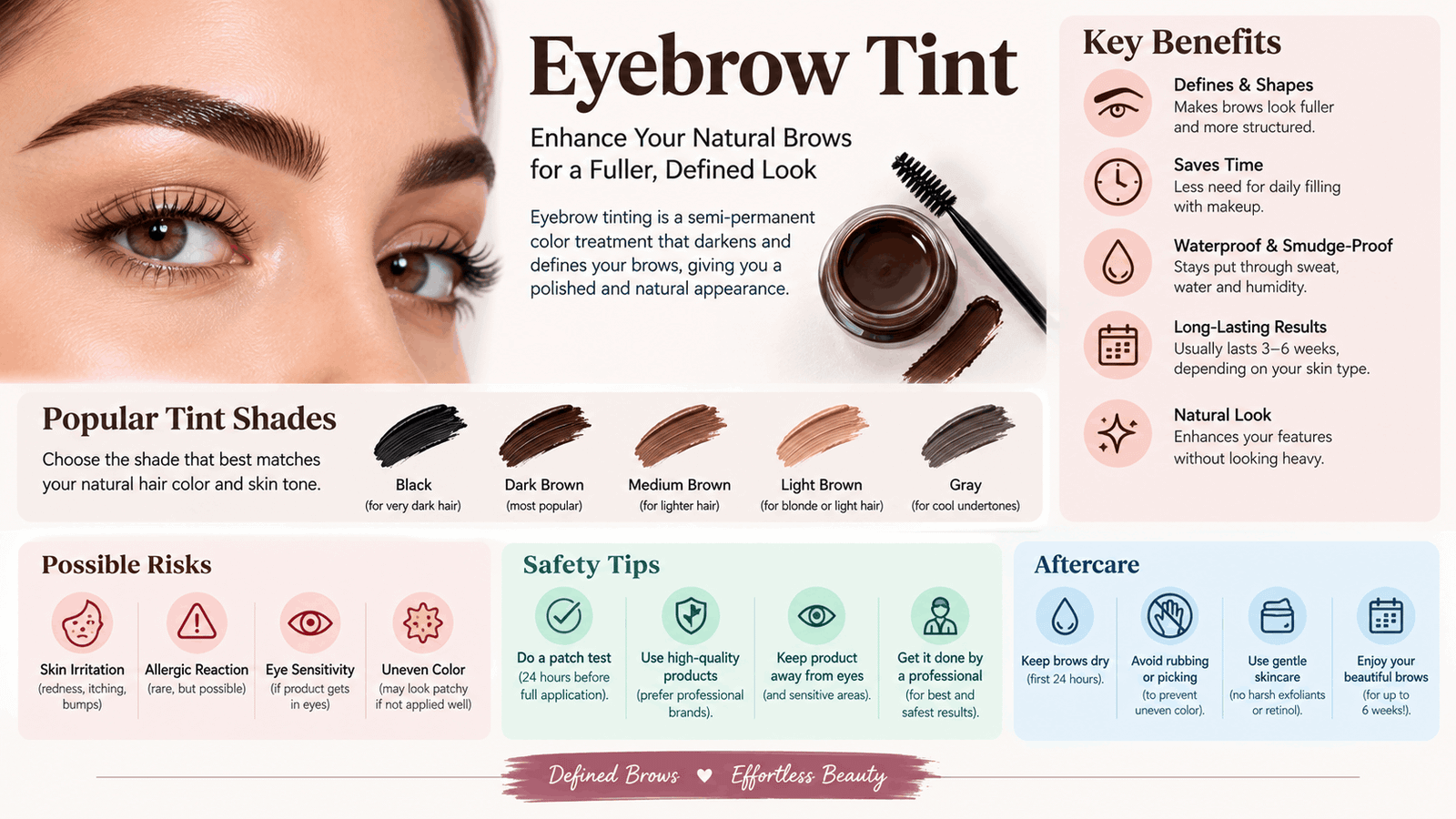
Well-defined eyebrows can enhance facial features and create a polished appearance without requiring a complicated makeup routine. Eyebrow tinting is a popular beauty treatment that adds color to eyebrow hairs, making them appear fuller, more defined, and easier to style.
This treatment is especially appealing to people with naturally light, sparse-looking, or uneven eyebrows. By adding temporary color to existing hairs, tinting can help create a more balanced look while reducing the need for daily eyebrow pencils, powders, or gels.
However, eyebrow tinting is not suitable for everyone. The products used near the eyes can cause irritation or allergic reactions, and some dyes are not approved for use in the eyebrow area. Understanding the procedure, benefits, possible risks, and proper aftercare can help you make an informed decision.
What Is Eyebrow Tinting?
Eyebrow tinting is a cosmetic treatment that applies a specially formulated color product to the eyebrow hairs. The goal is to enhance their natural shade, improve definition, and make existing hairs more noticeable.
A trained beauty professional usually selects a color based on your natural hair, skin tone, and desired appearance. Depending on the product, the tint may also stain some of the skin beneath the brows temporarily, creating the impression of greater fullness.
Unlike microblading or eyebrow tattoos, tinting does not involve inserting pigment into the skin with needles. Its results are temporary, and the color gradually fades as the hairs shed and the skin renews itself.
The exact results depend on the tint formulation, application technique, hair color, and individual skin characteristics.
Benefits of Eyebrow Tinting
1. Creates Fuller-Looking Brows
Light-colored or fine eyebrow hairs can be difficult to see, even when the brows contain a reasonable amount of hair. Tinting makes these hairs more visible, which may create a fuller appearance.
It can be particularly helpful for people whose eyebrow hairs are naturally blonde, light brown, or slightly gray.
2. Enhances Natural Definition
Tinting can improve the appearance of the brow shape by making individual hairs easier to see. This can help define the natural arch and create a more balanced look.
However, tinting does not change the actual shape of the eyebrows. Waxing, threading, or trimming may be needed if you want a different outline.
3. Reduces Daily Makeup Time
People who regularly fill in their eyebrows may find that tinting reduces the amount of time needed for their everyday makeup routine.
Some people still prefer to use a pencil or gel for additional definition, especially for special occasions.
4. Provides a Natural-Looking Finish
When the color is selected carefully, tinted brows can look subtle and natural. A professional can choose a shade that complements your hair color instead of creating an overly dark or harsh appearance.
5. Offers Temporary Results
Eyebrow tinting is not permanent. This allows you to try a different shade without committing to a long-lasting cosmetic procedure.
If you dislike the result, the color generally fades over time, although the speed of fading varies.
6. Works With Different Beauty Styles
Tinted eyebrows can complement natural makeup, soft glam, full-coverage makeup, and minimalist beauty routines. The result can be customized from barely noticeable enhancement to a more defined brow appearance.
Different Types of Eyebrow Tinting
Several products and techniques are used to enhance eyebrow color. They are not interchangeable, so choosing the correct product is important.
1. Professional Eyebrow Tint
A professional eyebrow tint is formulated for eyebrow use and applied according to the manufacturer’s instructions.
The color can be customized to suit your features, and a trained professional can assess the condition of your skin and brows before treatment.
2. Henna Brows
Henna brow treatments use henna-based formulations or products marketed as henna brow stains. Depending on the formulation, they may color the hairs and temporarily stain the skin beneath them.
The ingredients vary between products, so the label should be checked carefully. Some products marketed as henna contain additional dyes or chemicals that can cause allergic reactions.
Avoid using black henna products containing para-phenylenediamine (PPD) or other unsuitable dyes near the eyes.
3. Semi-Permanent Brow Stains
Some brow stains are designed to leave a temporary tint on both the hairs and the skin. They may create a more filled-in appearance than products that color the hairs alone.
The duration depends on the product, skin type, cleansing routine, and other factors.
4. At-Home Eyebrow Tint Kits
Home tinting kits are available, but only products specifically intended for eyebrows should be considered. Follow the directions exactly and never substitute ordinary hair dye for an eyebrow product.
Because the treatment is performed close to the eyes, professional application may be the safer choice, particularly for beginners.
How to Choose the Right Eyebrow Tint Color
Selecting the right shade is essential for a natural-looking result. A color that is too dark may make the eyebrows look harsh, while a shade that is too light may provide little visible difference.
Match Your Natural Hair Color
A useful starting point is to choose a shade that complements your natural eyebrow and hair color. The ideal choice does not always need to match your hair exactly.
- Blonde hair: Soft blonde, taupe, or light brown may create gentle definition.
- Light brown hair: Medium brown can enhance the brows without making them look overly dark.
- Dark brown hair: Deep brown often provides definition while retaining a natural appearance.
- Black hair: Dark brown may look softer than an intense black tint.
- Gray or silver hair: A suitable cool or neutral brown may provide balanced definition.
These are general guidelines rather than strict rules. Your preferred makeup style and natural eyebrow color should also influence the decision.
Consider Your Skin Undertone
Warm brown shades may complement warm complexions, while neutral or cooler browns can work well for people who prefer an ashy finish.
However, there is no universal color rule based on skin tone alone. A professional consultation can help identify a shade that complements your overall appearance.
Start With a Subtle Shade
If you are tinting your eyebrows for the first time, a slightly softer shade can be a practical starting point. It is often easier to create additional definition with makeup than to correct a result that looks too dark.
What Happens During an Eyebrow Tinting Appointment?
A professional appointment is usually straightforward, although the exact process depends on the product and salon.
Step 1: Consultation
The professional discusses your desired look, natural brow color, previous reactions to dyes, skin sensitivities, and any relevant eye conditions.
Tell them if you have recently experienced irritation around the eyes or have reacted to hair dye in the past.
Step 2: Cleaning the Eyebrows
The eyebrow area is gently cleansed to remove makeup, oil, and other residue that could interfere with application.
The skin should be free from active irritation or broken areas.
Step 3: Selecting the Tint
The professional chooses a product and shade suitable for eyebrow use. The product should be applied according to its specific instructions.
Step 4: Applying the Color
The tint is applied carefully to the eyebrow hairs while avoiding contact with the eyes. The product remains on the brows only for the time specified by the manufacturer.
Processing time varies by formulation, so there is no single timing recommendation that applies to every tint.
Step 5: Removing the Tint
The professional removes the product according to the instructions and checks the result. Any excess color may be cleaned away from the surrounding skin.
Step 6: Final Assessment
The eyebrows are examined for evenness and overall appearance. If shaping is also requested, it may be performed separately, depending on the salon’s services and the condition of your skin.
How Long Does Eyebrow Tint Last?
Eyebrow tint generally lasts around two to four weeks on the hairs, although some products fade sooner or remain visible longer.
When a product also stains the skin, that effect often fades more quickly, sometimes within a few days. Results depend on the formulation, hair growth cycle, skin type, cleansing habits, and exposure to oils or exfoliating products.
Frequent washing, makeup removers, swimming, and exfoliation may cause the color to fade sooner.
Tinting does not stop eyebrow hairs from growing or shedding. As new hairs appear, the overall color may gradually look less uniform.
Eyebrow Tinting Risks and Side Effects
Although eyebrow tinting is common, it is not risk-free. Products used close to the eyes require particular care.
1. Allergic Reactions
Some dye ingredients can cause allergic contact dermatitis. Symptoms may include redness, itching, swelling, burning, or a rash around the eyebrows.
A reaction may occur even if you have used similar products before without problems.
Follow the manufacturer’s allergy-testing instructions where provided. A negative patch test cannot guarantee that a reaction will not occur, and it does not make an unsuitable product safe for eye-area use.
2. Eye Irritation
If tint enters the eyes, it can cause significant irritation or injury. Products should never be applied where they may run into the eyes.
If a product gets into an eye, rinse immediately with plenty of clean, lukewarm running water and follow the product’s safety instructions. Seek urgent medical advice if pain, redness, blurred vision, or irritation persists.
3. Skin Irritation
Some products can irritate sensitive skin, especially when applied to skin that is inflamed, recently exfoliated, or damaged.
Avoid tinting over cuts, rashes, sunburn, or active irritation around the eyebrows.
4. Unsuitable Products
Ordinary hair dyes are not automatically safe for eyebrows. Some products contain ingredients that can cause severe reactions, and the risks are greater when products are used close to the eyes.
Use only products specifically labeled and intended for eyebrow use, following their instructions.
5. Uneven or Unwanted Color
An incorrect shade, inconsistent application, or unsuitable processing time can lead to overly dark, patchy, or uneven brows.
A trained professional can help reduce these problems and choose a shade that suits your features.
Eyebrow Tint Aftercare
Appropriate aftercare helps maintain the result and reduce unnecessary irritation.
Avoid Rubbing the Area
Be gentle when touching or cleansing the eyebrows after treatment. Rubbing can irritate the skin and may cause the color to fade more quickly.
Follow the Product’s Instructions
Some products recommend avoiding water, steam, or heavy products for a short period, while others have different aftercare requirements. Follow the specific instructions given by your professional or included with the product.
There is no universal rule that every eyebrow tint must remain dry for exactly the same amount of time.
Use Gentle Cleansers
Avoid harsh scrubs and unnecessary exfoliation around the eyebrows. Gentle cleansing can help preserve the tint and protect the skin.
Be Careful With Oils and Makeup Removers
Oil-based products and frequent cleansing may shorten the life of some tints. If maintaining the color is important, ask your professional which products are compatible with the formulation used.
Do Not Reapply Too Frequently
Repeated tinting may increase the risk of irritation or allergic sensitization. Follow the recommended interval for the particular product and avoid reapplying if your skin is irritated.
Eyebrow Tint vs. Eyebrow Lamination
Both serve different purposes.
Eyebrow tinting adds color to existing hairs, making them more visible and defined.
Eyebrow lamination uses a chemical process to reposition and set brow hairs, creating a brushed-up or more uniform appearance.
Some salons offer both treatments together, but combining chemical services may increase irritation risk. Your professional should assess whether the products are suitable for your skin and brows before combining them.
Eyebrow Tint vs. Microblading
Both treatments can make eyebrows look more defined, but the methods and results are different.
Eyebrow tinting colors the existing hairs and may temporarily stain the skin. It does not use needles, and the result gradually fades.
Microblading is a form of cosmetic tattooing in which pigment is placed into the skin using a specialized tool. It involves a more invasive procedure, healing, and additional risks such as infection, scarring, and pigment changes.
Tinting may suit people who want a temporary change, while microblading is intended for longer-lasting results and requires careful consideration of the risks.
Who Should Avoid Eyebrow Tinting?
Eyebrow tinting may not be appropriate for everyone. Consider postponing treatment and seeking professional advice if you have:
- An active rash, infection, or broken skin around the eyebrows.
- A history of severe reactions to hair dyes or brow tint products.
- Significant eye irritation or an active eye condition.
- Recently irritated skin after waxing, threading, exfoliation, or other treatments.
- A known allergy to an ingredient in the tint.
If you have a history of allergic reactions to hair dye, do not assume that a different brand will be safe. A healthcare professional or dermatologist can help assess your risk.
Can You Tint Your Eyebrows at Home?
At-home tinting may be possible with a product specifically intended for eyebrow use, but careful preparation is essential.
Before starting, read the full instructions, check the ingredients, and follow any recommended allergy-testing procedure. Use the product only for its stated purpose and never use regular hair dye, beard dye, or a product intended exclusively for eyelashes.
Keep the product away from the eyes and do not exceed the recommended processing time. If burning, itching, swelling, or other irritation develops, remove the product as directed and discontinue use.
For beginners or people with sensitive skin, professional application offers the advantage of experienced product handling and shade selection.
Conclusion
Eyebrow tinting is a convenient way to enhance natural brow color, improve definition, and reduce the need for daily makeup. It offers a temporary alternative to more permanent cosmetic procedures and can be customized to complement different hair colors and personal styles.
However, choosing an appropriate product is essential because dye reactions and eye irritation can occur. Use only formulations specifically intended for eyebrows, follow all safety instructions, and avoid treatment when the surrounding skin is irritated.
With suitable color selection and careful aftercare, eyebrow tinting can be a useful addition to a beauty routine. If you have sensitive skin, previous dye reactions, or concerns about eye safety, seek professional guidance before treatment.
Frequently Asked Questions (FAQs)
1. What is eyebrow tinting?
Eyebrow tinting is a cosmetic treatment that adds color to eyebrow hairs, making them appear more defined and noticeable. Some formulations also temporarily stain the skin beneath the brows.
2. How long does eyebrow tint last?
The color often remains visible on eyebrow hairs for approximately two to four weeks. Any temporary skin stain may fade sooner, depending on the product and individual skin characteristics.
3. Is eyebrow tinting safe?
It can be performed safely when an appropriate product is used according to its instructions, but allergic reactions and eye irritation are possible. Use only products intended for eyebrows and avoid contact with the eyes.
4. Can eyebrow tinting cause an allergic reaction?
Yes. Some ingredients can cause redness, itching, swelling, or a rash. Follow the manufacturer’s allergy-testing instructions, but remember that testing cannot guarantee that a reaction will not occur.
5. Can I use regular hair dye on my eyebrows?
No. Ordinary hair dye is not automatically safe for use near the eyes. Use only products specifically formulated and labeled for eyebrow application.
6. Does eyebrow tinting make eyebrows grow?
No. Tinting colors existing hairs but does not stimulate hair growth or increase the number of follicles.
7. Can I tint my eyebrows if I have sensitive skin?
Sensitive skin may be more prone to irritation. Consult a qualified professional or healthcare provider if you have a history of reactions, and avoid treatment on inflamed or damaged skin.
8. What should I avoid after eyebrow tinting?
Follow the specific product instructions. Depending on the formulation, you may need to limit rubbing, harsh cleansers, exfoliation, or oil-based products that can irritate the skin or fade the color.
9. Is eyebrow tinting better than microblading?
Neither option is universally better. Tinting is temporary and colors existing hairs, while microblading places pigment into the skin for a longer-lasting result and involves additional procedural risks.
10. Can I remove eyebrow tint if it is too dark?
The color generally fades gradually with normal washing. Avoid harsh chemicals, bleach, or aggressive scrubbing near the eyes. If the result is very dark or your skin becomes irritated, consult a qualified professional for safe advice.