Niacinamide Serum: Benefits and Skincare Tips for Healthy Skin
Introduction
Healthy skin depends on a well-functioning skin barrier, balanced moisture levels, and protection from environmental damage. However, excess oil, clogged pores, uneven skin tone, redness, and dehydration can affect the appearance and comfort of the skin. Choosing skincare products with suitable ingredients can help address these concerns without making a routine unnecessarily complicated.
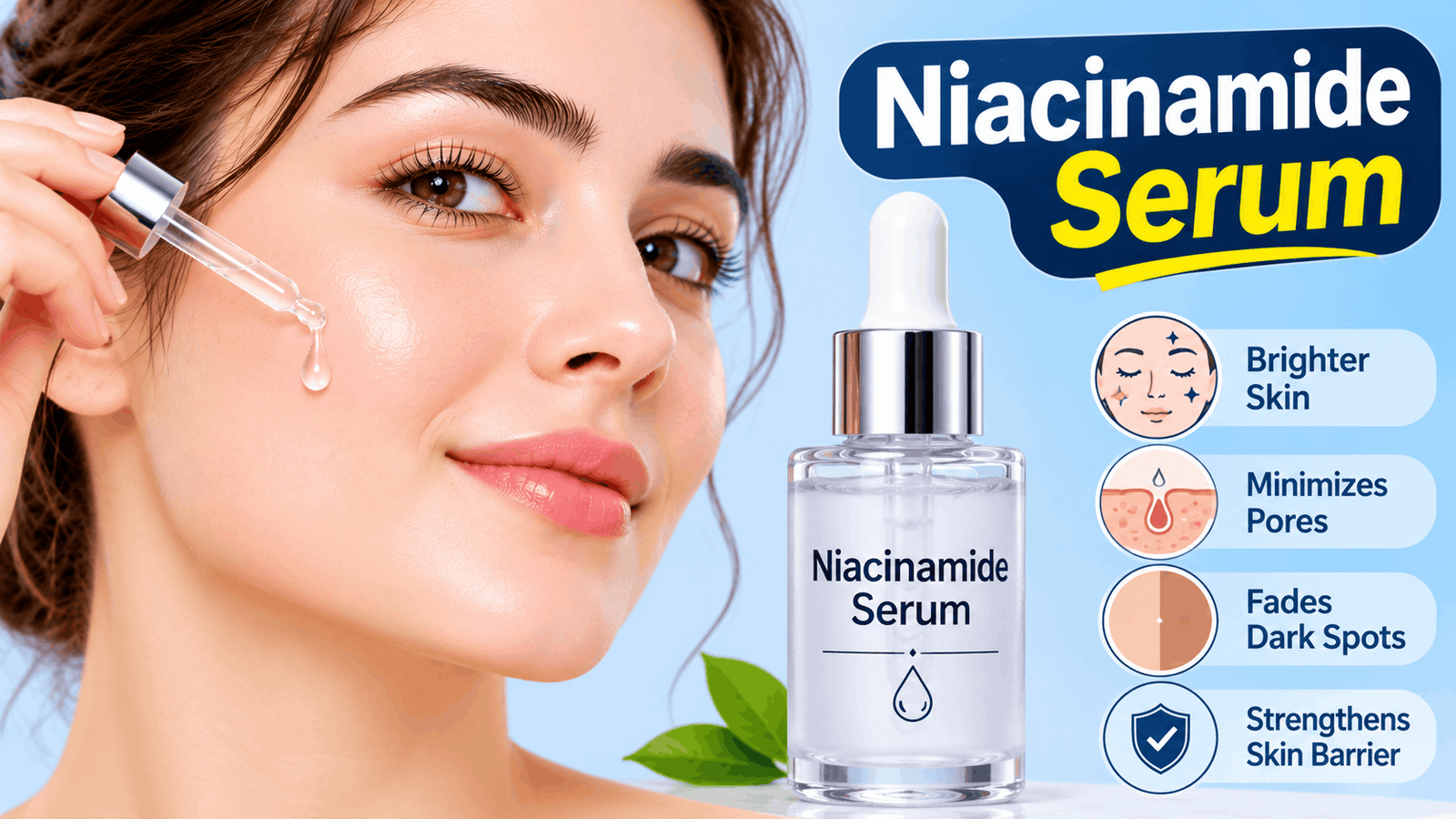
Niacinamide serum has become a popular choice because it contains niacinamide, a form of vitamin B3 that supports several important skin functions. Depending on the formulation, it may help strengthen the skin barrier, reduce the appearance of excess oil, improve uneven pigmentation, and make the skin look smoother.
Unlike some strong exfoliating ingredients, niacinamide is generally well tolerated by many skin types. Nevertheless, product concentration, formulation, and individual sensitivity all influence results.
This guide explains what niacinamide serum does, its potential benefits, how to use it correctly, which ingredients work well with it, and what to consider before adding it to your skincare routine.
What Is Niacinamide Serum?
Niacinamide serum is a topical skincare product containing niacinamide, also known as nicotinamide. It is a water-soluble form of vitamin B3 that plays an important role in cellular processes involved in energy production, skin barrier function, and the body’s normal response to environmental stress.
In skincare, niacinamide is used to address concerns such as oily skin, uneven tone, redness, dehydration, and visible signs of aging. It is commonly found in serums, moisturizers, cleansers, and other cosmetic products.
Many serums combine niacinamide with ingredients such as hyaluronic acid, glycerin, zinc compounds, or ceramides. These additions can provide complementary benefits, depending on the formula.
Niacinamide does not bleach the skin or permanently change its natural color. Instead, it may help improve the appearance of uneven pigmentation and support a healthier-looking complexion over time.
Benefits of Niacinamide Serum
Niacinamide has been studied for several dermatological and cosmetic uses. Results vary, and not every product provides the same level of benefit.
1. Supports the Skin Barrier
The skin barrier is the outermost layer of the skin. It helps retain moisture and protect against environmental irritants, allergens, and other external factors.
Niacinamide supports the production of important skin lipids, including ceramides, which help maintain barrier function. A healthy barrier can reduce excessive moisture loss and improve the skin’s ability to tolerate everyday environmental exposure.
This benefit may be particularly useful for people who experience dryness, tightness, or mild sensitivity.
2. Helps Balance Excess Oil
Excess sebum can contribute to a shiny appearance and may play a role in clogged pores. Niacinamide may help regulate surface oil and improve the appearance of oily skin.
It does not eliminate the skin’s natural oil production, nor should it leave the complexion excessively dry. The goal is to support a more balanced appearance while maintaining adequate hydration.
People with oily or combination skin may find a lightweight niacinamide serum useful as part of a consistent routine.
3. Improves the Appearance of Pores
Pore size is influenced by genetics, skin structure, sebum production, and other factors. Skincare products cannot permanently close or eliminate pores.
However, reducing excess surface oil and improving skin texture may make pores appear less noticeable. Niacinamide can support these goals, particularly when used consistently alongside gentle cleansing and appropriate moisturizing.
The result is generally a smoother-looking complexion rather than a permanent change in pore structure.
4. Helps Improve Uneven Skin Tone
Uneven pigmentation can develop after inflammation, acne, sun exposure, or other skin changes. Niacinamide may help reduce the appearance of certain dark spots by influencing the transfer of pigment-containing structures within the skin.
With consistent use, some formulations may improve the appearance of post-acne marks and uneven tone.
However, dark spots can have several causes. Persistent, changing, or unexplained pigmentation should be evaluated by a dermatologist rather than treated with cosmetic products alone.
5. May Help Calm Redness
Niacinamide has anti-inflammatory properties that may help improve the appearance of mild redness and irritation in some individuals.
It can also support the skin barrier, which may help the skin tolerate environmental stress more effectively.
People with rosacea, eczema, or other inflammatory skin conditions should choose products carefully. Although niacinamide may be suitable for some individuals with these conditions, it does not replace condition-specific medical treatment.
6. Supports Smoother-Looking Skin
Dehydration and an impaired skin barrier can make the skin look rough and uneven. Niacinamide may improve hydration indirectly by supporting barrier function and reducing water loss.
When the skin retains moisture more effectively, its surface may appear smoother and feel more comfortable.
A moisturizer containing glycerin, ceramides, or other hydrating ingredients can complement this benefit.
7. Helps Address Visible Signs of Aging
Fine lines, uneven tone, and changes in skin texture are common signs of aging. Some clinical research suggests that topical niacinamide formulations can improve aspects of skin texture, pigmentation, and the appearance of fine lines.
These effects are generally gradual and depend on the formulation and duration of use. Niacinamide should not be expected to produce the same effects as a cosmetic procedure or completely reverse established wrinkles.
Daily sunscreen remains essential for limiting ultraviolet damage that contributes to premature skin aging.
Which Niacinamide Concentration Should You Choose?
Niacinamide serums are available in different concentrations. A higher percentage is not automatically more effective or more suitable for every person.
Lower Concentrations
Formulas containing approximately 2% niacinamide may suit people who prefer a gentle product for everyday use. Lower concentrations may be particularly appealing to beginners or those with sensitive skin.
Moderate Concentrations
Products containing around 4–5% niacinamide are commonly used in skincare and have been studied for concerns such as uneven pigmentation, skin barrier support, and acne-related inflammation.
This range can be a reasonable starting point for many people, although individual tolerance varies.
Higher Concentrations
Some products contain 10% niacinamide or more. These formulas may appeal to consumers looking for a concentrated serum, but stronger products are not necessarily more effective.
Higher concentrations may increase the likelihood of irritation in susceptible individuals. If a product causes persistent burning, redness, or dryness, discontinue it and consider a lower concentration or a different formulation.
The overall ingredient list and quality of the formula matter more than the percentage alone.
How to Use Niacinamide Serum Correctly
Applying a serum in a consistent routine can help you evaluate how well it suits your skin.
Step 1: Cleanse Your Skin
Wash your face with a gentle cleanser to remove sweat, sunscreen, makeup, and excess surface oil. Avoid aggressive scrubbing or harsh cleansing products that leave your skin feeling tight.
Pat your face dry with a clean towel.
Step 2: Apply the Serum
Apply a small amount according to the product instructions, spreading it gently over the face. Avoid direct contact with the eyes and do not apply the product to broken or severely irritated skin.
If you are new to niacinamide, begin with a lower concentration and use it less frequently if necessary.
Step 3: Apply Moisturizer
Follow with a moisturizer suited to your skin type. Ingredients such as glycerin and ceramides can help retain moisture and support the skin barrier.
People with oily skin may prefer a lightweight lotion or gel, while those with dry skin may benefit from a richer cream.
Step 4: Apply Sunscreen in the Morning
Use a broad-spectrum sunscreen with SPF 30 or higher during the daytime. Sunscreen helps prevent additional ultraviolet damage and reduces the likelihood of existing dark spots becoming more pronounced.
Niacinamide is not a substitute for sun protection.
Step 5: Stay Consistent
Follow the product’s directions and give your skin time to respond. Improvements in oiliness, texture, or pigmentation may take several weeks, and results vary among individuals.
Avoid adding multiple new active ingredients simultaneously. Introducing products one at a time makes it easier to identify the cause if irritation develops.
A Simple Morning and Evening Routine
Morning Routine
- Gentle cleanser.
- Niacinamide serum.
- Moisturizer.
- Broad-spectrum sunscreen, SPF 30 or higher.
Evening Routine
- Cleanser to remove makeup, sunscreen, and daily impurities.
- Niacinamide serum.
- Moisturizer.
If you use a prescription acne treatment or another active ingredient, adjust the routine according to its instructions and your dermatologist’s advice.
Niacinamide Serum for Different Skin Types
For Oily Skin
Choose a lightweight, non-comedogenic formula that does not leave an uncomfortable residue. Niacinamide may help improve the appearance of excess oil, but gentle cleansing and appropriate acne treatment may still be necessary.
For Dry Skin
Look for a serum that combines niacinamide with hydrating ingredients such as glycerin or hyaluronic acid. Follow it with a moisturizer containing ceramides or other barrier-supporting components.
For Combination Skin
A moderate-strength serum may help address oiliness in some areas while supporting the skin barrier. Use a moisturizer that provides sufficient hydration without feeling excessively heavy.
For Sensitive Skin
Consider a fragrance-free product with a relatively low concentration of niacinamide. Introduce it gradually and test a small area before applying it across the face.
If you have eczema, rosacea, or a history of allergic reactions to skincare products, seek professional guidance if you are unsure whether the product is appropriate.
For Acne-Prone Skin
Niacinamide may help support the skin barrier and reduce inflammation associated with some acne lesions. However, it is not a complete treatment for moderate or severe acne.
Depending on the type of acne, a dermatologist may recommend ingredients such as benzoyl peroxide, salicylic acid, or topical retinoids alongside a suitable skincare routine.
For Mature Skin
Niacinamide may help improve the appearance of uneven tone, fine lines, and skin texture. Combining it with daily sun protection and a moisturizer can provide a useful foundation for an anti-aging routine.
People seeking more substantial improvement in wrinkles or sun damage may benefit from professional advice about additional treatments.
Ingredients That Work Well With Niacinamide
Niacinamide is versatile and can often be combined with other skincare ingredients.
Hyaluronic Acid
Hyaluronic acid attracts water and helps keep the skin hydrated. Using it with niacinamide may support a smoother and more comfortable complexion.
Ceramides
Ceramides help maintain the skin barrier and reduce moisture loss. They can complement niacinamide, particularly in routines for dry or sensitive skin.
Glycerin
Glycerin is a humectant that attracts water to the outer layers of the skin. It can help improve softness and reduce the feeling of dryness.
Vitamin C
Niacinamide and vitamin C can generally be used in the same skincare routine. Modern formulations can be compatible, despite older concerns that these ingredients should never be combined.
If your skin is sensitive, introduce them gradually or use one in the morning and the other in the evening.
Retinoids
Retinoids can help address acne, uneven texture, and visible signs of aging. Niacinamide may complement a retinoid routine by supporting barrier function.
However, retinoids can cause dryness and irritation. Introduce them carefully, and follow medical advice if using prescription formulations. Topical retinoids are generally avoided during pregnancy.
Salicylic Acid
Salicylic acid can help unclog pores and reduce blackheads. It may be used alongside niacinamide, but sensitive skin may react to excessive use of active ingredients.
Start gradually and adjust the routine if irritation develops.
Potential Side Effects and Safety Precautions
Niacinamide is generally well tolerated when used topically, but side effects are possible.
Some people may experience:
- Mild redness.
- Itching or stinging.
- Dryness or irritation.
- A rash or sensitivity to another ingredient in the formula.
To reduce the likelihood of a reaction, choose a suitable concentration, follow the label instructions, and introduce the serum gradually.
A patch test on a small area can help identify possible irritation, although it cannot guarantee that a product will never cause a reaction.
Stop using the product if irritation persists or worsens. Seek medical advice for significant swelling, a severe rash, or other concerning symptoms.
It is also important to distinguish topical niacinamide from oral vitamin B3 supplements. Taking high-dose supplements is not necessary for cosmetic skincare and should not be undertaken without appropriate medical guidance.
Common Mistakes to Avoid
Choosing the Highest Percentage
A concentrated serum is not automatically the best option. A lower-strength product may provide adequate benefits with less irritation.
Using Too Many Active Ingredients
Combining several strong exfoliants, retinoids, and other active ingredients can damage the skin barrier. Build your routine gradually.
Skipping Moisturizer
Even oily skin requires appropriate hydration. A suitable moisturizer helps maintain skin comfort and supports barrier function.
Expecting Instant Results
Niacinamide is not an overnight solution for acne scars, pigmentation, or wrinkles. Consistent use and realistic expectations are important.
Ignoring Sunscreen
Sun exposure can worsen uneven pigmentation and contribute to premature aging. Daily sunscreen is essential when treating concerns such as dark spots.
Applying Excessive Amounts
Using more serum than directed does not guarantee better results. Follow the product instructions and use only the amount needed for even application.
How Long Does Niacinamide Serum Take to Work?
The time required to notice improvement depends on the concern being treated, the product formulation, and the person’s skin.
Some people may notice changes in skin comfort or oiliness within the first few weeks. Improvements in uneven tone and the appearance of dark spots may take longer, often several weeks to a few months.
Take photographs under similar lighting conditions if you want to compare changes over time. If a product causes ongoing irritation or does not address a persistent skin problem, reconsider its use and consult a dermatologist.
Remember that cosmetic products can improve the appearance of the skin, but they cannot guarantee that every concern will disappear.
Conclusion
Niacinamide serum is a versatile skincare option that may help support the skin barrier, improve the appearance of excess oil, reduce the visibility of uneven pigmentation, and promote smoother-looking skin. It is suitable for many skin types when the concentration and formulation are chosen appropriately.
For the best results, use the serum consistently alongside gentle cleansing, a suitable moisturizer, and daily sunscreen. Introduce new products gradually and avoid combining too many active ingredients at once.
Although niacinamide has several useful cosmetic applications, it is not a cure for every skin concern. Persistent acne, significant pigmentation, ongoing redness, or unexplained skin changes may require a dermatologist’s assessment.
A simple, evidence-informed routine is often more beneficial than using numerous products. Choosing suitable ingredients and maintaining healthy skincare habits can help support a more balanced and comfortable complexion.
Frequently Asked Questions About Niacinamide Serum
1. What does niacinamide serum do for the skin?
Niacinamide serum may help support the skin barrier, improve the appearance of excess oil, reduce visible redness, and improve uneven skin tone. Its benefits depend on the concentration and formulation.
2. Can niacinamide serum be used every day?
Many niacinamide serums are designed for daily use. Follow the manufacturer’s instructions and introduce the product gradually if your skin is sensitive.
3. Is niacinamide serum good for oily skin?
Yes. Niacinamide may help improve the appearance of excess oil and support a more balanced complexion. Choose a lightweight formula that suits your skin.
4. Can niacinamide serum remove dark spots?
It may help improve the appearance of some forms of uneven pigmentation with consistent use. Results vary, and daily sunscreen is important for preventing further darkening.
5. Which niacinamide percentage is best for beginners?
A formula containing approximately 2–5% niacinamide may be a reasonable starting point for many beginners. Higher concentrations are not automatically more effective and may be less suitable for sensitive skin.
6. Can I use niacinamide with vitamin C?
Yes, these ingredients can generally be used together. If you experience irritation, introduce them separately or use them at different times of day.
7. Does niacinamide serum help with acne?
It may help reduce inflammation and support the skin barrier, but it may not be sufficient for moderate or severe acne. A dermatologist can recommend additional treatments when needed.
8. Can niacinamide serum reduce pore size?
It cannot permanently shrink pores. However, improving oil balance and skin texture may make pores appear less noticeable.
9. Should niacinamide serum be applied before moisturizer?
Yes. A lightweight serum is generally applied before moisturizer. Finish your morning routine with broad-spectrum sunscreen.
10. How long does niacinamide serum take to show results?
Some people notice changes in skin comfort or oiliness within a few weeks, while improvements in pigmentation may take longer. Results vary according to the formula, skin concern, and consistency of use.