Best Lotion for Dry Skin: Ingredients, Types,and Application Tips
Introduction
Dry skin can feel rough, tight, flaky, itchy, or uncomfortable, especially after bathing or during cold and dry weather. Choosing the best lotion for dry skin can make a major difference, but not every moisturizer works equally well for every person.
Dermatologists generally recommend looking beyond marketing claims and choosing moisturizers based on their ingredients, texture, and your level of dryness. For very dry skin, creams and ointments are often more effective than lightweight lotions because they contain more moisturizing ingredients and help reduce water loss from the skin.
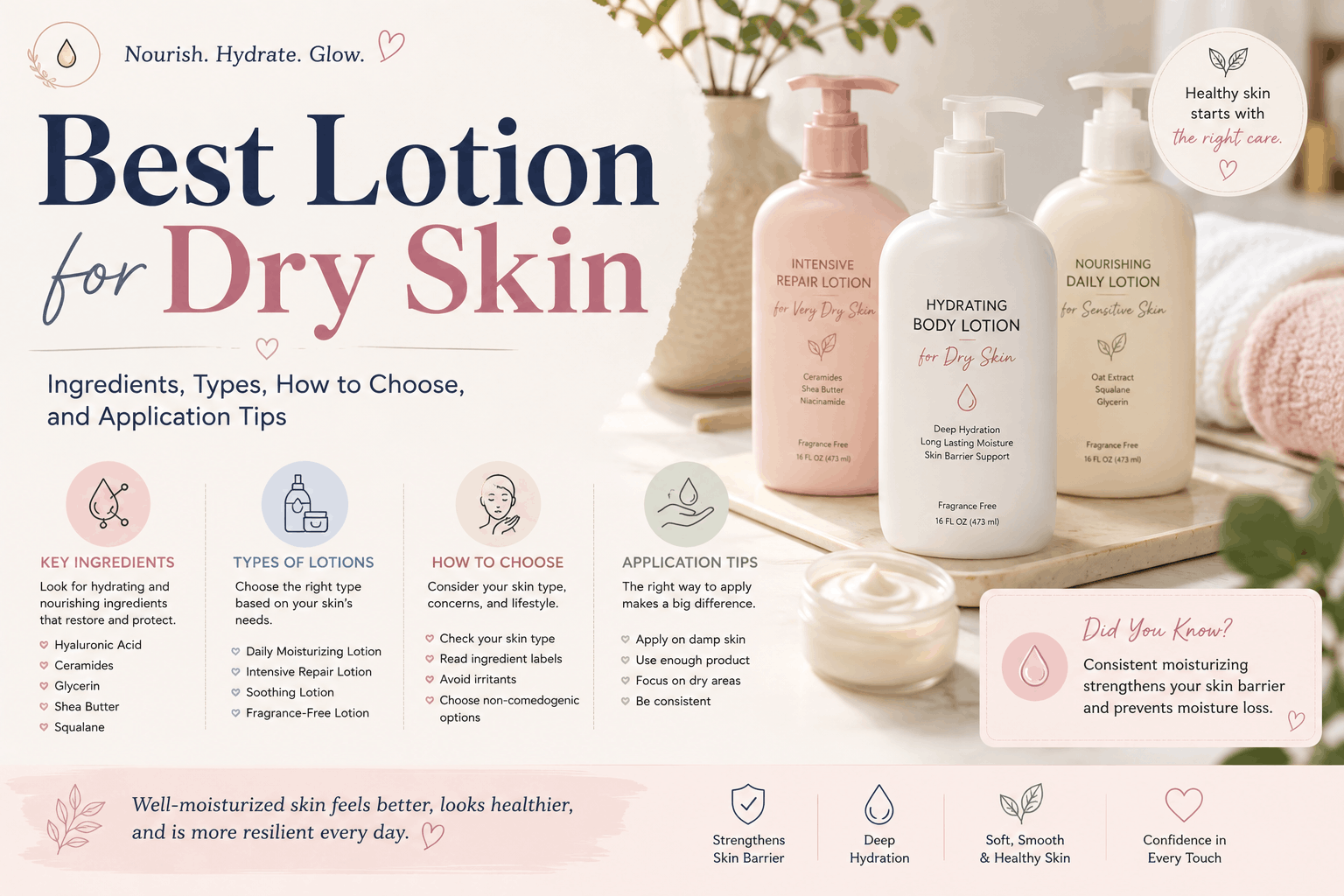
Ingredients such as ceramides, glycerin, hyaluronic acid, petrolatum, dimethicone, shea butter, and urea can be useful for dry skin. Fragrance-free formulas are often a better choice, particularly when the skin is sensitive or irritated.
This guide explains what to look for in a dry-skin moisturizer, which ingredients can help, how to apply lotion correctly, and when persistent dryness may require professional evaluation.
What Is the Best Lotion for Dry Skin?
There isn’t one moisturizer that is universally the best for everyone. The ideal product depends on how dry your skin is, where you’re using it, whether your skin is sensitive, and whether you have an underlying skin condition.
For mildly dry skin, a fragrance-free lotion may be sufficient. For moderate or severe dryness, a thicker cream or ointment is usually a better choice.
The American Academy of Dermatology recommends creams or ointments over lotions for very dry skin because they tend to moisturize more effectively.
When comparing products, look for:
- Ceramides
- Glycerin
- Hyaluronic acid
- Petrolatum
- Dimethicone
- Shea butter
- Mineral oil
- Urea
- Lactic acid
The best product is ultimately one that provides enough moisture without causing irritation and that you can comfortably use consistently.
Lotion vs. Cream vs. Ointment
Understanding the difference between these moisturizer types can make choosing a product much easier.
Lotion
Lotions are generally lightweight and contain a higher proportion of water. They spread easily and may feel comfortable during warm weather or on mildly dry skin.
However, they may not provide enough protection for severely dry or cracked skin.
Cream
Creams are thicker than lotions and generally contain more oil. They provide stronger moisturization while remaining relatively easy to spread.
For many people with dry skin, a fragrance-free cream is a practical everyday choice.
Ointment
Ointments are the thickest type of moisturizer. They create a stronger barrier over the skin and can be particularly useful for extremely dry areas, cracked skin, and overnight treatment.
Petrolatum-based ointments are commonly recommended for very dry skin because they help trap existing moisture.
Best Ingredients for Dry Skin
1. Ceramides
Ceramides are lipids naturally found in the skin barrier. Moisturizers containing ceramides can help support and strengthen that barrier.
They are particularly useful when dryness is associated with a weakened or irritated skin barrier.
2. Glycerin
Glycerin is a humectant, meaning it helps attract and retain water in the skin.
It is commonly found in moisturizers designed for dry and sensitive skin and can help leave skin feeling softer and smoother.
3. Hyaluronic Acid
Hyaluronic acid helps hydrate the skin by attracting water.
It can be useful when you want hydration without an especially heavy or greasy texture. Dermatologists commonly recommend it as one of the ingredients to look for in moisturizing products.
4. Petrolatum
Petrolatum, commonly found in petroleum jelly products, is an effective occlusive ingredient. It forms a protective layer that reduces water loss from the skin.
For very dry skin, applying petrolatum over a moisturizer can help lock in hydration.
5. Dimethicone
Dimethicone is another ingredient that can help create a protective barrier over the skin.
It may be particularly useful in products designed for dry, irritated, or frequently washed skin.
6. Shea Butter
Shea butter is an emollient used in many moisturizers. It can help soften rough, dry skin and improve the feel of the skin’s surface.
7. Urea
Urea can be especially useful for very dry or rough skin. Dermatologists may recommend moisturizers containing urea depending on the severity and cause of dryness.
8. Lactic Acid
Lactic acid can provide both moisturizing and gentle exfoliating effects. It may be useful for rough, dry areas, although sensitive or irritated skin may not tolerate exfoliating ingredients well.
Best Lotion for Sensitive Dry Skin
If your skin is dry and sensitive, simplicity is usually helpful.
Look for products that are:
- Fragrance-free
- Gentle
- Dye-free when possible
- Suitable for sensitive skin
- Rich in barrier-supporting ingredients
The AAD specifically recommends fragrance-free products for dry skin. It also notes that “unscented” does not necessarily mean fragrance-free because a product can contain ingredients used to mask odors.
If a moisturizer burns or stings every time you apply it, stop using it and consider discussing the reaction with a dermatologist.
Best Lotion for Extremely Dry Skin
When skin is severely dry, a lightweight lotion may not be enough.
Signs of very dry skin can include:
- Significant flaking
- Rough texture
- Tightness
- Cracking
- Itching
- Redness
- Stinging
- Small skin fissures
For these situations, dermatologists often recommend moving from lotion to a thick cream or ointment.
A practical routine is to apply a fragrance-free cream to slightly damp skin and use a petrolatum-based ointment on particularly dry areas when needed.
Best Moisturizer for Dry Facial Skin
Facial skin can require a slightly different approach from the body.
If your face is dry but acne-prone, look for products labeled non-comedogenic, which are less likely to clog pores. Mayo Clinic also recommends considering oil-free or non-comedogenic products for people who tend to develop acne.
Useful ingredients may include:
- Ceramides
- Glycerin
- Hyaluronic acid
- Dimethicone
- Squalane
If your face is very dry and sensitive, avoid heavily fragranced products and aggressive exfoliation.
Best Lotion for Dry Hands
Frequent handwashing, hand sanitizer, cold temperatures, and occupational exposure can make the hands extremely dry.
For dry hands, apply moisturizer immediately after washing while the skin is still slightly damp.
The AAD recommends hand creams or ointments containing ingredients such as ceramides, glycerin, hyaluronic acid, mineral oil, or petrolatum.
For severely cracked hands, a thicker ointment at night can provide additional protection.
You can apply the product generously before bed and, if comfortable, wear cotton gloves to help keep the moisturizer in place.
Best Lotion for Dry Legs and Arms
Dryness on the arms and legs is often easier to manage with a thicker body cream.
Look for:
- Ceramides
- Glycerin
- Shea butter
- Petrolatum
- Dimethicone
- Urea
Apply moisturizer shortly after showering while the skin is still slightly damp. This helps trap water in the outer layer of the skin.
Best Lotion for Dry, Rough Feet
Feet, particularly heels, can become extremely dry and thick.
A regular lotion may not be sufficient for severely rough heels. A thicker cream or ointment can provide better hydration.
Products containing urea can also be useful for rough, dry skin when appropriately formulated.
At night, apply a rich moisturizer to the heels and other dry areas. For very dry skin, a petrolatum-based product can be applied over the moisturizer.
If cracks are deep, painful, bleeding, or repeatedly infected, professional assessment is appropriate.
How to Apply Lotion for the Best Results
Even an excellent moisturizer won’t work as well if it’s applied incorrectly.
Step 1: Use Warm, Not Hot, Water
Long, hot showers can remove natural oils from the skin and worsen dryness.
The AAD recommends keeping showers or baths relatively short—around five to ten minutes—and using warm water.
Step 2: Use a Gentle Cleanser
Avoid harsh soaps and heavily fragranced cleansing products when your skin is dry.
Use a gentle cleanser and don’t aggressively scrub flaky areas.
Step 3: Pat Your Skin Dry
Instead of rubbing your skin vigorously with a towel, gently pat it dry.
Leave a little moisture on the skin.
Step 4: Apply Moisturizer Immediately
Apply your cream or lotion while your skin is still damp.
This is one of the simplest ways to improve the effectiveness of your moisturizing routine.
Step 5: Reapply During the Day
If your skin becomes dry again, apply more moisturizer.
People with very dry skin may need to moisturize several times throughout the day.
Ingredients to Avoid When Skin Is Very Dry
Some ingredients can aggravate already-irritated skin.
If your skin is very dry or sensitive, consider avoiding products containing:
- Strong fragrance
- Harsh alcohols
- Aggressive exfoliating ingredients
- Strong retinoids unless prescribed or recommended
- Irritating essential oils
The AAD specifically recommends avoiding fragrance and certain potentially irritating ingredients when treating very dry skin.
Can You Use Body Lotion on Your Face?
Sometimes, but it depends on the formula.
A body moisturizer may be perfectly suitable for the face if it is gentle and non-irritating. However, some body products are heavier, fragranced, or formulated differently from facial moisturizers.
If your facial skin is acne-prone, look for a non-comedogenic product.
If you have sensitive facial skin, a simple fragrance-free moisturizer is usually a safer starting point.
How Often Should You Apply Lotion?
There is no universal number that works for everyone.
A practical approach is to moisturize:
- After bathing
- After washing your hands
- Whenever your skin feels dry
- Before bed
- After swimming
For very dry skin, dermatologists may recommend moisturizing several times a day.
Consistency is often more important than applying a huge amount once and then forgetting about it.
Does Drinking Water Cure Dry Skin?
Staying adequately hydrated is important for overall health, but simply drinking extra water isn’t a substitute for applying moisturizer to dry skin.
Dry skin can result from environmental conditions, frequent bathing, irritating products, aging, medications, or underlying skin disorders.
A good routine combines appropriate skincare with healthy hydration habits.
Dry Skin in Winter
Cold temperatures and low humidity can make dry skin worse.
Indoor heating can also reduce humidity and increase water loss from the skin.
During winter, consider:
- Using a thicker moisturizer
- Taking shorter warm showers
- Avoiding harsh cleansers
- Applying moisturizer frequently
- Using a humidifier
- Protecting exposed skin from cold, dry air
A humidifier can add moisture to indoor air and may help reduce dryness and itching.
How to Choose the Best Lotion on a Budget
An expensive moisturizer isn’t automatically better.
When shopping, focus on the ingredient list rather than the price or packaging.
A budget-friendly moisturizer containing ingredients such as glycerin, petrolatum, ceramides, or dimethicone can be an excellent choice.
Petroleum jelly can also be an inexpensive option for particularly dry areas. The AAD notes that it can be useful for moisturizing dry skin and nails.
When Dry Skin May Need Medical Attention
Occasional dryness is usually manageable with appropriate skincare. However, persistent or severe dryness can sometimes be a sign of an underlying condition.
See a dermatologist if:
- Dryness doesn’t improve with regular moisturizing
- Your skin is repeatedly cracking or bleeding
- You develop a persistent rash
- Severe itching interferes with daily life
- Your skin becomes painful
- You develop signs of infection
- Dryness is sudden or unusually severe
Conditions such as eczema, psoriasis, ichthyosis, and certain systemic health problems can cause persistent dryness.
Conclusion
The best lotion for dry skin isn’t necessarily the most expensive product or the one with the longest ingredient list. For many people, the best choice is a fragrance-free cream or ointment containing proven moisturizing ingredients such as ceramides, glycerin, hyaluronic acid, dimethicone, petrolatum, shea butter, or urea.
If your skin is only mildly dry, a lightweight lotion may be enough. For moderate to severe dryness, switching to a thicker cream or ointment can provide better results.
Apply moisturizer immediately after bathing while the skin is still slightly damp, use gentle cleansing products, avoid very hot showers, and reapply whenever your skin becomes dry.
If dryness persists despite consistent care—or if you experience cracking, bleeding, severe itching, or a persistent rash—it’s worth seeing a dermatologist. The right treatment may involve addressing an underlying skin condition rather than simply adding more moisturizer.
Frequently Asked Questions(FAQs)
1. What is the best lotion for very dry skin?
For very dry skin, a thick fragrance-free cream or ointment is generally more effective than a lightweight lotion. Look for ingredients such as ceramides, glycerin, petrolatum, or urea.
2. Is lotion or cream better for dry skin?
Cream is usually better for moderate to severe dryness because it is thicker and generally provides more moisture. Ointments are even more occlusive and can be useful for extremely dry areas.
3. What ingredients should I look for in a dry-skin moisturizer?
Look for ceramides, glycerin, hyaluronic acid, petrolatum, dimethicone, shea butter, mineral oil, urea, or lactic acid.
4. Is fragrance-free lotion better for dry skin?
Yes, particularly if your skin is sensitive or irritated. Dermatologists commonly recommend fragrance-free products because fragrance can aggravate dry skin.
5. Can I use petroleum jelly for dry skin?
Yes. Petroleum jelly is an effective occlusive moisturizer that helps reduce water loss and can be particularly useful for very dry areas.
6. When should I apply lotion?
Apply moisturizer immediately after bathing while your skin is still slightly damp. You can also reapply whenever your skin feels dry.
7. What is the best moisturizer for dry, sensitive skin?
Choose a simple, fragrance-free cream or ointment containing barrier-supporting ingredients such as ceramides, glycerin, or petrolatum.
8. Can dry skin be caused by an underlying condition?
Yes. Persistent dryness can sometimes be associated with conditions such as eczema, psoriasis, or other medical problems. If ordinary moisturizing doesn’t help, professional evaluation may be appropriate.
9. Can I use the same moisturizer on my face and body?
Sometimes. A gentle, fragrance-free moisturizer may work for both, but people with acne-prone facial skin may prefer a non-comedogenic formula.
10. How can I prevent dry skin from coming back?
Use a gentle cleanser, take short warm showers, moisturize immediately afterward, avoid irritating fragrances, reapply moisturizer when needed, and consider a humidifier when indoor air is dry.