Non Comedogenic Moisturizer: How to Choose the Right One
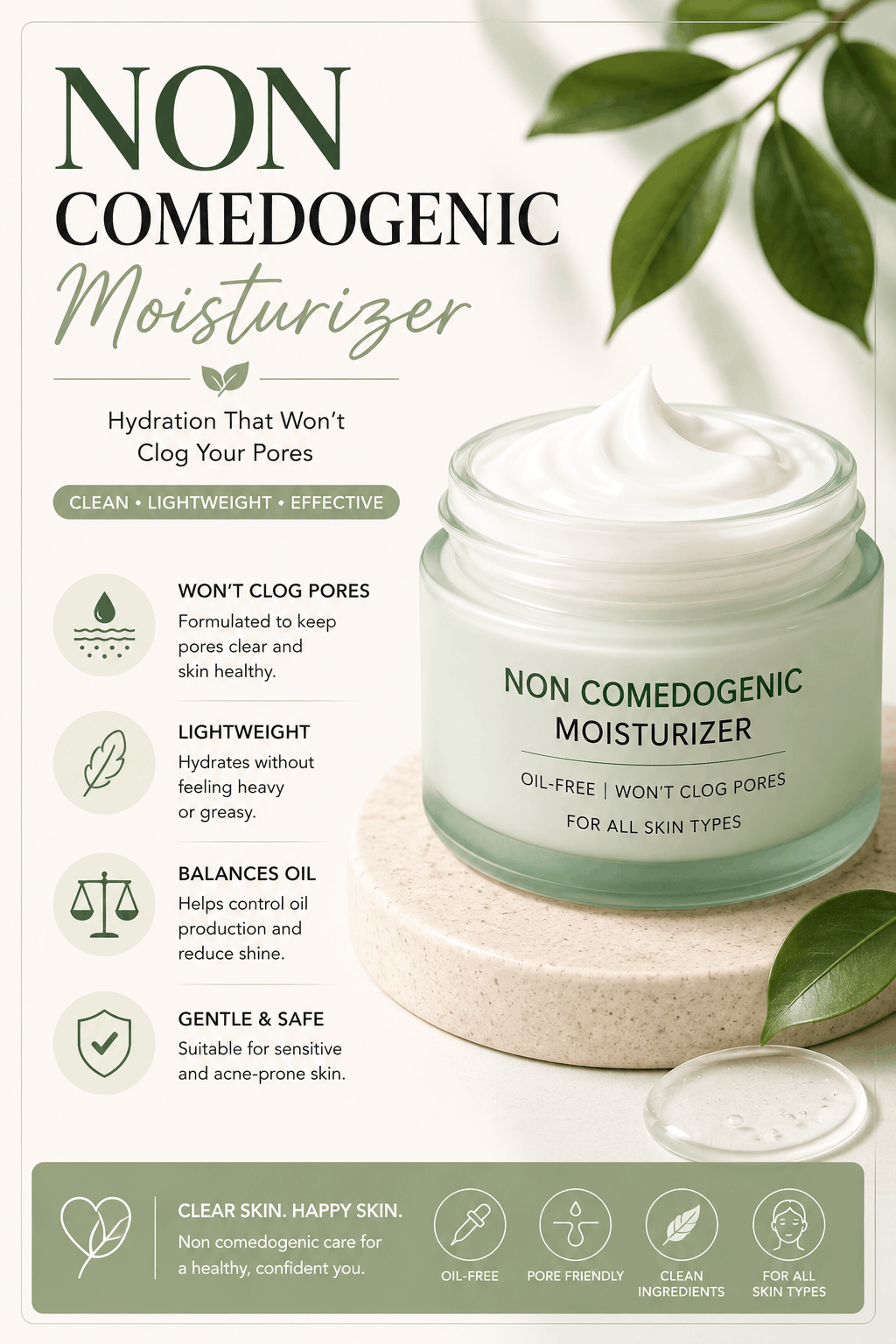
A good moisturizer is an important part of almost every skincare routine, even if your skin is oily or prone to breakouts. Many people with acne avoid moisturizer because they worry that it will make their skin greasy or clog their pores. The solution is choosing a non comedogenic moisturizer designed to hydrate the skin without increasing the likelihood of blocked pores.
The term “non-comedogenic” generally means that a product is formulated to be less likely to clog pores. Dermatologists commonly recommend looking for products labeled non-comedogenic, oil-free, or won’t clog pores when caring for acne-prone skin.
But choosing the right moisturizer involves more than simply finding those words on a bottle. Your skin type, climate, current skincare routine, and specific skin concerns can all affect which formula works best.
What Is a Non Comedogenic Moisturizer?
A non comedogenic moisturizer is a facial moisturizer formulated to reduce the likelihood of pore blockage. Clogged pores can contribute to blackheads, whiteheads and other types of acne.
Unlike some heavy creams or facial oils, many non-comedogenic moisturizers are lightweight and designed to provide hydration without leaving a thick, greasy layer on the skin.
However, “non-comedogenic” does not mean that a product can never cause a reaction or breakout. Everyone’s skin is different, and individual ingredients can affect people differently.
Why Does Acne-Prone Skin Need Moisturizer?
It may seem strange to moisturize oily or acne-prone skin, but skipping moisturizer can sometimes make your skincare routine more difficult.
Acne treatments such as benzoyl peroxide, salicylic acid and topical retinoids can cause dryness and irritation. A suitable moisturizer can help support the skin while making these treatments easier to tolerate.
When skin becomes excessively dry, it may also feel tight, irritated or uncomfortable. Maintaining hydration helps support the skin barrier and can make your overall routine more comfortable.
The American Academy of Dermatology recommends applying moisturizer after cleansing, while the skin is still slightly damp, to help lock in moisture.
Benefits of Using a Non Comedogenic Moisturizer
1. Helps Hydrate the Skin
Even oily skin needs water. A lightweight moisturizer can provide hydration without necessarily making the skin feel heavy.
2. Supports the Skin Barrier
Regular moisturizing can help reduce dryness and irritation. Ingredients such as ceramides are commonly used in moisturizers to support the skin barrier.
3. Can Complement Acne Treatments
People using acne medications may experience dryness or irritation. A suitable moisturizer can help improve comfort while continuing an acne-care routine.
4. May Reduce the Risk of Pore-Clogging
Choosing a product labeled non-comedogenic can be a useful starting point for people who frequently develop clogged pores or breakouts.
5. Works for Different Skin Types
Non-comedogenic formulas are available as gels, lotions and creams, making it possible to choose a texture according to your skin’s needs.
Best Non Comedogenic Moisturizer for Oily Skin
Oily skin usually benefits from lightweight hydration. Instead of choosing an extremely thick cream, look for a gel or lightweight lotion.
A good formula may contain hydrating ingredients such as:
- Hyaluronic acid
- Glycerin
- Ceramides
- Dimethicone
- Other lightweight humectants and skin-conditioning ingredients
The AAD notes that gel moisturizers can be a good option for oily skin because they are generally lighter than creams.
Look for labels such as:
- Non-comedogenic
- Oil-free
- Won’t clog pores
- Lightweight
- Fragrance-free, particularly if your skin is sensitive
Non Comedogenic Moisturizer for Dry Skin
Having dry skin does not mean you should automatically avoid moisturizer simply because you are concerned about acne.
Dry or combination skin may need a richer texture than oily skin. A non-comedogenic cream can provide more substantial hydration while still being appropriate for people concerned about clogged pores.
Ceramides and hyaluronic acid are two ingredients frequently recommended for moisturizing and supporting skin hydration.
If your skin is extremely dry, irritated, peeling or cracking, choosing the correct moisturizer becomes particularly important.
Non Comedogenic Moisturizer for Combination Skin
Combination skin can be tricky because different parts of the face may have different needs.
The forehead, nose and chin may become oily, while the cheeks feel dry. A lightweight lotion or gel-cream can be a practical choice.
You can also adjust the amount you use rather than applying the same thickness everywhere. Apply a lighter layer to oily areas and a little more to areas that feel dry.
Non Comedogenic Moisturizer for Sensitive Skin
Sensitive skin requires additional care because even a moisturizer that does not clog pores can still cause irritation.
If your skin is sensitive, consider a simple formula with fewer potential irritants. Fragrance-free products can be a useful choice, particularly if fragrance tends to irritate your skin. Cleveland Clinic also recommends considering sensitive-skin or hypoallergenic formulas when irritation or allergies are a concern.
Before applying a new product to your entire face, consider testing it on a small area first.
Ingredients to Look For
The ideal ingredient list depends on your skin type, but several moisturizing ingredients can be useful.
Hyaluronic Acid
Hyaluronic acid is a humectant that helps attract and retain water, making it a popular ingredient in lightweight moisturizers.
Ceramides
Ceramides are lipids naturally found in the skin barrier. Moisturizers containing ceramides can help support the skin’s protective barrier.
Glycerin
Glycerin is another humectant commonly used to increase hydration without requiring a heavy texture.
Dimethicone
Dimethicone can help reduce water loss and provide a smooth protective layer. The AAD lists dimethicone among ingredients that can be useful in moisturizers for acne-prone skin.
Ingredients and Formulas to Approach Carefully
There is no universal list of ingredients that everyone with acne must avoid. However, very heavy or highly occlusive formulas may not work well for everyone with oily or acne-prone skin.
Cleveland Clinic advises people prone to acne to consider non-comedogenic products and notes that some heavy occlusive products may aggravate breakouts.
If you have sensitive skin, fragrance and essential oils may also cause irritation in some people.
Most importantly, don’t assume that “natural” automatically means better. Natural ingredients can still irritate sensitive skin.
How to Use a Non Comedogenic Moisturizer
A simple routine can make moisturizer easier to incorporate into your skincare regimen.
Morning
- Cleanse gently.
- Apply any treatment recommended for your skin.
- Apply your non comedogenic moisturizer.
- Finish with broad-spectrum sunscreen.
Night
- Remove makeup and sunscreen.
- Cleanse gently.
- Apply your acne or skincare treatment if part of your routine.
- Apply moisturizer.
The AAD recommends moisturizing after washing because this can help trap water in the skin.
How Much Moisturizer Should You Use?
You don’t need a thick layer to moisturize effectively.
Start with a modest amount and spread it evenly across the face. If your skin still feels tight after several minutes, you may need slightly more.
Using too much product can make the skin feel greasy, while using too little may leave dry areas uncomfortable.
Can Non Comedogenic Moisturizer Cause Acne?
It is possible for an individual to experience breakouts from a product labeled non-comedogenic.
The term means the product is intended to be less likely to clog pores; it does not guarantee that every person’s skin will respond perfectly.
If you notice new or worsening breakouts after introducing a moisturizer, stop using it temporarily and evaluate the rest of your routine. Introducing several new products at the same time can make it difficult to determine which product is responsible.
Non Comedogenic Moisturizer vs. Oil-Free Moisturizer
These terms are related but not identical.
Oil-free generally means the formulation does not contain oils, while non-comedogenic Moisturizer refers to the product’s likelihood of clogging pores.
An oil-free product is not automatically the best option for every person with acne, and a non-comedogenic product does not necessarily need to be completely oil-free.
For acne-prone skin, looking for a product that is both lightweight and labeled non-comedogenic can be a practical starting point.
Common Mistakes to Avoid
Skipping Moisturizer Completely
Avoiding moisturizer because you have oily skin can leave your skin unnecessarily dry, especially when using acne treatments.
Using Very Heavy Products
A thick product may feel nourishing on dry skin but can feel uncomfortable on oily or acne-prone skin.
Over-Washing
Repeatedly washing or aggressively scrubbing the face can increase irritation. The AAD recommends gentle cleansing rather than harsh scrubbing for acne-prone skin.
Changing Products Too Frequently
Give your skincare routine enough time to show how your skin responds. Constantly switching products can make it difficult to identify what works.
Forgetting Sunscreen
Moisturizer does not replace sunscreen unless the product specifically provides adequate broad-spectrum SPF protection. Daily sun protection remains an important part of skincare.
How to Choose the Right Non Comedogenic Moisturizer
Before buying a product, consider these factors:
For oily skin:
Choose a lightweight gel or lotion.
For dry skin:
Consider a richer non-comedogenic cream.
For combination skin:
Try a balanced lotion or gel-cream.
For sensitive skin:
Consider a fragrance-free, simple formula.
For acne-prone skin:
Look for non-comedogenic, oil-free or “won’t clog pores” labeling.
For skin using acne treatments:
Prioritize hydration and barrier-supporting ingredients to reduce dryness and irritation.
Cleveland Clinic similarly recommends water-based, oil-free and non-comedogenic products for people with clogged pores or comedonal acne.
Frequently Asked Questions
1. What does non comedogenic mean?
Non-comedogenic means a product is formulated to be less likely to clog pores. It is commonly recommended for people with oily, acne-prone or congested skin.
2. Is a non comedogenic moisturizer good for acne-prone skin?
Yes. It can be a useful choice because it provides hydration while being designed to reduce the likelihood of pore blockage.
3. Can oily skin use moisturizer?
Absolutely. Oily skin still needs hydration. Lightweight gels and lotions are often more comfortable for oily skin.
4. Is non comedogenic the same as oil-free?
No. Oil-free refers to the absence of oils, while non-comedogenic refers to the product’s likelihood of clogging pores.
5. What ingredients are good in a non comedogenic moisturizer?
Hyaluronic acid, glycerin, ceramides and dimethicone are examples of ingredients commonly found in moisturizing formulas and can be useful depending on your skin type.
6. Can a non comedogenic moisturizer cause breakouts?
Although it is designed to be less likely to clog pores, no product can guarantee that every person’s skin will tolerate it perfectly.
7. Should I moisturize after acne treatment?
In many acne routines, moisturizer can help reduce dryness and irritation caused by acne treatments. The exact order can depend on the treatment you are using.
8. Is gel moisturizer better for oily skin?
A gel moisturizer is often a good option for oily skin because it generally has a lighter texture than a cream.
9. Should sensitive skin use fragrance-free moisturizer?
Fragrance-free formulas may be preferable for sensitive skin because fragrance can cause irritation or allergic reactions in some individuals.
10. How often should I use a non comedogenic moisturizer?
Most people can use moisturizer daily, typically after cleansing. If your skin becomes dry, consistent moisturizing can be particularly helpful.
Conclusion
Finding the right non comedogenic moisturizer can make a significant difference in a skincare routine, especially for people dealing with oily, acne-prone or combination skin. The goal isn’t to avoid moisturizer but to choose a formula that provides the hydration your skin needs without feeling excessively heavy.
Look for labels such as non-comedogenic, oil-free, or won’t clog pores, and choose the texture according to your skin type. Lightweight gels may suit oily skin, while creams may be more appropriate for dry skin.
Most importantly, keep your routine simple, introduce new products gradually and pay attention to how your own skin responds. If persistent or severe acne continues despite appropriate skincare, professional evaluation can help identify the best treatment approach.