Mineral Sunscreen: Benefits, How It Works, and Skin Protection
Introduction
Protecting your skin from the sun is one of the most important steps in maintaining healthy and youthful-looking skin. Daily exposure to ultraviolet (UV) rays can lead to sunburn, premature aging, dark spots, uneven skin tone, and other skin concerns. Because of this, using a reliable sunscreen has become an essential part of many skincare routines.
Among the different types of sun protection products available today, mineral sunscreen has gained popularity because of its gentle formula and skin-friendly ingredients. Many people choose this option because it sits on the surface of the skin and helps protect against harmful UV rays without relying on chemical filters.
People with sensitive skin, children, or those looking for a more straightforward skincare routine often consider mineral-based formulas. These products are available in different forms, including lotions, creams, sticks, and tinted options, making it easier to find a product that fits individual needs.
This complete guide explains what mineral sun protection is, how it works, its benefits, ingredients, differences from chemical formulas, how to apply it correctly, and important factors to consider when choosing the right product for your skin.
What Is Mineral Sunscreen?
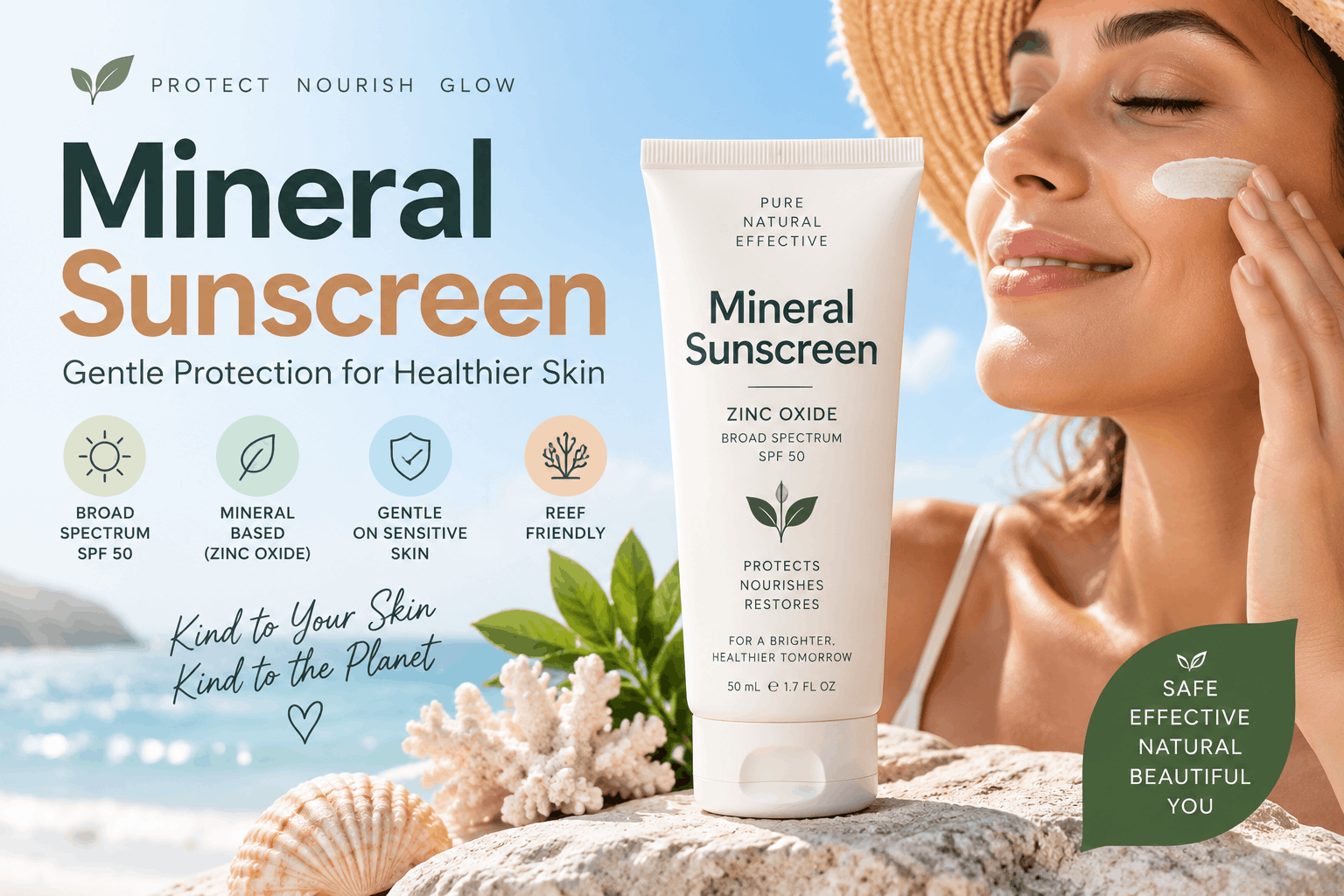
Mineral sunscreen is a type of sun protection product that uses natural mineral ingredients to help protect the skin from ultraviolet radiation.
The most common active ingredients found in these formulas are:
- Zinc oxide
- Titanium dioxide
These minerals create a protective layer on the skin that helps reflect and scatter UV rays before they can cause damage.
Unlike chemical sunscreens, which absorb UV rays and convert them into heat, mineral formulas work mainly by creating a physical barrier between the skin and sunlight.
Because of this difference, many people consider mineral-based products a gentle option for daily sun protection.
How Does Mineral Sunscreen Work?
Understanding how sunscreen works helps explain why consistent use is important.
The sun produces different types of radiation, including UVA and UVB rays.
UVA Rays
UVA rays are associated with:
- Skin aging
- Wrinkles
- Loss of skin elasticity
- Long-term skin changes
These rays can penetrate deeper into the skin and contribute to visible signs of aging.
UVB Rays
UVB rays are mainly responsible for:
- Sunburn
- Skin redness
- Surface-level damage
A good sunscreen should provide broad-spectrum protection, meaning it helps protect against both UVA and UVB rays.
Mineral ingredients such as zinc oxide and titanium dioxide help provide this type of protection by blocking harmful UV exposure.
Key Ingredients in Mineral Sunscreen
The effectiveness of a sunscreen depends largely on its active ingredients.
Zinc Oxide
Zinc oxide is one of the most commonly used ingredients in mineral formulas.
Benefits include:
- Broad-spectrum protection
- Suitability for sensitive skin
- Gentle application
- Protection against UVA and UVB rays
Many dermatologists recommend zinc oxide because it provides strong protection while being generally well tolerated.
Titanium Dioxide
Titanium dioxide is another mineral ingredient commonly used in sun protection products.
It helps protect mainly against UVB rays and some UVA rays.
When combined with zinc oxide, it can provide effective broad-spectrum coverage.
Supporting Ingredients
Besides active minerals, formulas may contain:
- Moisturizers
- Antioxidants
- Skin-soothing ingredients
- Hydrating components
These additional ingredients can improve comfort and support overall skin health.
Benefits of Mineral Sunscreen
Mineral formulas provide several benefits that make them popular among different skin types.
Suitable for Sensitive Skin
One of the biggest advantages is that mineral sunscreen is often considered gentle for sensitive skin.
Many people with easily irritated skin prefer mineral options because they do not rely on chemical UV filters.
It may be a suitable choice for people who experience:
- Redness
- Skin sensitivity
- Discomfort from certain skincare products
However, individual reactions can vary.
Provides Broad-Spectrum Protection
A quality sunscreen helps protect against both UVA and UVB rays.
Regular protection can help reduce the risk of:
- Sunburn
- Premature aging
- Uneven pigmentation
Using sunscreen consistently is an important part of a complete skincare routine.
Works Immediately After Application
Mineral formulas begin protecting the skin as soon as they are applied properly.
This differs from many chemical sunscreen products that may require some time after application before becoming fully effective.
Good Option for Daily Use
Many people include mineral protection in their daily skincare routine because sun exposure happens throughout the year, not only during summer.
Daily use can be especially important for people who:
- Spend time outdoors
- Drive frequently
- Work near windows
- Use skincare ingredients that increase sun sensitivity
Mineral Sunscreen vs Chemical Sunscreen
Many people wonder about the difference between these two categories.
Mineral Formulas
Mineral products:
- Use zinc oxide or titanium dioxide
- Sit on the skin surface
- Create a protective barrier
- Are often preferred by sensitive skin users
Chemical Formulas
Chemical sunscreens use organic filters that absorb UV rays and convert them into heat.
They often:
- Feel lighter
- Spread easily
- Leave less visible residue
Both types can provide effective sun protection when used correctly.
The best choice depends on personal preference, skin type, comfort, and lifestyle.
Is Mineral Sunscreen Better for Sensitive Skin?
Many people with sensitive skin prefer mineral products because they are generally gentle.
Sensitive skin may react to certain skincare ingredients, causing:
- Burning sensations
- Redness
- Irritation
- Discomfort
Mineral ingredients are often recommended for people who want a simpler formula.
However, everyone’s skin is different. A product that works well for one person may not work the same way for another.
Performing a small patch test before applying a new product widely can help identify possible reactions.
Benefits for Children and Families
Parents often look for gentle sun protection options for children.
Mineral formulas are commonly chosen because they are:
- Gentle
- Easy to understand
- Suitable for many skin types
Children spend significant time outdoors, making sun protection especially important.
Parents should also use other protection methods, including:
- Protective clothing
- Hats
- Shade
- Limiting direct sun exposure during strong sunlight hours
How to Choose the Right Mineral Sunscreen
Choosing the right product depends on your skin type, lifestyle, and personal preferences.
Look for Broad-Spectrum Protection
A good sunscreen should provide protection against both UVA and UVB rays.
Consider SPF Level
SPF measures protection against UVB rays.
Higher SPF products provide more protection, but correct application is equally important.
Choose Based on Skin Type
Different formulas may work better for different skin concerns.
Dry Skin
Look for formulas containing moisturizing ingredients.
Oily Skin
Lightweight or non-greasy options may feel more comfortable.
Sensitive Skin
Simple formulas with fewer potential irritants may be preferred.
How to Apply Mineral Sunscreen Correctly
Using sunscreen correctly is just as important as choosing a good product.
Apply Enough Product
Many people do not apply enough sunscreen to receive the protection listed on the label.
Apply a generous amount to all exposed areas.
Common areas people forget include:
- Ears
- Neck
- Hands
- Around the hairline
Apply Before Sun Exposure
Apply sunscreen before going outdoors.
Reapply Regularly
Reapplication is important, especially after:
- Swimming
- Sweating
- Towel drying
- Long periods outdoors
Common Mistakes People Make With Sunscreen
Even good sunscreen may not work effectively if used incorrectly.
Only Applying During Summer
UV exposure happens throughout the year.
Many people benefit from daily protection regardless of season.
Forgetting Certain Areas
Commonly missed areas include:
- Neck
- Ears
- Hands
Applying Too Little
Using too little product reduces the level of protection.
Skipping Reapplication
One application may not provide all-day protection during outdoor activities.
Mineral Sunscreen for Different Skin Concerns
Sun protection is important for many skincare goals.
Dark Spots and Uneven Skin Tone
UV exposure can worsen pigmentation problems.
Consistent protection can help prevent additional sun-related discoloration.
Aging Skin
Sun exposure contributes to visible signs of aging.
Regular sunscreen use supports long-term skin care.
Acne-Prone Skin
Some people with acne prefer lightweight mineral formulas.
Choosing a non-comedogenic product may help reduce concerns about clogged pores.
Tinted Mineral Sunscreen
Tinted options have become popular because they can help reduce the visible white residue that some mineral products leave behind.
Benefits may include:
- More natural appearance
- Better blending with different skin tones
- Additional cosmetic coverage
Some tinted products contain pigments that help improve appearance while providing sun protection.
Can Mineral Sunscreen Leave a White Cast?
One common complaint about mineral products is the possibility of a white appearance after application.
This happens because mineral particles sit on the skin surface.
Modern formulas have improved through:
- Smaller mineral particles
- Better textures
- Tinted options
Applying the correct amount and choosing a suitable formula can help reduce this issue.
How to Add Sunscreen to Your Skincare Routine
Sunscreen is usually applied as the final step of a morning skincare routine.
A simple routine may include:
- Cleanser
- Moisturizer
- Sunscreen
If using makeup, sunscreen is usually applied before makeup.
Consistency is more important than having a complicated routine.
Is Mineral Sunscreen Worth Using?
Mineral sunscreen can be a valuable part of a daily skincare routine, especially for people who prefer gentle formulas or have sensitive skin.
It provides protection against harmful UV rays and supports healthier-looking skin over time.
However, the best sunscreen is the one you will use consistently. Comfort, texture, and personal preference play an important role in choosing a product.
Conclusion
Mineral sunscreen is a popular choice for people looking for effective and gentle sun protection. With active ingredients like zinc oxide and titanium dioxide, it helps create a protective barrier against harmful UVA and UVB rays.
Using sunscreen regularly can support healthier skin by reducing sunburn, premature aging, and uneven pigmentation caused by UV exposure. While mineral formulas are often preferred by sensitive skin users, the right product depends on individual skin needs and preferences.
A good skincare routine does not need to be complicated. Daily sunscreen use, combined with healthy habits and proper skin care, can help maintain protected and healthier-looking skin for years.
Frequently Asked Questions (FAQs)
1. What is mineral sunscreen?
Mineral sunscreen is a sun protection product that uses ingredients like zinc oxide and titanium dioxide to protect skin from UV rays.
2. Is mineral sunscreen good for sensitive skin?
Many people with sensitive skin prefer mineral formulas because they are often gentle and less irritating.
3. Does mineral sunscreen protect against UVA and UVB rays?
Yes, many mineral formulas provide broad-spectrum protection against both types of harmful UV rays.
4. How often should I apply sunscreen?
Sunscreen should be applied daily and reapplied when needed, especially during swimming, sweating, or extended outdoor activities.
5. Can mineral sunscreen cause breakouts?
Some formulas may not suit every skin type. Choosing lightweight and non-comedogenic options may help acne-prone skin.
6. What are the main ingredients in mineral sunscreen?
The main active ingredients are usually zinc oxide and titanium dioxide.
7. Is mineral sunscreen safe for children?
Many parents choose mineral formulas for children because they are generally gentle, but sunscreen should always be used according to age recommendations.
8. Does mineral sunscreen leave a white cast?
Some products may leave a white appearance, but newer formulas and tinted options can reduce this effect.
9. Can I wear makeup over mineral sunscreen?
Yes, sunscreen can usually be applied before makeup as the final step of skincare.
10. Is mineral sunscreen better than chemical sunscreen?
Neither option is universally better. The best choice depends on skin type, comfort, preferences, and consistent use.