Bronzing Drops: How to Use Them, Benefits,
Introduction
Bronzing drops have become a popular addition to modern beauty routines because they offer an easy way to achieve a warm, sun-kissed glow without spending hours in the sun. These versatile liquid products can add a subtle bronze finish to the complexion, enhance natural radiance, and give the skin a healthy-looking appearance. Depending on the formula, they may also provide hydration and a luminous finish.
Unlike traditional powder bronzers, bronzing drops usually come in liquid or serum-like textures that blend easily with moisturizers, foundations, and other skincare products. Some formulas create an immediate cosmetic effect, while others contain skincare ingredients that support skin hydration. Their lightweight consistency makes them appealing to people who prefer a natural, dewy finish rather than heavy makeup.
However, choosing the right formula and applying it correctly can make a significant difference in the final result. Using too much product may create an overly dark or patchy appearance, while selecting an unsuitable shade can make the complexion look unnatural.
In this guide, you will discover what bronzing drops are, how they work, their benefits, the different types available, how to apply them, and how to choose the right product for your skin type.
What Are Bronzing Drops?
Bronzing drops are liquid cosmetic products designed to give the skin a warmer, bronzed appearance. They commonly contain pigments or light-reflecting ingredients that create a sun-kissed finish. Some products have a sheer, barely noticeable tint, while others provide a deeper bronze effect.
These products are generally applied to the face and may be used alone or mixed with moisturizer, foundation, or primer, depending on the manufacturer’s instructions.
Bronzing drops are different from self-tanning products. Traditional bronzing drops usually create an immediate color effect that can be removed during cleansing. Self-tanners commonly contain ingredients such as dihydroxyacetone (DHA), which react with the outermost layer of the skin to produce a temporary tan that develops over several hours.
It is important to check the label because products marketed as bronzing drops do not all work in the same way.
Most conventional bronzing drops are designed to provide one or more of these cosmetic effects:
- Add warmth to the complexion.
- Create a subtle, sun-kissed appearance.
- Enhance the skin’s natural-looking radiance.
- Provide a dewy or luminous finish.
- Add a light tint without the coverage of foundation.
- Help create a more dimensional makeup look.
Some formulas also include ingredients such as glycerin, hyaluronic acid, or other moisturizing agents. However, the benefits depend on the specific formulation rather than the product category alone.
Benefits of Using Bronzing Drops
1. Create a Natural Sun-Kissed Glow
One of the main reasons people use bronzing drops is to achieve a warm complexion without intentional sun exposure. A well-matched shade can make the skin appear naturally radiant and give the face a fresh, healthy-looking finish.
The effect can be subtle or more noticeable depending on how much product you apply. Starting with a small amount allows you to build the color gradually.
Unlike tanning beds or deliberate sunbathing, ordinary cosmetic bronzing does not require exposing the skin to ultraviolet radiation.
2. Provide a Lightweight Alternative to Heavy Makeup
Traditional contouring and bronzing products may feel too heavy for people who prefer minimal makeup. Liquid bronzing formulas can provide a softer effect without requiring several layers of powder.
Many products spread easily across the skin and can be blended with fingertips, a makeup sponge, or a brush.
For everyday wear, a small amount mixed with a compatible moisturizer may provide enough warmth without creating a full-coverage makeup look.
3. Enhance Skin Radiance
Some bronzing drops contain finely milled reflective pigments that help the skin appear luminous. These formulas can give the complexion a fresh, dewy finish, especially when used with a hydrating base.
However, a radiant finish is not the same as treating dullness or improving the skin’s health. The visible effect is primarily cosmetic, and products with shimmer may emphasize texture or enlarged pores in certain lighting.
If you prefer a natural finish, choose a formula with subtle luminosity rather than large glitter particles.
4. Work With Different Makeup Routines
Bronzing drops are versatile and can fit into different beauty routines. Depending on the product instructions, they can be used alone, blended with moisturizer, mixed with foundation, or layered under other makeup.
For a minimal routine, apply a small amount over skincare and sunscreen. For a more polished look, combine them with foundation and concealer.
Always check whether the product is intended for direct application or mixing. Not every formula is designed to be combined with other products.
5. Allow Buildable Color
Many bronzing drops have a sheer consistency, which makes it easier to control the intensity of the color. You can begin with one or two drops and add more if necessary.
Buildable coverage is particularly useful when experimenting with a new shade. It reduces the risk of applying too much pigment at once and makes it easier to achieve a balanced finish.
6. Offer a Convenient Beauty Option
Liquid bronzing products can simplify a makeup routine because they may replace several steps when a subtle, warm finish is all you want.
A single product can provide a hint of bronze and a luminous appearance without requiring separate powder bronzer and highlighting products.
The amount of convenience depends on the formula, application method, and the rest of your routine.
Different Types of Bronzing Drops
Not every formula produces the same finish. Understanding the main types can help you select a product that matches your preferences.
1. Hydrating Bronzing Drops
Hydrating formulas may contain glycerin, hyaluronic acid, or other moisture-supporting ingredients. They are designed to provide a bronzed appearance while helping the skin feel comfortable.
These formulas may suit people with dry or dehydrated skin, especially when they prefer a dewy finish.
However, people with sensitive skin should still check the ingredient list for fragrance or other ingredients that may cause irritation.
2. Illuminating Bronzing Drops
Illuminating products contain reflective pigments that help create a glowing finish. They may make the skin appear more radiant under natural or artificial light.
These are suitable for people who enjoy luminous makeup, but they may not be ideal for everyone. If you have pronounced skin texture or prefer a matte appearance, a less reflective formula may work better.
3. Matte Bronzing Drops
Matte or low-shine formulas create warmth without an obvious reflective finish. They may suit people who prefer a natural-looking bronze effect or who want to avoid additional shine.
Some products marketed as matte drops may still leave a slight sheen, so checking product photographs and descriptions can help set expectations.
4. Tinted Bronzing Serums
These products combine a serum-like texture with cosmetic pigments. Depending on the formulation, they may offer a lightweight finish and selected moisturizing benefits.
Despite the name, a bronzing serum should not automatically be considered a treatment for pigmentation, aging, or other skin concerns. Its cosmetic and skincare benefits depend on the ingredients and supporting evidence.
5. Self-Tanning Drops
Self-tanning drops are a separate category. They commonly contain DHA and are designed to gradually develop a tan rather than simply add removable cosmetic pigment.
Some are formulated specifically for the face and may be mixed with moisturizer according to the label. They generally require different application and aftercare from conventional bronzing makeup.
Do not assume that ordinary bronzing drops will develop into a lasting tan, or that self-tanning drops can be used like regular makeup.
How to Choose the Right Shade
Selecting the right shade is one of the most important steps in achieving a natural finish. A color that is too dark or too orange can appear unnatural, while a shade that is too light may not provide the warmth you want.
Fair Skin
People with fair skin may prefer light bronze or soft golden shades. These create subtle warmth without overwhelming the complexion.
Start with a very small amount and blend carefully around the cheeks and forehead. If you prefer a cooler look, avoid formulas with a strong orange undertone.
Light to Medium Skin
Light to medium complexions can often work well with soft golden, neutral bronze, or warm honey shades.
The best option depends on your natural undertone. Neutral formulas are versatile, while golden shades may create a warmer appearance.
Olive Skin
Olive skin often pairs well with neutral bronze or muted golden shades. Products with excessive orange pigment may clash with some olive undertones.
Testing the shade in natural daylight can help you determine whether it complements your complexion.
Deep Skin
People with deep skin tones may prefer richer bronze, caramel, copper, or golden-brown shades. A well-pigmented formula can add warmth and dimension without leaving an ashy appearance.
Look for shades that remain visible and blend smoothly with your natural complexion.
Consider Your Undertone
Your undertone can also influence the final result.
- Warm undertones: Golden, honey, and warm bronze shades may complement the skin.
- Cool undertones: Neutral bronze shades may look more balanced than strongly orange products.
- Neutral undertones: A wider range of bronze shades may work well.
These are general guidelines rather than strict rules. Personal preference, lighting, and product formulation all affect how a shade appears.
How to Apply Bronzing Drops Correctly
Applying bronzing drops is relatively simple, but proper preparation and blending help achieve a smooth result.
Step 1: Cleanse Your Skin
Begin with a clean face. Use a gentle cleanser to remove excess oil, sweat, and makeup residue.
Avoid harsh cleansing or vigorous scrubbing immediately before application, especially if your skin is sensitive.
Step 2: Apply Your Regular Skincare
Use your usual moisturizer and allow it to settle before applying makeup. During the daytime, apply broad-spectrum sunscreen as the final step of your skincare routine before makeup.
Do not mix sunscreen with bronzing drops or foundation unless the sunscreen manufacturer specifically directs you to do so. Mixing products can interfere with achieving the intended sunscreen protection.
Step 3: Dispense a Small Amount
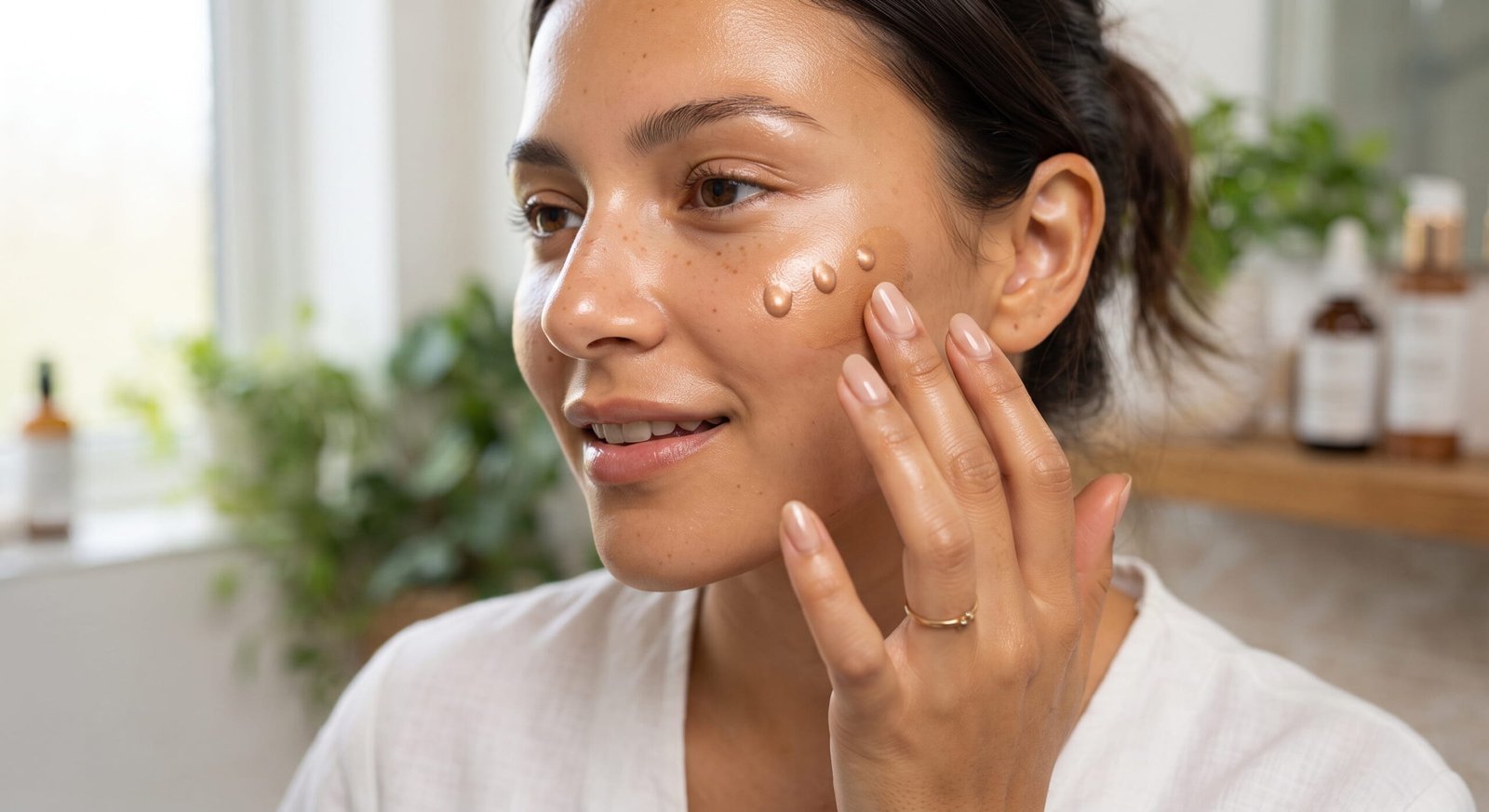
Start with one or two drops, or follow the manufacturer’s directions. Place the product on clean fingertips, a makeup palette, or the recommended applicator.
Beginning with less product makes it easier to control the color and prevent uneven patches.
Step 4: Apply to the Desired Areas
For an all-over glow, apply a thin layer across the face and blend carefully toward the hairline and jaw.
For a more sculpted appearance, concentrate a small amount on the upper cheeks, temples, and outer forehead. This creates warmth in areas where sunlight naturally tends to highlight the face.
Avoid placing too much product around the nose, eyebrows, or hairline, where pigment can accumulate.
Step 5: Blend Thoroughly
Use clean fingertips, a damp makeup sponge, or a suitable brush to distribute the product evenly. Blend along the jawline and around the ears if the product is used near those areas.
Check your face in natural light to make sure there are no visible streaks or sharp color boundaries.
Step 6: Build the Color Gradually
If the initial result looks too subtle, add a small amount and blend again.
Layering gradually is usually easier than trying to correct an overly dark application. Allow each layer to settle according to the product instructions before adding more.
Step 7: Finish Your Makeup
Depending on the formula, you may apply concealer, foundation, blush, or setting powder afterward.
If you want a dewy finish, avoid applying excessive powder over the entire face. If you have oily skin, use a small amount of powder only where necessary.
Should You Mix Bronzing Drops With Moisturizer?
Some bronzing drops can be mixed with moisturizer to create a sheer, all-over glow. This approach can be convenient for people who prefer lightweight makeup.
However, the technique is appropriate only when the product label permits mixing. Some formulas are designed to be applied directly, while others may separate or produce an uneven result when combined with incompatible products.
If mixing is allowed, dispense a small amount of each product onto a clean surface, blend them together, and apply evenly.
Avoid mixing bronzing drops directly into sunscreen. Sunscreen should be applied separately and evenly according to its instructions to help maintain the labeled level of protection.
Bronzing Drops for Different Skin Types
Dry Skin
Dry skin may benefit from formulas containing moisturizing ingredients. Prepare the skin with a suitable moisturizer and avoid applying the product over flaky or irritated areas.
A very matte formula may emphasize dry patches, while an excessively shimmery one may draw attention to uneven texture.
Oily Skin
People with oily skin may prefer lightweight, non-greasy formulas that do not leave an overly shiny finish.
Look for products labeled non-comedogenic if you are prone to clogged pores, while remembering that this label does not guarantee that a product will suit everyone.
Use a small amount and allow it to settle before applying additional makeup.
Combination Skin
Combination skin may have an oily forehead and nose alongside drier cheeks. Apply a thin layer and adjust the rest of your makeup according to the needs of each area.
For example, you may use a small amount of powder on the T-zone while leaving the cheeks more luminous.
Sensitive Skin
Sensitive skin may react to fragrance, preservatives, or certain botanical extracts. Review the ingredient list before purchasing a new product.
Perform a patch test according to the product instructions, and stop using the product if you experience persistent burning, swelling, itching, or redness.
If you have a history of allergic reactions, choose products carefully and seek medical advice when needed.
Acne-Prone Skin
If you experience frequent breakouts, select a lightweight formula that is suitable for acne-prone skin and remove it thoroughly at the end of the day.
Avoid applying makeup over open, inflamed, or infected skin. Clean brushes and sponges regularly, and do not share makeup applicators.
Bronzing drops do not treat acne, so continue following an appropriate acne-care routine.
Common Mistakes to Avoid
Applying Too Much Product
Excessive application can leave the face looking overly dark, orange, or uneven. Start with a small amount and build the color gradually.
Choosing the Wrong Undertone
A product that clashes with your natural undertone may appear artificial. Test shades in natural light whenever possible.
Skipping Skin Preparation
Applying makeup over dry flakes or unevenly moisturized skin can make the product harder to blend. Gentle cleansing and appropriate moisturizing help create a smoother base.
Forgetting to Blend the Edges
Visible lines around the jaw, hairline, and ears can make the application look incomplete. Blend carefully and check the result from different angles.
Confusing Bronzing Drops With Sunscreen
Bronzing drops are not a substitute for sunscreen, even if the product creates the appearance of a sun-kissed complexion. Unless a product has a properly labeled SPF, it should not be relied on for sun protection. Even when a bronzing product contains SPF, apply it according to its sunscreen directions and do not assume that a small cosmetic application provides adequate protection.
Leaving Makeup on Overnight
Remove cosmetic products before sleeping to reduce buildup and maintain a consistent cleansing routine. Choose a gentle cleanser that removes the formula without irritating the skin.
Are Bronzing Drops Safe for Everyday Use?
Many conventional bronzing drops can be used regularly when they are formulated for facial application and used according to the label. However, suitability depends on the ingredients and your skin’s individual response.
If you have sensitive or acne-prone skin, choose a suitable formula and monitor your skin for irritation or breakouts. Stop using the product if an unwanted reaction develops.
Self-tanning drops require separate consideration because their ingredients and intended effects differ from those of ordinary cosmetic bronzers. Follow their instructions carefully and avoid applying products intended for the body to the face unless the label permits it.
Cosmetic bronzing also does not eliminate the need for sun protection. A bronzed appearance does not mean the skin has developed meaningful protection against ultraviolet radiation.
How to Make Bronzing Drops Last Longer
The longevity of bronzing drops depends on their formula, your skin type, environmental conditions, and the makeup products used alongside them.
For a longer-lasting result:
- Start with clean, properly moisturized skin.
- Apply a thin, even layer rather than one heavy application.
- Allow the product to settle before layering other makeup.
- Use compatible primer and foundation products if needed.
- Avoid repeatedly touching or rubbing your face.
- Use a suitable setting spray or a small amount of powder if appropriate for the finish.
- Remove the product gently at the end of the day.
Remember that conventional bronzing drops usually wash off with cleansing. Self-tanning drops may last longer because they work differently, so follow the instructions for the specific product you own.
Conclusion
Bronzing drops are a versatile beauty product that can add warmth, radiance, and a sun-kissed appearance to the complexion without intentional sun exposure. Their lightweight textures and buildable color make them suitable for a variety of makeup styles, from a subtle everyday glow to a more polished, luminous finish.
The best results come from choosing a shade that complements your complexion, preparing the skin properly, and applying the product gradually. Your skin type, preferred finish, and the ingredients in the formula should guide your selection.
Always distinguish ordinary cosmetic bronzing drops from self-tanning products, as their effects and application methods are different. Most importantly, do not confuse a bronzed appearance with sun protection. Apply sunscreen separately, follow product instructions, and remove makeup before bed.
With the right formula and careful application, bronzing drops can become a simple and effective addition to your beauty routine.
Frequently Asked Questions (FAQs)
1. What are bronzing drops used for?
Bronzing drops are used to add warmth and a sun-kissed appearance to the skin. Depending on the formula, they may also create a luminous finish and can be applied alone or combined with compatible makeup products.
2. Can I use bronzing drops every day?
Many facial bronzing drops are suitable for everyday use when applied according to the manufacturer’s instructions. If your skin is sensitive or acne-prone, choose an appropriate formula and discontinue use if irritation develops.
3. Can I mix bronzing drops with moisturizer?
Yes, some formulas can be mixed with moisturizer to create a sheer bronze finish. Check the product label first because not every formula is designed to be mixed with other products.
4. Are bronzing drops the same as self-tanning drops?
No. Conventional bronzing drops usually provide temporary cosmetic color that washes off. Self-tanning drops commonly contain DHA and create a tan that develops over several hours and lasts longer.
5. Do bronzing drops work on all skin tones?
Yes, bronzing drops are available in shades and formulations suited to different skin tones. Choosing a complementary undertone and adjusting the amount of product can help create a natural-looking result.
6. Can bronzing drops cause acne?
They may contribute to breakouts in some individuals, depending on the formulation and personal skin response. People with acne-prone skin can look for lightweight, non-comedogenic products and remove makeup thoroughly.
7. Should I apply bronzing drops before or after foundation?
It depends on the product and the finish you want. They may be applied before foundation for a subtle glow or over foundation for a more noticeable bronze effect. Follow the manufacturer’s instructions and blend carefully.
8. Do bronzing drops replace sunscreen?
No. Bronzing drops do not provide reliable sun protection unless they are specifically formulated and labeled with an SPF. Apply a broad-spectrum sunscreen separately and use it according to its instructions.
9. How do I choose the right bronzing drops for my skin type?
Dry skin may prefer moisturizing formulas, oily skin may benefit from lightweight textures, and sensitive skin should prioritize suitable ingredients and fragrance considerations. Always choose a shade that complements your complexion and test new products carefully.
10. How long do bronzing drops last on the skin?
Ordinary cosmetic bronzing drops generally last until they are removed by cleansing or wear off. Self-tanning drops can last several days because they work differently. The exact duration depends on the formula, application, and skincare routine.