Top 20 Korean Skincare Ingredients
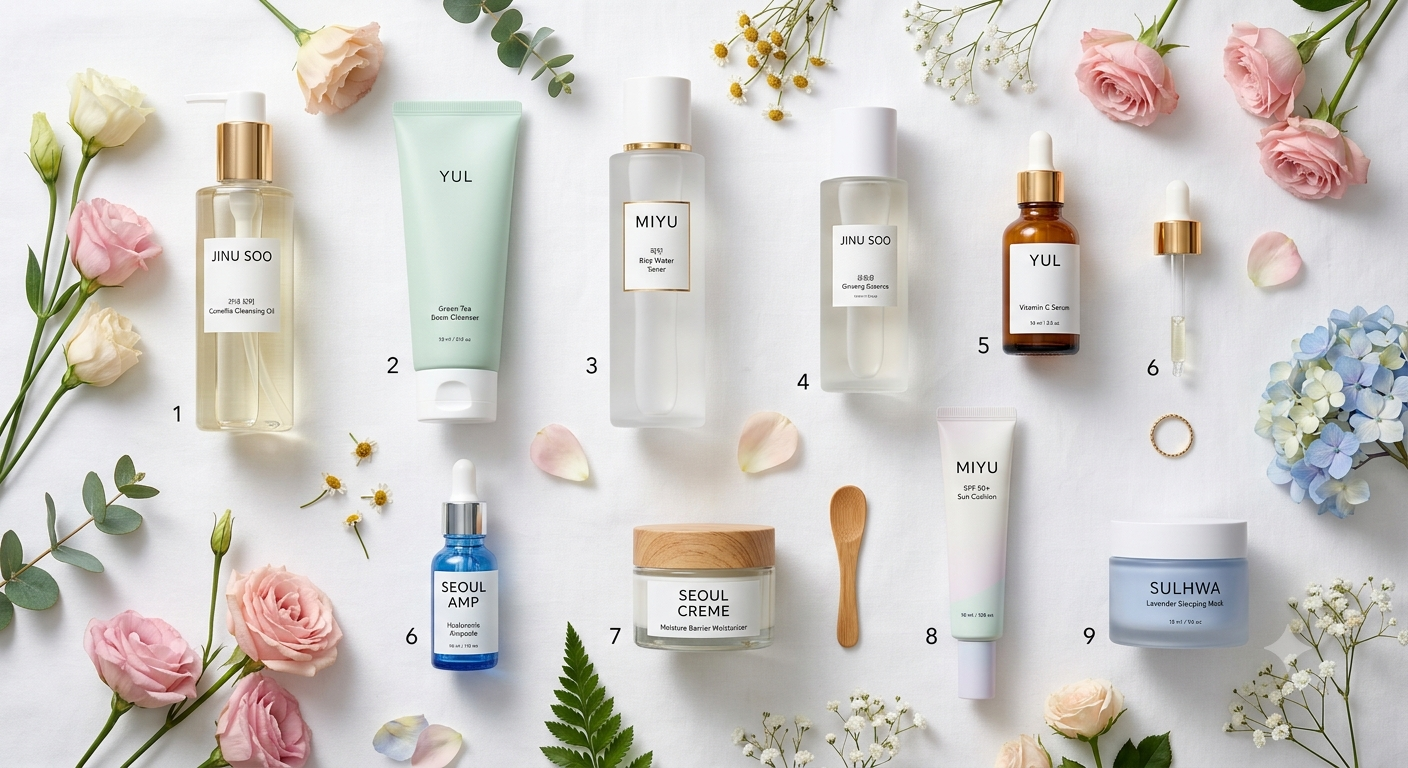
Korean skincare is renowned for combining traditional botanical extracts with modern dermatological science. Rather than relying on a single “miracle ingredient,” K-Beauty formulations often blend multiple active and supportive ingredients to improve hydration, strengthen the skin barrier, soothe inflammation, and address concerns such as acne, hyperpigmentation, and premature aging. Below are the 20 most popular and effective ingredients found in Korean skincare products.
1. Snail Mucin (Snail Secretion Filtrate)
Effective for all types of skins including sensitive skin
Snail mucin is one of the signature ingredients in Korean skincare. Rich in glycoproteins, hyaluronic acid, glycolic acid, and peptides, it helps hydrate the skin, support barrier repair, improve skin texture, and reduce the appearance of acne scars and fine lines. It is suitable for most skin types, including sensitive skin.
Benefits
- Deep hydration
- Supports skin repair
- Improves skin elasticity
- Helps fade post-acne marks
- Strengthens the skin barrier
2. Centella Asiatica (Cica)
Reduces risk of sensitivity and irritation
Centella Asiatica is a medicinal herb valued for its soothing and anti-inflammatory properties. It is particularly beneficial for sensitive, acne-prone, and irritated skin.
Benefits
- Calms redness and irritation
- Supports wound healing
- Strengthens the skin barrier
- Reduces inflammation
- Suitable for rosacea-prone skin
3. Hyaluronic Acid
Skin hydrator
Hyaluronic acid is a powerful humectant capable of attracting and retaining large amounts of water, helping the skin remain hydrated and plump.
Benefits
- Intense hydration
- Improves skin elasticity
- Reduces dryness
- Smooths fine lines
- Suitable for all skin types
4. Niacinamide (Vitamin B3)
Beneficial for oily skin ,acne prone and pigments
Niacinamide is one of the most versatile skincare ingredients, offering multiple benefits for oily, acne-prone, and pigmented skin.
Benefits
- Brightens skin tone
- Reduces hyperpigmentation
- Controls excess oil
- Minimizes enlarged pores
- Improves skin barrier function
5. Ceramides
Prevention from loss of moisture
Ceramides are naturally occurring lipids that help maintain the skin’s protective barrier and prevent moisture loss.
Benefits
- Repairs the skin barrier
- Prevents dehydration
- Reduces sensitivity
- Improves skin resilience
- Ideal for dry and eczema-prone skin
6. Green Tea Extract
Reduces environmental damages
Green tea is rich in antioxidants known as catechins, which help protect the skin from environmental damage and reduce inflammation.
Benefits
- Antioxidant protection
- Soothes irritated skin
- Controls excess sebum
- Helps reduce acne
- Protects against oxidative stress
7. Rice Extract
Brightening and moisturizing
Rice extract has been used in Korean beauty traditions for centuries due to its brightening and moisturizing properties.
Benefits
- Brightens dull skin
- Hydrates the skin
- Improves skin texture
- Supports an even complexion
- Rich in vitamins and amino acids
8. Ginseng
Anti aging
Ginseng is a traditional Korean herbal ingredient valued for its antioxidant and anti-aging effects.
Benefits
- Improves skin elasticity
- Enhances circulation
- Reduces visible signs of aging
- Revitalizes tired skin
- Protects against free radicals
9. Propolis
Skin nourishment with Propolis
Derived from bees, propolis contains antioxidants and compounds that help soothe and nourish the skin.
Benefits
- Supports skin healing
- Hydrates the skin
- Calms inflammation
- Provides antioxidant protection
- Helps improve skin radiance
10. Mugwort (Artemisia)
Solution for incompatibilities
Mugwort is widely used in Korean skincare for its calming and anti-inflammatory properties.
Benefits
- Reduces redness
- Soothes sensitive skin
- Supports barrier repair
- Relieves irritation
- Suitable for reactive skin
11. Panthenol (Pro-Vitamin B5)
Skin repair and healing support with Vit B5
Panthenol is a highly effective moisturizing ingredient that supports skin healing and barrier recovery.
Benefits
- Improves hydration
- Soothes irritation
- Supports skin repair
- Strengthens the moisture barrier
- Reduces dryness
12. Peptides
Wrinkle free skin with peptides
Peptides are short chains of amino acids that support collagen production and improve skin firmness.
Benefits
- Improves elasticity
- Reduces wrinkles
- Promotes collagen synthesis
- Supports skin repair
- Enhances skin firmness
13. Vitamin C
Pigmentation reduction
Vitamin C is a potent antioxidant commonly used for brightening the skin and improving pigmentation.
Benefits
- Brightens complexion
- Fades dark spots
- Stimulates collagen production
- Protects against environmental damage
- Improves overall skin tone
14. Beta-Glucan
Moisturizing agent
Beta-glucan is a natural polysaccharide known for its exceptional moisturizing and soothing properties.
Benefits
- Deep hydration
- Strengthens the skin barrier
- Reduces redness
- Supports skin recovery
- Improves skin softness
15. PDRN (Polydeoxyribonucleotide)
PDRN is an advanced ingredient increasingly used in Korean skincare for skin regeneration and anti-aging support.
Benefits
- Supports skin renewal
- Improves elasticity
- Enhances hydration
- Promotes skin repair
- Helps improve skin texture
16. Retinal (Retinaldehyde)
Retinal is a vitamin A derivative recognized for its effectiveness in treating aging skin and acne.
Benefits
- Reduces fine lines
- Improves skin texture
- Encourages cell turnover
- Helps manage acne
- Promotes collagen production
17. Heartleaf (Houttuynia Cordata)
Heartleaf is commonly used in Korean skincare to calm sensitive and acne-prone skin.
Benefits
- Reduces inflammation
- Controls excess oil
- Soothes irritation
- Helps prevent acne
- Supports a healthy skin barrier
18. Birch Sap
Birch sap is a natural source of minerals and amino acids that provides lightweight hydration.
Benefits
- Hydrates the skin
- Supports barrier function
- Refreshes tired skin
- Improves moisture retention
- Suitable for sensitive skin
19. Licorice Root Extract
Licorice root is widely used for its brightening and soothing properties.
Benefits
- Reduces pigmentation
- Brightens uneven skin tone
- Calms inflammation
- Provides antioxidant protection
- Helps fade post-inflammatory marks
20. Fermented Ingredients
Fermented botanical ingredients are a hallmark of Korean skincare. Fermentation may enhance the bioavailability of certain compounds and improve product absorption.
Benefits
- Supports skin hydration
- Improves skin texture
- Enhances radiance
- Strengthens the skin barrier
- Provides antioxidant benefits
Conclusion
The effectiveness of Korean skincare lies not in a single ingredient but in thoughtfully formulated combinations that work together to cleanse, hydrate, protect, and repair the skin. Selecting ingredients based on individual skin type, concerns, and tolerance is more important than following trends. Consulting a qualified dermatologist can help ensure that products are chosen safely and effectively for long-term skin health.
Frequently Asked Questions (FAQs) About Korean Skincare Products
1. What are Korean skincare products?
Korean skincare products, often referred to as K-Beauty products, are skincare formulations developed in South Korea. They are designed to improve overall skin health through hydration, barrier protection, gentle cleansing, and targeted treatment of concerns such as acne, pigmentation, dryness, and signs of aging.
2. Why is Korean skincare so popular?
Korean skincare has gained worldwide popularity because of its innovative formulations, lightweight textures, high-quality ingredients, and focus on long-term skin health rather than quick cosmetic results. Many products are also suitable for sensitive skin and emphasize hydration and prevention.
3. Is Korean skincare suitable for all skin types?
Yes. Korean skincare offers products for oily, dry, combination, normal, acne-prone, and sensitive skin. Choosing products based on your individual skin type and concerns is more important than following a specific trend or routine.
4. What makes Korean skincare different from Western skincare?
Korean skincare focuses on prevention, hydration, and maintaining a healthy skin barrier, while many Western skincare routines place greater emphasis on treating existing concerns with stronger active ingredients. Both approaches can be effective when used appropriately.
5. Do I need to follow the famous 10-step Korean skincare routine?
No. The 10-step routine is optional and can be simplified. For most people, a gentle cleanser, moisturizer, sunscreen, and one or two targeted treatment products are sufficient for maintaining healthy skin.
6. Which Korean skincare ingredients are best for acne?
Ingredients such as Centella Asiatica, niacinamide, salicylic acid, tea tree extract, and heartleaf are commonly used to help reduce inflammation, control excess oil, and improve acne-prone skin.
7. Which Korean skincare ingredients help brighten the skin?
Niacinamide, vitamin C, rice extract, licorice root extract, and tranexamic acid are widely used to improve uneven skin tone and reduce the appearance of pigmentation.
8. Is snail mucin safe to use?
Yes. Snail mucin is generally considered safe for most skin types. It is valued for its hydrating and skin-repairing properties. However, individuals with known allergies or sensitive skin should perform a patch test before regular use.
9. What is Centella Asiatica (Cica), and why is it beneficial?
Centella Asiatica is a medicinal herb known for its soothing and anti-inflammatory properties. It helps calm irritated skin, supports skin barrier repair, and is particularly useful for sensitive or acne-prone skin.
10. Are Korean skincare products good for sensitive skin?
Many Korean skincare products are formulated specifically for sensitive skin and include calming ingredients such as Centella Asiatica, panthenol, ceramides, and mugwort. Fragrance-free options are generally preferred for highly sensitive skin.
11. Can Korean skincare help reduce acne scars?
Certain ingredients, including snail mucin, niacinamide, retinoids, and vitamin C, may improve the appearance of post-acne marks over time. Results vary depending on the type and severity of the scarring.
12. Are Korean skincare products effective for anti-aging?
Yes. Many Korean skincare products contain peptides, retinal, ginseng, ceramides, and antioxidants that help improve skin elasticity, reduce the appearance of fine lines, and support healthy aging.
13. Should I use sunscreen every day?
Yes. Daily sunscreen use is one of the most important steps in any skincare routine. Broad-spectrum sunscreen helps protect the skin from UV damage, pigmentation, and premature aging, regardless of whether you follow a Korean skincare routine.
14. How long does it take to see results from Korean skincare?
Some improvements, such as increased hydration, may be noticeable within days. Concerns like pigmentation, acne, and signs of aging often require several weeks to a few months of consistent use to show meaningful improvement.
15. Can I combine Korean skincare products with products from other brands?
Yes. Korean skincare products can usually be incorporated into routines that include products from other countries. The key is to choose compatible ingredients and avoid combining multiple strong active ingredients without professional guidance.
16. Are Korean skincare products safe during pregnancy?
Some Korean skincare products are suitable during pregnancy, while others contain ingredients such as retinoids that should generally be avoided. Pregnant individuals should consult their dermatologist or healthcare provider before introducing new skincare products.
17. Are Korean skincare products cruelty-free?
Some Korean skincare brands are cruelty-free, while others are not. Consumers should check the manufacturer’s policies and certifications if cruelty-free products are important to them.
18. How can I identify authentic Korean skincare products?
Purchase products from authorized retailers or reputable online stores. Check for original packaging, batch numbers, ingredient lists, and proper labeling to reduce the risk of purchasing counterfeit products.
19. Can men use Korean skincare products?
Absolutely. Healthy skin is not gender-specific. Korean skincare products are suitable for anyone and should be selected based on skin type and individual concerns rather than gender.
20. What is a dermatologist’s advice for beginners interested in Korean skincare?
Start with a simple routine consisting of a gentle cleanser, moisturizer, and broad-spectrum sunscreen. Introduce one new product at a time and choose ingredients that address your specific skin concerns. Consistency, patience, and proper product selection are more important than following a complicated routine.