Fair Skin: Tone, Undertone, Care, and Healthy Skin Tips
Introduction
Skin comes in a wide range of natural colors, from very light to deep brown and everything in between. Fair skin generally describes a lighter complexion with relatively low amounts of melanin. However, having a light complexion does not automatically mean that the skin is healthier, more sensitive, or more attractive than another skin tone.
What matters most is understanding your individual skin characteristics. Two people with similarly light complexions can have completely different undertones, oil levels, sensitivities, and skincare needs.
People with lighter skin may notice redness, sun-related changes, freckles, or visible discoloration more easily. This makes daily sun protection and a gentle skincare routine especially important.
This guide explains what a fair complexion means, how to identify its undertone, common characteristics, suitable skincare practices, makeup considerations, sun protection, and ways to maintain healthy-looking skin without trying to change its natural color.
What Is Fair Skin?
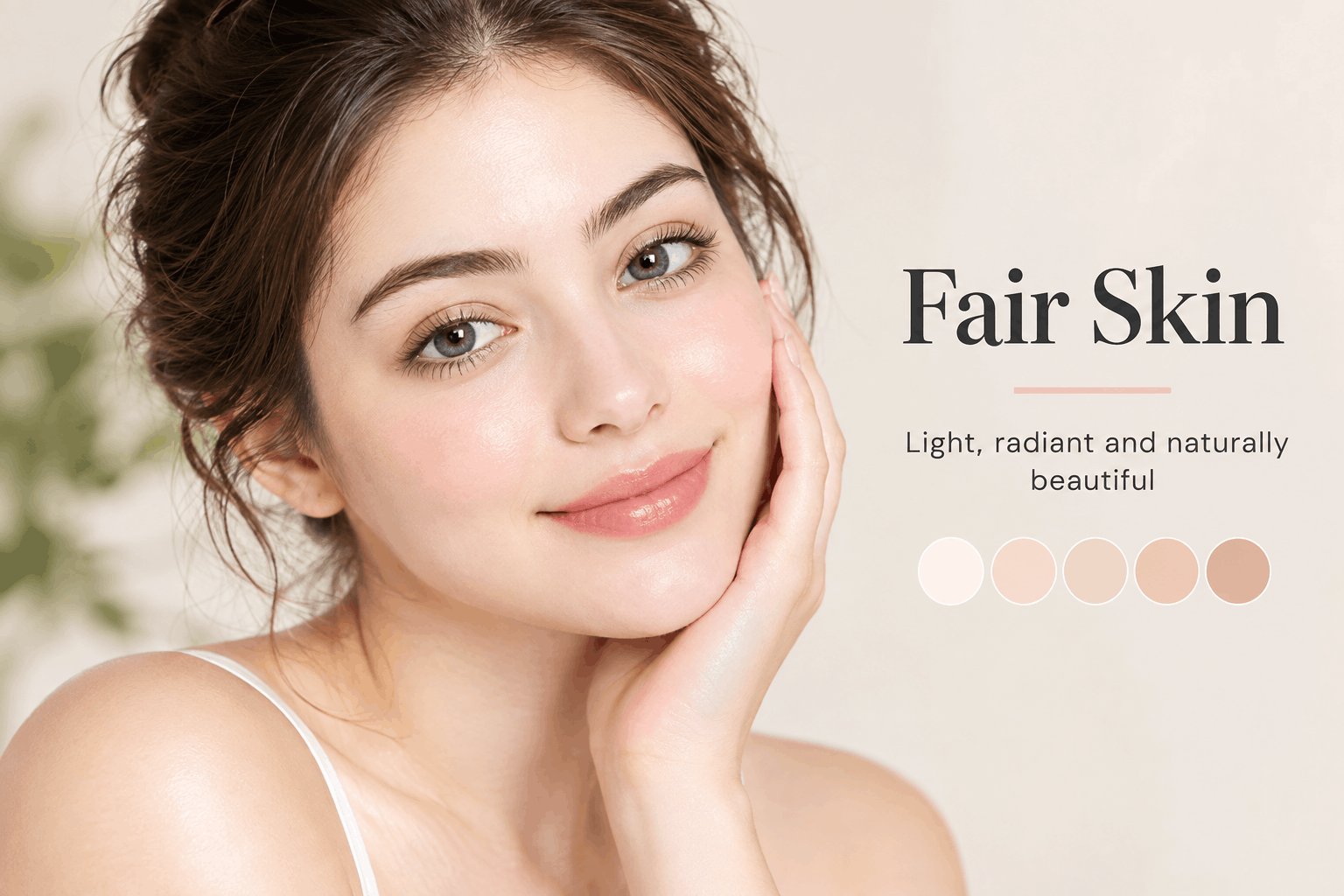
Fair skin generally refers to a light complexion that contains relatively low levels of melanin.
Melanin is the natural pigment responsible for much of the color in human skin, hair, and eyes. The amount and type of melanin a person produces are influenced largely by genetics.
A light complexion can appear:
- Very pale
- Ivory
- Porcelain
- Light beige
- Light peach
- Creamy or rosy
The exact appearance varies depending on genetics, blood flow, sun exposure, and undertone.
It is important to distinguish natural skin tone from temporary tanning, redness, or pigmentation.
Skin Tone vs. Skin Undertone
These terms are often confused.
Skin Tone
Skin tone refers to the visible color of your skin. It can change somewhat because of:
- Sun exposure
- Tanning
- Seasonal changes
- Hormonal changes
- Certain skin conditions
Skin Undertone
Undertone refers to the subtle color beneath the surface of the skin. It generally remains more consistent.
Common undertones include:
- Cool
- Warm
- Neutral
Some people may also describe an olive undertone, which can contain greenish or muted golden characteristics.
Knowing your undertone can make it easier to choose foundation, concealer, blush, lipstick, clothing, and jewelry.
How to Identify Your Undertone
There is no single home test that is perfect for everyone, but several clues can help.
Look at Your Veins
Check the veins on the inside of your wrist under natural daylight.
If they appear more blue or purple, you may have a cool undertone.
they look greenish, a warm undertone may be more likely.
If you cannot clearly identify either color, you may have a neutral undertone.
This test is only a guide because lighting and skin characteristics can affect what you see.
Consider Jewelry
Some people find that certain metals complement their complexion more naturally.
Silver or white gold may look particularly harmonious with cool undertones.
Gold may complement warm undertones.
People with neutral undertones can often wear both comfortably.
Observe Your Reaction to Sun
People with lighter skin may burn relatively easily when exposed to ultraviolet radiation.
If your skin tends to become red quickly before developing a tan, you may have a lower natural level of photoprotection.
However, sun reaction is influenced by more than undertone, so it should not be used as the only method of determining undertone.
Characteristics of a Light Complexion
People with lighter complexions may notice certain features more easily.
Visible Redness
Redness from irritation, heat, exercise, acne, or inflammation can be more noticeable against lighter skin.
Sun Sensitivity
Lower melanin levels generally mean less natural protection against ultraviolet radiation.
This makes sun protection particularly important.
Freckles
Freckles can become more visible after sun exposure and are common in some individuals with lighter skin.
Visible Blood Vessels
Small blood vessels may be more noticeable through lighter skin, particularly around the nose, cheeks, and under-eye area.
Pigmentation Changes
Although dark spots can occur in every skin tone, post-inflammatory marks and redness may have a particularly noticeable contrast against a lighter complexion.
Skincare Routine for Fair Skin
The ideal routine depends more on skin type than color.
A simple routine can include:
Morning
- Gentle cleanser
- Moisturizer
- Broad-spectrum sunscreen
Evening
- Gentle cleanser
- Targeted treatment if needed
- Moisturizer
People with acne, eczema, rosacea, or other skin concerns may need a more individualized routine.
Cleansing
Choose a cleanser according to your skin type.
If your skin is dry or sensitive, a gentle, fragrance-free cleanser may be more comfortable.
If your skin is oily, a lightweight cleanser can help remove excess oil without excessive stripping.
Washing too aggressively can damage the skin barrier and increase dryness or irritation.
Moisturizing
Every skin type benefits from maintaining a healthy skin barrier.
Look for ingredients such as:
- Ceramides
- Glycerin
- Hyaluronic acid
- Squalane
- Petrolatum
The best moisturizer is one that keeps your skin comfortable without causing excessive greasiness or irritation.
Sunscreen Is Essential
Sun protection is one of the most important steps in caring for lighter skin.
Ultraviolet radiation contributes to:
- Sunburn
- Premature skin aging
- Uneven pigmentation
- Freckles
- DNA damage
- Skin cancer
Choose a broad-spectrum sunscreen with an SPF appropriate for your daily exposure.
Apply enough product and reapply when necessary, especially during prolonged outdoor activity, sweating, or swimming.
Why Sun Protection Matters So Much
Melanin provides some natural protection against ultraviolet radiation. People with lower melanin levels generally have less natural protection and may burn more easily.
That does not mean darker skin does not require sunscreen. Everyone can experience UV-related skin damage.
For fair complexions, however, preventing repeated sunburn is especially important.
Can Fair Skin Tan?
Yes.
A person with a light complexion can develop a tan after ultraviolet exposure.
However, tanning is the skin’s response to UV radiation and is not necessarily a sign of healthy skin.
Repeated tanning can contribute to premature aging and increase the risk of skin damage.
Using sunscreen and avoiding intentional tanning is a safer approach.
Fair Skin and Sunburn
Sunburn occurs when UV radiation damages fair skin cells.
Signs may include:
- Redness
- Warmth
- Tenderness
- Pain
- Swelling
- Peeling
- Blistering in more severe cases
If blistering or severe symptoms occur, medical attention may be appropriate.
Prevention is much better than repeatedly exposing the skin to burns.
Best Ingredients for Maintaining Healthy Skin
Skin color does not determine which active ingredients are appropriate. Your concern and skin type matter more.
Vitamin C
Vitamin C is an antioxidant that can support a brighter, more even-looking complexion and help protect against environmental oxidative stress.
Niacinamide
Niacinamide can support the skin barrier and may help with oil control, redness, and uneven appearance.
Hyaluronic Acid
Hyaluronic acid helps attract and retain water, making it useful for hydration.
Retinoids
Retinoids can support skin renewal and are used for concerns such as acne, fine lines, and uneven texture.
They can initially cause dryness or irritation, so gradual introduction is important.
Ceramides
Ceramides help support the skin barrier and are particularly useful when skin is dry or compromised.
Ingredients to Use Carefully
More products do not necessarily mean better skin.
Strong exfoliating acids, retinoids, or other active ingredients can irritate the skin when used too frequently.
Signs of over-exfoliation or irritation include:
- Burning
- Persistent redness
- Tightness
- Peeling
- Increased sensitivity
If several strong products are being used together, simplify the routine.
Fair Skin and Makeup
Choosing makeup becomes easier when you understand both tone and undertone.
Foundation
A foundation should blend into the skin rather than creating a noticeably lighter or darker mask.
Test foundation along the jawline rather than only on the hand.
Cool Undertones
Cool undertones may suit foundations with pink, rosy, or neutral-cool characteristics.
Warm Undertones
Warm undertones may work better with golden, peach, or yellow-based shades.
Neutral Undertones
Neutral undertones often have flexibility with both warm and cool shades.
Blush Colors
Blush can add natural-looking warmth and dimension.
Depending on undertone, options may include:
- Soft pink
- Rose
- Peach
- Coral
- Mauve
- Berry
The ideal shade also depends on personal style and makeup intensity.
Lip Colors
Light complexions can work beautifully with many lip shades.
Popular options include:
- Nude pink
- Rose
- Peach
- Berry
- Classic red
- Mauve
- Brownish nude
The best choice depends on undertone and personal preference rather than skin color alone.
Common Skincare Mistakes
Trying to Become Even Lighter
Natural skin color does not need to be changed to be healthy or attractive.
Aggressive lightening products can damage the skin barrier and, in some cases, cause serious complications.
Skipping Sunscreen
Daily UV exposure accumulates over time even when there is no obvious sunburn.
Over-Exfoliating
Using multiple exfoliating products can create irritation rather than improving texture.
Testing Too Many Products at Once
Introducing several new products simultaneously makes it difficult to determine which one is helping or causing irritation.
Ignoring Skin Conditions
Persistent redness, unusual pigmentation, acne, or scaling should not automatically be blamed on skin tone.
How to Maintain a Healthy-Looking Complexion
A healthy appearance is supported by consistent basic care.
Focus on:
- Gentle cleansing
- Adequate moisturization
- Daily sun protection
- Sufficient sleep
- Balanced nutrition
- Regular physical activity
- Avoiding smoking
- Managing stress
- Treating specific skin concerns appropriately
You do not need a complicated routine to maintain healthy skin.
Fair Skin and Aging
Sun exposure is one of the most important environmental contributors to premature skin aging.
Long-term UV exposure can contribute to:
- Fine lines
- Wrinkles
- Uneven pigmentation
- Loss of skin elasticity
- Rough texture
Consistent sunscreen use and other protective measures can help reduce cumulative UV damage.
When to See a Dermatologist
Professional evaluation is worthwhile when you notice:
- A new or changing mole
- A persistent unexplained rash
- Rapidly changing pigmentation
- A sore that does not heal
- Persistent redness
- Severe acne
- Unusual itching
- Repeated sunburn-related problems
People with very high sun exposure or a personal or family history of skin cancer may also benefit from discussing appropriate skin checks with a healthcare professional.
Can Skincare Change Natural Skin Color?
Skincare can improve hydration, texture, pigmentation, and overall appearance, but it should not be expected to fundamentally change a person’s genetically determined skin tone.
Products marketed as aggressive whitening or bleaching solutions may contain irritating or harmful ingredients.
The healthier goal is to maintain an even, comfortable complexion and treat genuine pigmentation problems safely.
Final Thoughts
A light complexion can have many different appearances and undertones, and there is no single skincare routine that works for everyone. The most important factors are your individual skin type, sensitivity, concerns, and exposure to the environment.
Gentle cleansing, regular moisturization, appropriate active ingredients, and especially consistent sun protection form the foundation of good care. Avoiding unnecessary bleaching, excessive exfoliation, and complicated product combinations can also help preserve the skin barrier.
Rather than focusing on making naturally light skin even lighter, aim for skin that is healthy, comfortable, protected, and well cared for. If persistent redness, pigmentation, irritation, or unusual changes develop, professional assessment can help identify the cause and guide appropriate treatment.
Frequently Asked Questions
1. What does fair skin mean?
It generally describes a lighter natural complexion with relatively low levels of melanin. It can range from very pale to light beige or ivory.
2. What is the difference between skin tone and undertone?
Skin tone is the visible surface color, while undertone is the subtle hue beneath the skin. Undertones are commonly described as cool, warm, or neutral.
3. Does fair skin need sunscreen every day?
Yes. Daily broad-spectrum sun protection is important because ultraviolet exposure can cause sunburn, premature aging, pigmentation changes, and skin cancer.
4. Is fair skin more sensitive?
Not necessarily. Sensitivity depends on many factors, including genetics, skin barrier function, medical conditions, and skincare products. However, lighter skin may show redness and sun damage more visibly.
5. Can fair skin get darker in the sun?
Yes. UV exposure can stimulate increased melanin production and produce tanning. Repeated tanning, however, contributes to cumulative skin damage.
6. Which foundation is best for fair skin?
Choose a foundation that matches your actual complexion and undertone. Testing it along the jawline in natural light can help you find a better match.
7. Which skincare ingredients are useful?
Ingredients such as ceramides, glycerin, niacinamide, vitamin C, hyaluronic acid, and appropriately used retinoids can support different skincare goals.
8. How can I protect light skin from sun damage?
Use broad-spectrum sunscreen, seek shade, wear protective clothing and a hat, and avoid intentional tanning. Reapply sunscreen as directed during prolonged outdoor exposure.
9. Should I use skin-lightening products?
There is generally no health reason to make naturally light skin lighter. Avoid aggressive or unregulated products, particularly those with potentially harmful bleaching ingredients.
10. When should I see a dermatologist?
See a dermatologist for persistent redness, unexplained pigmentation, severe acne, unusual moles, non-healing sores, persistent rashes, or other skin changes that concern you.