Sports Massage Secrets: Muscle Recovery, Performance & Relief
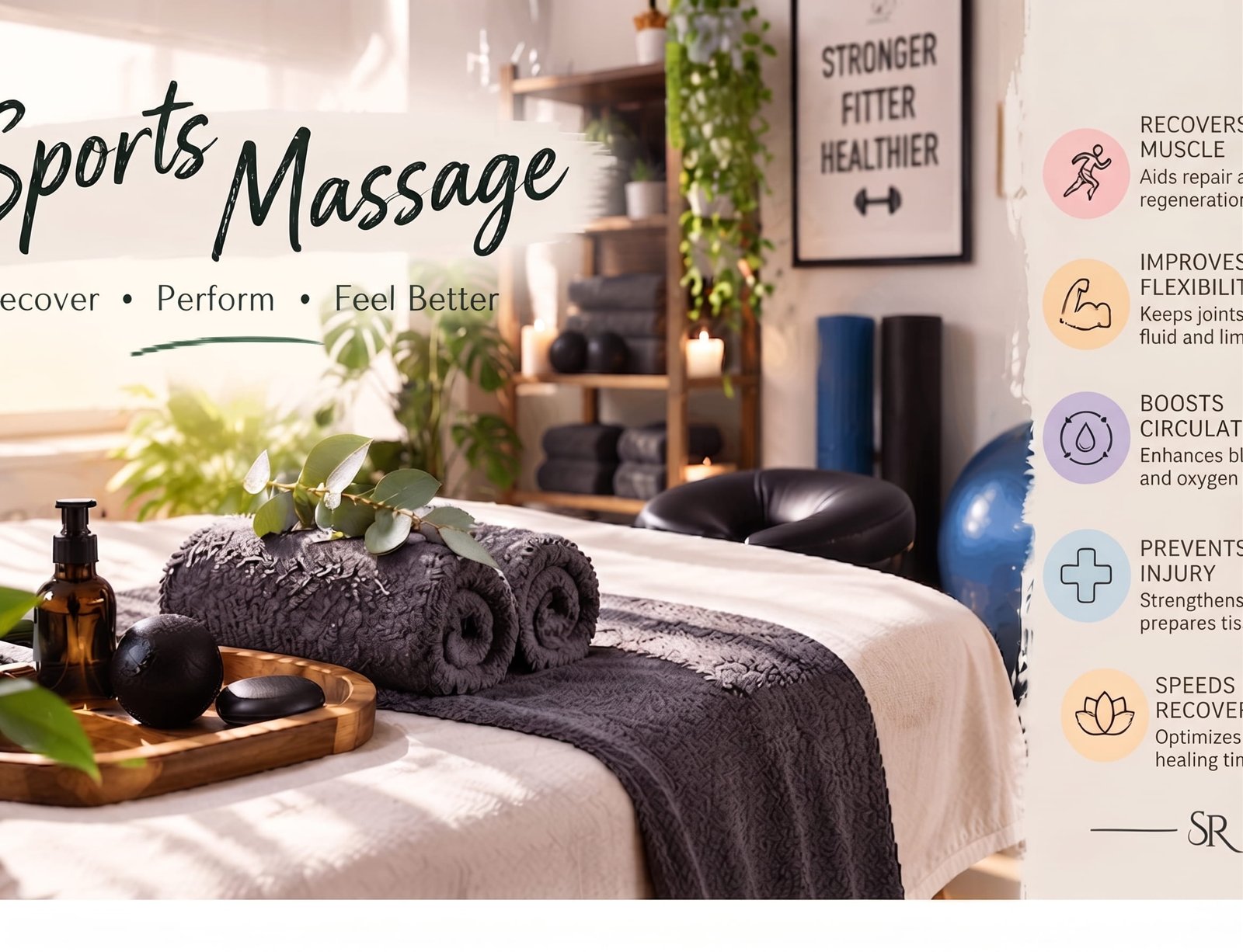
For athletes, fitness enthusiasts, runners, and active people, recovery is just as important as training. Hard workouts can leave muscles feeling tight, tired, and sore, which is why many people turn to sports massage as part of their recovery routine.
Sports massage is a form of manual therapy commonly used around training and competition. It can involve different techniques depending on the athlete’s needs, including focused work on areas that feel tight or overworked.
But what are the real benefits of sports massage? Can it actually improve athletic performance? How often should you get one? And is massage enough to recover from intense exercise?
Research suggests that sports massage may help with delayed-onset muscle soreness (DOMS), flexibility, relaxation, and perceived recovery, but its direct effect on strength, sprinting, endurance, and other performance measures is less convincing.
What Is Sports Massage?
Sports massage is a type of massage designed around the needs of physically active people.
Unlike a general relaxation massage, sports massage often focuses on muscles and areas that are heavily used during exercise. The therapist may adjust the pressure, technique, and treatment area depending on whether the goal is preparation, recovery, or addressing muscular discomfort.
It may be used by:
- Professional athletes
- Runners
- Cyclists
- Weightlifters
- Football players
- Swimmers
- Gym enthusiasts
- Recreational athletes
The treatment can be incorporated before or after physical activity, although the appropriate approach depends on the individual and the timing of the session.
How Does Sports Massage Work?
Sports massage applies manual pressure and movement to soft tissues such as muscles and surrounding structures.
Depending on the session, a therapist may use techniques such as:
- Effleurage or gliding strokes
- Kneading
- Compression
- Friction techniques
- Trigger-point work
- Stretching
- Focused soft-tissue techniques
The goal isn’t simply to make the muscles feel relaxed. Treatment may be tailored to areas that are experiencing tightness, soreness, or high training loads.
However, massage should not be viewed as a way to physically “flush out” all metabolic waste or repair muscle damage instantly. Current evidence does not support many of the stronger physiological claims sometimes made about massage.
Sports Massage and Muscle Recovery
One of the biggest reasons athletes choose sports massage is recovery.
After demanding exercise, muscles can become sore, particularly when training involves unfamiliar movements or high workloads. This soreness is often called delayed-onset muscle soreness, or DOMS.
A systematic review and meta-analysis found that massage was associated with small improvements in DOMS and flexibility, although it did not show clear improvements in strength, jumping, sprinting, endurance, or fatigue.
This means sports massage may be useful for how you feel during recovery, even if it does not directly make you stronger or faster.
Can Sports Massage Reduce Muscle Soreness?
Yes, research suggests massage may provide some relief from post-exercise muscle soreness.
A review of sports massage research found evidence suggesting reduced DOMS, although questions remain about the best timing, duration, and technique.
For someone dealing with ordinary post-workout soreness, massage may therefore be a useful part of a broader recovery strategy.
It should not, however, be used to mask severe or unusual pain that could indicate an injury.
Does Sports Massage Improve Athletic Performance?
This is where expectations matter.
Sports massage is often marketed as a performance enhancer, but scientific evidence does not consistently show that massage directly improves strength, sprint speed, jumping ability, or endurance.
A systematic review of 29 studies found no evidence of improvements in strength, jumping, sprinting, endurance, or fatigue, while finding small improvements in flexibility and DOMS.
Another systematic review involving 114 articles concluded that massage generally did not affect most motor abilities, although flexibility, pain, soreness, mood, relaxation, and perceived recovery may benefit.
So the better way to think about sports massage is as a recovery and comfort tool, rather than a guaranteed performance booster.
Sports Massage Before Exercise
Some athletes use massage before training or competition because they believe it will prepare the muscles.
However, longer pre-performance massage may not improve athletic performance. A systematic review found no evidence that pre-performance massage improved maximal strength, sprinting, or jumping, and longer sessions could potentially have unfavorable effects on some performance measures.
If massage is used before exercise, the approach should therefore be appropriate to the activity and should not replace a proper warm-up.
Sports Massage After Exercise
Post-exercise massage is one of the most common uses.
It may be helpful when the goal is to:
- Reduce perceived soreness
- Promote relaxation
- Improve comfort
- Support flexibility
- Help an athlete feel recovered
- Manage muscular tightness
Research suggests these perceived recovery benefits may be more consistent than direct improvements in physical performance.
Sports Massage for Flexibility
Flexibility is another area where massage may have some benefit.
The 2020 systematic review found a small but statistically significant improvement in flexibility following massage.
For athletes who feel temporarily restricted or tight, massage may therefore be useful as one component of mobility and recovery work.
It should still be combined with appropriate stretching, mobility exercises, strength training, and sport-specific conditioning.
Sports Massage for Stress and Relaxation
Physical training isn’t the only source of fatigue. Competition, work, travel, and demanding training schedules can also create psychological stress.
Research reviews suggest massage may improve relaxation, mood, and perceived recovery while reducing perceptions of stress and fatigue.
For athletes, feeling relaxed can be valuable even when massage doesn’t directly increase physical performance.
Sports Massage vs. Regular Massage
The primary difference is usually the purpose and focus.
A general relaxation massage may prioritize comfort, relaxation, and overall wellbeing.
Sports massage is more likely to be structured around:
- Training schedules
- Specific sports
- Frequently used muscle groups
- Recovery needs
- Muscular tightness
- Competition preparation
Neither approach is automatically better. The appropriate type depends on the person’s goals.
How Long Does a Sports Massage Take?
The duration can vary depending on the purpose of treatment.
A focused session may concentrate on one or two areas, while a longer appointment may address several muscle groups.
Interestingly, research has not established that longer massage sessions necessarily produce better performance recovery. One meta-analysis found that shorter massage interventions sometimes produced larger effects than longer sessions, although the evidence remains limited.
The most appropriate duration should therefore depend on the individual’s needs rather than simply choosing the longest appointment.
How Often Should You Get a Sports Massage?
There is no universal schedule that works for every athlete.
Frequency can depend on:
- Training volume
- Competition schedule
- Exercise intensity
- Muscle soreness
- Recovery needs
- Previous injuries
- Personal response to massage
Some people may use massage occasionally after particularly demanding workouts, while others may incorporate it into a regular training program.
A qualified therapist can help determine an appropriate schedule.
What to Expect During a Sports Massage
Before treatment, tell the therapist about your exercise routine, areas of discomfort, previous injuries, and current goals.
During the session, the therapist may work on specific muscle groups using different pressures and techniques.
Communication is important. Sports massage does not need to be extremely painful to be effective.
If pressure feels excessively painful, causes sharp pain, numbness, or unusual symptoms, tell the therapist immediately.
Common Sports Massage Mistakes
Choosing Excessive Pressure
More pressure does not automatically mean a better massage.
Very aggressive treatment can leave you more sore and may be inappropriate when tissues are already irritated.
Getting Deep Massage Immediately Before Competition
A very intense session before an important event may not be ideal, particularly if it affects how your muscles feel or perform.
Using Massage Instead of Rehabilitation
Massage can be an adjunct to recovery, but it should not replace appropriate rehabilitation for an injury.
Ignoring Severe Pain
Normal post-exercise soreness is different from sharp, severe, or persistent pain.
If symptoms suggest an injury, professional evaluation may be more appropriate than massage.
Who Can Benefit From Sports Massage?
Sports massage may be useful for people who:
- Exercise regularly
- Experience ordinary post-workout soreness
- Participate in endurance sports
- Perform repetitive training
- Experience muscular tightness
- Want relaxation during demanding training periods
- Prefer massage as part of their recovery routine
The benefits vary between individuals, and massage should be integrated with other recovery practices.
Sports Massage and Injury Recovery
Sports massage may sometimes be included as part of a broader rehabilitation program, but it is not a universal treatment for sports injuries.
Recent research on athletes recovering after ACL reconstruction suggests massage-based interventions may have a role as an adjunct to structured rehabilitation, particularly when combined with individualized exercise-based programs.
This highlights an important principle: massage can complement rehabilitation, but it should not replace appropriate medical assessment, progressive exercise, strength work, or sport-specific rehabilitation.
Other Important Recovery Strategies
Sports massage works best when combined with fundamental recovery habits.
Sleep
Adequate sleep is essential for physical and mental recovery.
Nutrition
Adequate calories, protein, carbohydrates, fluids, vitamins, and minerals support training and recovery.
Active Recovery
Light movement can be useful between harder training sessions.
Hydration
Maintaining adequate fluid intake is particularly important around prolonged or intense exercise.
Strength and Mobility Training
Appropriate strength and mobility work can help athletes maintain physical capacity and movement quality.
Massage should complement these strategies rather than replace them.
When Should You Avoid Sports Massage?
Massage may not be appropriate in certain situations, particularly when there is an acute injury or medical condition that could be worsened by pressure.
Seek professional medical advice before massage if you have:
- Severe unexplained pain
- A suspected fracture
- Significant swelling
- An acute muscle tear
- An open wound
- Fever or systemic illness
- A suspected blood clot
- Severe unexplained bruising
If you’re unsure whether massage is appropriate, speak with a healthcare professional.
Final Thoughts
The real sports massage secrets are less about finding a magical technique and more about understanding what massage can—and cannot—do.
Research suggests sports massage may help reduce delayed-onset muscle soreness, improve flexibility, promote relaxation, and enhance the feeling of recovery. However, evidence does not show that massage consistently produces direct improvements in strength, sprinting, endurance, or other athletic performance measures.
For athletes, the best approach is to use massage as one part of a complete recovery plan that includes sleep, nutrition, hydration, appropriate training, mobility, and rehabilitation when necessary.
FAQs About Sports Massage
1. What is sports massage?
Sports massage is a form of manual therapy designed around the needs of physically active people. It commonly focuses on muscles and areas affected by exercise and training.
2. Does sports massage help muscle recovery?
It may help with perceived recovery and reduce delayed-onset muscle soreness. However, evidence for direct improvements in physical performance is limited.
3. Can sports massage improve athletic performance?
Current research does not consistently show that sports massage directly improves strength, sprinting, jumping, or endurance.
4. Does sports massage reduce DOMS?
Research suggests massage can provide a small reduction in delayed-onset muscle soreness following exercise.
5. Is sports massage painful?
It can involve firm pressure, but severe pain is not necessary. Tell your therapist if pressure becomes uncomfortable or causes sharp pain.
6. How often should athletes get sports massage?
There is no universal frequency. It depends on training volume, soreness, competition schedules, individual needs, and how the body responds.
7. Is sports massage good before a workout?
It may be used before exercise, but long or intense pre-performance massage has not been shown to improve strength, sprinting, or jumping and may sometimes be counterproductive.
8. What is the best time for sports massage?
Many athletes use massage after training or during recovery periods. The best timing depends on the purpose and intensity of the treatment.
9. Can sports massage treat an injury?
Massage may be included in some rehabilitation programs, but it should not replace diagnosis and evidence-based injury rehabilitation.
10. Is sports massage worth it?
For people who enjoy massage and find that it helps with soreness, relaxation, flexibility, or perceived recovery, it can be a useful part of a broader recovery routine. Its direct performance benefits, however, should not be overstated.