Nail Glue : Uses, Types and Applications, Safety and Removal
Introduction
Nail glue, a beauty product, is used to adhere artificial nails, press-on nail tips, decorative nail accessories, and nail tips. Correctly used, nail glue can form a long-lasting, strong bond, and give your nails a shiny appearance. Because most nail glues are fast-drying, an incorrect application could cause irritation to the skin or damage the natural nails.
This comprehensive guide will explain what nail glue is and how it works. It will also cover the different types of nail glue, how to use it safely, how to remove it, and common mistakes.
What is Nail Glue?
Nail glue is an adhesive that’s designed to adhere artificial nails and nail decorations to natural nails. The majority of professional nail glues are made with cyanoacrylate.
Nail glue is different from ordinary craft glue. Artificial nails can remain attached to the nail during normal activities.
The durability and strength of nail glue depends on the formula, the condition and application of the natural nails, and the exposure to chemicals, water and oils.
What is the purpose of nail glue?
Nail glue is used in many ways for nail care and nail arts.
1. Attaching Artificial Nails
The most common use is to attach artificial or acrylic nail tips to natural fingernails.
2. How to Apply Press-On Nails
Most press-on nail kits come with glue or adhesive tabs. Glue is a more durable and stronger attachment than tabs.
3. Repairing small nail cracks
Sometimes a small crack can be temporarily repaired with a nail repair product.
4. Nail Art Decorations
Nail adhesives for cosmetics can be used to secure small rhinestones and charms.
There are many different types of nail glue
There are different nail glues for different purposes.
Liquid Nail Glue
The most common is liquid glue. It spreads quickly and easily over the nail.
Advantages:
- Strong bond
- Quick application
- Widely Available
Disadvantages:
- Can bond skin quickly
- After drying, the residue is difficult to remove
- The removal of excessive use can be difficult
Brush-On Nail Glue
Brush-on adhesive comes with a similar applicator to nail polish. The brush can help make the application process easier, as it helps to distribute a controlled quantity of adhesive.
This is especially useful for those who have difficulty controlling drop-style adhesive.
Gel Nail Adhesive
Use these products according to the instructions provided by the manufacturer.
Nail Glue Tabs
Although they are not technically glues, adhesive tabs are often used as an alternative to liquid glue.
How to apply nail glue correctly
For a successful bond, it is essential to prepare properly.
Step 1: Cleanse Your Natural Nails
Remove any residue, including old polish, oils, lotions, etc. Cleaning and drying your nails will generally improve adhesion.
Step 2: Select the correct nail size
Choose an artificial nail which fits your natural nail, but does not extend too far onto the skin.
Step 3: Prepare Surface
As directed by the manufacturer, prepare the nails gently if necessary. Avoid aggressive filing, which can weaken or thin the natural nail.
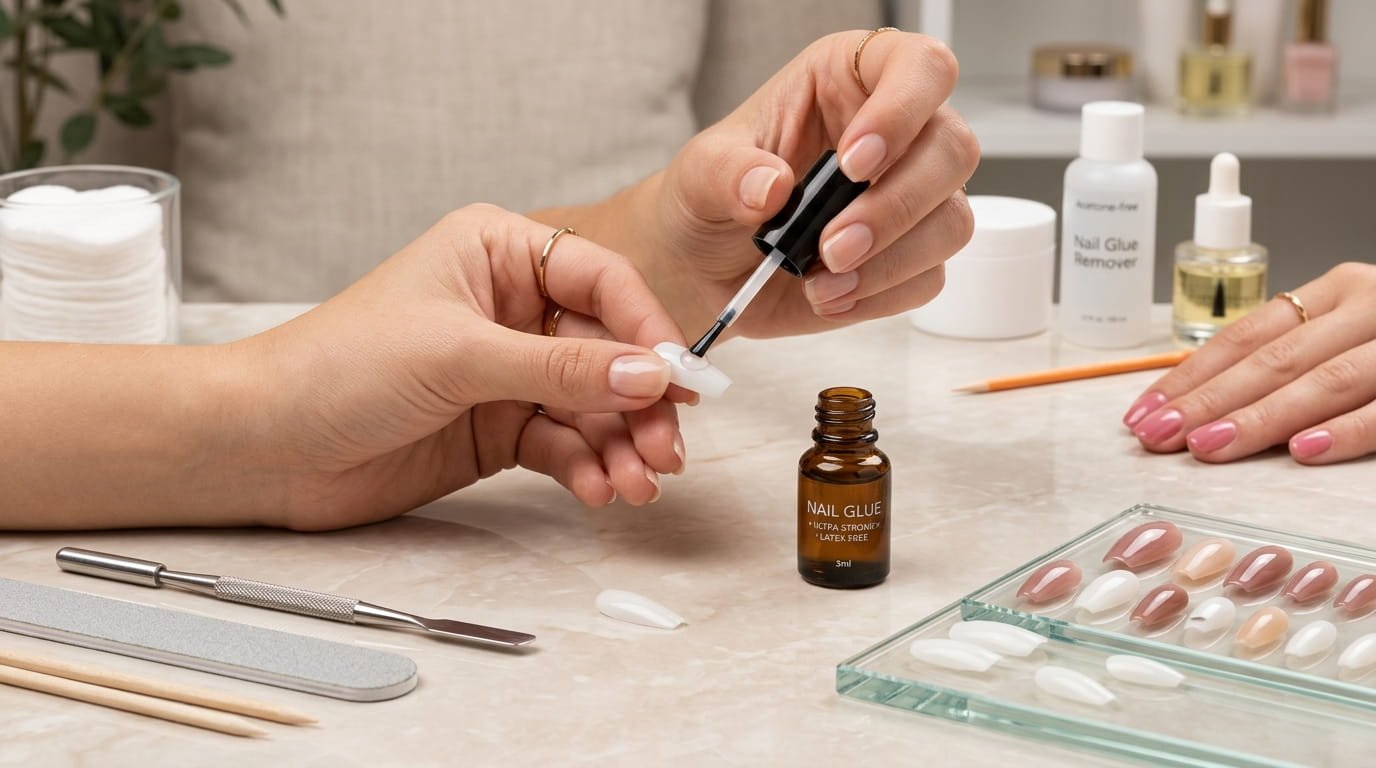
Step 4: Apply A Small Amount Of Glue
Only use the recommended amount by the manufacturer. It is not necessary to use more glue for a stronger bond.
Step 5: Positioning the Artificial Nail
Place the artificial nail gently over the natural one and press for the time recommended.
Step 6: Let the glue set
Avoid exposing your nails to excessive pressure, water or oils. The instructions on the product will tell you how long it takes to cure or set.
How long does nail glue last?
The duration can vary greatly. Artificial nails can remain in place for a few days, or even longer, depending on the type of product, application method, nail condition and daily activities.
When an artificial nail starts lifting, it is possible to damage the natural nail if you force it to stay in place.
Is nail glue safe?
When used in accordance with the instructions, nail glues can be used without risk.
It is important to handle cyanoacrylate glues with care, as they can quickly bond surfaces like skin.
Some of the potential problems include:
- Skin irritation
- Allergic reactions
- Burning or redness
- Accidental bonding between fingers
- Natural nail damage
- Nails thinned after repeated or incorrect application
- Infections can occur if artificial nails catch moisture or debris
- Chemical irritation due to excessive exposure
If you have damaged, inflamed or injured nails, it is best to avoid using artificial nails on the area until the problem has resolved.
Can Nail Glue Damage Natural Nails?
When used correctly, nail glue is not harmful. However, removal and application practices can damage.
Peeling artificial nails off aggressively can, for example, remove layers of natural nail.
Reduce the risk by:
- Peel artificial nails gently.
- Avoid excessive filing.
- Use the appropriate removal methods.
- Allow damaged nails to heal.
- Follow the instructions provided by the manufacturer.
- If irritation occurs, stop using the product.
How to Remove Nail Glue
To remove nail glue, you need patience. Never forcefully rip off artificial nails.
Acetone Based Removal
The most common method is to use cotton or other suitable removal materials soaked in acetone and place them over the artificial nail. This will allow the adhesive to gradually soften. The manufacturer’s instructions and the artificial nail system will determine how to proceed.
Remove the artificial nail gently after the adhesive has melted. Do not pull the artificial nails aggressively.
Nail Glue remover
Some cosmetic brands have dedicated removers for nail glue. Please read the instructions carefully.
Never force the nail off
If the artificial nails do not easily come off, you may need to soak them longer or use the recommended method of removal. Pulling the artificial nail can cause damage to the natural surface.
How to Remove Nail glue from Skin
If you accidentally get nail glue on your skin, don’t pull the skin apart too forcefully.
Over time, soaking the area in warm, soapy water can help loosen adhesive. It may be safer to gently roll or separate the bonded areas than to pull.
Acetone is a solvent that can dissolve cyanoacrylate, but it may also irritate the skin or cause it to dry out. Use with caution and follow product instructions.
Common Nail Glue Errors
Use Too Much Glue
The excess glue can cause the skin to become difficult to remove.
Use Glue on Wet or Oily Nails
Moisture, lotion, and oil can all interfere with adhesion.
Ignoring Nail damage
Artificial nails shouldn’t be used to conceal a nail problem.
Peeling Off Artificial Nails
It is the most common cause of natural nail damage.
Using Super Glue in the Household
While some household adhesives contain similar ingredients, they should not be automatically considered nail glue.
Adhesive Tabs vs. Nail Glue
Both options offer advantages.
Nail glue is a strong and long-lasting adhesive, but it can be difficult to remove.
Adhesive Tabs can be easier to remove or apply, and are a good option if you want to use press-on nails only temporarily.
How long you wish to keep the nails on and how easy you would like them removed will determine which option is best for you.
How to get better nail glue results
To make your application stronger and cleaner:
- Start by cleaning and drying your nails.
- Choose the right artificial nail size.
- Use a controlled, small amount of glue.
- Avoid letting glue touch the skin.
- Avoid unnecessary contact with the water immediately following application.
- Never try to remove artificial nails by force.
- Keep nail glue in a tightly-closed container.
- Keep this product out of reach of children.
- Safety instructions are provided by the manufacturer.
What to do if Nail Glue Irritates Your Skin
Stop using the product if you experience redness, swelling, itchiness, or any other irritation. Remove it as safely as possible if this occurs.
Mild irritation can improve when the exposure is stopped, but severe or persistent symptoms should be evaluated by a health professional.
Seek medical attention immediately if adhesive gets into the eye. Do not try to remove it yourself.
Conclusion:
Nail glue can be used to apply artificial nails, press on nails, decorative accessories, and tips. The fast-acting and strong properties of nail glue make it a popular product, but they also mean that it must be handled with care.
It is safer to apply a cosmetic adhesive as directed by the manufacturer, to keep it away form skin and eyes and to remove artificial nails with a gentle touch rather than peeling. You can have artificial nails without damaging your natural nails by following the manufacturer’s instructions for preparation, application and removal.
Frequently Asked Questions(FAQs)
1. Can I use nail glue on natural nails without harm?
When used in accordance with the instructions of the manufacturer, nail glue is generally safe to use.
2. How long will nail glue last?
Nail glue can hold an artificial or press-on nail for several days, or even longer, depending on the product used, the nail condition, the application technique and your daily activities.
3. How do I safely remove nail glue?
Avoid pulling or peeling artificial nails with force. Acetone or nail glue removers can soften adhesive depending on the type of nail system.
4. Can nail glue damage natural nails?
Incorrect application or aggressive removal may damage the natural nails, causing them to peel, thin, or weaken.
5. Can I use nail glue every day?
Artificial nails can cause damage or irritation if they are removed incorrectly.
6. How long does it take for nail glue to dry?
Nail glues can bond in seconds. However, the exact time it takes to set varies from product to product.
7. Can you use nail glue on a broken or cracked nail?
You should avoid using cosmetic nail glue if your nail is painful, bleeding or deeply cracked. Only cosmetic products designed for minor repairs should be used.
8. Is nail glue allergic?
Yes. Nail adhesives can cause irritation or allergic reactions in some people. If you notice any symptoms that are concerning, stop using the product.
9. Is nail adhesive waterproof?
Even though some nail glues can resist water even after they are fully set, prolonged exposure to it can still cause artificial nails to weaken.
10. How can I make my press-on nails last for longer?
Use the appropriate amount of glue, apply the nail firmly, and avoid excessive stress or prolonged exposure to water.