Yellow Nails: Symptoms, Treatment, and When to See a Doctor
Introduction
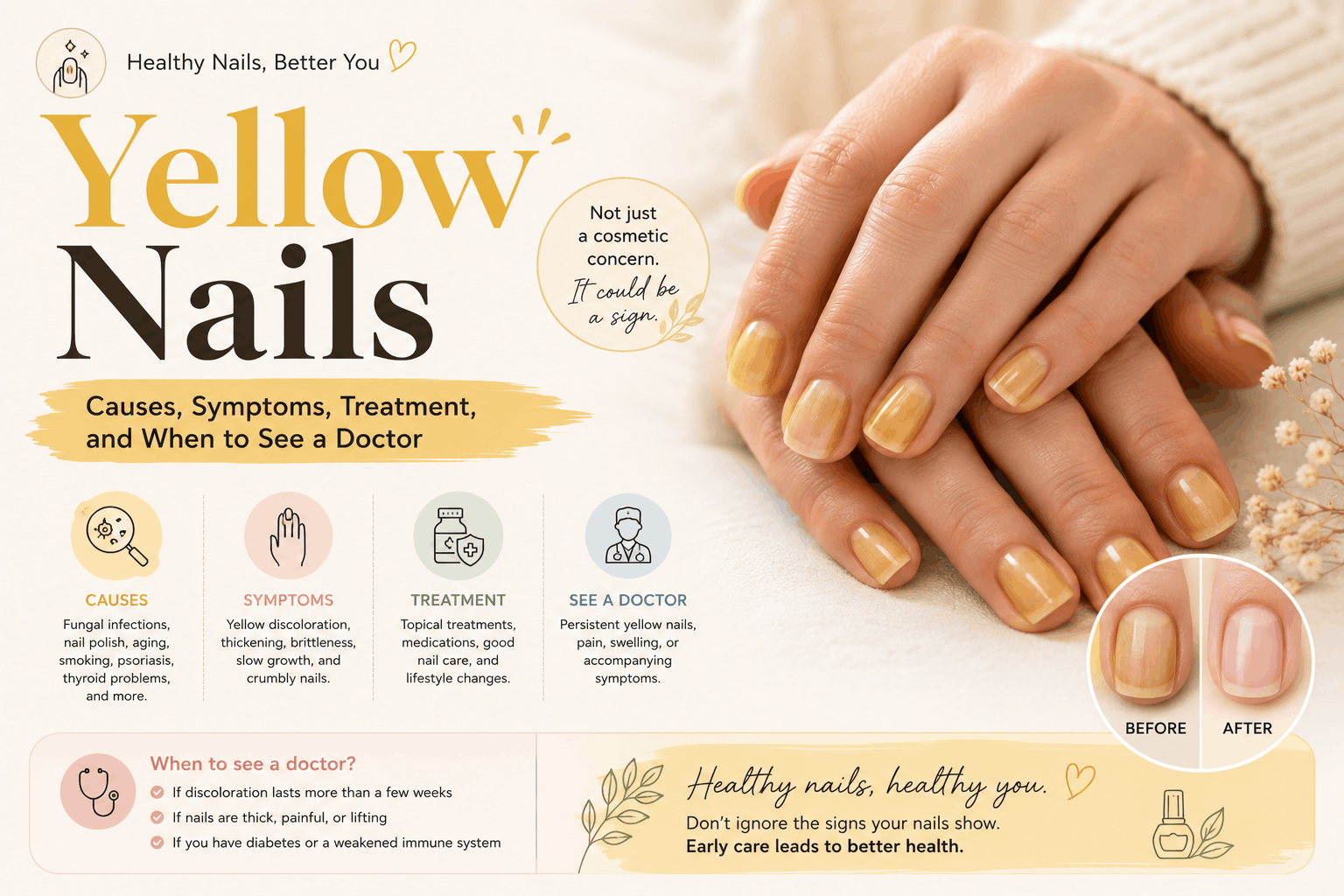
Yellow nails are a common nail change that can happen for many different reasons. Sometimes the discoloration is temporary and harmless, while in other cases it may be linked to a fungal nail infection, nail polish staining, certain skin conditions, nutritional issues, or an underlying health problem.
Because nails grow slowly, changes in their color can sometimes remain visible for weeks or months. Understanding the possible causes can help you decide whether simple home care is enough or whether you should see a healthcare professional.
This guide explains the most common causes of yellow nails, associated symptoms, treatment options, prevention tips, and when professional evaluation is recommended.
What Are Yellow Nails?
Yellow nails refer to nails that develop a yellow, yellowish-brown, or yellow-orange appearance. The discoloration may affect one nail or several nails and can involve the fingernails, toenails, or both.
The appearance can vary considerably. Some nails may simply look slightly yellow, while others can become thick, brittle, rough, or crumbly.
The color alone does not identify the cause. Other features—such as nail thickness, texture, pain, odor, separation from the nail bed, and changes in the surrounding skin—can provide important clues.
Common Causes of Yellow Nails
1. Nail Polish Staining
One of the simplest causes of yellow nails is frequent use of dark-colored nail polish.
Pigments from red, burgundy, orange, or other dark polishes can gradually stain the nail plate. This discoloration is usually cosmetic rather than a sign of disease.
Using a base coat before applying colored polish and taking occasional breaks from polish may help reduce staining.
If the nails gradually return to their normal color as they grow, staining is more likely than an infection.
2. Fungal Nail Infection
A fungal nail infection, medically called onychomycosis, is one of the more important causes of yellow or discolored nails.
A fungal infection can cause nails to become:
- Yellow, white, or brown
- Thickened
- Brittle
- Crumbly
- Distorted
- Separated from the nail bed
- Difficult to trim
Toenails are particularly susceptible because fungi thrive in warm, moist environments.
A fungal infection does not always cause pain, especially during its early stages. However, untreated infections can gradually become more noticeable.
3. Yellow Nail Syndrome
Yellow nail syndrome is a rare condition characterized by yellow or yellow-green nails that become thick and grow slowly. The nails may also develop increased curvature and separation from the nail bed.
Importantly, yellow nail syndrome can be associated with respiratory problems and swelling caused by lymphatic abnormalities.
Someone with persistent yellow nails accompanied by unexplained swelling of the legs or breathing problems should receive medical evaluation.
4. Psoriasis
Nail psoriasis can cause a variety of nail changes, including discoloration.
People with nail psoriasis may develop:
- Small pits in the nails
- Yellowish or reddish discoloration
- Thickened nails
- Nail separation
- Crumbling
- Changes in nail texture
Nail psoriasis can sometimes be mistaken for a fungal infection, so proper diagnosis is important.
5. Smoking
Smoking can contribute to yellow discoloration of the nails, particularly the fingernails.
Nicotine and other substances associated with tobacco smoke can stain nails and fingertips over time.
The discoloration may be more noticeable on the fingers that regularly hold cigarettes.
6. Aging
Nails naturally change as people get older.
They may become thicker, more brittle, slower-growing, or more prone to discoloration. Therefore, mild yellowing doesn’t necessarily indicate an infection or serious illness, particularly when there are no other symptoms.
7. Nail Trauma
Repeated injury or pressure can alter the appearance and growth of a nail.
Tight footwear, repeated impact, aggressive manicures, or picking at the nail can damage the nail plate or nail bed.
Damaged nails can sometimes appear discolored as they grow.
8. Poor Nail Hygiene
Accumulation of dirt, dead skin, or other debris under or around nails can contribute to an unhealthy appearance.
However, persistent yellow discoloration shouldn’t automatically be attributed to poor hygiene. If cleaning does not improve the appearance, another cause may be involved.
9. Certain Medical Conditions
In some cases, yellow nails can occur alongside systemic health problems.
Conditions affecting circulation, the respiratory system, lymphatic system, or metabolism can sometimes be associated with nail changes.
This doesn’t mean that yellow nails automatically indicate an internal disease. Most cases have more straightforward explanations, but persistent unexplained changes deserve attention.
Yellow Toenails vs. Yellow Fingernails
The location of the discoloration can provide clues.
Yellow Toenails
Yellow toenails are commonly associated with fungal infections, especially when the nail is also thick, brittle, or crumbly.
Other factors that may increase the risk include:
- Sweaty feet
- Tight shoes
- Walking barefoot in communal wet areas
- Previous fungal infections
- Nail trauma
Yellow Fingernails
Yellow fingernails may result from nail polish, smoking, fungal infection, trauma, or skin conditions such as psoriasis.
If several fingernails suddenly change color without an obvious explanation, professional evaluation may be useful.
Yellow Nails and Nail Fungus
Because fungal infections are a common cause of nail discoloration, it’s important to recognize the typical signs.
A fungal nail may:
- Become yellow or white
- Get thicker
- Become brittle
- Develop debris underneath
- Change shape
- Separate from the nail bed
- Develop an unpleasant odor
However, these signs aren’t exclusive to fungal infections.
For this reason, treating every yellow nail with an antifungal product isn’t always appropriate. A healthcare professional may examine the nail and, when necessary, test a nail clipping or sample before recommending treatment.
Can Diet Cause Yellow Nails?
Nutrition can influence nail health, but yellow nails alone don’t usually point to a specific vitamin deficiency.
A balanced diet provides nutrients needed for normal nail growth, including protein, iron, zinc, and various vitamins.
Severe nutritional deficiencies can affect the nails, but they generally produce other symptoms as well.
Rather than taking multiple supplements simply because your nails look yellow, it is better to identify the underlying cause first.
How Are Yellow Nails Diagnosed?
Diagnosis depends on the appearance of the nails and any accompanying symptoms.
A healthcare professional may ask about:
- How long the discoloration has been present
- Whether one or multiple nails are affected
- Nail polish use
- Smoking
- Recent nail trauma
- Skin conditions
- Previous fungal infections
- Other health symptoms
- Medications
During an examination, the clinician may look for thickening, scaling, nail separation, pitting, inflammation, or other changes.
If a fungal infection is suspected, laboratory testing can sometimes help confirm the diagnosis.
Treatment for Yellow Nails
Treatment depends entirely on the underlying cause.
Treating Nail Polish Staining
If polish is responsible, stopping or reducing polish use may allow the nail to gradually return to its normal appearance.
Because nails grow slowly, improvement isn’t always immediate.
Treating Fungal Nail Infections
Fungal nail infections can require antifungal treatment.
Depending on the severity and number of affected nails, treatment may involve topical antifungal medication or prescription oral antifungal medication.
Oral medications can have important considerations and potential interactions, so they should be used under appropriate medical supervision.
Even with successful treatment, the nail may take many months to grow out completely.
Treating Psoriasis
When psoriasis affects the nails, treatment may include topical medications, injections, light-based treatments, or systemic treatments depending on severity and whether other areas of the body are involved.
A dermatologist can determine the most appropriate option.
Treating Underlying Conditions
If yellow nails are related to another medical condition, treating that underlying condition may be an important part of management.
Home Care for Yellow Nails
Simple nail-care habits can help maintain healthier nails.
Keep Nails Clean and Dry
Wash hands and feet regularly and dry them thoroughly, especially between the toes.
Trim Nails Carefully
Keep nails trimmed to a comfortable length and avoid cutting too deeply into the corners.
Avoid Picking or Biting
Picking at nails can damage the nail plate and surrounding skin, increasing the risk of infection.
Wear Breathable Shoes
For people prone to toenail problems, breathable footwear and moisture-control habits can help reduce fungal growth.
Avoid Sharing Nail Tools
Don’t share nail clippers, files, or other personal nail-care tools.
If you visit a salon, choose one that follows appropriate hygiene and sterilization practices.
Can You Remove Yellow Nails Quickly?
There isn’t one guaranteed method for instantly removing yellow nail discoloration.
If staining is caused by nail polish, the discoloration may gradually disappear as the nail grows.
If a fungal infection or medical condition is responsible, simply buffing or whitening the nail won’t solve the underlying problem.
Aggressive scraping, filing, or bleaching can damage the nail and may make the situation worse.
When Should You See a Doctor?
You should consider professional evaluation if:
- Yellow discoloration persists without an obvious reason
- Nails become thick or crumbly
- The nail separates from the nail bed
- Several nails are affected
- The nail becomes painful
- There is swelling or redness around the nail
- You have recurrent nail infections
- Nail changes occur alongside other unexplained symptoms
- Home care doesn’t improve the problem
People with diabetes, poor circulation, or a weakened immune system should be particularly cautious about persistent foot or nail problems and seek appropriate medical advice.
How to Prevent Yellow Nails
Prevention depends on the underlying cause, but several habits can reduce the risk of nail problems.
Give Nails Breaks From Dark Polish
Using a base coat and occasionally going without nail polish can reduce staining.
Keep Feet Dry
Change damp socks and allow shoes to dry thoroughly between uses.
Wear Properly Fitting Shoes
Shoes that repeatedly press against the toenails can cause trauma and make nails more vulnerable to problems.
Don’t Share Nail Equipment
Personal nail tools should be kept personal.
Avoid Cutting Cuticles Aggressively
The cuticle helps protect the area around the nail. Excessive cutting or pushing can create opportunities for infection.
Treat Athlete’s Foot Promptly
Fungal skin infections can spread to the toenails, so addressing an athlete’s foot can help reduce the risk of nail involvement.
Yellow Nails vs. Normal Nail Color
Healthy nails are generally smooth, relatively uniform in color, and firmly attached to the nail bed.
A small amount of variation can be completely normal.
The important issue is a new or progressive change.
If your nails suddenly become yellow, thick, brittle, painful, or separated from the nail bed, it’s worth considering why the change occurred rather than focusing only on the color.
Conclusion
Yellow nails can have many causes, ranging from harmless nail-polish staining to fungal infections, psoriasis, trauma, smoking, aging, and less common medical conditions.
The appearance of the nail can provide useful clues, but color alone isn’t enough to make a diagnosis. In particular, fungal infections and other nail disorders can look similar, which is why persistent or unusual changes may require professional examination.
Simple nail-care habits—keeping nails clean and dry, avoiding trauma, using clean manicure tools, and wearing appropriate footwear—can support healthy nails. However, if discoloration persists or occurs alongside thickening, crumbling, pain, swelling, or nail separation, seeing a dermatologist or healthcare professional is the safest approach.
The key is to treat the cause, not just the yellow color.
Frequently Asked Questions(FAQs)
1. What causes yellow nails?
Common causes include nail-polish staining, fungal infections, smoking, aging, trauma, psoriasis, and other less common health conditions.
2. Are yellow nails always caused by fungus?
No. Yellow nails can have many causes. A fungal infection is common, but nail-polish staining and other conditions can produce similar discoloration.
3. How do I get rid of yellow nails?
Treatment depends on the cause. Nail-polish staining may disappear as the nail grows, while fungal infections may require antifungal treatment.
4. Can nail polish make nails yellow?
Yes. Dark-colored nail polish can stain the nail plate, especially when used frequently without a protective base coat.
5. Are yellow toenails a sign of fungus?
They can be. Yellow, thick, brittle, or crumbly toenails are common features of fungal nail infections, but other conditions can look similar.
6. Can vitamin deficiency cause yellow nails?
Nutritional deficiencies can affect nail health, but yellow nails alone don’t identify a particular vitamin deficiency. It’s better to determine the underlying cause before taking supplements.
7. Can yellow nails grow out?
Yes, depending on the cause. If discoloration is limited to the nail plate, normal nail growth can gradually replace the affected portion.
8. Should I see a dermatologist for yellow nails?
Consider seeing a dermatologist if yellowing persists, affects several nails, or occurs with thickening, crumbling, pain, nail separation, or other unusual changes.
9. How can I prevent yellow toenails?
Keep your feet dry, wear breathable shoes, avoid sharing nail tools, trim nails carefully, and address fungal skin infections promptly.
10. Are yellow nails a sign of a serious disease?
Usually not, but persistent unexplained yellow nails can occasionally occur with underlying medical conditions. If the change is accompanied by other symptoms, professional evaluation is recommended.