Masseter Botox: Benefits, Procedure, Risks & Complete Guide
Masseter Botox has become a popular non-surgical treatment for people who want to create a slimmer lower-face appearance while also addressing problems associated with an overactive masseter muscle. The masseter is one of the major muscles responsible for chewing and is located along the sides of the jaw.
Botulinum toxin injections can temporarily reduce the activity and size of the masseter muscle. This may soften a prominent or square-looking jawline in appropriate cosmetic patients. It has also been studied for conditions such as bruxism and muscular temporomandibular disorders, although the evidence and treatment protocols vary.
What Is Masseter Botox?
Masseter Botox is an injection of botulinum toxin type A into the masseter muscles on both sides of the jaw.
Botulinum toxin temporarily reduces nerve signaling to the targeted muscle. As muscle activity decreases, the treated masseter may gradually become smaller. This can result in a less prominent lower jaw and a softer facial contour.
The treatment is different from Botox injections used to reduce wrinkles because the target in this procedure is a deeper chewing muscle rather than a superficial facial-expression muscle.
Why Do People Get Masseter Botox?
There are two major reasons people consider masseter Botox: facial contouring and muscle-related symptoms.
Cosmetic Jaw Slimming
Some people naturally have large masseter muscles, which can make the lower face appear broad or square. Masseter Botox may reduce the prominence of the muscle over time and create a narrower-looking lower-face contour.
A 2026 systematic review and meta-analysis evaluated botulinum toxin for masseter muscle hypertrophy and examined its effectiveness for reducing masseter prominence.
Teeth Grinding and Jaw Clenching
Masseter Botox has also been investigated for bruxism, a condition involving repetitive or involuntary clenching or grinding of the teeth.
Clinical research suggests botulinum toxin can reduce biting force and may reduce pain in some people with bruxism. However, results vary between studies, and it should not automatically be considered a replacement for established dental approaches.
How Does Masseter Botox Work?
The masseter muscle contracts when you chew or clench your teeth. With botulinum toxin treatment, nerve signals responsible for muscle contraction are temporarily reduced.
Over time, reduced muscle activity can lead to decreased muscle bulk.
The process can be summarized as:
- The practitioner assesses the jaw and masseter muscles.
- The masseter is identified by asking the patient to clench.
- The injection sites are marked.
- A small amount of botulinum toxin is injected into selected areas.
- Muscle activity gradually decreases.
- The facial contour may become slimmer as the muscle reduces in size.
The exact injection pattern and amount should be individualized rather than copied from another patient.
Masseter Botox Procedure
Masseter Botox is generally performed as an outpatient procedure.
Before treatment, the practitioner evaluates the patient’s facial anatomy, muscle size, symmetry, medical history, and treatment goals.
During the procedure, several small injections are placed into the masseter muscles. The number of injection points and amount of toxin depend on factors such as muscle strength, anatomy, previous treatment, and the reason for treatment.
The appointment is usually relatively short, although the exact duration varies.
Does Masseter Botox Hurt?
Most people describe the injections as brief pinches or small stinging sensations.
Because several injections may be given on each side of the face, temporary tenderness can occur afterward.
Some practitioners use topical or other comfort measures when appropriate, but many patients tolerate the procedure without significant difficulty.
When Do Masseter Botox Results Appear?
Masseter Botox does not usually produce an immediate slimming effect.
The muscle’s activity begins to decrease after treatment, while visible contour changes generally develop gradually.
For bruxism-related symptoms, clinical studies have reported effects within the first several weeks, with benefits potentially lasting for several months.
Cosmetic results can take longer because visible facial slimming depends on gradual reduction in muscle bulk.
How Long Does Masseter Botox Last?
The duration varies between individuals.
Factors that can affect longevity include:
- Amount of botulinum toxin used
- Individual metabolism
- Muscle size and strength
- Frequency of jaw clenching
- Treatment history
- Injection technique
- Individual response
Research on bruxism has found that some treatment effects can persist for several months, although benefits may gradually decrease as muscle activity returns.
Benefits of Masseter Botox
Potential benefits include:
1. Slimmer-Looking Jawline
Reducing masseter bulk can make a broad lower face appear narrower in appropriate patients.
2. Non-Surgical Treatment
The procedure does not require surgical removal of the muscle or modification of the jawbone.
3. Reduced Muscle Activity
Botulinum toxin can reduce excessive masseter contraction.
4. Possible Bruxism Benefits
Clinical studies have reported reductions in biting force and some bruxism-related symptoms following treatment.
5. Minimal Downtime
Many patients can return to their normal routine soon after treatment, although individual aftercare instructions may vary.
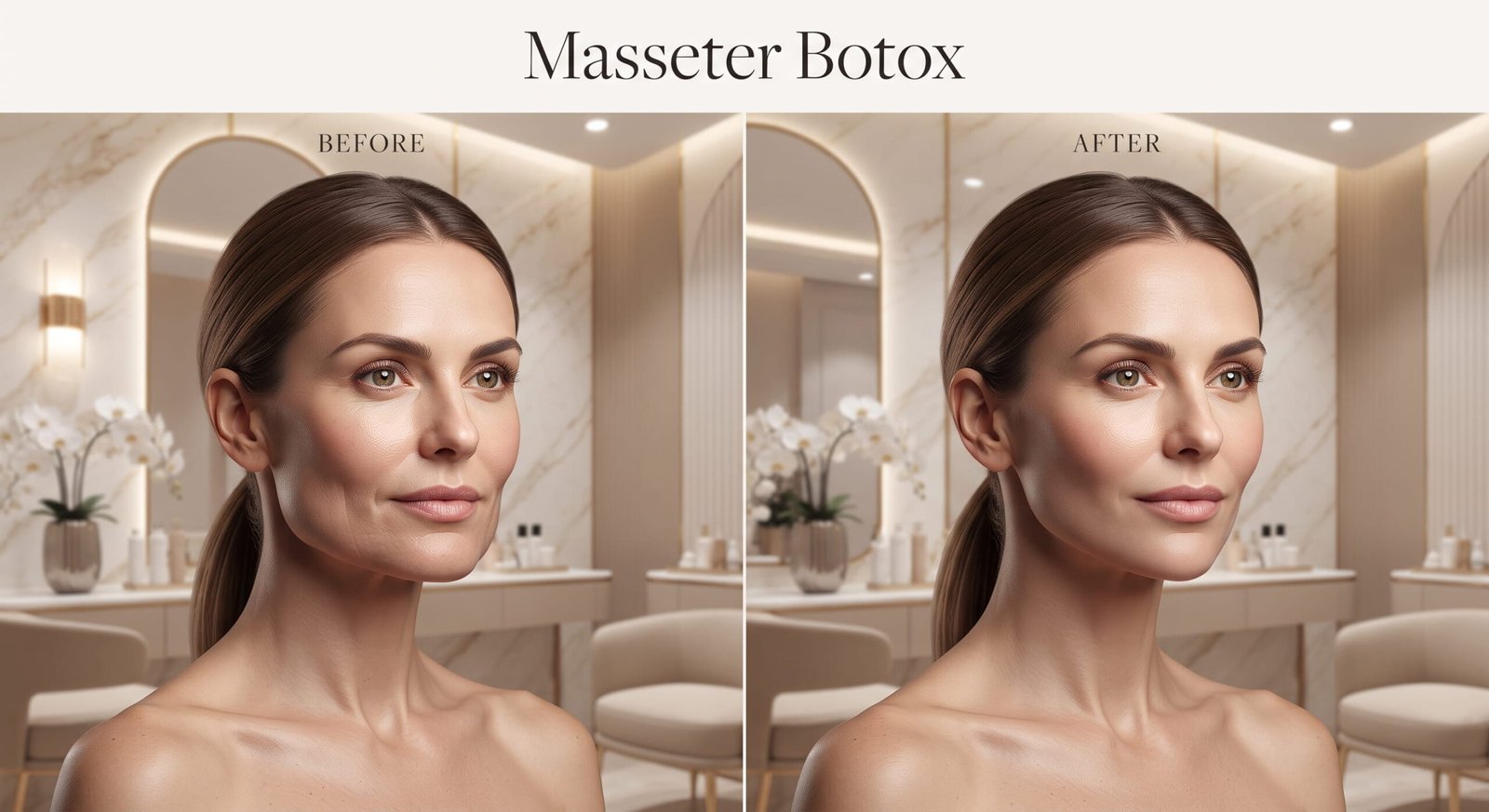
Masseter Botox Before and After
Before-and-after changes are usually gradual.
Before treatment, a patient may have prominent masseter muscles that create a wider lower-face appearance. After treatment, the muscle may become less prominent, potentially producing a softer or slimmer contour.
Results depend heavily on the patient’s anatomy. Masseter Botox cannot significantly narrow the underlying jawbone because it works on muscle rather than bone.
This distinction is important when discussing expected results.
Who Is a Good Candidate?
A suitable candidate may have:
- Prominent masseter muscles
- A broad lower-face appearance caused partly by muscle bulk
- Excessive jaw-muscle activity
- Certain cases of bruxism or muscle-related jaw symptoms
- Realistic expectations about the treatment
A proper assessment is important because facial width can also be influenced by bone structure, fat distribution, skin, and other muscles.
Who May Not Be a Good Candidate?
Masseter Botox may not be appropriate for everyone.
A practitioner may recommend another approach if facial width is primarily caused by bone structure or another underlying issue.
Extra caution may also be appropriate for people with certain neuromuscular conditions, swallowing difficulties, previous reactions to botulinum toxin, pregnancy-related considerations, or other relevant medical issues.
A qualified medical professional should review your history before treatment.
Possible Side Effects and Risks
Although botulinum toxin is widely used, masseter injections are not risk-free.
Possible effects include:
- Temporary injection-site pain
- Bruising
- Swelling
- Tenderness
- Muscle weakness
- Changes in chewing strength
- Facial asymmetry
- Changes in smile
- Difficulty with certain facial movements
- Undesired contour changes
A 2024 systematic review of botulinum toxin for sleep bruxism reported generally mild and temporary adverse effects in the included studies, but cosmetic smile changes were also reported in some participants.
A newer systematic review has also examined changes occurring in masticatory muscles following botulinum toxin injections, highlighting why appropriate dosing, anatomy, and follow-up matter.
Can Masseter Botox Change Your Smile?
It can in some cases.
Because the masseter is close to other structures involved in facial movement, inaccurate injection placement or unwanted diffusion can potentially contribute to temporary changes in facial expression or smile.
This is one reason masseter Botox should be performed by a properly trained and experienced medical injector with detailed knowledge of facial anatomy.
Masseter Botox and TMJ Disorders
Masseter Botox is sometimes promoted as a treatment for TMJ-related symptoms. However, TMJ disorders are a broad group of conditions with different causes.
Evidence regarding botulinum toxin for TMD remains inconsistent. One 2024 systematic review and meta-analysis found that botulinum toxin did not demonstrate clear superiority over placebo for several outcomes, while another meta-analysis reported benefits for muscular TMD pain and muscle activity.
This difference in findings means patients should receive an individualized diagnosis rather than assuming Botox is appropriate for every type of jaw pain.
Masseter Botox vs. Jawline Surgery
Both address different structures.
Masseter Botox targets muscle bulk and is temporary.
Jaw surgery changes underlying bone structure and is considerably more invasive.
If a wide jaw is primarily caused by bone anatomy, Botox may produce limited cosmetic improvement. A professional facial assessment can help determine which factors contribute most to the appearance.
How to Prepare for Masseter Botox
Your practitioner may provide specific instructions before treatment.
General preparation may include:
- Discussing medications and supplements
- Informing the practitioner about previous botulinum toxin treatments
- Reporting allergies or previous reactions
- Discussing pregnancy or breastfeeding when relevant
- Avoiding unnecessary blood-thinning substances only when your clinician recommends it
Do not stop prescribed medication without discussing it with your healthcare professional.
Aftercare
After treatment, follow the instructions provided by your injector.
Depending on the procedure and practitioner, you may be advised to avoid significant pressure or manipulation of the treated area immediately after treatment.
Your clinician may also provide guidance regarding exercise, facial massage, dental procedures, and other activities.
How Much Does Masseter Botox Cost?
The cost varies considerably depending on location, provider experience, the amount of botulinum toxin required, and whether the treatment is cosmetic or therapeutic.
Some clinics charge per unit, while others use a treatment-area or package price.
Because dosing should be individualized, comparing prices based only on the number of units may not provide a meaningful comparison.
Is Masseter Botox Worth It?
For the right patient, masseter Botox can be a useful option for temporarily reducing masseter prominence or muscle activity.
However, expectations are important. It does not reshape the jawbone, results are temporary, and repeated treatments may be required.
For bruxism or jaw pain, the underlying diagnosis should also be considered. Evidence suggests potential benefits, but research remains variable and treatment protocols are not completely standardized.
Final Thoughts
Masseter Botox is a minimally invasive treatment that temporarily reduces activity in the masseter muscles. It can be used for cosmetic facial slimming and has also been studied for bruxism and muscular jaw symptoms.
The best results depend on accurate patient selection, detailed facial anatomy knowledge, appropriate treatment planning, and realistic expectations. Because the treatment can affect chewing muscles and facial appearance, it should be performed by a qualified and experienced medical professional.
For patients considering treatment for jaw pain or teeth grinding, a proper dental or medical evaluation is particularly important because Botox may be an adjunct rather than a universal solution.
FAQs About Masseter Botox
1. What is Masseter Botox?
Masseter Botox involves injecting botulinum toxin type A into the masseter muscles to temporarily reduce muscle activity and, over time, potentially reduce muscle bulk.
2. Does Masseter Botox slim the face?
Yes, it can create a slimmer-looking lower face when facial width is significantly influenced by enlarged masseter muscles. It does not reduce the underlying jawbone.
3. How long does Masseter Botox last?
Results vary, but effects can last for several months. Muscle activity gradually returns as the effect of the toxin wears off.
4. Is Masseter Botox painful?
Most patients experience brief pinching or stinging during injections. Mild tenderness or bruising can occur afterward.
5. When will I see Masseter Botox results?
Results develop gradually rather than immediately. Muscle activity can decrease within weeks, while visible facial contour changes may take longer.
6. Can Masseter Botox help teeth grinding?
Research suggests botulinum toxin may reduce biting force and some symptoms associated with bruxism, but it is not appropriate for every patient and should be considered alongside other treatment options.
7. Can Masseter Botox change my smile?
Temporary changes in smile or facial movement can occur if nearby muscles are affected. Proper anatomy assessment and injection technique are important for reducing this risk.
8. Is Masseter Botox permanent?
No. The effect is temporary, and muscle activity generally returns gradually as the botulinum toxin wears off.
9. Is Masseter Botox safe?
Botulinum toxin treatments are widely performed, but all injections carry potential risks. Side effects can include bruising, tenderness, weakness, asymmetry, chewing changes, and other unwanted effects.
10. Should I get Masseter Botox for TMJ pain?
Not automatically. TMJ disorders have multiple causes, and evidence regarding botulinum toxin remains mixed. A dentist, oral/maxillofacial specialist, or appropriately qualified medical professional should determine whether it is suitable for your specific condition.