How to Get Rid of Dandruff: Effective Scalp Care and Treatment
Introduction
Few hair and scalp problems are as common as dandruff. Those small flakes on dark clothing, persistent scalp itching, or white buildup around the hairline can be annoying and sometimes embarrassing. While dandruff is usually not dangerous, it can become a recurring problem if the scalp is irritated or the underlying cause is not addressed.
The good news is that most cases can be controlled with an appropriate scalp-care routine. The right approach depends on whether the problem is related to excess oil, dryness, seborrheic dermatitis, sensitivity to hair products, or another scalp condition.
Many people immediately reach for oils or harsh scrubs when they notice flakes. These approaches do not work for everyone and can sometimes make irritation worse. A better strategy is to understand what is happening on the scalp, choose suitable cleansing products, and give the routine enough time to work.
This guide explains the common reasons for scalp flaking, effective treatment options, daily habits that can help, mistakes to avoid, and situations where professional evaluation may be necessary.
What Is Dandruff?
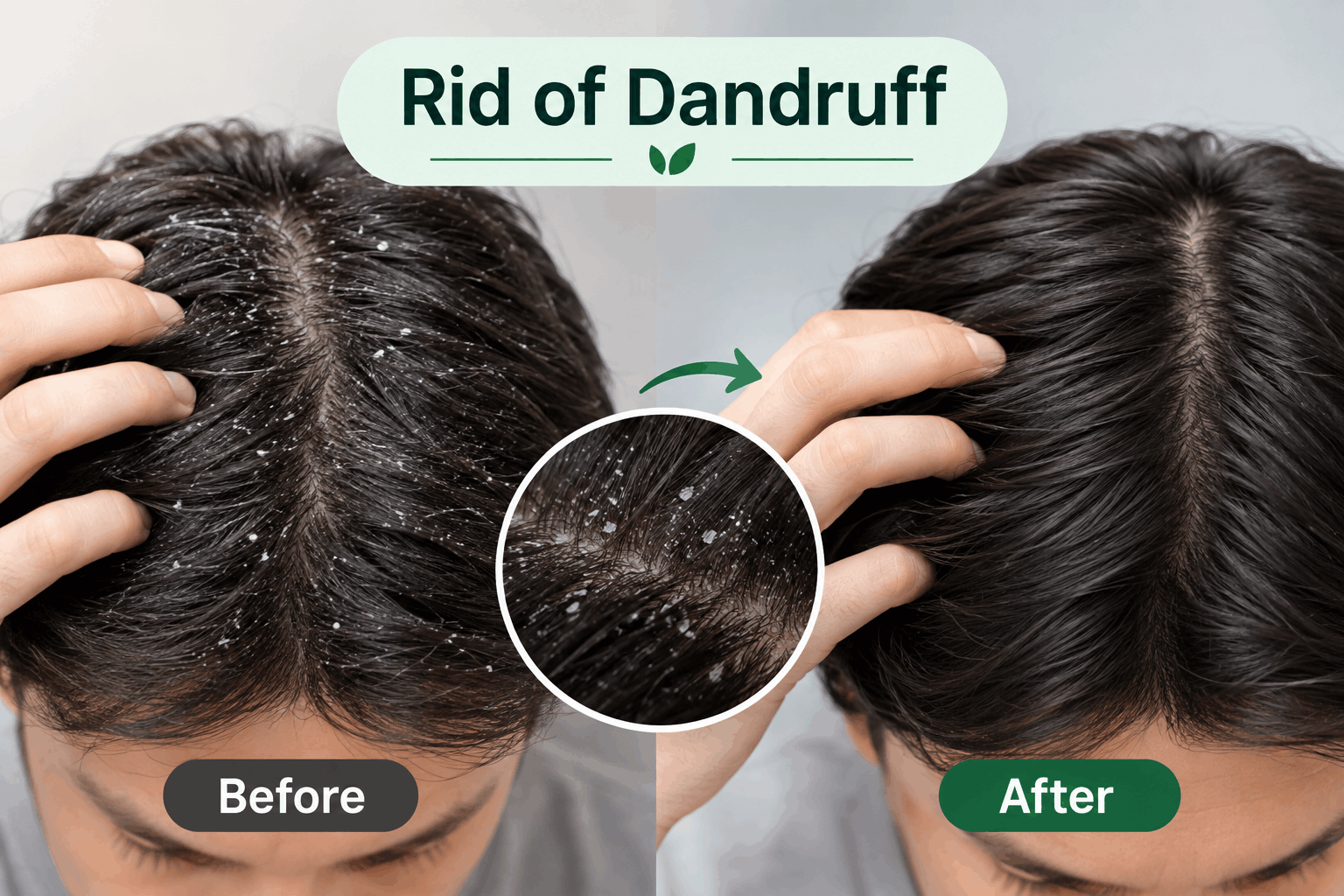
Dandruff is a common scalp condition characterized by visible flakes of shed skin. The scalp naturally produces and replaces skin cells, but in some people this process becomes more noticeable because of oiliness, inflammation, irritation, or changes involving naturally occurring microorganisms on the skin.
The flakes may be:
- White or gray
- Slightly yellow
- Fine and powdery
- Larger and somewhat greasy
Some people experience only visible flakes, while others also have itching, redness, or scalp sensitivity.
Importantly, dandruff does not mean that someone has poor personal hygiene. It is a skin and scalp issue that can affect people who wash their hair regularly.
Why Does Dandruff Happen?
Several factors may contribute to scalp flaking. Understanding the likely cause can make treatment more effective.
Oily Scalp
Excess scalp oil can combine with dead skin cells and create visible buildup. An oily environment may also encourage the activity of Malassezia, a yeast that naturally lives on human skin.
People with oily scalps may notice greasy-looking flakes, itching, and areas of redness.
Malassezia and Scalp Inflammation
Malassezia is normally found on the skin and is not inherently harmful.
However, some people are more sensitive to changes associated with this yeast and the oils on their scalp. This can contribute to inflammation and increased skin shedding.
This is one reason antifungal ingredients are included in many medicated scalp products.
Seborrheic Dermatitis
Persistent flaking accompanied by redness and greasy scales may indicate seborrheic dermatitis rather than simple dandruff.
This condition can also affect:
- Eyebrows
- Behind the ears
- Sides of the nose
- Beard area
- Hairline
More significant cases may need treatment recommended by a dermatologist.
Dry or Irritated Skin
A dry scalp can also produce flakes. Cold weather, dry indoor air, excessive washing, or harsh cleansing products can contribute.
Dryness and dandruff are not always identical, so using strong anti-dandruff treatments on an already irritated scalp may not be the best solution.
Hair Products
Shampoos, conditioners, styling products, dyes, sprays, and fragrances can irritate sensitive skin.
A new product that causes itching, redness, or scaling may be responsible for contact dermatitis rather than ordinary dandruff.
Dandruff or Dry Scalp?
The two are often confused.
A dry scalp usually produces smaller, dry flakes and may feel tight or uncomfortable. Dandruff is more often associated with oiliness, inflammation, and recurring scaling.
There can also be overlap. A person may have a scalp that is both dry and irritated.
Instead of relying only on the appearance of flakes, pay attention to the overall pattern:
More suggestive of dryness:
- Tight-feeling scalp
- Small dry flakes
- Increased symptoms after harsh shampoo
- Little or no redness
More suggestive of dandruff or seborrheic dermatitis:
- Recurrent flaking
- Greasy scales
- Itching
- Redness
- Oily scalp
- Flaking around eyebrows or ears
Effective Ways to Control Dandruff
1. Choose a Medicated Shampoo
An appropriate anti-dandruff shampoo is often the first practical step.
Depending on the product and country, useful active ingredients may include:
- Ketoconazole
- Selenium sulfide
- Zinc pyrithione
- Salicylic acid
- Coal tar
Each ingredient has a different purpose. Some help control yeast and microbial activity, while others loosen thick scales or reduce excessive buildup.
Read the product instructions carefully and use the shampoo as directed.
2. Apply Shampoo to the Scalp
When treating flakes, concentrate the product on the scalp rather than simply coating the hair.
Use your fingertips to massage it gently into the skin. Avoid using your fingernails because they can scratch and damage the scalp.
3. Allow Enough Contact Time
Some medicated shampoos need to remain on the scalp for several minutes before rinsing.
Washing the product away immediately may reduce its effectiveness.
The recommended contact time varies, so follow the instructions on the specific product rather than using a fixed time for every shampoo.
4. Maintain a Consistent Routine
One of the most common mistakes is using a treatment once or twice and expecting immediate results.
Scalp conditions often require consistent care. Give the selected treatment enough time to show whether it is helping.
Once symptoms are controlled, some people benefit from periodic maintenance use of a suitable product.
Common Active Ingredients Explained
Ketoconazole
Ketoconazole is an antifungal ingredient frequently used for scalp conditions associated with Malassezia.
It can be particularly useful when ordinary cosmetic shampoos are not controlling recurrent flaking.
Selenium Sulfide
Selenium sulfide can help reduce scaling and control certain microorganisms on the scalp.
It may be useful for people with persistent or oily flaking.
Salicylic Acid
Salicylic acid helps loosen dead skin and thick scale.
It can make buildup easier to wash away, although excessive use may leave some scalps dry or irritated.
Zinc Pyrithione
Zinc pyrithione has traditionally been used in anti-dandruff formulations to help control flaking and microbial activity. Availability differs by region.
Coal Tar
Coal tar can slow excessive skin-cell turnover and may help certain chronic scalp conditions.
It may have a noticeable odor and can increase sun sensitivity, so product directions should be followed carefully.
How Often Should You Wash Your Hair?
There is no universal washing schedule.
Someone with an oily scalp may need frequent cleansing, while a person with dry or textured hair may prefer less frequent washing.
A useful rule is to focus on how the scalp responds.
If the scalp becomes greasy, itchy, and flaky when washing is delayed, more frequent cleansing may be appropriate.
If frequent washing leaves the scalp tight, burning, or excessively dry, a gentler routine may be preferable.
Avoid Scratching Your Scalp
Flaking often causes itching, which can create a cycle of scratching and irritation.
Repeated scratching can:
- Damage the skin
- Cause small wounds
- Produce bleeding
- Increase inflammation
- Increase the risk of infection
Instead of trying to physically remove every flake, focus on controlling the underlying scalp problem.
What About Oiling the Scalp?
Oiling is a traditional hair-care practice, but it is not a universal solution for scalp flaking.
Light moisturization may be helpful for certain dry scalps. However, heavy oiling can be uncomfortable for people with oily or seborrheic scalps.
If your flakes are greasy and your scalp becomes oily quickly, applying large amounts of oil may not improve the problem.
Natural Remedies
Home remedies are widely promoted online, but evidence varies considerably.
Coconut Oil
Coconut oil can soften dry skin and may reduce the feeling of tightness. However, it does not address every cause of dandruff.
If your scalp is oily, heavy application may make buildup more noticeable.
Tea Tree Oil
Tea tree oil has antimicrobial properties, but concentrated essential oils can cause irritation or allergic reactions.
Never assume that a natural product is automatically suitable for sensitive skin.
Apple Cider Vinegar
Apple cider vinegar is sometimes suggested as a scalp rinse, but it is not a proven universal treatment.
Undiluted vinegar can irritate or burn the scalp, particularly if the skin is already scratched.
Aloe Vera
Aloe vera may feel soothing on irritated skin, but it should not replace appropriate treatment when persistent scaling is caused by an underlying scalp disorder.
Hair Products and Dandruff
Some people notice increased itching or flaking after using particular styling products.
Potential irritants include:
- Strong fragrances
- Hair dyes
- Styling sprays
- Certain gels
- Chemical treatments
- Essential oils
If symptoms began after introducing a new product, stop using it temporarily and observe whether the scalp improves.
A persistent reaction may require evaluation for contact dermatitis.
Can Stress Make It Worse?
Stress can influence many inflammatory skin conditions.
It does not necessarily create dandruff by itself, but people with an existing tendency toward scalp inflammation may notice more itching or flaking during stressful periods.
Adequate sleep, regular physical activity, relaxation techniques, and a balanced routine can support overall skin health.
Does Diet Matter?
There is no specific food that reliably eliminates dandruff.
Nevertheless, healthy skin requires adequate nutrition. A varied diet containing protein, vegetables, fruits, whole grains, healthy fats, and essential vitamins and minerals supports normal skin function.
People with restrictive diets or symptoms suggesting nutritional deficiency should discuss their concerns with a healthcare professional rather than taking large amounts of supplements without testing.
Dandruff and Hair Loss
Ordinary flaking does not usually cause permanent hair loss.
However, severe scalp inflammation and repeated scratching can contribute to temporary shedding or breakage.
If significant hair loss occurs alongside persistent scaling, redness, or itching, another scalp condition may be involved.
Possible causes include:
- Seborrheic dermatitis
- Psoriasis
- Eczema
- Fungal infection
- Contact dermatitis
- Other forms of inflammatory scalp disease
A dermatologist can help determine the actual cause.
Can Dandruff Be Completely Cured?
For some people, symptoms disappear for long periods. For others, the condition tends to come back.
Recurring scalp flaking is often something that can be controlled rather than permanently eliminated.
This is especially true when it is associated with seborrheic dermatitis or an individual’s natural sensitivity to scalp microorganisms.
A maintenance routine may therefore be more useful than repeatedly waiting for symptoms to become severe.
When Should You See a Dermatologist?
Professional evaluation is advisable when:
- Symptoms are severe
- The scalp is very red
- There are thick plaques or crusts
- The skin is painful
- There is pus or drainage
- Significant hair loss develops
- Symptoms spread to the face or ears
- Over-the-counter treatment fails
- The problem repeatedly returns
A dermatologist can distinguish dandruff from psoriasis, eczema, fungal infections, and allergic reactions.
Common Mistakes That Can Make Flaking Worse
Scrubbing Aggressively
Hard scrubbing may remove visible flakes temporarily but can damage the scalp and increase inflammation.
Using Too Many Treatments
Combining several medicated shampoos, oils, scrubs, and home remedies at the same time can make it difficult to know what is helping.
It may also irritate the scalp.
Washing With Very Hot Water
Hot water can strip protective oils from the skin and aggravate dryness.
Lukewarm water is generally more comfortable.
Picking at Scales
Picking can create small wounds and increase the risk of infection.
Using Heavy Oils Without Considering Scalp Type
Oil may not be appropriate for an oily or inflamed scalp.
Stopping Treatment Too Early
A few days of improvement does not always mean the problem is permanently resolved. Follow the recommended treatment schedule.
A Simple Scalp-Care Routine
A practical routine can be surprisingly straightforward.
Morning or regular wash:
- Wet the scalp with lukewarm water.
- Apply an appropriate shampoo.
- Massage gently with fingertips.
- Allow medicated products to remain on the scalp for the recommended time.
- Rinse thoroughly.
- Avoid aggressive towel rubbing.
Between washes:
- Avoid scratching.
- Limit irritating styling products.
- Keep brushes and combs clean.
- Avoid unnecessary scalp manipulation.
Maintenance:
- Continue treatment according to the product instructions.
- If symptoms repeatedly return, consider professional assessment.
How Long Does It Take to Improve?
The timeline varies.
Some people notice reduced itching and flaking after several uses of an appropriate product. More persistent scalp conditions can take longer to control.
If there is no meaningful improvement after using a suitable treatment correctly, continuing the same approach indefinitely may not be useful.
The diagnosis may need to be reconsidered.
Can Dandruff Be Prevented?
Complete prevention is not always possible, especially when someone has a recurring inflammatory scalp condition.
However, symptoms can often be reduced by:
- Keeping the scalp clean
- Using appropriate anti-dandruff products
- Avoiding irritating hair products
- Managing excessive scratching
- Keeping combs and brushes clean
- Avoiding unnecessary buildup
- Maintaining a balanced lifestyle
- Treating flare-ups early
The goal is consistent scalp health rather than trying to eliminate every individual flake.
Final Thoughts
Scalp flaking can be frustrating, but it is usually manageable once the right cause and treatment approach are identified. A suitable anti-dandruff shampoo, consistent washing, gentle scalp care, and avoidance of irritating products can make a significant difference.
Not every flaky scalp needs the same treatment. Some people primarily have dryness, while others have oil-related scaling, seborrheic dermatitis, product irritation, or another dermatological condition.
Avoid aggressive scratching, harsh scrubbing, and unproven remedies that cause burning or irritation. If symptoms remain severe or keep returning despite appropriate care, professional evaluation can help identify the underlying problem.
With a consistent and individualized routine, most people can keep their scalp comfortable, clean, and much less flaky.
Frequently Asked Questions
1. What is the best way to get rid of dandruff?
A suitable anti-dandruff shampoo containing an effective active ingredient is often the most practical starting point. Consistency and correct application are important.
2. How quickly can dandruff improve?
Mild symptoms may improve after several appropriate treatments, while chronic scalp conditions may take longer. If there is no improvement after consistent use, medical evaluation may be needed.
3. Should I wash my hair every day?
Not necessarily. Washing frequency should depend on your scalp type, oil production, hair texture, and how your scalp responds to cleansing.
4. Can coconut oil remove dandruff?
Coconut oil may help soften dry skin, but it is not a universal treatment. Heavy oiling may be unsuitable for an oily or inflamed scalp.
5. Does scratching make dandruff worse?
Yes. Scratching can damage the scalp, increase inflammation, cause bleeding, and potentially lead to infection.
6. Can dandruff cause permanent hair loss?
Typical dandruff does not usually cause permanent hair loss. Severe inflammation or repeated scratching may contribute to temporary shedding or breakage.
7. Is dandruff caused by poor hygiene?
No. It is not simply a hygiene problem. Scalp oil, inflammation, naturally occurring microorganisms, skin sensitivity, and other factors can contribute.
8. Why does my dandruff keep returning?
Recurring symptoms may occur because of seborrheic dermatitis, scalp sensitivity, oily skin, irritating products, or an incomplete treatment routine. Persistent cases should be evaluated.
9. Are natural remedies safe for dandruff?
Some may soothe dry skin, but natural remedies are not automatically safe or effective. Concentrated essential oils and acidic substances can irritate the scalp.
10. When should I see a dermatologist?
Seek professional advice if the scalp becomes very red, painful, swollen, develops thick scales or drainage, causes significant hair loss, or does not respond to appropriate treatment.