Lash Glue: How to Choose, Apply, and Remove It Safely
Introduction
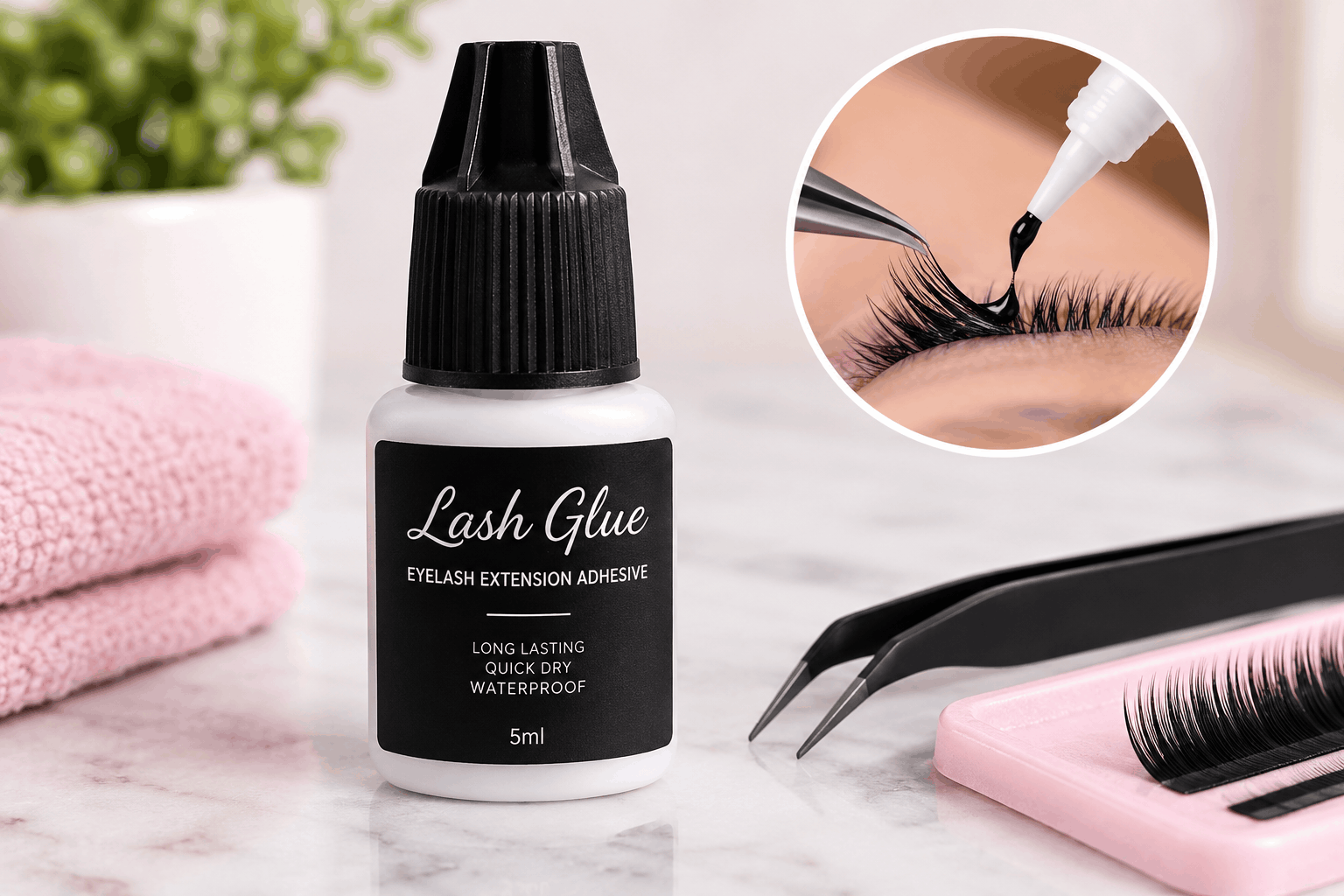
False eyelashes can add definition, volume, and length to the eyes, making them a popular choice for everyday makeup and special occasions. One product that plays an essential role in achieving a secure, natural-looking finish is lash glue. The right adhesive helps lashes stay in place while allowing them to be removed without unnecessary discomfort.
However, not every lash adhesive works for every person or eyelash style. Formula, drying time, application technique, and sensitivity around the eyes all matter when selecting a product. Understanding these factors can help you achieve a beautiful result while protecting the delicate skin around your eyes.
This guide explains the different types of eyelash adhesives, how to apply them correctly, common mistakes to avoid, and ways to remove false lashes safely.
What Is Lash Glue?
Lash glue is an adhesive designed to attach artificial eyelashes to the natural lash line or, in the case of individual extensions, to attach extensions to natural lashes using a professional application method.
Most strip-lash adhesives are applied to the band of a false eyelash before it is positioned just above the natural lash line. Some formulas dry clear, while others remain black to blend with eyeliner.
The ingredients vary between products. Many temporary strip-lash adhesives use latex-based or latex-free formulations, while professional eyelash-extension adhesives may contain cyanoacrylate compounds. These products are not interchangeable, and extension adhesive should not be used to apply ordinary strip lashes.
A product designed specifically for the intended lash application is important because the eye area is sensitive and accidental exposure can cause irritation or injury.
Types of Lash Glue
Different adhesives suit different makeup preferences, skill levels, and lash styles.
1. Clear Lash Adhesive
Clear adhesive typically appears white or pale when first applied and becomes transparent as it dries. This makes it a useful option for people who prefer a subtle finish.
It can work well with natural-looking strip lashes and colorful makeup looks because the dried adhesive is less visible.
Best for: Beginners, everyday makeup, and people who do not want a dark line along the lash band.
2. Black Lash Adhesive
Black adhesive dries dark, allowing it to blend with black eyeliner and the band of many false eyelashes.
It may create a more defined appearance, particularly when wearing dramatic lashes. However, it can be more noticeable if applied unevenly or if the lash band is misplaced.
Best for: Smoky-eye makeup, bold eyeliner, and dramatic lash styles.
3. Latex-Based Adhesive
Some temporary eyelash adhesives contain natural rubber latex. These products may provide reliable hold, but they are unsuitable for people with a latex allergy.
Allergic reactions can cause redness, itching, swelling, or discomfort. People with known latex sensitivity should choose an appropriate latex-free alternative and check the ingredient label carefully.
4. Latex-Free Adhesive
Latex-free formulas are available for people who prefer to avoid latex. They can be suitable for everyday strip lashes, depending on the specific product.
However, latex-free does not mean allergy-proof. Other ingredients, including preservatives, acrylates, or fragrances in some formulas, may still irritate sensitive skin.
5. Waterproof Lash Adhesive
Water-resistant or waterproof formulas are designed to maintain their hold when exposed to moisture. They may be useful for humid conditions or long events.
These products can be more difficult to remove, so follow the manufacturer’s removal instructions rather than pulling the lashes away.
Waterproof performance varies by brand, and no adhesive should be assumed to be suitable for swimming or prolonged water exposure unless its labeling specifically supports that use.
6. Magnetic Eyeliner and Magnetic Lashes
Magnetic lash systems use magnets rather than conventional adhesive to secure lashes. Some systems rely on magnetic eyeliner, while others use paired magnetic lash strips.
These products may be an alternative for people who find traditional adhesive difficult to use. Nevertheless, they can still cause irritation, and the manufacturer’s directions should be followed carefully.
Magnetic lashes are different from ordinary strip lashes and should not be confused with professional lash-extension products.
How to Choose the Right Lash Glue
Choosing an appropriate adhesive is about more than how long it holds. The product should suit your lashes, experience, and sensitivity.
Consider Your Skin Sensitivity
If the skin around your eyes reacts easily to cosmetics, look for a fragrance-free product labeled for use with false eyelashes. Check the ingredient list and avoid any ingredient you already know causes a reaction.
If you have experienced swelling, itching, or redness from an adhesive before, do not simply try another product on the eyelid without considering the cause. A dermatologist or healthcare professional can help assess possible contact allergy.
A patch test performed according to the product’s instructions may help identify some skin reactions, but it cannot guarantee that the product is safe near the eyes.
Check the Ingredients
Read the packaging before use. Look for relevant information about latex, acrylates, preservatives, and the product’s intended application.
People with a known latex allergy should avoid latex-containing adhesives. Those with a history of reactions to nail glue or other acrylate-containing products should seek professional advice before using an unfamiliar lash adhesive.
Never use household glue, nail glue, craft adhesive, or other products that are not specifically formulated for eyelash application.
Think About Drying Time
Some adhesives become tacky within seconds, while others require a longer waiting period. The correct timing allows the lash band to stay in position instead of sliding across the eyelid.
Always follow the label rather than relying on a universal drying time. Applying lashes while the adhesive is too wet can make placement difficult.
Choose the Appropriate Hold
For a short makeup session, a standard strip-lash adhesive may be sufficient. Events that last several hours may require a formula designed for longer wear.
Longer-lasting products are not necessarily better for everyone. Ease of removal, ingredient sensitivity, and comfort should remain priorities.
Select the Correct Product for the Lash Type
Strip lashes, individual temporary clusters, and professional extensions require different products or application methods.
Use only an adhesive that is specifically labeled for the lashes you are applying. Professional extension glue should be handled by a trained technician because the application involves working close to the eyes and may require specialized precautions.
How to Apply Lash Glue Correctly
Good technique can make false lashes look more natural and reduce the likelihood of lifting or discomfort.
Step 1: Prepare Your Eyelids
Start with clean, dry eyelids. Remove excess oil, makeup residue, and skincare products from the lash area.
If you wear contact lenses, follow your eye-care professional’s guidance for cosmetic use and keep adhesive away from the lenses. Avoid applying lashes when your eyes are already red, irritated, or infected.
Step 2: Measure the Lash Band
Place the false eyelash gently against your eyelid without adhesive to check its length.
If the band extends beyond the outer corner, trim a small amount from the outer end when appropriate. Avoid cutting too much at once, and never trim lashes while they are positioned against the eye.
A well-fitted band is less likely to lift at the corners.
Step 3: Apply a Thin Layer
Use the applicator supplied with the product to apply a small, even amount along the false-lash band.
Too much adhesive can make the band slippery, messy, and uncomfortable. Excess product may also increase the chance of accidental transfer toward the eye.
Keep the container closed when not in use and avoid touching its applicator to your natural eyelashes or eyelid.
Step 4: Wait Until the Adhesive Is Ready
Allow the adhesive to become tacky according to the product instructions. This often takes a short period, but the timing differs between formulas.
Do not blow directly on the adhesive or use excessive heat to speed up drying. If the product becomes too dry to position properly, follow its directions rather than adding unapproved substances.
Step 5: Position the Lash Band
Using clean fingers or a suitable lash applicator, place the band just above your natural lash line.
Begin around the center, then adjust the inner and outer corners. Avoid pressing the band into the eye or placing it on the wet inner eyelid margin.
Look straight ahead or slightly downward into a mirror to help with positioning. Make small adjustments before the adhesive fully sets.
Step 6: Secure the Corners
Gently press the band into place using a clean applicator. Check that the inner and outer corners are secure without squeezing the eyelid or pulling on your natural lashes.
If the band continues to lift, remove it carefully and reassess the fit and amount of adhesive instead of repeatedly layering glue onto the eyelid.
Step 7: Finish Your Makeup
Once the adhesive has set, you can add eyeliner or mascara if the products are compatible with your lashes.
Avoid sharing false lashes or applicators, and clean reusable lashes according to the manufacturer’s directions. Do not reuse a strip that is damaged or contaminated.
Common Lash Glue Mistakes
Even a good product may perform poorly if it is used incorrectly.
Applying Too Much Adhesive
A thick layer can take longer to set and may create visible lumps. It can also make lash placement less predictable.
Use a thin, even layer and add product only if the manufacturer’s instructions permit it.
Applying Lashes Too Soon
When the adhesive is still very wet, the band may slide or shift. Waiting for the correct tackiness usually makes placement easier.
Placing the Band Too Close to the Eye
The adhesive should not enter the eye or be placed directly on the inner eyelid margin. Keep the product on the intended external lash-band area.
Using Expired or Contaminated Products
Old adhesive may change texture or performance. A contaminated container can introduce unwanted material near the eye.
Follow the product’s expiration date and any period-after-opening instructions. Discard the product if its smell, consistency, or appearance changes unexpectedly.
Pulling Lashes Off Quickly
Removing lashes by force can pull out natural eyelashes and irritate the eyelid skin. Loosen the adhesive according to the product instructions before gently removing the band.
How to Remove Lash Glue Safely
Careful removal is just as important as correct application.
1. Wash Your Hands
Clean your hands before touching the eye area. If you wear contact lenses, remove them according to your usual safe handling routine when appropriate.
2. Loosen the Adhesive
Use a makeup remover or lash-removal product that is compatible with your adhesive. Follow its instructions and avoid allowing the product to enter the eye.
Some temporary strip-lash adhesives loosen with an oil-based makeup remover, while others may require a different method. Do not assume that every formula can be removed in the same way.
3. Lift the Band Gently
Starting at the outer corner, ease the lash band away slowly once the adhesive has loosened.
If you feel pulling or resistance, stop and apply the recommended remover again. Do not tug at your natural lashes or use tweezers to scrape adhesive from the eyelid.
4. Remove Remaining Residue
Use a soft cotton pad or clean applicator with an appropriate eye-area makeup remover to wipe away remaining residue. Keep your eyes closed and use gentle movements.
Avoid acetone, nail-polish remover, and harsh household solvents around the eyes. These substances are not intended for this purpose and can cause serious irritation or injury.
5. Clean Reusable Lashes
If the lashes are labeled reusable, clean them as directed by the manufacturer. Remove old adhesive carefully without damaging the band.
Let them dry completely before storing them in a clean container. Never share false eyelashes, even if they appear clean.
Is Lash Glue Safe for Your Eyes?
When used as directed, products specifically formulated for false eyelashes can be appropriate for many people. However, no cosmetic adhesive is completely free of risk.
Possible problems include irritation, allergic contact dermatitis, eyelid swelling, and injury if the adhesive enters the eye. Some people may react to ingredients even when the product is labeled gentle or latex-free.
To reduce risks:
- Use only products intended for eyelash application.
- Keep adhesive out of the eyes and off the inner eyelid margin.
- Follow the instructions and avoid prolonged wear beyond the recommended period.
- Do not apply adhesive to irritated or broken skin.
- Remove the lashes if discomfort or redness develops.
- Avoid using another person’s adhesive or applicator.
If adhesive enters the eye, follow the product’s first-aid instructions and rinse the eye promptly with clean, lukewarm running water. Do not try to remove hardened adhesive by force. Seek urgent medical advice if pain, redness, blurred vision, or other symptoms persist.
Severe eye pain, significant swelling, or a change in vision requires prompt medical evaluation.
Lash Glue vs. Eyelash Extension Adhesive
These products serve different purposes and should not be substituted for one another.
Strip-lash adhesive is designed to attach a temporary lash band to the skin immediately above the natural lash line. The lashes are usually removed at the end of the wear period.
Eyelash-extension adhesive is used by trained technicians to attach individual extensions to natural lashes. Many professional formulas contain cyanoacrylate and cure under specific conditions. Fumes and accidental contact may irritate or injure the eye.
Extension glue should not be used at home to attach strip lashes, and ordinary strip-lash adhesive should not be used as a substitute for professional extension adhesive.
If you want extensions, choose a qualified technician who follows appropriate hygiene and application practices. Tell the technician about any previous reactions to adhesives or eye-area cosmetics.
Tips for Longer-Lasting, Comfortable Lashes
The quality of the result depends on the adhesive, the fit of the lashes, and the way the product is used.
- Choose a band that follows the natural curve of your eyelid.
- Apply adhesive evenly rather than using a thick coating.
- Wait for the recommended tacky stage before positioning the lashes.
- Avoid rubbing your eyes or pulling on the band.
- Follow instructions about water, makeup, and wear duration.
- Remove the lashes carefully at the end of the recommended period.
- Replace products that are expired, contaminated, or visibly changed.
If lashes repeatedly cause irritation or fail to stay in place, consider trying a different lash style or seeking professional advice rather than increasing the amount of glue.
Conclusion
Lash glue helps false eyelashes stay in place, but choosing the correct formula and applying it carefully are essential for comfort and safety. Clear, black, latex-based, and latex-free options each have different features, while professional extension adhesives are designed for a separate application method.
For the best results, use a product intended for your lash type, follow the manufacturer’s directions, allow adequate setting time, and remove the lashes gently. Avoid household adhesives and never pull off lashes that are still firmly attached. If you experience persistent irritation, swelling, pain, or changes in vision, stop using the product and seek appropriate medical care.
Frequently Asked Questions (FAQs)
1. What is lash glue used for?
Lash glue is an adhesive designed to secure artificial eyelashes. Temporary strip-lash formulas attach a lash band just above the natural lash line, while extension adhesives are used for professional individual-lash applications.
2. Is clear or black lash glue better?
Neither is universally better. Clear adhesive is less visible after drying, while black adhesive can blend with dark eyeliner. The best option depends on your makeup style and comfort with application.
3. How long should lash glue dry before applying lashes?
The correct waiting time depends on the product. Follow the manufacturer’s instructions and wait until the adhesive reaches the recommended tacky stage before positioning the lash band.
4. Can I use lash glue if I have sensitive skin?
Some people with sensitive skin tolerate certain formulas, but irritation or allergy is still possible. Check the ingredients, avoid known triggers, and seek professional advice if you have experienced reactions around the eyes.
5. Is latex-free lash glue safer?
Latex-free adhesive avoids natural rubber latex, which is important for people with a latex allergy. However, it can still contain ingredients that cause irritation or allergic reactions.
6. How do I remove lash glue without damaging my natural lashes?
Use a remover designed for the adhesive, allow it to loosen the bond, and gently lift the lash band away. Stop if you feel pulling, and never scrape or tug at your natural eyelashes.
7. Can I use nail glue for false eyelashes?
No. Nail glue is not designed for eyelash application and can cause serious irritation or injury if it contacts the eye. Use only an adhesive specifically intended for the type of lashes you are applying.
8. Can lash glue cause an allergic reaction?
Yes. Some adhesives contain ingredients that may cause allergic contact dermatitis or irritation. Symptoms can include itching, redness, and eyelid swelling. Stop using the product if a reaction develops.
9. Can I sleep while wearing strip lashes?
It is generally best to remove temporary strip lashes according to the product instructions before sleeping. Sleeping in them may cause discomfort, shifting, or hygiene problems, and repeated wear beyond the recommended period may irritate the eyelids.
10. When should I stop using lash glue?
Stop using it if you experience burning, persistent redness, itching, swelling, or discomfort. If the adhesive enters your eye and you develop ongoing pain or vision changes, seek prompt medical evaluation.