How to Clean Makeup Brushes: Complete Step by Step Guide
Introduction
Makeup brushes are one of the most important tools in any beauty routine. They help create smooth foundation application, perfect eyeshadow blending, and flawless makeup looks. However, many people forget that makeup brushes collect product buildup, oil, dead skin cells, bacteria, and dust over time.
Using dirty makeup brushes can affect your makeup results and may cause skin problems like clogged pores, breakouts, irritation, and uneven application. Regularly cleaning your brushes keeps them soft, hygienic, and long lasting.
Learning how to clean makeup brushes is easier than many people think. You do not need expensive products or professional equipment. With the right method and a few simple steps, you can clean your makeup brushes at home and keep them in excellent condition.
This complete guide explains everything you need to know, including how often to wash brushes, the best cleaning products, step by step instructions, drying methods, common mistakes, and expert tips for maintaining your beauty tools.
Why Is It Important to Clean Makeup Brushes?
Makeup brushes come into direct contact with your skin every time you apply cosmetics. Over time, they collect different types of buildup that can affect both your skin and makeup quality.
Prevents Bacteria Growth
Brush bristles can trap bacteria, especially when they come into contact with liquid products like foundation and concealer. These bacteria multiply when brushes are not cleaned regularly.
Using contaminated brushes can transfer bacteria back onto your face, increasing the chance of breakouts and skin irritation.
Helps Prevent Acne and Skin Problems
Dirty brushes often contain oil, makeup residue, and dead skin cells. When these substances build up, they can block pores and contribute to acne.
Clean brushes provide a cleaner makeup application and reduce unnecessary contact with impurities.
Improves Makeup Application
Old makeup residue can make brushes stiff and uneven. A dirty foundation brush may leave streaks, while an unclean eyeshadow brush can mix unwanted colors.
Clean brushes work better because the bristles remain soft and flexible.
Extends Brush Life
High quality makeup brushes can last for years when properly maintained. Regular cleaning removes product buildup that can damage the bristles and weaken the brush over time.
How Often Should You Clean Makeup Brushes?
The cleaning schedule depends on how frequently you use your brushes and the type of products you apply.
Foundation and Concealer Brushes
Brushes used for liquid or cream products should be cleaned at least once a week.
Liquid makeup creates a perfect environment for bacteria because it contains moisture and oils.
Powder Brushes
Powder brushes can usually be cleaned every 1 to 2 weeks. However, frequent users may need to wash them more often.
Eyeshadow Brushes
Eyeshadow brushes should ideally be cleaned every week, especially if you use different colors regularly.
Dirty eyeshadow brushes can mix shades and affect your makeup results.
Beauty Sponges
Makeup sponges should be cleaned after every use because they absorb moisture, makeup, and bacteria easily.
What Do You Need to Clean Makeup Brushes?
Before starting the cleaning process, collect the necessary items.
You will need:
- Lukewarm water
- Gentle soap or brush cleanser
- Clean towel
- Small bowl if needed
- Brush cleaning mat or textured surface
- Conditioner (optional for extra softness)
Avoid using harsh chemicals because they can damage the brush fibers.
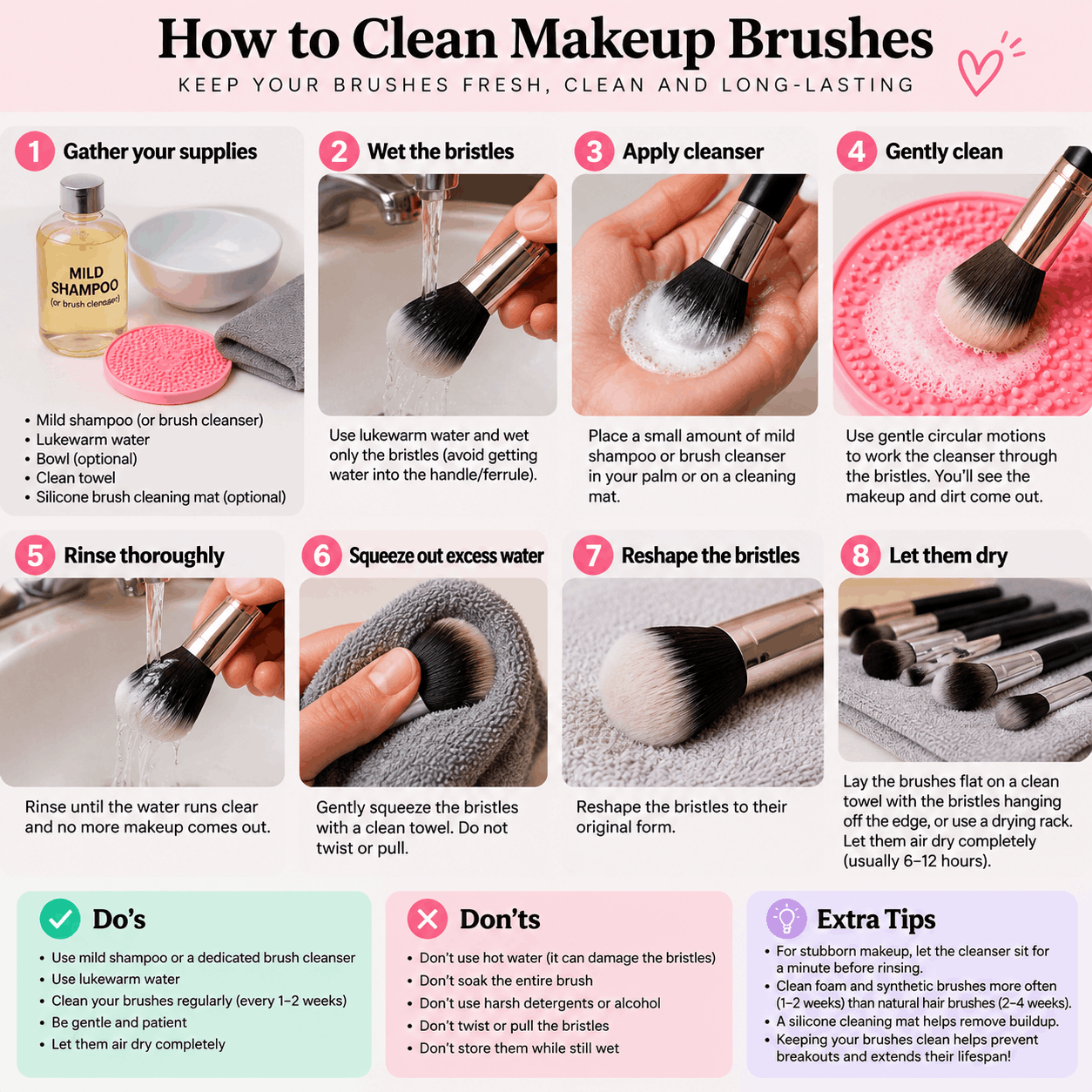
How to Clean Makeup Brushes Step by Step
Cleaning makeup brushes properly requires a gentle approach. Follow these simple steps.
Step 1: Wet the Brush Bristles
Start by running the brush under lukewarm water.
Always keep the brush facing downward because water should not enter the area where the bristles connect to the handle.
If water gets inside the handle, it can loosen the glue and cause the brush to shed.
Avoid using hot water because high temperatures can damage delicate bristles.
Step 2: Apply Brush Cleanser or Soap
Place a small amount of gentle soap or makeup brush cleanser on your hand or cleaning mat.
Avoid using too much product because excessive soap can be difficult to remove.
A mild shampoo can also work if you do not have a specialized brush cleaner.
Step 3: Massage the Bristles Gently
Move the brush in circular motions to remove makeup buildup.
Focus on areas where product collects the most, especially the center of thick brushes.
Continue massaging until the old makeup starts coming out.
For heavily dirty brushes, repeat this step several times.
Step 4: Rinse Thoroughly
Hold the brush under clean running water until the water becomes clear.
Make sure all soap and makeup residue are removed.
Remaining cleanser can make the bristles stiff after drying.
Step 5: Remove Excess Water
After rinsing, gently squeeze the brush using your fingers or a clean towel.
Do not pull or twist the bristles because this can damage their shape.
Step 6: Reshape the Brush
Use your fingers to reshape the bristles.
Restoring the original shape helps the brush maintain its performance.
Step 7: Let the Brushes Dry Properly
Place brushes on a clean towel and allow them to air dry.
Keep the bristle area slightly elevated if possible so air can move around the brush.
Never dry brushes upright with water dripping toward the handle.
How to Deep Clean Makeup Brushes
Regular cleaning removes daily makeup residue, but deep cleaning provides a more thorough wash.
Deep cleaning is recommended once every few weeks.
Use a Brush Cleaning Mat
A textured cleaning mat helps remove stubborn product buildup.
The small grooves create friction that cleans deeper between the bristles.
Double Clean for Heavy Makeup
If you use waterproof foundation or long lasting makeup, one wash may not be enough.
Repeat the cleaning process until the brush feels completely clean.
Use Conditioning Treatment
Natural hair brushes may benefit from occasional conditioning.
A small amount of conditioner can help maintain softness.
How to Clean Makeup Brushes Without Brush Cleaner
You do not always need a professional brush cleaning product.
Several household options can help clean brushes safely.
Mild Shampoo
A gentle shampoo can remove makeup oils and residue.
Choose products without harsh ingredients.
Dish Soap and Olive Oil
Some people use a mixture of mild dish soap and olive oil for deep cleaning.
The soap removes buildup while oil helps break down stubborn makeup.
However, this method should not be used too frequently because excessive oil may affect some brush types.
Baby Shampoo
Baby shampoo is a popular choice because it is gentle and suitable for sensitive materials.
How to Dry Makeup Brushes Correctly
Drying is just as important as washing.
Incorrect drying methods can damage brushes permanently.
Avoid Drying Upright
When brushes dry vertically, water can travel into the handle.
This weakens the glue holding the bristles together.
Avoid Using Heat
Hair dryers and direct sunlight can damage brush fibers.
Air drying is the safest method.
Give Enough Drying Time
Most brushes need several hours to dry completely.
Large brushes may require overnight drying.
Common Mistakes When Cleaning Makeup Brushes
Many people accidentally damage their brushes because of incorrect cleaning habits.
Using Hot Water
Hot water can weaken brush fibers and damage the adhesive.
Always use lukewarm water.
Soaking the Entire Brush
Never place the entire brush in water.
Only clean the bristle area.
Scrubbing Too Hard
Aggressive cleaning can cause bristles to fall out.
Use gentle movements instead.
Not Rinsing Completely
Leftover soap can make brushes uncomfortable and reduce performance.
Always rinse until the water runs clear.
Storing Wet Brushes
Wet brushes can develop unpleasant smells and bacteria.
Always allow brushes to dry fully before storage.
How to Clean Different Types of Makeup Brushes
Different brushes may require slightly different care.
Foundation Brushes
Foundation brushes usually collect heavy product buildup.
They may require extra cleaning because liquid products stick strongly to fibers.
Powder Brushes
Powder brushes are easier to clean because powder products do not contain as much moisture.
Gentle washing is usually enough.
Lip Brushes
Lip brushes should be cleaned frequently because lipstick contains oils and pigments.
Clean them after every few uses.
Eyeliner Brushes
Small eyeliner brushes need careful cleaning because dried eyeliner can make the bristles hard.
Tips to Keep Makeup Brushes Cleaner for Longer
A good maintenance routine reduces how often brushes need deep cleaning.
Remove Excess Product After Use
Wipe brushes with a clean tissue after applying makeup.
This prevents heavy buildup.
Store Brushes Properly
Keep brushes in a clean container away from dust and moisture.
Avoid Sharing Brushes
Sharing makeup brushes can transfer bacteria between people.
Personal beauty tools should stay personal.
Replace Old Brushes
Even well maintained brushes eventually wear out.
Replace brushes when bristles become damaged or uncomfortable.
Signs Your Makeup Brushes Need Cleaning
Your brushes may need washing if:
- They feel stiff
- They have visible makeup buildup
- They smell unpleasant
- Makeup application looks uneven
- Your skin becomes irritated after makeup
These signs indicate that your brushes are holding too much residue.
Benefits of Maintaining Clean Makeup Brushes
A regular cleaning routine provides many advantages.
Healthier Skin
Clean brushes reduce exposure to bacteria and unwanted buildup.
Better Makeup Results
Fresh brushes help products blend smoothly and evenly.
Longer Lasting Tools
Proper care protects your investment and prevents early replacement.
More Professional Makeup Application
Clean tools allow better control and precision.
Conclusion
Knowing how to clean makeup brushes is an essential part of maintaining good beauty habits. Dirty brushes can affect your makeup performance and may contribute to skin problems, while clean brushes provide smoother application and better hygiene.
The cleaning process does not need to be complicated. With gentle soap, lukewarm water, proper drying, and regular maintenance, you can keep your makeup brushes soft, fresh, and ready to use.
Make brush cleaning a regular part of your beauty routine. A few minutes of care can protect your skin, improve your makeup results, and extend the life of your favorite tools.
Frequently Asked Questions (FAQs)
1. How often should I clean my makeup brushes?
You should clean makeup brushes at least once a week if you use them regularly. Brushes used with liquid products like foundation should be washed more frequently.
2. Can I clean makeup brushes with regular soap?
Yes, you can use mild soap to clean makeup brushes. Avoid harsh soaps because they may damage the bristles.
3. What is the fastest way to clean makeup brushes?
A quick cleaning spray can remove surface makeup between uses, but deep washing with water and cleanser is needed for proper cleaning.
4. Can dirty makeup brushes cause acne?
Yes, dirty brushes can collect bacteria, oil, and dead skin cells that may contribute to clogged pores and breakouts.
5. Can I use shampoo to clean makeup brushes?
Yes, gentle shampoo can safely clean many makeup brushes. Choose a mild formula without harsh chemicals.
6. How long does it take makeup brushes to dry?
Most brushes take several hours to dry completely. Large brushes may need overnight drying.
7. Should I clean makeup brushes after every use?
Daily deep cleaning is not necessary for most brushes, but removing excess product after each use is recommended.
8. Can I use hot water to wash makeup brushes?
No, hot water can damage brush fibers and weaken the glue holding the bristles. Use lukewarm water instead.
9. How do I clean makeup brushes without damaging them?
Use gentle soap, avoid soaking the handle, massage softly, rinse completely, and let brushes air dry.
10. When should I replace makeup brushes?
Replace makeup brushes when the bristles start falling out, lose their shape, feel rough, or no longer apply makeup properly.