Best Liquid Eyeliners: How to Choose the Perfect One
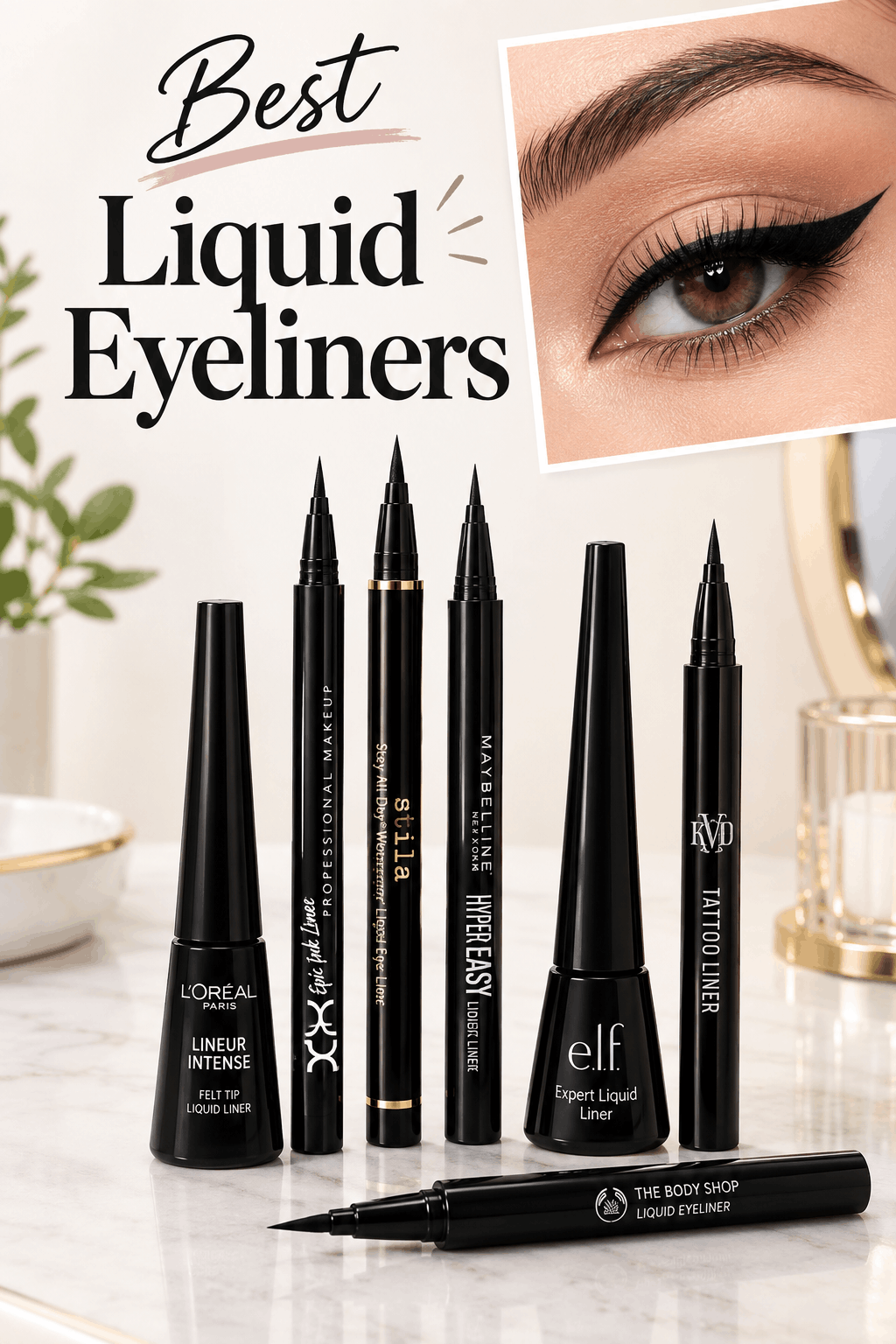
A great eyeliner can completely transform an eye makeup look. Whether you prefer a barely-there lash-line definition, a sharp cat-eye, or a dramatic wing, liquid eyeliner is one of the best options for creating clean and precise lines. Its fluid formula and precision applicator make it possible to create everything from ultra-thin strokes to bold graphic designs.
However, finding the best liquid eyeliner can be challenging because different formulas and applicators behave differently. Some are designed for beginners, while others offer greater precision for experienced makeup users. Some prioritize waterproof wear, while others focus on easy removal and a comfortable finish.
The right eyeliner ultimately depends on your eye shape, makeup style, experience level, and how long you want your makeup to last.
What Is Liquid Eyeliner?
Liquid eyeliner is an eye makeup product with a fluid, pigment-rich formula designed to create defined lines around the eyes. It is commonly packaged as a pen, tube, or small container with an applicator.
Compared with many pencil eyeliners, liquid formulas can create sharper and more graphic lines. They are particularly useful for winged eyeliner, cat eyes, thin lash-line definition, and creative makeup looks.
Liquid eyeliners commonly come with:
- Felt-tip applicators
- Fine brush tips
- Precision pen tips
- Flexible brush applicators
- Waterproof or water-resistant formulas
- Matte, satin, glossy, or metallic finishes
Why Choose Liquid Eyeliner?
One of the biggest advantages of liquid eyeliner is precision. A good applicator can create a very thin line close to the lashes or build a thicker wing without requiring several different products.
Liquid eyeliner can also provide intense pigmentation and a polished finish. Modern formulas are available in many colors, although classic black remains one of the most versatile choices. Brown, navy, plum, green, and other shades can provide softer or more creative alternatives.
Another benefit is versatility. You can use liquid eyeliner for:
- Everyday eye makeup
- Office makeup
- Winged eyeliner
- Cat-eye makeup
- Evening makeup
- Graphic eyeliner
- Minimal makeup
- Special occasions
Types of Liquid Eyeliners
1. Felt-Tip Liquid Eyeliner
Felt-tip eyeliner resembles a marker and is often an excellent choice for beginners. The relatively firm tip can make it easier to control the direction and thickness of the line.
It works particularly well for simple wings and everyday eyeliner.
Best for: Beginners, everyday makeup, quick application.
2. Brush-Tip Liquid Eyeliner
Brush-tip formulas use fine bristles that can provide greater flexibility. With practice, you can create extremely thin lines and gradually increase the thickness.
Because the brush can move more freely, beginners may initially find it less predictable than a felt tip.
Best for: Detailed lines, graphic eyeliner, experienced users.
3. Precision Pen Eyeliner
Pen-style liquid eyeliners are designed to feel similar to holding a writing pen. This can make the application process more natural and comfortable.
They are particularly useful when you want a controlled line without handling a separate brush.
Best for: Everyday use and controlled application.
4. Waterproof Liquid Eyeliner
Waterproof formulas are designed to resist moisture and help maintain the appearance of eyeliner for longer. They can be particularly useful for humid weather, long events, or people who experience watery eyes.
However, waterproof does not mean completely immune to every type of smudging or transfer.
Best for: Long days, humid conditions, special occasions.
How to Choose the Best Liquid Eyeliner
There is no single liquid eyeliner that is perfect for everyone. Instead, consider several features before buying.
Look at the Applicator
The applicator should match your experience level and desired look.
A firm felt tip may be easier for beginners, while a fine brush can offer more flexibility for advanced techniques. Beauty editors and makeup artists commonly emphasize precision, pigment, and wear when evaluating liquid liners.
Consider Pigmentation
Highly pigmented formulas can produce a stronger line with fewer strokes.
If an eyeliner requires repeated application to appear dark, it may become uneven or textured. Look for a formula that provides consistent color without excessive layering.
Check the Drying Time
Drying time matters more than many people realize.
A liner that dries relatively quickly can reduce transfer onto the upper eyelid. However, extremely fast-drying formulas may leave beginners with less time to correct mistakes.
For beginners, a product that offers a little working time can be easier to control.
Think About Wear Time
If your eyeliner needs to survive a long workday, wedding, party, or humid weather, look for a formula advertised as long-wearing or water-resistant.
Those with oily eyelids may also prefer formulas designed to resist transfer.
Choose the Right Finish
Liquid eyeliners can have different finishes.
Matte:
Ideal for sophisticated and modern makeup.
Glossy:
Creates a more dramatic, reflective appearance.
Metallic:
Useful for festive or creative makeup.
Satin:
Provides a balance between matte and shine.
Best Liquid Eyeliner for Beginners
If you’re new to liquid eyeliner, don’t automatically choose the most flexible brush available.
A felt-tip liquid eyeliner is often easier to control because its firmer point behaves more like a marker. This can make it easier to practice straight lines and small wings.
Start with a simple line rather than attempting an elaborate cat-eye immediately.
A good beginner routine is:
- Rest your elbow on a stable surface.
- Look slightly downward into a mirror.
- Start near the middle of the upper lash line.
- Use short strokes rather than one long stroke.
- Gradually connect the line toward the inner corner.
- Extend the outer corner slightly for a small wing.
- Build thickness slowly.
Best Liquid Eyeliner for Winged Eyes
Winged eyeliner requires precision, so the applicator becomes especially important.
A sharp felt tip can make a straightforward wing easier, while a flexible brush tip can provide greater control over fine details.
One useful technique is to create the wing first and then connect it to the lash line. This can make the overall shape easier to control than trying to draw one continuous line.
For symmetrical wings, avoid trying to make both eyes perfect in a single stroke. Build each side gradually and compare the shape before adding more product.
Best Liquid Eyeliner for Oily Eyelids
Oily eyelids can cause eyeliner to transfer, fade, or crease during the day.
If this is a concern, consider:
- Long-wear formulas
- Water-resistant formulas
- Quick-setting formulas
- A lightweight eye primer
- Setting the surrounding lid with a small amount of powder
Avoid applying excessive skincare or oily products directly over the area where eyeliner will be placed.
Remember that “waterproof” and “oil-proof” are not necessarily the same thing, so product claims should be checked carefully.
Best Liquid Eyeliner for Sensitive Eyes
People with sensitive eyes should pay close attention to how their eyes react to cosmetics.
Look for products specifically intended for the eye area and consider ophthalmologist-tested options when appropriate. If a product causes burning, significant redness, swelling, or persistent irritation, discontinue use.
It is also important not to share liquid eyeliner with other people. The FDA warns that improperly used or contaminated eye cosmetics can contribute to eye infections.
How to Apply Liquid Eyeliner Perfectly
You don’t need a perfectly steady hand to create attractive eyeliner. Technique makes a major difference.
Step 1: Prepare the Eyelids
Start with clean, dry eyelids. If your lids become oily, use a suitable eye primer before applying makeup.
Step 2: Stabilize Your Hand
Rest your elbow on a table or another stable surface. This reduces unnecessary movement.
Step 3: Start in the Middle
Rather than immediately drawing from the inner corner to the outer corner, begin around the middle of the upper lash line.
Use small strokes close to the lashes.
Step 4: Work Toward the Outer Corner
Gradually connect the line toward the outer corner. Keep the inner portion thinner if you want a more natural appearance.
Step 5: Create the Wing
For a classic wing, extend a short line outward and slightly upward from the outer corner.
Then connect the tip back toward the lash line.
Step 6: Fill Any Gaps
Look closely at the lash line. If you see small spaces between the liner and lashes, carefully fill them.
Step 7: Let It Dry
Give the eyeliner enough time to set before repeatedly blinking or applying additional products.
Professional makeup guidance similarly emphasizes starting close to the lash line, building gradually, and using controlled strokes.
Liquid Eyeliner Mistakes to Avoid
Even the best liquid eyeliner can look messy if it is applied incorrectly.
Drawing One Very Long Stroke
Trying to draw the entire line in one movement can make mistakes harder to correct.
Short, connected strokes are often easier.
Applying Too Much Product
Heavy application can create an uneven or cracked appearance.
Start thin and build gradually.
Pulling the Eyelid Too Hard
Stretching the eyelid may temporarily make application easier, but it can distort the shape you’re actually trying to create.
Use a gentle touch.
Using Liquid Liner on the Waterline
Liquid eyeliner is generally intended for application on the skin around the eye rather than directly on the waterline. Some formulas may migrate into the eye and cause irritation or temporary staining.
Forgetting to Close the Product
Leaving the eyeliner open can cause the formula or tip to dry out.
Close the container securely after every use.
How to Make Liquid Eyeliner Last Longer
A few simple changes can improve wear time:
- Start with clean, dry eyelids.
- Use a suitable eye primer.
- Avoid applying heavy moisturizer immediately before eyeliner.
- Choose a long-wearing formula when needed.
- Allow the eyeliner to dry completely.
- Avoid rubbing your eyes.
- Remove makeup gently at the end of the day.
The best long-lasting formula is not necessarily the one with the strongest waterproof claim. Comfort, application, pigmentation, and easy removal should also be considered.
How to Remove Liquid Eyeliner
Removing eyeliner properly is just as important as applying it.
Use a gentle eye makeup remover or cleansing product designed for eye cosmetics. Hold a soaked cotton pad over the closed eyelid for several seconds to loosen the product rather than aggressively rubbing the skin.
If the eyeliner is waterproof, you may need an oil-based or bi-phase eye makeup remover.
Be gentle around the eye because repeated rubbing can irritate the delicate skin surrounding it.
How Often Should You Replace Liquid Eyeliner?
Liquid eye products can become contaminated over time, particularly when the applicator repeatedly comes into contact with the eye area.
Follow the manufacturer’s recommended period-after-opening instructions and discard products that change smell, texture, color, or performance.
Never share liquid eyeliner with another person. The FDA specifically advises against sharing eye cosmetics because germs can be transferred between users.
Conclusion
The best liquid eyeliner is not necessarily the most expensive or the most popular product. The ideal choice depends on your application skills, desired finish, eye shape, wear requirements, and personal preferences.
Beginners may appreciate the control of a felt-tip pen, while experienced makeup users may prefer the flexibility of a fine brush. For long days or humid conditions, a long-wearing or water-resistant formula can be useful.
Most importantly, focus on precision, pigmentation, comfortable application, wear time, and eye-area safety. With the right product and a little practice, liquid eyeliner can make everything from a simple everyday look to a dramatic wing feel much easier to achieve.
FAQs About Best Liquid Eyeliners
1. What is the best liquid eyeliner for beginners?
Felt-tip liquid eyeliners are often a good starting point because their firm applicators can provide better control than highly flexible brush tips.
2. Is liquid eyeliner better than pencil eyeliner?
Neither is universally better. Liquid eyeliner is excellent for sharp, precise lines, while pencil is often better for softer, smokier looks.
3. What type of liquid eyeliner is easiest to use?
A pen-style felt-tip eyeliner is generally one of the easiest formats for beginners to control.
4. Is waterproof liquid eyeliner better?
Waterproof eyeliner can be useful when you need longer wear or resistance to moisture, but it may require a dedicated makeup remover.
5. How do I stop liquid eyeliner from smudging?
Start with clean, dry eyelids, use a suitable primer, choose a long-wearing formula, and allow the eyeliner to dry completely.
6. How can I make both eyeliner wings look even?
Create small wings gradually and compare both sides before adding additional product. Avoid trying to create the entire wing in one stroke.
7. Can I use liquid eyeliner on the waterline?
Liquid eyeliner is generally better suited to the skin along the lash line rather than the waterline. Always follow the product’s intended-use instructions.
8. What color liquid eyeliner should I choose?
Black creates the strongest definition, while brown can provide a softer everyday effect. Navy, plum, green, and other shades can add more creativity.
9. How do I remove waterproof liquid eyeliner?
Use a gentle eye makeup remover designed to dissolve long-wearing products, then cleanse the area without excessive rubbing.
10. Is liquid eyeliner safe for sensitive eyes?
It can be, but individual reactions vary. Choose products intended for the eye area, stop using any product that causes irritation, and maintain good cosmetic hygiene.