Pressed Powder: How to Choose and Apply It for a Flawless Finish
Introduction
Pressed powder is a popular makeup essential that helps create a smooth, polished complexion. It can reduce excess shine, set foundation, soften the appearance of uneven texture, and keep makeup looking fresh throughout the day. Its compact packaging also makes it convenient for quick touch-ups at home, work, or while traveling.
Although pressed powder may look simple to use, choosing the right formula and applying it correctly can make a noticeable difference. The wrong shade or a heavy application may leave the skin looking cakey, dry, or uneven. A suitable product, however, can provide a natural finish that complements your skin type and makeup routine.
This guide explains the different types of pressed powder, how to choose the right shade, application techniques, common mistakes, and tips for achieving a beautiful finish.
What Is Pressed Powder?
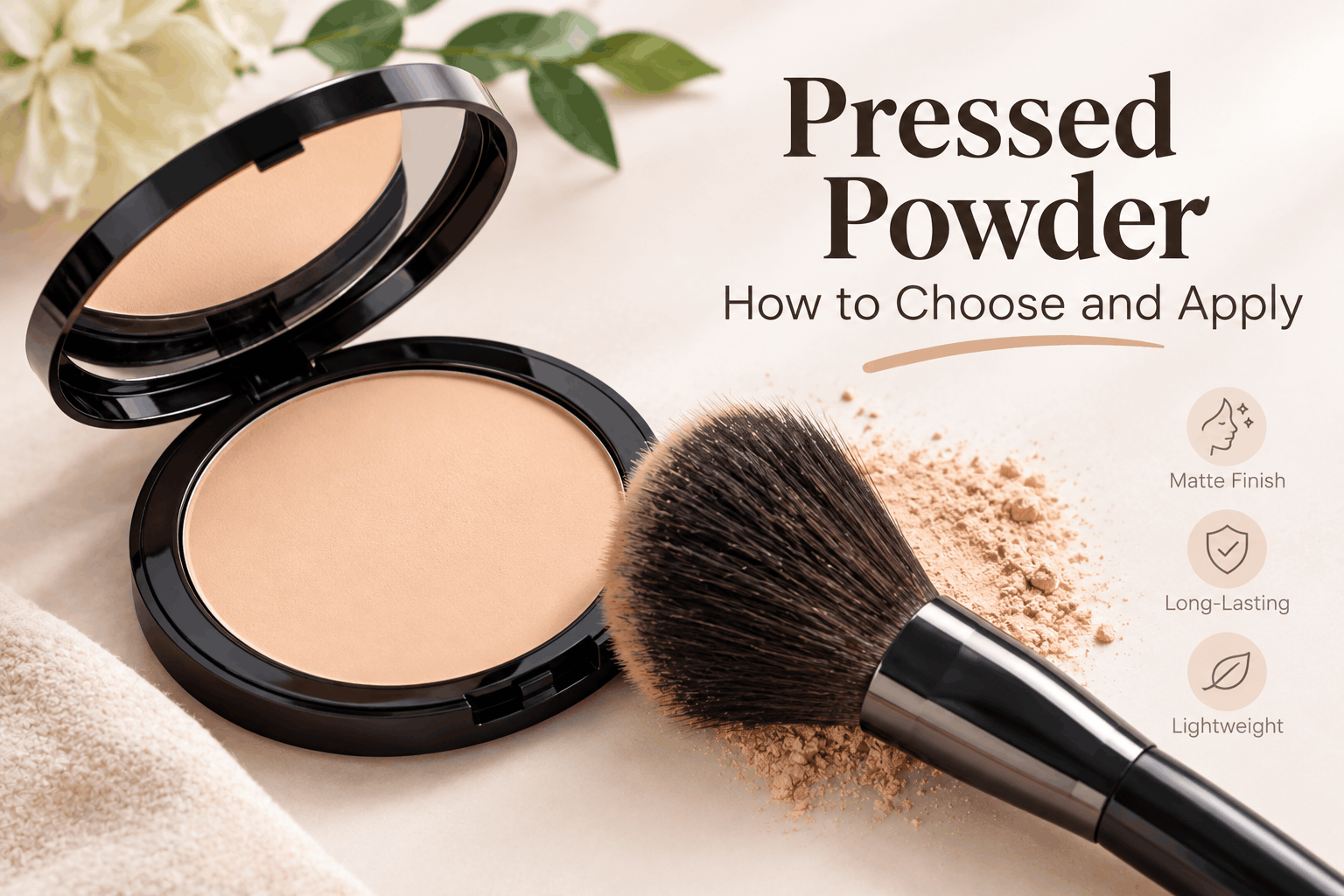
Pressed powder is a face makeup product made by compressing powder ingredients into a solid cake inside a compact container. It usually comes with a mirror and may include a sponge or puff for application.
Its formula can contain ingredients such as talc, mica, silica, starches, pigments, and emollients. The exact ingredients depend on the product and its intended finish. Some formulas are designed to absorb excess oil, while others provide light coverage or help set liquid foundation.
Pressed powder is particularly useful for people who want portable makeup that is easy to apply without creating a mess. Unlike loose powder, which comes in a finely milled, free-flowing form, a pressed formula stays inside its compact and is convenient for carrying in a handbag.
Benefits of Pressed Powder
1. Controls Excess Shine
Many pressed powders help absorb surface oil, making them useful for people who experience shine on the forehead, nose, and chin. A light application can reduce the appearance of greasy skin without requiring a complete makeup redo.
The level of oil control varies by formula, so people with very oily skin may prefer a product specifically designed for shine control.
2. Sets Foundation and Concealer
Liquid foundation and creamy concealers can sometimes move, crease, or transfer during the day. Applying a small amount of powder over these products can help them stay in place longer.
Focus on areas where makeup tends to crease, such as around the nose and under the eyes. Use a minimal amount in delicate areas to avoid emphasizing fine lines.
3. Provides Light Coverage
Some pressed powders contain pigments that help even out the appearance of skin tone. Depending on the formula, they may offer sheer, medium, or buildable coverage.
A tinted product can be useful on days when you prefer a lighter alternative to foundation. However, powder alone may not fully conceal prominent blemishes or discoloration.
4. Makes Touch-Ups Convenient
Compact packaging makes pressed powder easy to carry. You can use it to reduce shine, refresh makeup, or soften the appearance of excess oil during the day.
For a more hygienic application, use a clean puff or brush rather than repeatedly pressing an unwashed applicator against your face.
5. Creates a More Refined Finish
The right formula can reduce unwanted shine and make the complexion appear more even. Some powders create a soft matte finish, while others provide a subtle, natural-looking glow.
Powder does not actually remove skin texture, pores, or wrinkles. Instead, it can temporarily change how light reflects from the skin, making the complexion look more polished.
Different Types of Pressed Powder
Pressed powders are available in several formulas. Understanding their differences can help you choose one that matches your skin type and makeup preferences.
Matte Pressed Powder
Matte formulas help minimize shine and create a non-glossy finish. They are often suitable for oily and combination skin.
These products can be especially useful on the forehead, nose, and chin. Applying too much, however, may make dry patches or textured areas more noticeable.
Translucent Pressed Powder
Translucent powder is designed to add minimal visible color while setting makeup and reducing shine. It is available in different formulations, and some products may still leave a visible cast if applied too heavily.
Although often marketed as suitable for many skin tones, it is important to test the formula on your complexion, particularly if you have a deeper skin tone.
Tinted Pressed Powder
Tinted powder contains pigments that provide additional color and coverage. It can help even out the complexion and may be worn alone or over foundation.
Choose a shade that blends naturally with your skin. A powder that is too light can create a pale appearance, while a shade that is too dark may leave the face looking uneven.
Hydrating or Moisturizing Pressed Powder
Some formulas contain emollient ingredients intended to provide a more comfortable finish on dry skin. These powders may be less drying than strongly oil-controlling alternatives.
They are not substitutes for moisturizer, though. Applying powder over well-hydrated skin generally creates a smoother result.
Mineral Pressed Powder
Mineral powders commonly use mineral-based ingredients such as mica, zinc oxide, or iron oxides, depending on the formulation. Some offer light coverage, while others provide a more substantial makeup finish.
The term “mineral” does not automatically mean a product is suitable for every skin type. Check the ingredient list if you have known sensitivities.
Pressed Powder Foundation
Powder foundation is designed to provide more coverage than many setting powders. It may be used alone or over a compatible base product.
This option can be convenient for people who prefer a powder-based makeup routine. To prevent a heavy appearance, start with a small amount and build coverage gradually.
How to Choose the Right Pressed Powder
Selecting the right product involves considering your skin type, shade, preferred finish, and intended use.
Choose According to Your Skin Type
Oily skin: Look for oil-absorbing or shine-control formulas. A lightweight matte powder may help reduce unwanted shine during the day.
Dry skin: Choose a finely milled formula that feels comfortable and does not strongly emphasize dry patches. Moisturize before applying makeup.
Combination skin: Consider using a mattifying powder only on oily areas and a lighter application on the cheeks.
Sensitive skin: Review the ingredient list and avoid ingredients that have previously caused irritation. Fragrance-free options may be worth considering if fragrance is a known trigger.
Mature skin: A finely milled, lightweight powder may provide a more natural finish than a thick, heavily mattifying formula. Apply sparingly around fine lines.
Select the Correct Shade
For tinted products, test the powder in natural lighting whenever possible. The shade should blend with your complexion rather than create an obvious line between your face and neck.
If you intend to wear powder over foundation, consider how the two shades work together. A powder that is too pigmented may change the color of your foundation.
Translucent products should also be tested, especially if you use flash photography or have a deeper complexion.
Decide on Your Desired Finish
Think about the look you want to achieve.
- Matte: useful for reducing visible shine.
- Natural: offers a balanced finish without looking overly flat.
- Radiant: can provide a subtle glow.
- Full coverage: more suitable when you want powder to contribute significant color correction or coverage.
The best finish is one that feels comfortable and complements your everyday routine.
Check the Ingredients
If your skin is acne-prone or sensitive, look for a formula that suits your individual needs. Products labeled non-comedogenic are designed to be less likely to clog pores, but the label cannot guarantee that a product will work for everyone.
Check for known irritants, keep applicators clean, and discontinue use if a product repeatedly causes itching, burning, or a rash.
How to Apply Pressed Powder Correctly
A good application technique helps prevent patchiness and an overly powdered appearance.
Step 1: Prepare Your Skin
Begin with clean skin and apply a moisturizer suited to your skin type. During the daytime, use sunscreen as the final step of your skincare routine before makeup, following the product’s instructions.
Allow skincare products to settle before applying foundation or powder. This can help reduce pilling and uneven application.
Step 2: Apply Your Base Makeup
If you use foundation or concealer, blend these products first. Give them a moment to settle before setting them with powder.
If you prefer minimal makeup, you can apply a small amount of tinted pressed powder directly to moisturized skin, provided the formula is designed for that use.
Step 3: Choose the Right Applicator
A fluffy brush usually provides a light, natural finish. It is ideal when you want to reduce shine without adding much coverage.
A powder puff or sponge can provide more concentrated coverage. Use gentle pressing motions rather than dragging the applicator across your face.
Always follow the manufacturer’s instructions for the applicator supplied with the product.
Step 4: Pick Up a Small Amount
Lightly load your brush or puff with powder. Tap away excess product before applying it to your face.
Starting with a small amount gives you better control and helps prevent a cakey finish. You can always add another thin layer if necessary.
Step 5: Apply to the Areas That Need It
Begin with areas that tend to become shiny, such as the forehead, sides of the nose, and chin. Blend outward with light strokes.
If your cheeks are dry, avoid covering them with unnecessary layers. Targeted application often looks more natural than applying a thick layer across the entire face.
Step 6: Set Concealer Carefully
If you want to set concealer under the eyes, use a small brush or a clean, soft puff. Apply only enough powder to reduce creasing.
Too much powder can emphasize fine lines and dryness. If the area looks dry after application, consider using less product next time.
Step 7: Blend and Check the Finish
Inspect your makeup in natural lighting. Look for powder collecting around the nose, eyebrows, hairline, or dry areas.
Use a clean, fluffy brush to gently remove excess powder. The finished look should appear even rather than visibly dusty.
Pressed Powder vs. Loose Powder
Both products can set makeup, reduce shine, and improve the appearance of the complexion, but they differ in texture and convenience.
Pressed powder is compact, less messy to carry, and often useful for touch-ups. Loose powder is usually free-flowing and can be convenient for applying a light setting layer or using specific techniques such as baking.
Neither type is automatically better. The right choice depends on your routine, skin type, preferred coverage, and application habits.
For travel or quick daytime touch-ups, pressed powder is often more practical. For detailed makeup application at home, loose powder may offer greater flexibility for some users.
Common Pressed Powder Mistakes to Avoid
Applying Too Much Product
Multiple heavy layers can make makeup look thick and emphasize texture. Start lightly and build only where needed.
Choosing the Wrong Shade
An unsuitable shade may create a noticeable difference between your face and neck. Test tinted products in natural light and consider the color of your foundation.
Applying Powder to Dry Skin Without Preparation
Powder can settle into flakes and rough areas when the skin is dehydrated or irritated. Use an appropriate moisturizer and avoid applying excessive powder to dry patches.
Using a Dirty Applicator
Brushes and puffs collect oil, makeup residue, and debris. Clean reusable tools regularly according to their material and allow them to dry completely before reuse.
Do not share personal makeup applicators, and avoid using products that have changed in smell, color, or texture.
Reapplying Over Excess Oil
Repeatedly layering powder over oily skin can create a heavy finish. If your face becomes very shiny, gently blot excess oil with a clean tissue or blotting paper before applying a small amount of powder.
Expecting Powder to Replace Skincare
Pressed powder is a cosmetic product, not a treatment for acne, pigmentation, or enlarged pores. It can improve the temporary appearance of the complexion, but persistent skin concerns may require an appropriate skincare routine or professional advice.
Tips for a Natural, Long-Lasting Finish
A few simple habits can help your makeup remain comfortable and presentable.
- Match your powder to your skin type and desired finish.
- Apply skincare in thin layers and allow it to settle.
- Use a light hand, especially around the eyes and mouth.
- Focus on oily areas instead of automatically powdering the entire face.
- Blot excess oil before touching up your makeup.
- Keep brushes and puffs clean and dry.
- Check the finished look in natural lighting.
- Remove makeup gently before sleeping.
If your makeup separates or becomes patchy soon after application, review your skincare and makeup combination. Certain products may not layer well together, and using fewer layers can sometimes improve the result.
Is Pressed Powder Suitable for Everyday Use?
Pressed powder can be part of an everyday makeup routine if it suits your skin and is applied comfortably. People who prefer a minimal look may use a tinted formula alone, while others may use a small amount to set foundation.
Daily use is not inherently harmful for everyone, but personal tolerance matters. Remove makeup at the end of the day, clean reusable applicators, and avoid applying products to irritated or broken skin.
If you develop persistent redness, swelling, itching, or burning after using a cosmetic product, stop using it. Seek medical advice if symptoms are severe or do not improve.
Remember that makeup should complement your skin rather than leave it feeling uncomfortable. A lightweight application is often enough to achieve a smooth, balanced finish.
Conclusion
Pressed powder is a versatile makeup product that can reduce shine, set foundation, add light coverage, and make touch-ups simple. Choosing a suitable formula depends on your skin type, preferred finish, shade, and how you plan to use it.
For the best results, prepare your skin properly, use a clean applicator, and apply thin layers only where needed. Avoid excessive powder, choose shades carefully, and maintain good makeup hygiene. With the right product and technique, you can achieve a polished finish that looks natural and feels comfortable throughout the day.
Frequently Asked Questions
1. What is pressed powder used for?
Pressed powder is used to set foundation, reduce excess shine, provide light coverage, and refresh makeup during the day. Its specific benefits depend on the formula.
2. Can I use pressed powder without foundation?
Yes. You can use a tinted pressed powder alone if you want a lightweight makeup look. Choose a formula that provides the coverage and finish you prefer.
3. Is pressed powder good for oily skin?
Many matte and oil-controlling formulas work well for oily skin because they help reduce surface shine. Apply a thin layer and avoid repeatedly adding powder over excess oil.
4. Can people with dry skin use pressed powder?
Yes, but a lightweight formula and proper moisturizing are important. Heavy applications may emphasize flakes and dry patches, so use powder sparingly.
5. What is the difference between pressed powder and powder foundation?
Pressed powder often focuses on setting makeup or reducing shine, although some formulas provide color. Powder foundation is specifically designed to provide foundation-like coverage.
6. Should pressed powder be lighter or darker than foundation?
For a natural finish, choose a shade that works with your foundation and complexion. A heavily pigmented powder that is much lighter or darker may change the overall makeup color.
7. Can pressed powder clog pores?
Some products may not suit acne-prone skin, although pressed powder does not automatically clog pores. Consider non-comedogenic formulas, remove makeup thoroughly, and monitor your skin’s response.
8. How do I prevent pressed powder from looking cakey?
Use moisturizer, apply a small amount of powder, and avoid unnecessary layers. Blot excess oil before touch-ups and remove visible buildup with a clean, fluffy brush.
9. Can I reapply pressed powder throughout the day?
Yes. Blot excess oil first, then apply a thin layer where needed. Repeated heavy applications can make the complexion look thick or uneven.
10. How often should I clean my pressed powder applicator?
Clean reusable brushes and puffs regularly, following the care instructions for the tool. Allow them to dry completely and avoid sharing applicators to support good hygiene.