Powder Brush: Tips for a Flawless Makeup Finish
Introduction
A smooth, natural-looking makeup finish often depends on the tools you use as much as the products you apply. A powder brush is one of the most useful items in a makeup kit because it helps distribute face powder evenly, reduce unwanted shine, and create a polished appearance without making the skin look overly heavy.
Whether you prefer a minimal everyday routine or a full-glam look, choosing the right brush can make powder application easier and more precise. Different brush shapes, bristle densities, and sizes serve different purposes, from setting the entire face to applying powder beneath the eyes.
Understanding these differences can help you select a brush that suits your makeup products, skin type, and preferred finish. With proper application and regular cleaning, this simple tool can also help you get more consistent results from your makeup routine.
What Is a Powder Brush?
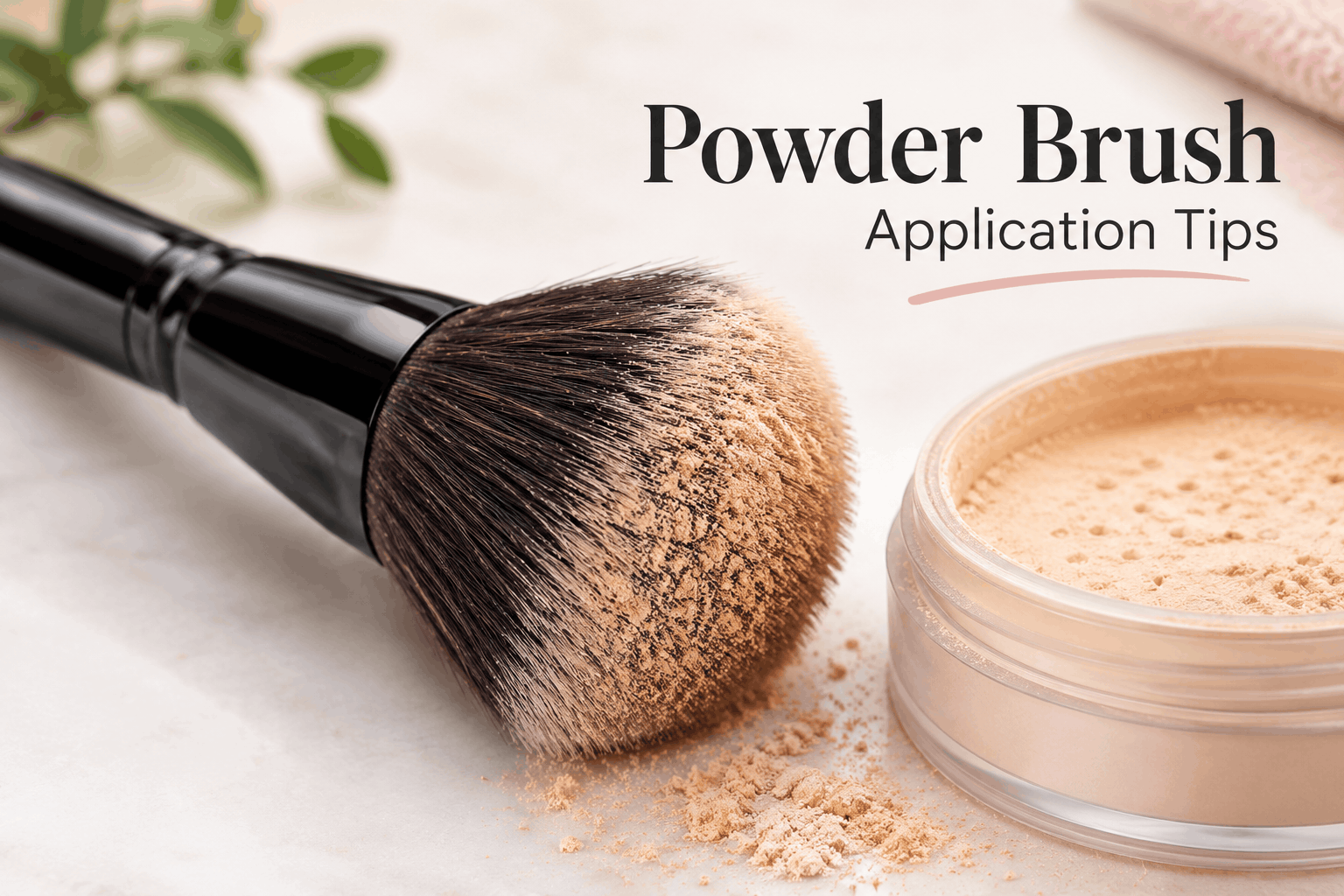
A powder brush is a makeup tool designed to apply loose or pressed powder to the face. It typically features a handle, a ferrule that holds the bristles, and a brush head made from natural or synthetic fibers.
Most traditional powder brushes have a large, rounded, fluffy head that picks up a small amount of product and spreads it across the skin. The soft bristles help distribute powder without creating obvious patches or harsh lines.
Powder brushes are commonly used with setting powder, finishing powder, and certain powder foundations. Smaller variations can also be used for targeted application around the nose, under the eyes, or along the jawline.
Although many brushes look similar, their size and density affect how much product they deposit. A fluffy brush usually creates a lighter finish, while a denser brush provides more coverage.
What Is a Powder Brush Used For?
This versatile tool can perform several functions depending on its shape and the type of powder being applied.
Setting Liquid or Cream Foundation
After applying foundation, a light layer of setting powder can help reduce excess shine and improve makeup longevity. A fluffy brush is useful for spreading a thin layer over larger areas without making the base appear thick.
Focus on areas where makeup tends to crease or become shiny, such as the forehead, sides of the nose, and chin.
Reducing Excess Shine
People with oily or combination skin may prefer to apply powder to the T-zone, which includes the forehead, nose, and chin.
A brush helps distribute powder evenly, allowing you to control the amount applied. This is often more comfortable than repeatedly layering a heavy coating over the entire face.
Applying Finishing Powder
Finishing powder is generally used near the end of a makeup routine to soften the appearance of texture or create a more refined finish, depending on the formula.
A large, soft brush can sweep a small amount across the face. Always check the product instructions because some finishing powders work best with a particular application technique.
Blending Powder Foundation
Certain powder brushes are designed to work with powder foundation. These brushes often have denser bristles that help build coverage.
Use gentle circular or pressing motions according to the product’s instructions. Start with a light layer and add more only where needed to avoid a cakey appearance.
Setting Concealer
A small tapered brush can help apply powder beneath the eyes and around the nose. These areas often require more precision than the cheeks or forehead.
Use a small amount of finely milled powder and avoid dragging the brush across delicate skin. Too much product can emphasize dryness and fine lines.
Different Types of Powder Brushes
Not every powder brush produces the same result. Understanding the main styles can help you choose the right tool for your routine.
1. Large Fluffy Powder Brush
<text>Best for: Light, all-over powder application</text>
A large fluffy brush usually has a rounded head with loosely packed bristles. It distributes powder in a sheer layer and is suitable for setting the face without adding too much coverage.
This style works well for people who prefer a natural makeup finish. It can also be used to remove excess loose powder after baking, provided the bristles are clean and soft.
2. Dense Powder Brush
<text>Best for: More coverage and pressed powder</text>
A dense brush has tightly packed bristles that pick up and deposit more product than a very fluffy brush.
It can work well with powder foundation and pressed face powders. However, using too much product may make the makeup look thick, so build coverage gradually.
3. Tapered Powder Brush
<text>Best for: Targeted application</text>
A tapered brush narrows toward the tip, making it useful for applying powder around the sides of the nose, beneath the eyes, and in other smaller areas.
Its shape allows more control than a large rounded brush. It is especially helpful when you want to set specific areas without powdering the entire face.
4. Angled Powder Brush
<text>Best for: Contoured areas and controlled placement</text>
An angled brush has a slanted edge that follows the contours of the face. Depending on its size and density, it can be used to apply powder around the cheekbones, jawline, and sides of the face.
Some angled brushes are intended for bronzer or contour products rather than loose setting powder, so check the manufacturer’s recommended use.
5. Kabuki Brush
<text>Best for: Buffing and powder foundation</text>
A kabuki brush usually has a short handle and a dense, rounded or flat-topped head. Its structure makes it useful for blending powder foundation and building coverage.
A flat-topped kabuki brush generally deposits product more densely than a traditional fluffy powder brush. Use a light hand and blend carefully around the hairline and jaw.
6. Small Precision Powder Brush
<text>Best for: Small areas and touch-ups</text>
A smaller brush provides greater control when applying powder beneath the eyes, around the nostrils, or over localized areas of shine.
It is convenient for makeup touch-ups because it limits product placement to the areas that need it.
Natural vs. Synthetic Bristles
Brush fibers affect softness, product pickup, cleaning, and durability. Both natural and synthetic options can work well, depending on their construction.
Natural Bristles
Natural-hair brushes are traditionally made from animal hair. Some offer a soft texture and work particularly well with certain powder products.
However, quality varies, and natural fibers may require careful cleaning and drying. They may also be unsuitable for people who prefer vegan or cruelty-free cosmetics.
Synthetic Bristles
Synthetic brushes commonly use manufactured fibers such as nylon or other polymers. Many modern synthetic brushes are soft, durable, and suitable for loose and pressed powders.
They are often easier to clean and are widely available in vegan options. Performance depends on the fiber quality, brush shape, and density rather than simply whether the bristles are natural or synthetic.
For most everyday routines, a well-made synthetic brush is a practical choice.
How to Choose the Right Powder Brush
The best brush depends on how you use powder and the finish you want to achieve.
Consider the Powder Formula
Loose powder generally works well with a fluffy brush that can pick up a small amount and distribute it evenly.
Pressed powder can be applied with a fluffy brush for a light finish or a denser brush when more coverage is desired. Powder foundation may require a specially designed, densely packed brush.
Think About Your Skin Type
If your skin becomes shiny during the day, a brush that allows targeted application can help you control shine without layering powder everywhere.
For dry skin, a soft, fluffy brush and a finely milled powder may provide a more comfortable finish. Avoid excessive powder around flaky or irritated areas because it can make texture more noticeable.
Sensitive skin may benefit from very soft bristles and gentle application. Clean tools regularly to reduce the buildup of oil, makeup residue, and debris.
Choose the Right Size
A large brush is convenient for the cheeks, forehead, and other broad areas. A smaller or tapered brush provides better control around the eyes and nose.
If you wear makeup only occasionally, one medium-sized fluffy brush may be enough for your basic routine. More detailed makeup styles may benefit from several different shapes.
Check the Handle and Construction
A comfortable handle makes it easier to control pressure and movement. The ferrule should hold the bristles securely, without noticeable shedding during ordinary use.
A durable brush should also retain its shape after appropriate cleaning and drying.
Set a Realistic Budget
An expensive brush is not automatically better for every person. Affordable brushes can perform well when they have soft bristles, secure construction, and a shape suited to the intended product.
Prioritize comfort, ease of cleaning, and performance over brand name alone.
How to Apply Powder With a Brush
A few simple techniques can help you achieve an even, natural-looking result.
Step 1: Prepare Your Skin
Begin with skincare and foundation appropriate for your skin type. Allow skincare products to settle before applying makeup, as excess moisture can cause powder to cling unevenly.
If you use concealer or liquid foundation, blend it thoroughly before setting it with powder.
Step 2: Pick Up a Small Amount
Dip the brush lightly into the powder. For loose powder, tap off excess product before bringing the brush to your face.
Starting with less powder gives you better control and reduces the risk of a dry or cakey finish.
Step 3: Apply Where Needed
For general setting, use gentle sweeping motions across the face. If you want more coverage, press the brush lightly onto a specific area rather than repeatedly sweeping over it.
Pay particular attention to the forehead, nose, and chin if those areas become oily. Use a smaller brush around the eyes and nostrils.
Step 4: Blend the Edges
Check the hairline, jawline, and sides of the nose for visible powder buildup. Lightly blend these areas so the makeup looks consistent.
Avoid vigorous rubbing, especially over foundation or concealer, because it can disturb the base underneath.
Step 5: Check the Finish
Look at your makeup in natural or evenly distributed light. If certain areas still look shiny, add a small amount of powder rather than repeating the application across your entire face.
For a more natural appearance, preserve some of the skin’s natural dimension instead of aiming for a completely matte finish everywhere.
Common Powder Brush Mistakes to Avoid
Even a high-quality brush may produce disappointing results when used incorrectly.
Applying Too Much Powder
Excess powder can settle into fine lines, highlight dry patches, and make makeup appear heavy. Begin with a thin layer and build gradually.
Using the Same Brush for Every Product
A brush used for dark bronzer or blush may transfer color into setting powder. Clean the brush between products or use separate tools when necessary.
Pressing Too Hard
Excessive pressure can move the foundation underneath and create uneven coverage. Let the bristles do the work with light, controlled movements.
Ignoring Brush Hygiene
Oil, dead skin cells, makeup residue, and moisture can accumulate in brush bristles. Dirty tools may contribute to irritation and breakouts, particularly when they are shared.
Clean brushes regularly and allow them to dry completely before using them again.
Choosing the Wrong Brush Shape
A very dense brush may deposit more powder than you want for a sheer finish. Similarly, a large brush can be difficult to control around the eyes.
Match the brush size and density to the area and product.
How to Clean and Maintain a Powder Brush
Regular cleaning helps maintain the brush’s performance and reduces the buildup of product residue.
Wash the Bristles
Use lukewarm water and a gentle brush cleanser or mild soap suitable for makeup tools. Wet the bristles without unnecessarily soaking the handle or ferrule.
Gently work the cleanser through the fibers until makeup residue begins to lift. Rinse thoroughly until the water runs clear.
Remove Excess Water
Gently press the bristles with a clean towel. Avoid twisting, pulling, or squeezing them aggressively, as this may damage the fibers or loosen the adhesive.
Reshape and Dry
Use your fingers to restore the original brush shape. Lay the brush flat or position it so moisture can drain away from the ferrule.
Allow it to dry completely before using it again. Avoid storing a damp brush in a closed container.
How Often Should You Clean It?
If you use the brush frequently, cleaning it about once a week is a reasonable starting point. Brushes used around the eyes or on sensitive skin may need more frequent attention, especially when product buildup occurs.
Spot-cleaning between uses can help remove surface residue, but it does not replace thorough washing. Never share brushes without appropriate cleaning.
Can a Powder Brush Be Used for Other Makeup Products?
Yes, depending on its shape, density, and cleanliness.
A large fluffy brush may work for finishing powder or a light application of bronzer. A smaller tapered brush can apply powder blush or set targeted areas. A dense brush may be useful for powder foundation.
However, brush performance varies. A brush designed for loose setting powder may not provide enough precision for contouring or blush, while a dense foundation brush may apply too much product for a sheer finish.
For the most consistent results, use a brush suited to the product and clean it before switching between different shades or formulas.
Powder Brush vs. Powder Puff
Both brushes and puffs can apply setting powder, but they create different effects.
A fluffy brush is useful for spreading a light layer over larger areas. It allows gradual application and works well when you want a soft, natural finish.
A powder puff can press product more firmly into the skin. This may be useful for setting areas that crease or become oily, depending on the powder formula and technique.
Neither tool is universally better. Some makeup routines use a puff for targeted setting and a brush to blend excess powder afterward.
Conclusion
A powder brush is a versatile makeup tool that can help create a smooth, balanced finish with loose powder, pressed powder, and selected powder foundations. The right shape and density make it easier to control coverage, reduce unwanted shine, and avoid excessive product buildup.
For everyday use, a soft, fluffy brush is a practical starting point. A dense or tapered option may be more useful when you need additional coverage or precision. Gentle application, appropriate product selection, and regular cleaning all contribute to better results.
Ultimately, the best brush is one that feels comfortable, suits your makeup routine, and helps you achieve the finish you prefer.
Frequently Asked Questions (FAQs)
1. What is a powder brush used for?
A powder brush is used to apply loose or pressed face powder. It can help set foundation, reduce shine, blend finishing powder, and create a more even makeup finish.
2. Which powder brush is best for beginners?
A medium-sized, soft, fluffy brush is a useful starting point. It works well for applying a light layer of powder across larger areas of the face and is relatively easy to control.
3. Can I use a powder brush with pressed powder?
Yes. A fluffy brush provides light coverage, while a denser brush can deposit more product. The best choice depends on the formula and the finish you want.
4. Is a powder brush better than a makeup sponge?
They serve different purposes. A brush is convenient for light, even application over larger areas, while a sponge or puff can press product into the skin for more concentrated coverage.
5. Should I use a powder brush before or after foundation?
Powder is generally applied after liquid or cream foundation when the goal is to set the base. Some people also use powder foundation on its own, depending on their preferred routine.
6. How often should I clean my powder brush?
For frequent use, weekly washing is a reasonable guideline. Clean it more often when product buildup occurs, when using it around sensitive areas, or if you share makeup tools after appropriate sanitization.
7. Can a powder brush cause acne?
A dirty brush may transfer oil, makeup residue, and debris to the skin, which can contribute to irritation or breakouts in some people. Regular cleaning and avoiding shared tools can help maintain hygiene.
8. Are synthetic powder brushes good?
Yes. High-quality synthetic brushes can be soft, durable, and effective with many powder products. They are also widely available in vegan options.
9. Can I use the same brush for powder and blush?
You can, but residual pigment may transfer between products. Clean the brush before switching shades or use separate brushes for more predictable color application.
10. How do I prevent powder from looking cakey?
Use a small amount of finely milled powder, tap off excess product, and apply it with gentle movements. Concentrate on areas that need setting instead of layering powder over the entire face repeatedly.