Does Magnesium Lotion Help You Sleep? Benefits and Evidence
Introduction
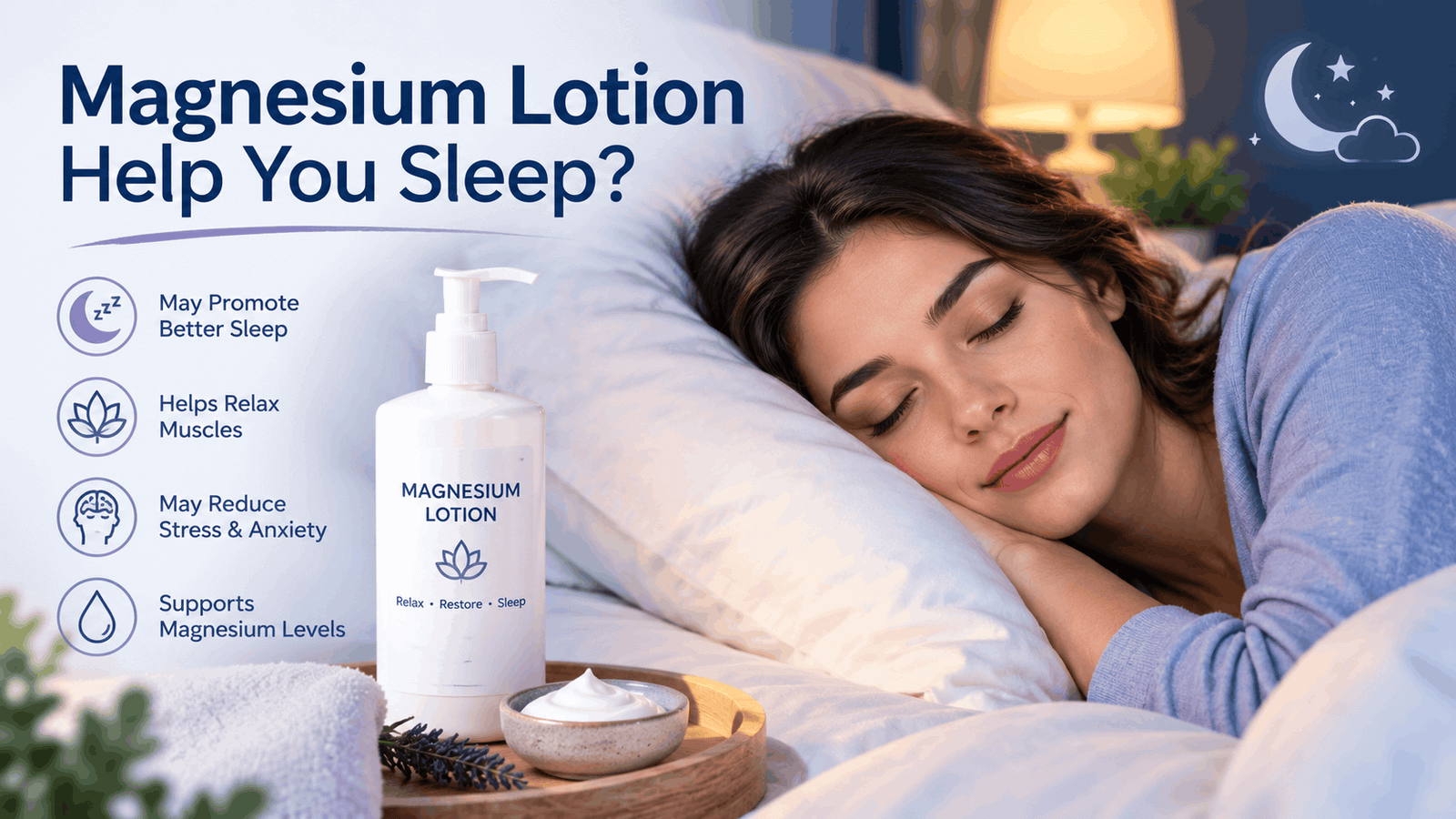
Magnesium lotion has become a popular addition to nighttime self-care routines. Many people apply it to their feet, legs, or shoulders before bed, hoping to relax their muscles, reduce tension, and enjoy a more restful night. Social media and wellness brands often promote these products as natural sleep aids, but an important question remains: does magnesium lotion actually help you sleep?
Magnesium is an essential mineral that supports normal nerve function, muscle contraction, and many other processes in the body. Adequate magnesium intake is important for general health, and researchers have investigated whether magnesium supplements can improve sleep. However, applying magnesium to the skin is different from taking it orally, and evidence supporting topical magnesium lotion for sleep remains limited. <Cite refs={[“turn179877search4″,”turn179877search7”]} />
This guide explores what magnesium lotion is, its potential benefits, the scientific evidence behind sleep-related claims, possible side effects, and practical ways to improve sleep quality.
What Is Magnesium Lotion?
Magnesium lotion is a topical product that contains a magnesium compound mixed with moisturizing ingredients. Depending on the formulation, it may also contain ingredients such as glycerin, plant oils, shea butter, or fragrance.
People commonly massage it into areas such as:
- Feet and ankles
- Calves and legs
- Arms and shoulders
- Hands
- Other areas of the body, according to the product instructions
Unlike oral magnesium supplements, which deliver magnesium through the digestive system, magnesium lotion is intended for application to the skin.
Manufacturers may advertise these lotions for relaxation, muscle comfort, or nighttime use. However, a product’s intended purpose does not establish that it produces those effects. Research has not demonstrated that magnesium lotion reliably delivers enough magnesium through the skin to improve sleep. <Cite refs={[“turn179877search2″,”turn179877search11”]} />
Does Magnesium Lotion Help You Sleep?
There is currently insufficient scientific evidence to conclude that magnesium lotion improves sleep.
Magnesium is involved in normal nervous system function, and researchers have explored possible connections between magnesium levels and sleep quality. Some studies of oral magnesium supplements have reported improvements in certain sleep-related measures, while others have found no clear benefit. Overall, the evidence remains uncertain. <Cite refs={[“turn179877search1″,”turn179877search4”]} />
The evidence for magnesium applied directly to the skin is even more limited. Studies investigating topical magnesium have not established consistent absorption through healthy skin or shown that magnesium lotion is an effective treatment for insomnia.
Some people may still find a nighttime lotion helpful as part of a relaxing routine. Gentle massage, moisturizing the skin, and taking a few quiet minutes before bed may feel soothing. However, these effects do not prove that magnesium itself is responsible.
If you enjoy using magnesium lotion and it does not irritate your skin, you may choose to include it in your evening routine. It is best to treat it as a personal-care product rather than a proven sleep treatment.
How Might Magnesium Affect Sleep?
Although the benefits of magnesium lotion remain unproven, magnesium itself plays several roles in the body that are relevant to normal nervous system function.
1. Supporting Normal Nerve Function
Magnesium helps regulate the activity of nerves and muscles. It also participates in processes involving neurotransmitters, which are chemical messengers that allow nerve cells to communicate.
These functions are important for overall health. However, it has not been established that applying magnesium lotion meaningfully changes magnesium levels in the body or improves sleep through these pathways.
2. Supporting Muscle Function
Magnesium is involved in normal muscle contraction and relaxation. Adequate intake helps maintain healthy muscle function.
Some people apply magnesium lotion to their legs or feet after physical activity because they associate the product with relaxation. The massage itself may feel comforting, but there is insufficient evidence that topical magnesium reliably prevents muscle cramps or treats sleep disturbances.
3. Possible Connections With Sleep Regulation
Magnesium participates in biological processes associated with nervous system activity and sleep regulation. This has led researchers to investigate whether magnesium supplementation might help people who struggle with sleep.
Nevertheless, a biological explanation alone is not enough to establish that a treatment works. The amount absorbed through the skin, its effect on magnesium status, and its influence on sleep must be demonstrated through well-designed clinical studies.
4. Creating a Relaxing Bedtime Routine
Applying lotion slowly and comfortably can become part of a calming nighttime ritual. A consistent routine may help some people transition from daytime activities to sleep.
The possible benefit may come from the massage, the moisturizing effect, the pleasant texture, or the feeling of relaxation associated with the routine. These benefits should not be confused with evidence that magnesium is absorbed through the skin in clinically meaningful amounts.
What Does the Scientific Research Say?
Scientific research on magnesium and sleep involves two different questions: whether oral magnesium supplements improve sleep and whether topical magnesium products can produce similar effects.
Research on Oral Magnesium
Studies of oral magnesium supplementation have produced mixed findings. Some small studies have suggested possible improvements in selected sleep outcomes, including the time it takes to fall asleep. Other studies have not demonstrated clear benefits.
A systematic review published in 2026 examined randomized controlled trials of magnesium supplementation in adults. It found inconsistent results and rated the overall certainty of evidence as low to very low. The findings did not support routinely recommending magnesium supplements as a treatment for insomnia. <Cite refs={[“turn179877search1″,”turn179877search3”]} />
These findings are important, but they should not be interpreted as evidence that magnesium lotion works. Oral supplements and topical products have different routes of administration.
Research on Topical Magnesium
A small pilot study published in 2017 investigated whether magnesium cream could affect magnesium measurements in the blood and urine. The study involved only 25 participants and lasted two weeks. Its findings were limited and did not establish that magnesium cream reliably improves magnesium status or sleep.
Other research examining magnesium applied to the skin has questioned whether healthy human skin allows meaningful absorption. Evidence remains insufficient to establish a reliable transdermal delivery method for improving magnesium levels.
Importantly, studies of magnesium lotion have not established that it treats insomnia, improves sleep duration, or consistently increases deep sleep.
What Does This Mean for Consumers?
The current evidence suggests three important conclusions:
- Magnesium is essential for normal health, but that does not mean topical magnesium improves sleep.
- Evidence for oral magnesium supplements and sleep is limited and inconsistent.
- Magnesium lotion may be enjoyable to use, but its sleep-related claims remain unproven.
More well-designed clinical trials are needed before magnesium lotion can be recommended as an evidence-based treatment for sleep problems.
Potential Benefits of Magnesium Lotion
Although a direct sleep benefit has not been established, a magnesium-containing lotion may offer some practical personal-care benefits depending on its ingredients.
1. Moisturizing Dry Skin
Many lotions contain ingredients that help soften skin and reduce dryness. Glycerin, for example, is a humectant that helps attract and retain moisture.
If a magnesium lotion contains suitable moisturizing ingredients, it may help improve the feel and appearance of dry skin. This benefit comes from the lotion’s formulation and does not depend on magnesium being absorbed.
2. Providing a Comfortable Massage
Massaging lotion into the hands, feet, or legs can feel soothing after a busy day. Gentle massage may help some people feel more comfortable before bedtime.
However, there is not enough evidence to conclude that magnesium lotion provides a unique muscle-relaxing effect beyond the massage itself.
3. Supporting a Consistent Evening Routine
Using the same calming activities before bed can help establish a predictable sleep routine. Applying lotion may be one part of that routine, especially when combined with dim lighting, reduced screen use, and quiet activities.
A consistent bedtime routine is more likely to be useful when it supports other healthy sleep habits rather than relying on one product.
4. Offering a Pleasant Self-Care Experience
Some people enjoy the fragrance, texture, or sensation of applying a lotion. Personal-care rituals can make the transition to bedtime more enjoyable.
Choose fragrance-free products if your skin is sensitive or prone to irritation, and discontinue use if a rash or persistent discomfort develops.
How to Use Magnesium Lotion Before Bed
If you want to try magnesium lotion as part of your nighttime routine, use it primarily as a personal-care product and follow the manufacturer’s directions.
Step 1: Read the Product Label
Check the ingredients, intended use, application instructions, and any warnings. Products marketed as magnesium lotions can differ considerably in formulation.
Do not assume that a higher concentration automatically produces better results.
Step 2: Test a Small Area of Skin
Apply a small amount to a limited area according to the product instructions. Monitor for redness, itching, burning, or swelling before using it more widely.
A small-area test may help identify irritation, although it cannot guarantee that a reaction will never occur.
Step 3: Apply to Clean, Intact Skin
Use the lotion only as directed. Avoid applying it to broken, irritated, or freshly shaved skin if the product warns against it.
Keep it away from the eyes, mouth, and other sensitive areas.
Step 4: Massage Gently
If comfortable, massage the lotion into the skin using gentle movements. Avoid vigorous rubbing, especially if the skin is sensitive.
You do not need to apply it to your feet specifically for a sleep benefit; there is no convincing evidence that foot application is superior to application elsewhere.
Step 5: Continue With Your Usual Bedtime Routine
After applying the lotion, consider dimming the lights, putting away electronic devices, and allowing time for a quiet activity. These habits can support a more consistent sleep schedule.
Do not increase the amount or frequency of application in an attempt to force a sleep effect.
Possible Side Effects and Safety Precautions
Magnesium lotion is generally intended for external use, but the safety of a specific product depends on its ingredients and how it is used.
Skin Irritation
Some products may cause dryness, itching, redness, or a stinging sensation. Fragrances and other ingredients can also trigger irritation or allergic reactions.
Stop using the product if symptoms develop. Seek medical advice for persistent or worsening irritation.
Avoid Sensitive or Damaged Skin
Do not apply lotion to open wounds or areas of significant skin inflammation unless a healthcare professional has advised you to do so.
Avoid contact with the eyes and mucous membranes.
Do Not Rely on It to Correct Magnesium Deficiency
Magnesium lotion has not been shown to reliably correct magnesium deficiency. If you have a medical condition that may affect magnesium levels or have been diagnosed with a deficiency, ask a healthcare professional about appropriate assessment and treatment.
Consider Other Ingredients
Some products contain essential oils, fragrances, or other additives. These ingredients may not be suitable for everyone, particularly people with sensitive skin or known allergies.
Review the full ingredient list before use.
Seek Medical Advice for Persistent Sleep Problems
Ongoing sleep difficulties may be associated with stress, medication effects, pain, sleep apnea, restless legs syndrome, or other medical conditions.
A lotion should not replace an appropriate evaluation when sleep problems persist or interfere with daily functioning.
Magnesium Lotion vs. Oral Magnesium Supplements
Magnesium lotion and oral magnesium supplements are not interchangeable.
| Feature | Magnesium lotion | Oral magnesium |
| How it is used | Applied to the skin | Swallowed as a supplement |
| Main considerations | Skin compatibility and product ingredients | Dose, absorption, interactions, and digestive effects |
| Evidence for sleep | Insufficient | Limited and inconsistent |
| Ability to correct deficiency | Not established | May be appropriate when recommended by a healthcare professional |
| Possible adverse effects | Skin irritation or allergy | Diarrhea, nausea, and abdominal discomfort |
Oral magnesium supplements may be appropriate for people who have inadequate intake or a diagnosed deficiency. However, taking more magnesium is not automatically better for sleep.
In the United States, the adult upper limit of 350 mg per day applies to magnesium from supplements and medications, not magnesium naturally present in food. This limit does not replace individualized medical advice, and local guidance may differ. People with kidney disease or those taking certain medications should seek professional advice before using magnesium supplements. <Cite refs={[“turn179877search4″,”turn179877search6”]} />
Better Ways to Improve Sleep Quality
If your main goal is to fall asleep more easily and wake up feeling rested, evidence-based sleep habits are a sensible starting point.
1. Maintain a Regular Sleep Schedule
Try to go to bed and wake up at consistent times, including on weekends. A regular schedule helps support the body’s sleep-wake rhythm.
2. Create a Comfortable Bedroom
Keep the bedroom quiet, dark, and comfortably cool. Consider blackout curtains, earplugs, or a fan if noise or light interferes with sleep.
3. Reduce Evening Caffeine
Caffeine can remain active in the body for several hours. If you struggle to sleep, try avoiding coffee, energy drinks, and other caffeinated products later in the day.
4. Limit Screen Use Before Bed
Bright light and stimulating activities can make it harder for some people to wind down. Consider reducing screen use before bedtime and choosing a quiet alternative, such as reading.
5. Exercise Regularly
Regular physical activity supports overall health and may improve sleep. Choose an exercise routine that suits your fitness level, and adjust vigorous evening workouts if they interfere with your ability to relax.
6. Use Relaxation Techniques
Gentle stretching, slow breathing, meditation, or a warm bath may help some people feel more relaxed before bed.
These activities do not cure every sleep disorder, but they can form part of a useful bedtime routine.
7. Consider Professional Treatment for Insomnia
If you regularly struggle to fall asleep or remain asleep, cognitive behavioral therapy for insomnia (CBT-I) is an established treatment that addresses the thoughts and behaviors that maintain insomnia.
A healthcare professional can help identify the cause of ongoing sleep difficulties and recommend appropriate treatment.
Who Should Be Cautious About Magnesium Lotion?
Although many people can use ordinary moisturizers without difficulty, certain individuals should take extra care with topical products.
- People with sensitive skin: Choose simple, fragrance-free formulations and discontinue use if irritation develops.
- People with skin conditions: Ask a clinician or pharmacist whether the ingredients are suitable for your condition.
- People with known allergies: Check the complete ingredient list and avoid known triggers.
- People relying on it for a medical problem: Do not use magnesium lotion as a substitute for treatment of a diagnosed deficiency or chronic sleep disorder.
- People taking other magnesium products: Remember that topical absorption is uncertain, but discuss your complete product use with a healthcare professional if you have kidney disease or other relevant health concerns.
Pregnant or breastfeeding individuals who are considering magnesium supplements for sleep should seek individualized advice rather than assuming a product is effective or appropriate because it is marketed as natural.
Conclusion
Magnesium lotion is often promoted as a natural way to relax before bed, but current research does not establish that it improves sleep or treats insomnia. Magnesium is essential for normal nerve and muscle function, yet there is insufficient evidence that healthy skin absorbs topical magnesium in amounts that produce meaningful sleep benefits.
A lotion may still be useful as a moisturizer or as part of a relaxing bedtime ritual. If you enjoy using it and experience no irritation, you can include it in your personal-care routine without expecting it to work as a proven sleep aid.
For more reliable sleep support, focus on a consistent sleep schedule, a comfortable bedroom, reduced late-day caffeine, and appropriate treatment for persistent insomnia. If sleep difficulties continue, consult a healthcare professional to identify the underlying cause and discuss effective options.
Frequently Asked Questions (FAQs)
1. Does magnesium lotion really help you sleep?
There is not enough scientific evidence to show that magnesium lotion improves sleep. Some people may find the massage or moisturizing routine relaxing, but a specific sleep benefit from topical magnesium has not been established.
2. Where should you apply magnesium lotion for sleep?
People commonly apply it to their feet, legs, or arms, following the product label. However, no application site has been proven to improve sleep, and there is no convincing evidence that applying it to the feet is more effective.
3. How long before bed should you apply magnesium lotion?
There is no scientifically established timing for magnesium lotion as a sleep aid. If you use it for moisturizing or relaxation, apply it according to the manufacturer’s directions as part of your normal evening routine.
4. Can magnesium lotion help with insomnia?
Magnesium lotion has not been established as an effective insomnia treatment. Persistent insomnia may benefit from assessment and evidence-based approaches such as cognitive behavioral therapy for insomnia.
5. Does magnesium lotion get absorbed through the skin?
Research has not demonstrated reliable, clinically meaningful absorption of magnesium through healthy skin from commonly used lotions. Evidence remains limited, and absorption claims should be interpreted cautiously.
6. Is magnesium lotion better than oral magnesium for sleep?
Neither method has been established as a reliable treatment for insomnia. Oral magnesium has been studied more extensively, but results remain inconsistent. Topical lotion has even less evidence supporting sleep-related benefits.
7. Can magnesium lotion help relax sore muscles?
Some people find massage with lotion comforting, but there is insufficient evidence that magnesium lotion specifically relieves muscle soreness or cramps. Persistent, severe, or unexplained muscle symptoms should be evaluated.
8. Are there side effects from magnesium lotion?
Possible side effects include skin irritation, itching, redness, or allergic reactions to magnesium-containing formulations or other ingredients. Stop using the product if a reaction develops.
9. Can I use magnesium lotion every night?
Follow the product’s instructions and discontinue use if irritation occurs. Regular application may be reasonable for skin care if the formulation suits your skin, but nightly use has not been proven to improve sleep.
10. What is the best natural way to improve sleep?
Helpful approaches include maintaining a regular sleep schedule, limiting late-day caffeine, keeping the bedroom dark and comfortable, exercising regularly, and practicing relaxation techniques. Persistent insomnia may require professional assessment and CBT-I.