Taper vs Fade: Key Differences, Styles,
Introduction
Choosing the right haircut can make a significant difference in your overall appearance. Two of the most popular men’s hairstyles are the taper and the fade. Both offer a clean, modern look, but they differ in how the hair transitions from longer lengths to shorter ones. Understanding these differences can help you select a style that complements your face shape, hair texture, and personal preferences.
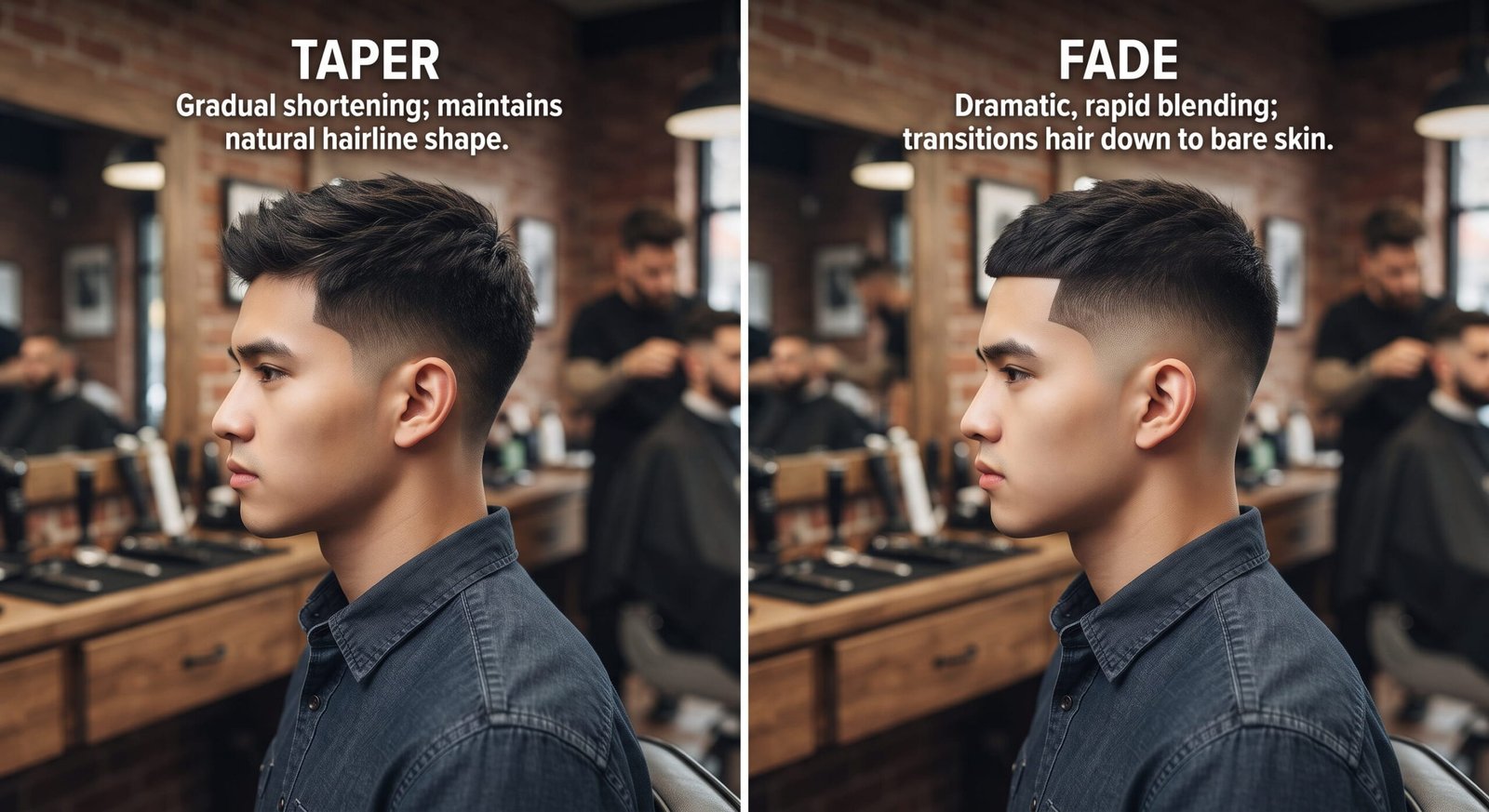
A taper provides a subtle, gradual reduction in hair length around the sideburns and neckline, while a fade creates a more noticeable transition that often blends the hair down to the skin. Although barbers sometimes use these terms interchangeably, each technique creates a distinct finish.
Whether you prefer a professional hairstyle for work, a sharp look for special occasions, or a trendy cut for everyday wear, understanding these two options will help you communicate your preferences to your barber.
What Is a Taper Haircut?
A taper haircut gradually shortens the hair around specific areas, usually the sideburns, temples, and neckline. Unlike some other short hairstyles, a traditional taper leaves most of the hair on the sides relatively full.
The transition between different hair lengths is usually subtle, creating a natural and balanced appearance. This makes it an excellent option for men who want a polished haircut without dramatically exposing the scalp.
Key Features of a Taper
- Gradual shortening around the sideburns and neckline.
- More length retained on the sides and back.
- A natural, understated finish.
- Suitable for professional and casual settings.
- Easy to combine with many hairstyles.
Popular Taper Styles
1. Classic Taper
The classic taper offers a timeless appearance with neatly shortened hair around the ears and neckline. The remaining hair is left long enough to maintain a traditional shape. It works particularly well with side parts, comb-overs, and short textured hairstyles.
2. Low Taper
A low taper begins just above the ears and gradually blends into the neckline. It creates a clean outline without removing too much bulk from the sides. This style is popular among men who want a modern haircut that remains subtle.
3. Mid Taper
A mid taper provides a slightly more noticeable transition than a low taper. The shortening begins around the middle of the sides, giving the haircut a balanced appearance that works with many hair textures.
4. High Taper
A high taper starts higher around the temples and upper sides. Depending on the barber’s technique, it can create a sharper appearance while preserving more length elsewhere than a typical high fade.
5. Taper with a Textured Top
This combination keeps the sides and neckline neat while allowing movement and volume on top. It works well with straight, wavy, and curly hair.
What Is a Fade Haircut?
A fade haircut involves blending the hair from longer lengths into progressively shorter lengths, often reaching very short stubble or bare skin. Unlike a traditional taper, a fade usually affects a larger portion of the sides and back.
The result can range from a subtle gradient to a bold, high-contrast finish. The placement of the fade determines how dramatic the haircut looks.
Fades are popular because they can make almost any hairstyle appear sharper and more defined. They pair well with textured crops, buzz cuts, pompadours, curly tops, and modern comb-overs.
Key Features of a Fade
- A gradual blend across the sides and back.
- Short hair that may reach the skin.
- A sharper contrast between the top and sides.
- Multiple variations based on the starting height.
- A modern, clean-cut appearance.
Popular Fade Styles
1. Low Fade
A low fade begins close to the ears and lower neckline. It creates a restrained gradient that does not remove as much hair from the upper sides. This option suits men who want a fashionable cut without an extremely dramatic contrast.
2. Mid Fade
A mid fade starts around the middle of the sides. It provides a noticeable blend while maintaining a balanced shape. It is a versatile choice for men who want a contemporary look.
3. High Fade
A high fade begins near the temples or higher on the sides. The hair becomes very short relatively high up, creating a strong contrast with the longer hair on top. It is especially popular with textured crops, quiffs, and short curly styles.
4. Skin Fade
A skin fade blends the hair down to bare skin at the shortest point. It produces an especially clean and precise finish. Because the scalp becomes visible, the contrast may be more noticeable than with a traditional taper.
5. Drop Fade
A drop fade curves downward behind the ear toward the back of the head. This shape follows the natural contours of the head and can complement curly tops, waves, and textured hairstyles.
6. Burst Fade
A burst fade creates a curved, semicircular blend around the ears while leaving more length toward the back. It is frequently paired with mohawks, faux hawks, and curly hairstyles.
Taper vs Fade: The Main Differences
Although both techniques rely on blending, their coverage and overall appearance are different.
1. Hair Length
A taper generally shortens the hair around the sideburns and neckline while preserving length on most of the sides.
A fade gradually reduces the length across a broader area, sometimes reaching the skin.
Winner for retaining length: Taper.
2. Overall Appearance
A taper creates a natural, classic, and understated finish. It works well for people who prefer a neat appearance without a dramatic change.
A fade creates a sharper and often more contemporary look. Its contrast can make the hairstyle on top stand out.
Best for a subtle appearance: Taper.
Best for a bold appearance: Fade.
3. Maintenance
The taper and fade styles require regular barber visits, but the ideal schedule depends on hair growth, the chosen length, and how precise you want the haircut to remain.
A traditional taper may continue looking presentable as it grows because the transition is relatively subtle. A skin fade can lose its crisp appearance more quickly as new hair becomes visible.
Many people maintain a taper every three to five weeks, while those who prefer a sharp skin fade may schedule trims every one to three weeks. These are general estimates rather than strict rules.
4. Styling Options
A taper works well with classic side parts, slick-backs, crew cuts, textured tops, and medium-length hairstyles.
A fade complements buzz cuts, French crops, pompadours, quiffs, curly tops, and many other modern looks.
Both techniques are versatile, so the best choice depends on the haircut you want to create.
5. Suitability for Different Occasions
A taper is often preferred for offices, formal gatherings, and traditional environments because it offers a restrained finish.
A fade can also look professional, particularly when it is low or mid-height. Higher fades and skin fades may create a more striking appearance, depending on how they are combined with the top.
Neither haircut is limited to one setting. The final result depends on the fade height, hair length, styling, and personal taste.
Taper vs Fade: Comparison Table
| Feature | Taper | Fade |
|---|---|---|
| Main area | Sideburns and neckline | Sides and back |
| Hair length | Usually retained on the sides | Progressively shorter over a wider area |
| Skin exposure | Usually minimal | May reach bare skin |
| Appearance | Classic and subtle | Sharp and modern |
| Maintenance | Often less frequent | Often more frequent for crisp results |
| Best for | Natural, versatile styles | Defined, high-contrast styles |
| Styling options | Classic and contemporary | Classic and contemporary |
Which Haircut Is Better for Your Face Shape?
Your face shape can help you choose a flattering hairstyle, although hair texture, head shape, and personal preference matter just as much.
Oval Face
An oval face generally works with many haircut styles. Low tapers, mid fades, textured crops, and side parts can all complement its balanced proportions.
Round Face
A hairstyle with additional height on top can create the appearance of a longer face. A mid or high fade paired with a textured top may help achieve this effect. A taper with some volume on top can also work well.
Square Face
Square faces often have defined jawlines and broad cheekbones. A classic taper or a clean mid fade can emphasize these features while maintaining a balanced appearance.
Long Face
If your face is naturally long, consider a low taper or a moderate fade with controlled height on top. Avoid excessive volume if you want to keep the overall proportions balanced.
Heart-Shaped Face
A textured top with a low taper or a softer fade can help balance a broader forehead and narrower chin. Your barber can adjust the sides and top to suit your proportions.
Which Is Better for Different Hair Types?
Straight Hair
Straight hair works well with both techniques. A taper creates a smooth, traditional shape, while a fade highlights the contrast between the sides and top.
Wavy Hair
A taper can preserve natural movement around the sides, while a fade provides a sharper outline. A textured top works especially well with either choice.
Curly Hair
Curly hair pairs beautifully with fades because the short sides emphasize the volume and texture of the curls. A taper is also an excellent choice when you want to keep a fuller, more natural shape.
Thick Hair
A fade can reduce bulk across the sides and back, making thick hair easier to manage. A taper is suitable if you want to preserve some fullness.
Thin Hair
A carefully blended taper can create a soft, natural appearance. A low fade can also work well, but an extremely short fade may make the contrast with thinner areas more noticeable. The best option depends on your hair density and scalp visibility.
Can You Combine a Taper and a Fade?
Yes. A barber can combine elements of both techniques to create a customized haircut.
For example, a low taper around the temples and neckline can be paired with a more noticeable fade through other sections. Some modern cuts also use a taper at the edges while maintaining a blended, shorter finish elsewhere.
A common option is the taper fade, which combines a gradual transition with the neat outlining associated with a taper. However, the exact meaning can vary between barbers and salons.
If you want this combination, explain where you want the hair shortened and whether you want the blend to reach the skin. These details help prevent misunderstandings.
How to Ask Your Barber for the Right Cut
Knowing the terminology is useful, but showing your barber a reference photo can be even more effective.
Follow these steps to communicate your preferred style:
- Choose the overall look: Decide whether you want a classic taper, low fade, mid fade, or high fade.
- Explain the desired length: Tell your barber whether you want some hair left on the sides or a very short finish.
- Discuss skin exposure: Specify whether you want a natural blend or a skin-level fade.
- Describe the top: Explain whether you prefer curls, a side part, a textured crop, a quiff, or another style.
- Mention your maintenance routine: If you do not visit the barber frequently, ask for a style that grows out neatly.
- Use a reference image: A clear photo can communicate the height, shape, and finish you want.
You can also ask your barber which option suits your hairline, hair density, and head shape.
Tips for Maintaining Your Haircut
Keeping your hairstyle neat requires a simple routine.
- Schedule regular trims: Visit your barber when the edges begin losing their shape.
- Use suitable styling products: Lightweight creams, clays, or pomades can help control the top without making it look greasy.
- Keep the neckline tidy: A clean neckline can make a taper or fade look more polished.
- Avoid excessive heat: If you use a hair dryer, choose a moderate temperature and avoid holding it too close to the scalp.
- Care for your scalp: Use a gentle shampoo and avoid products that cause irritation.
- Follow your natural texture: Choose styling methods that work with your hair rather than fighting against it.
If you have sensitive skin, tell your barber before using a very close blade or razor finish.
Common Mistakes to Avoid
Choosing between these hairstyles becomes easier when you avoid a few common mistakes.
Choosing a style without considering maintenance: A very short fade may require frequent touch-ups. Consider your schedule before choosing one.
Requesting a fade without specifying the height: Low, mid, and high fades create different results. State your preference clearly.
Ignoring the hairstyle on top: The sides and top should work together. A fade does not automatically make every hairstyle look better.
Following trends without considering your preferences: A haircut should suit your lifestyle and make you feel comfortable.
Expecting every barber to use the same terminology: Some barbers interpret terms such as taper fade differently. Reference photos and clear instructions can help you get the intended result.
Conclusion
The difference between a taper and a fade comes down to the areas being shortened, the amount of contrast, and the overall finish. A taper focuses mainly on the sideburns and neckline, preserving more length throughout the sides. A fade blends the hair across a wider area and may reach the skin for a sharper appearance.
Choose a taper if you prefer a classic, natural, and versatile haircut. Consider a fade if you want a cleaner gradient, a more defined silhouette, or a modern high-contrast style. Both options can look excellent when tailored to your hair texture, face shape, and daily routine.
Ultimately, the best haircut is the one that complements your appearance and fits the amount of maintenance you are comfortable with. Discuss your preferences with your barber, bring a reference photo, and choose a style that makes you feel confident.
Frequently Asked Questions (FAQs)
1. What is the main difference between a taper and a fade?
A taper gradually shortens the hair around the sideburns and neckline, while a fade blends the hair across more of the sides and back, sometimes down to bare skin.
2. Is a taper better than a fade?
Neither is universally better. A taper is ideal for a natural, classic appearance, while a fade is suitable for people who prefer a sharper, more defined finish.
3. Which haircut looks more professional?
A classic taper or low fade can look professional. The best option depends on your workplace, personal style, and how neatly the haircut is maintained.
4. Does a fade require more maintenance than a taper?
A very short or skin fade often requires more frequent touch-ups because regrowth can make the gradient less defined. A traditional taper may grow out more subtly.
5. What is a taper fade?
A taper fade is a hairstyle that combines a gradual reduction in length with tapered detailing around the sideburns and neckline. The exact finish depends on the barber’s technique.
6. Is a taper suitable for curly hair?
Yes. A taper keeps the sides and neckline tidy while preserving natural curls and fullness. It is a good option for men who prefer a softer appearance.
7. Which haircut is best for a round face?
A mid or high fade paired with some height on top can create the appearance of a longer face. A taper with a textured top is another suitable option.
8. Can I get a skin fade with a taper?
A traditional taper does not usually involve shaving a large area down to the skin. However, a barber can combine a skin-level finish with tapered detailing to create a customized style.
9. How often should I get a taper or fade?
A taper may need refreshing every three to five weeks. A sharp fade may need attention every one to three weeks, depending on how quickly your hair grows and how precise you want the finish.
10. How do I decide between a taper and a fade?
Consider your preferred appearance, hair texture, face shape, and maintenance routine. Choose a taper for a subtle finish or a fade for a more defined gradient. A reference photo can help your barber understand your preference.