Clogged Pores: Symptoms, Treatment, Prevention, and Clear Skin
Introduction
Clogged pores are a common concern for many, particularly those struggling with blackheads, whiteheads, pimplelike bumps, coarse skin, or persistent acne. You may find the occasional bump on your nose, forehead, or other facial area and wonder why your skin doesn’t seem flawless.
A pore is a small hole on the surface of the skin, and most people have pores where hair grows. Pores become clogged when oil, dead skin cells, and other materials collect inside the follicles, leading to a blackhead or whitehead.
The good news is, clogged pores are frequently responsive to regular skincare and acne therapies. Salicylic acid, topical retinoids, and other excellent substances can help keep pores clear, and utilizing noncomedogenic (nonporeclogging) skincare and cosmetics can prevent future blockages.
This article will explain what clogged pores are, the causes, the location, the treatment, prevention, ingredients to utilize and avoid, and when to see a dermatologist.
What Are Clogged Pores?
A pore is an opening in the skin where hair grows from. A person will typically have many pores across their body, though the number or visibility varies depending on the individual.
Materials that can contribute to blockages might include:
• Excess oil
• Dead skin cells
• Cosmetic products
• Haircare products
• Sweat
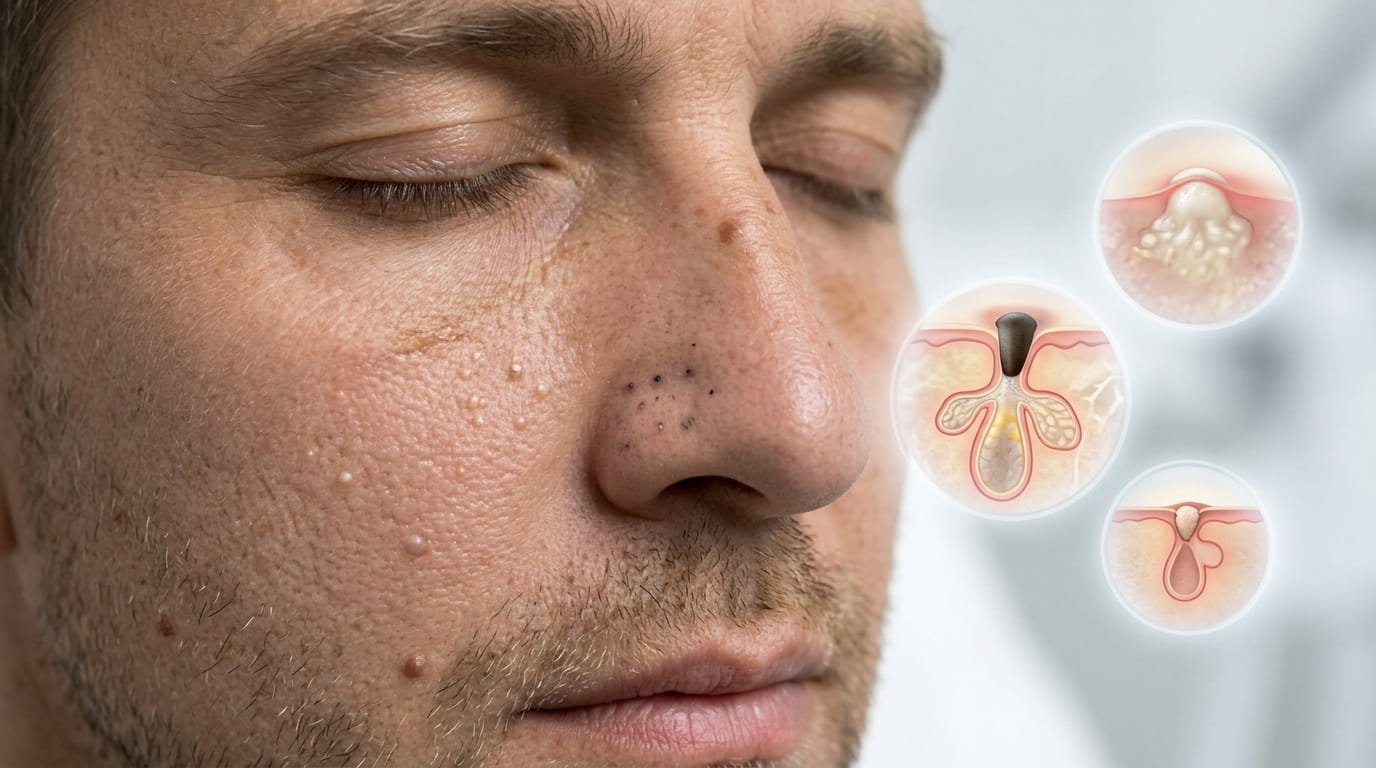
When these materials gather in the pore, they frequently cause a blackhead. The material in the pore might oxidize when exposed to air, resulting in the black hue. Contrary to popular belief, the darkness is not caused by dirt. Another variation of a clogged pore is a whitehead, which occurs when the pore is blocked but not open to the air.
Clogged pores are frequently associated with comedonal acne, blackheads, and whiteheads.
What Causes Clogged Pores?
There isn’t typically a single cause of clogged pores.
Instead, there are various variables that might contribute to the development of these blockages.
• Excess oil
Oil is essential to the skin’s health, but some people have an overabundance of it. This can lead to clogs in the pores, particularly on the forehead, nose, or chin.
• Dead cells
As the skin renews itself, dead skin cells constantly shed. However, if these cells combine with oil and other materials and become trapped, they might contribute to a clog.
Salicylic acid and other exfoliating ingredients can help with this issue by removing dead cells.
• Certain cosmetics
Topical treatments and skincare products such as moisturizers and foundations might clog the pores.
The American Academy of Dermatology suggests seeking out products that are labeled “noncomedogenic,” “oilfree,”won’t clog pores,”, or “nonacnegenic” when selecting skincare for acneprone skin.
• Haircare products
Haircare items might also lead to clogged pores, particularly on the forehead or along the hairline. Oily materials in pomades, conditioners, and styling creams might irritate the skin. The AAD notes that acne triggered by haircare products frequently improves after discontinuing the offending item
• Hormonal fluctuations
Hormones also play a role in pore blockage, notably during puberty or pregnancy. Adult females who notice clogs or pimples near their menstrual cycle or menopause may discover that these issues improve once their hormone levels stabilize.
• Stress
Although stress does not directly induce pimples, studies show that it might cause acne flare ups. Stress, and the resulting increases in a hormone called cortisol, can impact the skin in various ways, such as by increasing oil production.
• Genetics
A person’s susceptibility to acne and related issues like clogged pores can frequently be predicted based on their family history.
Where Do Clogged Pores Usually Occur?
There are numerous places on the body where clogged pores might develop, but they’re most typical in places with lots of oil glands, such as the face.
Common areas for clogged pores include:
• Nose – the nose frequently develops blackheads due to excessive oil production
• Forehead – this area can develop whiteheads, particularly when skincare or haircare products are utilized
• Chin – pimples and clogged pores might both be prevalent here, particularly if there are hormonal imbalances
• Cheeks – this area might develop clogged pores due to cosmetics, skincare items, or friction
• Jawline – hormonal changes can frequently lead to clogged pores along the jawline, particularly in males and females with adult acne
What Do Clogged Pores Look Like?
Clogged pores can take numerous forms, depending on the amount of blockage and the kind of material involved.
• Blackheads – these frequently appear as dark spots on the skin, particularly on the nose or forehead
• Whiteheads – similar to blackheads, these are tiny pale swellings on the skin
• Small bumps – these might appear as tiny, skin-colored bumps without any significant redness or inflammation
• Rough, uneven texture – numerous tiny clogged pores might lead to an uneven skin texture, with some areas feeling rougher than others
Are Sebaceous Filaments Pores Too?
Many individuals conflate sebaceous filaments with clogged pores.
Sebaceous filaments are a typical component of the skin’s natural structure, particularly on the nose and other oily parts.
They frequently appear as tiny grayish or black bumps on the skin’s surface and assist in transporting oil from the follicles to the surface.
Although they might resemble blackheads, sebaceous filaments are wholly normal and can’t be entirely removed. In fact, attempting to extract them might lead to irritation, particularly if the person tries too frequently.
How to Unclog Pores: Effective Treatments
The best strategy for managing clogged pores is to unclog them gradually instead of trying to empty them all at once.
The following measures can help unplug clogged pores and prevent future blockages:
1. Wash Your Face Gently
Washing your face is an essential part of any skincare regimen, but it’s critical not to rub or scrub, as this might inflame the skin and lead to more pimples.
2. Salicylic Acid Helps Clear Clogged Pores
Salicylic acid is a fabulous ingredient for dealing with clogged pores.
This substance can help remove dead skin cells and unclog pores, making it an excellent choice for blackheads or whiteheads.
Salicylic acid can be found in numerous cleansers, gels, and lotions, and a dermatologist can help you identify the most suitable products for your skincare needs.
3. Adapalene Can Assist
Adapalene is a topical retinoid that can help unclog pores and manage blackheads, whiteheads, and pimples. Many over-the-counter topical acne treatments contain adapalene, including the brand Differin. Topical retinoids have also been recommended by the AAD as an efficient therapy for blackheads and whiteheads.
4. Azelaic Acid Is Worth Considering
Azelaic acid is a fantastic alternative to salicylic acid and adapalene.
It aids in the removal of blockages from the pores while also reducing inflammation and bacteria that contribute to pimples. Azelaic acid is also beneficial in lightening the dark spots that sometimes remain after a pimple heals.
5. Use NonComedogenic Products
If you have clogged pores, it’s a smart idea to review your skincare and cosmetics.
Opt for noncomedogenic moisturizers and sunscreens, oilfree foundations, and acnefriendly cleansers.
Products that are noncomedogenic have been tested and are less likely to clog pores, although they may not be appropriate for all skin types.
Should You Squeeze Clogged Pores?
It might be tempting to attempt to remove a large blackhead or a pimple that has developed on the chin, but squeezing clogged pores shouldn’t be a frequent occurrence. The American Academy of Dermatology reports that picking and squeezing can lead to irritation and even permanent dark spots, particularly if the skin is inflamed.
The issue is exacerbated by the fact that many people mistakenly squeeze pimples that have already erupted, which leads to further inflammation. For particularly persistent blackheads or whiteheads, a dermatologist can perform extractions to remove the material.
Are Pore Strips A Good Way To Remove Clogged Pores?
Pore strips can assist in removing blackheads and whiteheads by peeling them off the skin, but they aren’t an excellent long-term solution to clogged pores.
They also don’t eliminate the causes of blackheads or whiteheads, so it’s crucial to continue with an efficient skincare regimen. Finally, pore strips aren’t strong enough to diminish the appearance of large pores permanently.
Are Facial Scrubs Useful for Clogged Pores?
Facial scrubs aren’t an excellent option for dealing with clogged pores.
They frequently have a harsh texture that can inflame acne-prone skin, particularly if utilized frequently.
The American Academy of Dermatology recommends that people with clogged pores or acne opt for a gentle cleanser rather than a harsh scrubbing brush or an abrasive scrub.
If exfoliation is necessary, chemical exfoliants such as salicylic acid can be more effective and less irritating.
Morning And Evening Skincare Routine For Clogged Pores
Morning
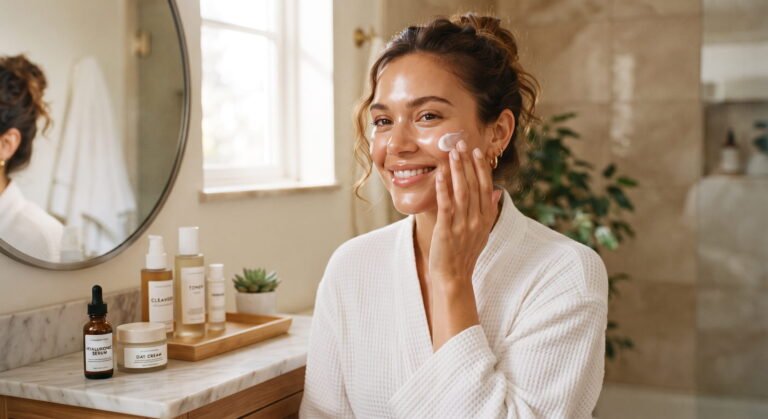
1. Apply a gentle cleanser
2. Apply a light, noncomedogenic moisturizer
3. Apply a broadspectrum sunscreen with an SPF of 30 or greater
Topical acne treatments frequently cause the skin to be more sensitive to sunlight, so it’s crucial to apply a noncomedogenic, nonirritating sunscreen each morning. ( 5 )
Evening
1. Apply a gentle cleanser
2. Apply an acne treatment such as salicylic acid or adapalene
3. Apply a noncomedogenic moisturizer
There’s no need to overload the evening skincare regimen with too many acne treatments at once. In fact, this might irritate the skin and make it challenging to identify the most effective routine.
How Long Does It Take To Clear Clogged Pores?
As previously mentioned, it’s critical to be patient and let your skincare regimen take effect.
The American Academy of Dermatology notes that most topical treatments for acne require between 6 and 8 weeks of frequent usage before the results become apparent.
On the other hand, it might take months for the effects to become noticeable in some circumstances.
It’s crucial not to change your skincare products too soon if you notice no improvement after a few weeks.
Making Mistakes With Clogged Pores
Many people make numerous common mistakes when caring for clogged pores, such as:
• Washing your face too often
• Roughly scrubbing your skin
• Utilizing too many active substances
• Picking your pimples
• Sleeping in your makeup
• Missing the role of haircare products
• Not allowing topical treatments to take effect
Washing Your Face Too Often
A lot of people feel the need to wash their face frequently throughout the day, but doing so might irritate the skin.
Scrubbing
Some people think that scrubbing the skin harshly is an effective way to remove oil or dead skin, but it can inflame acne-prone skin, particularly if done regularly.
Too Many Active Ingredients
It might be tempting to try every acne therapy available at once, but combining too many products can cause a lot of dryness and irritation.
Picking At Your Skin
Picking or squeezing pimples frequently can result in permanent dark spots or even scarring.
Sleeping In Makeup
While this isn’t always a problem, sleeping in makeup can cause breakouts in some individuals.
Missing The Role Of HairCare Products
Numerous people who experience clogged pores or pimples on their forehead or along their hairline fail to recognize the role their haircare items play.
According to the American Academy of Dermatology, acne caused by haircare products frequently improves when the offending item is discontinued.
Not Letting Treatments Work
People frequently change their skincare products too soon if they don’t notice any improvement after a few days.
It’s a frequent mistake to constantly look for an entirely new skincare routine instead of giving the current one enough time to work.
It’s critical to remember that most topical treatments for acne will take between 6 and 8 weeks to show any noticeable results.
Can Diet Cause Clogged Pores?
The link between nutrition and clogged pores is complicated, and social media often gives misleading information on the subject.
Diet can certainly have an impact on the skin, but there isn’t a specific meal or product that will cause clogged pores or pimples on its own.
The American Academy of Dermatology notes that numerous variables, such as oil production, dead skin cells, hair, hormones and genetics, and cosmetics, are involved in the development of clogged pores.
When it comes to diet, the AAD’s updated acne recommendations state that “there was insufficient evidence to support or refute efficacy” for restricting specific foods as an acne treatment.
Rather than limiting healthy meals, it’s a better idea to adopt an effective skincare regimen and consult a dermatologist if the issue persists.
When Should You See A Dermatologist For Clogged Pores?
Most of the time, clogged pores can be managed with the correct skincare regimen. However, there are some instances when seeing a dermatologist is the best option.
You may need to see a dermatologist for clogged pores if:
• You’re unable to adequately manage the issue on your own
• You suffer from persistent pimpletype pimples that refuse to go away
• You have painful, inflamed pimples
• You’re noticing an accumulation of acne scars
• You notice dark marks following breakouts
• You have a sudden outbreak of pimples
• You’re experiencing unexpected adult acne
• You suspect that a drug is causing your acne
• You’re noticing that your skin is irritated, inflamed, or reacting negatively to your skincare products
The AAD notes that rosacea, perioral dermatitis, keratosis pilaris, and other conditions can frequently be mistaken for acne.
A dermatologist can help you identify the cause of your pimples and recommend the most effective treatment.
Treatments For Clogged Pores: What A Dermatologist May Do
If you have clogged pores and consult a dermatologist, they’ll likely go over the same general recommendations as those mentioned above. However, they’ll also have other tools at their disposal to assist clear the blockages.
A dermatologist might recommend the following treatments for clogged pores:
Topical Retinoids
Prescription retinoids such as tretinoin, tazarotene, or trifarotene might be recommended for severe clogged pores. These topical treatments assist in preventing and clearing blackheads, whiteheads, and other acne symptoms.
Extractions
To remove blackheads or whiteheads, a dermatologist or esthetician can perform extractions. This technique can help free up a blocked pore by extracting the trapped material.
Combination Acne Therapies
A dermatologist may decide that combination therapy is the most effective option if a person has acne in addition to clogged pores. Combination therapies for acne frequently contain a variety of active ingredients to address the issue from several angles.
Therapies For Severe Acne
People with severe acne typically require more intensive treatment than what’s available over the counter. The AAD advises seeking medical assistance for severe acne because it frequently necessitates a combination of topical and oral medications.
How To Prevent Clogged Pores
The best way to prevent clogged pores is to keep your skincare regimen simple and use gentle items.
Here are some recommendations for avoiding clogged pores:
• Wash your face twice a day, as well as following perspiration
• Use noncomedogenic skincare and cosmetics
• Remove your makeup before going to bed
• Keep your hair from touching your face when possible
• Wash your pillowcases frequently
• Avoid touching your face too often
• Don’t pick at your blackheads or pimples
• Allow your topical treatments to take effect
• Use a sunscreen every day
• Be patient with your skincare routine
If a certain product appears to be causing issues, it’s a good idea to stop using it and see if things improve. When it comes to haircare products, blackheads and pimples frequently take several weeks to vanish after discontinuing the offending item.
Conclusion
Clogged pores are typically a prevalent concern for many, but they shouldn’t have to be a chronic problem. Understanding the causes allows people to implement the appropriate measures to reduce or eliminate them.
Excess oil, dead skin cells, cosmetics, haircare products, and other variables can all contribute to clogged pores. Blackheads, whiteheads, and pimples are only a few of the potential consequences.
A simple but effective skincare regimen, on the other hand, can help clear the skin and prevent future blockages.
Gentle cleansers, noncomedogenic skincare and cosmetics, salicylic acid or topical retinoids treatments to unclog pores, and daily moisturizing and sunscreen application are all vital steps in managing clogged pores. Salicylic acid can assist in removing existing blockages, whereas topical retinoids can aid in preventing future ones.
It’s critical not to squeeze pimples or scrub the skin, as this can result in irritation or permanent dark marks. Lastly, if clogged pores or pimples continue to be an issue, a dermatologist can assist in identifying the underlying cause and developing an individualized treatment strategy to address them.
Frequently Asked Questions(FAQs)
1. What Causes Clogged Pores?
Clogged pores are frequently caused by a mixture of oil, dead skin cells, cosmetics, and haircare products. Hormonal changes, individual susceptibility, and other variables can also contribute.
2. How To Unclog Pores Naturally?
Gentle exfoliation, avoiding pore-clogging items, brushing away haircare products from the face, and regular skincare can all contribute to the natural unclogging of pores.
3. What Is The Best Ingredient For Clogged Pores?
Salicylic acid is a fantastic ingredient for clogged pores because it helps remove dead skin cells and opens up the pores.
5. Are Blackheads Caused By Dirt?
No, blackheads are frequently the consequence of pores becoming clogged with oil, dead skin cells, and other materials.
6. Should I Squeeze Clogged Pores?
It’s better to avoid squeezing clogged pores because it can inflame the skin and lead to permanent dark spots.
7. Can Clogged Pores Go Away On Their Own?
Mild clogged pores can occasionally be managed with proper skincare, but topical treatments may be necessary for more severe cases. It’s critical to be patient since these treatments frequently take several months to have an impact.
8. Do Salicylic Acid Unclog Pores?
Yes, salicylic acid can assist in unclogging pores by removing dead skin.
9. Why Do I Keep Getting Clogged Pores On My Nose?
The nose frequently suffers from blackheads due to excessive oil. Additionally, some people mistake sebaceous filaments for clogged pores.
10. When Should I See A Dermatologist For Clogged Pores?
If you have clogged pores that refuse to clear up on their own, consult a dermatologist. A dermatologist should also be considered if you have additional concerns, such as inflamed pimples, dark marks, or acne scars.