CC Cream: Benefits, How to Use It and Choosing Right Formula
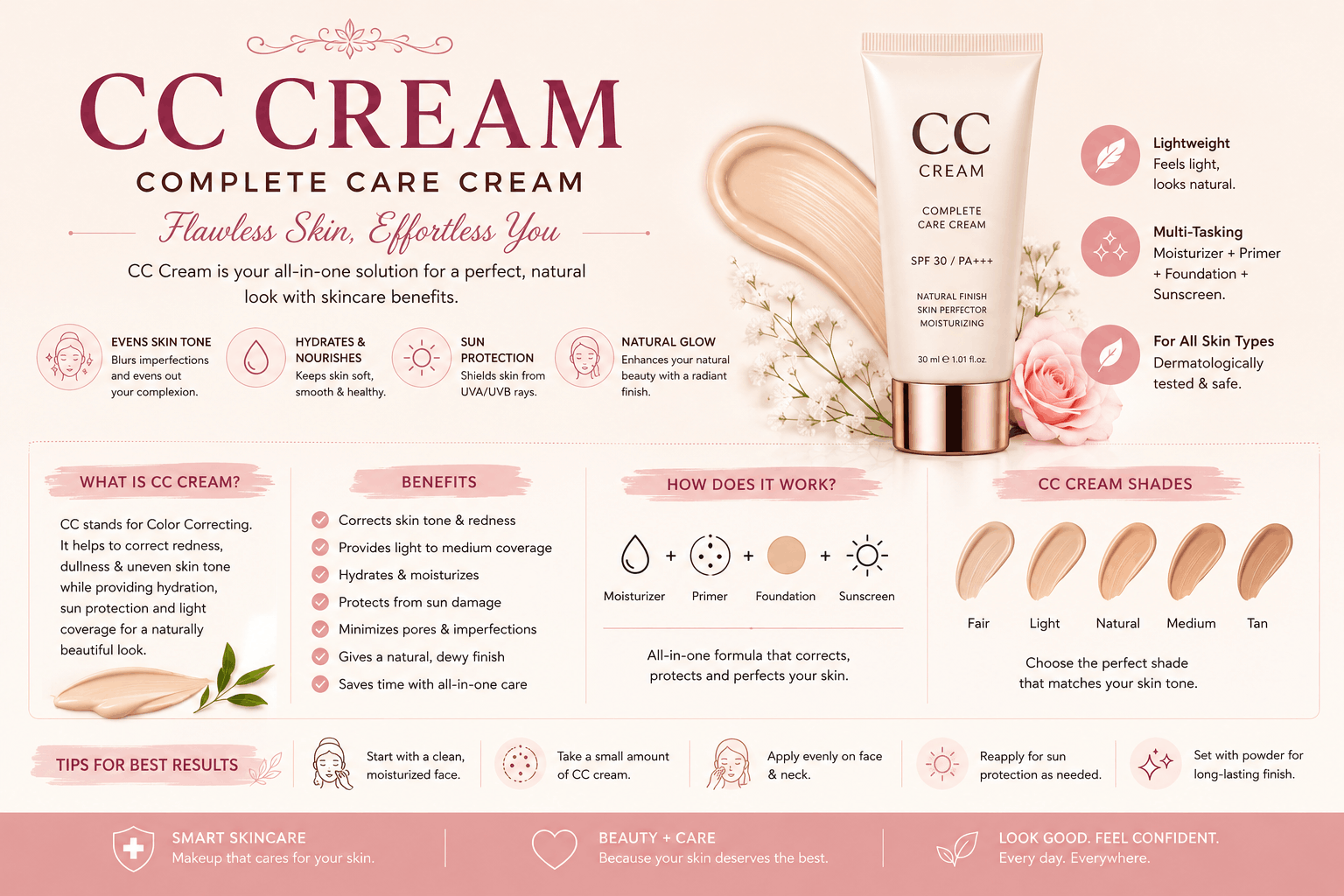
CC cream has become a popular choice for people who want makeup coverage while keeping their complexion looking natural. Unlike traditional foundation, a CC cream is often designed to provide lighter coverage while helping improve the appearance of uneven skin tone, redness, dullness, and minor imperfections.
The name “CC” commonly stands for Color Correcting or Complexion Correcting. Depending on the formula, a CC cream may combine makeup with skincare-focused ingredients and, in some products, sun protection. This makes it an appealing option for everyday makeup, particularly for people who prefer a lightweight finish.
What Is CC Cream?
CC cream is a complexion product designed primarily to even out the appearance of skin tone while providing some level of coverage. It is generally lighter than a full-coverage foundation and can create a more natural-looking finish.
Many CC creams are formulated with ingredients intended to support the skin’s appearance, such as:
- Hyaluronic acid for hydration
- Antioxidants
- Niacinamide
- Botanical extracts
- Moisturizing ingredients
- Pigments that help visually neutralize discoloration
However, formulas differ significantly between brands. It should therefore be selected according to your individual skin type and concerns rather than relying only on its name.
CC Cream vs. BB Cream
Both are often confused because both are multifunctional complexion products.
BB cream generally focuses on light coverage, hydration, and creating a smoother-looking complexion.
CC cream tends to place greater emphasis on correcting the appearance of uneven skin tone, including redness, sallowness, or discoloration.
The difference is not standardized, however. One company’s BB cream may provide more coverage than another company’s CC cream. Checking the product’s ingredients, coverage level, finish, and intended use is more useful than relying on the label alone.
Benefits of CC Cream
1. Helps Even Out Skin Tone
One of the main reasons people use CC cream is to create a more uniform-looking complexion. Pigments can help reduce the visible appearance of redness, dullness, and mild discoloration.
2. Lightweight Coverage
It usually provides lighter coverage than traditional foundation. This can be comfortable for everyday use and can help the skin retain a more natural appearance.
3. Natural-Looking Finish
Many CC creams are designed to blend into the skin rather than create a heavy makeup layer. This makes them useful for casual outings, work, school, and daytime makeup.
4. Can Provide Hydration
Some CC creams contain moisturizing ingredients that help improve the skin’s feel and appearance. People with dry skin may prefer creamy, hydrating formulas.
5. Convenient for Everyday Makeup
It can simplify a makeup routine by combining complexion coverage with other cosmetic or skincare features. Depending on the product, it may reduce the need for multiple complexion products.
Does CC Cream Provide Sun Protection?
Some CC creams contain SPF, but this does not automatically make them a replacement for dedicated sunscreen.
The amount of product normally applied for makeup coverage may not provide the same level of protection indicated on the label. If you will be exposed to sunlight, use a broad-spectrum sunscreen as directed and consider CC cream an additional complexion product rather than your only sun-protection method.
Types of CC Cream
CC creams are available in different formulations, allowing users to select a product based on their skin needs.
Hydrating CC Cream
Hydrating formulas can be suitable for normal-to-dry skin. They may contain ingredients that help reduce the appearance of dryness and leave a more comfortable finish.
Oil-Control CC Cream
People with oily or combination skin may prefer lightweight, oil-controlling formulas. These products can help create a less shiny appearance throughout the day.
Matte CC Cream
Matte formulas are designed to minimize the appearance of shine. They may work particularly well for people who prefer a polished, non-dewy finish.
Illuminating CC Cream
Illuminating formulas contain ingredients or pigments that create a brighter, more radiant appearance. They can be useful when the complexion looks dull.
Mineral CC Cream
Some formulas use mineral-based pigments and may be preferred by people looking for particular ingredient profiles. Always check the complete ingredient list if you have sensitive or reactive skin.
How to Choose the Right CC Cream
Choosing it should begin with your skin type and the appearance you want to achieve.
For Dry Skin
Look for a hydrating formula containing moisturizing ingredients. A creamy texture and dewy or natural finish may help prevent the complexion from looking excessively dry.
For Oily Skin
Choose a lightweight, non-greasy formula with an oil-control or natural-matte finish. Applying too many layers can make makeup feel heavy, so start with a small amount.
For Combination Skin
A balanced formula with moderate hydration and a natural finish can work well. You can also adjust the amount applied to different areas of the face.
For Sensitive Skin
Consider products with relatively simple formulations and avoid ingredients that you already know irritate your skin. Patch testing can be helpful when introducing a new cosmetic.
For Mature Skin
Hydrating formulas with a natural finish may be preferable because excessively matte products can sometimes emphasize the appearance of fine lines and dry areas.
How to Apply
Applying cream correctly can make a significant difference in the final appearance.
Step 1: Cleanse Your Face
Start with clean skin. Use a gentle cleanser appropriate for your skin type.
Step 2: Apply Skincare
Use your normal moisturizer if needed. During the daytime, apply broad-spectrum sunscreen before makeup.
Step 3: Apply a Small Amount of CC Cream
Place small dots on the forehead, cheeks, nose, and chin. Start with a thin layer rather than applying too much at once.
Step 4: Blend Carefully
Use clean fingers, a makeup sponge, or a suitable brush to blend the product evenly across the face.
Step 5: Add More Coverage Where Needed
If you need additional coverage, apply a small amount to specific areas rather than covering the entire face with several thick layers.
Step 6: Set If Necessary
People with oily skin may prefer a light layer of setting powder, while those with dry skin may prefer to leave the finish more natural.
CC Cream for Different Skin Concern
It can improve the appearance of several common complexion concerns, although it does not treat the underlying causes of skin diseases.
Redness
Color-correcting pigments may visually reduce the appearance of redness.
Dull Skin
Some illuminating formulas can make the complexion appear brighter and more refreshed.
Uneven Skin Tone
It can create a more uniform-looking complexion by blending areas of discoloration with surrounding skin.
Minor Imperfections
Light-to-medium coverage formulas can help disguise small blemishes, marks, and uneven areas. More significant imperfections may require a concealer or foundation.
CC Cream and Acne-Prone Skin
People with acne-prone skin should look for a formula that feels comfortable and does not worsen their skin concerns. A non-comedogenic product may be preferable, although “non-comedogenic” labeling is not an absolute guarantee that a product will work for everyone.
Makeup should also be removed thoroughly at the end of the day. Avoid sleeping with cream or other complexion makeup on your skin.
If you have persistent or inflammatory acne, cosmetic coverage should not replace appropriate acne treatment.
Can You Wear CC Cream Every Day?
For many people, CC cream can be used as part of a daily makeup routine. The important factors are the formula, your skin’s response, and proper cleansing.
If a particular product causes itching, burning, persistent redness, or breakouts, discontinue it and consider whether another formulation would be more suitable.
Daily use also makes it important to pay attention to product hygiene. Do not share makeup, clean reusable tools regularly, and follow the manufacturer’s instructions for storage and expiration.
CC Cream vs. Foundation
The best choice depends on your desired coverage and finish.
| Feature | CC Cream | Foundation |
| Coverage | Usually light to medium | Light to full |
| Main purpose | Even-looking complexion | Buildable complexion coverage |
| Texture | Often lightweight | Varies widely |
| Everyday use | Very convenient | Depends on formula |
| Natural finish | Common | Depends on product |
| Color correction | Often emphasized | Usually secondary |
| Buildability | Usually limited to moderate | Often greater |
It is generally a good option when you want a lighter, more natural appearance. Foundation may be more appropriate when you need greater coverage or want a specific makeup finish.
Common Mistakes When Using it
Even a good CC cream may not look right if it is applied incorrectly.
Applying Too Much
More product does not always mean better coverage. Excessive application can create a heavy or uneven appearance.
Choosing the Wrong Shade
The wrong shade can make the face appear noticeably lighter, darker, orange, or gray compared with the neck.
Skipping Moisturizer
If your skin is dry and the formula is not sufficiently hydrating, applying moisturizer beforehand can improve the overall finish.
Using CC Cream as Your Only Sunscreen
Even if your cream contains SPF, it should not automatically replace dedicated sunscreen during significant sun exposure.
Not Removing Makeup
Leaving complexion products on overnight can contribute to clogged pores and irritation in some people.
Is CC Cream Good for Your Skin?
It is primarily a cosmetic product, although some formulations contain skincare ingredients. Whether it is beneficial for your skin depends on the individual formula and your skin’s needs.
Ingredients such as moisturizers, antioxidants, or niacinamide may provide additional skincare-related benefits, but the product should still be viewed primarily as makeup unless it has been specifically formulated and tested for a therapeutic purpose.
People with conditions such as acne, rosacea, eczema, or significant pigmentation may need a personalized skincare routine rather than relying on makeup alone.
Tips for Getting the Best Results
For a smooth and natural-looking finish:
- Choose a shade close to your natural skin tone.
- Match the formula to your skin type.
- Start with a thin layer.
- Blend around the hairline and jawline.
- Use concealer only where extra coverage is needed.
- Apply sunscreen separately when appropriate.
- Clean makeup brushes and sponges regularly.
- Remove makeup before going to bed.
- Stop using a product if it causes persistent irritation.
Final Thoughts
It is a convenient complexion product for people who want light coverage, a more even-looking skin tone, and a natural everyday finish. Its color-correcting properties can help visually minimize redness, dullness, and mild discoloration without the heavier appearance that some foundations can create.
The right cream depends on your skin type, shade, desired coverage, and preferred finish. While some products contain useful skincare ingredients or SPF, it should not automatically be considered a substitute for a complete skincare routine or dedicated sunscreen.
For everyday makeup, however, a well-chosen cream can be a simple way to create a fresh, polished complexion while keeping your makeup routine relatively lightweight.
Frequently Asked Questions About CC Cream
1. What does CC cream stand for?
CC commonly stands for Color Correcting or Complexion Correcting. It is designed to help create a more even-looking complexion.
2. Is CC cream better than foundation?
Neither is universally better. CC cream is generally preferable for lighter, natural-looking coverage, while foundation may be better when greater or more buildable coverage is needed.
3. Can CC cream be used every day?
Yes, many people can use CC cream daily as part of their makeup routine, provided the product suits their skin and is removed properly at the end of the day.
4. Is CC cream suitable for oily skin?
Yes. People with oily skin can choose lightweight, oil-control, or matte CC cream formulas.
5. Is CC cream good for dry skin?
Hydrating CC creams can work well for dry skin. Applying an appropriate moisturizer beforehand may also improve the finish.
6. Can CC cream hide acne?
CC cream can help conceal mild redness and minor blemishes, but it does not treat acne. A concealer or foundation may provide greater coverage when needed.
7. Can CC cream replace sunscreen?
Generally, no. Even when a CC cream contains SPF, it should not automatically replace dedicated broad-spectrum sunscreen, particularly during significant sun exposure.
8. How should CC cream be applied?
Apply a small amount to clean, moisturized skin and blend it evenly using clean fingers, a makeup sponge, or a suitable brush.
9. Can CC cream clog pores?
It depends on the formulation and individual skin. If you are prone to clogged pores, consider a suitable non-comedogenic formula and remove makeup thoroughly each night.
10. What is the difference between BB cream and CC cream?
BB cream generally emphasizes light coverage and skincare-style benefits, while CC cream typically emphasizes correcting the appearance of uneven skin tone. The exact differences vary by product.