Benzoyl Peroxide Face Wash: Benefits, Effects, and Acne Care
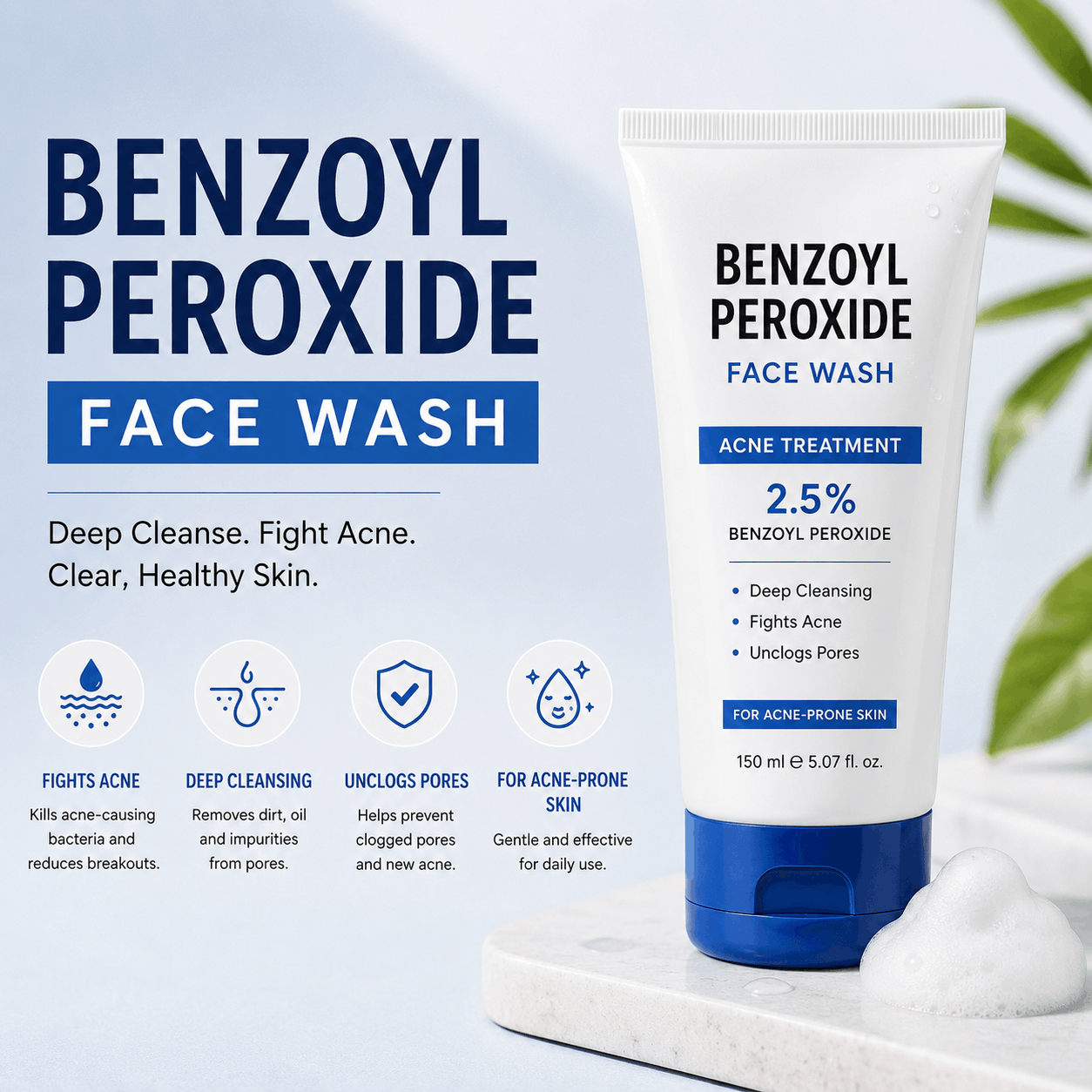
Acne can be frustrating, especially when pimples, blackheads, whiteheads, and oily skin keep returning despite a regular skincare routine. One of the most commonly used ingredients for acne is benzoyl peroxide, which is available in different forms, including face washes, gels, creams, and cleansing products.
A benzoyl peroxide face wash can be particularly useful for people dealing with mild to moderate inflammatory acne. It works mainly by reducing acne-causing bacteria and can be incorporated into a simple daily skincare routine. The American Academy of Dermatology recognizes benzoyl peroxide as an effective acne-fighting ingredient and recommends it as part of acne treatment.
However, benzoyl peroxide can also cause dryness, peeling, redness, or irritation, especially when someone starts using it too frequently. Understanding how to use it correctly can help you get its benefits while minimizing unwanted irritation.
What Is Benzoyl Peroxide Face Wash?
Benzoyl peroxide face wash is a cleansing product that contains benzoyl peroxide as its active acne-fighting ingredient.
Unlike a traditional cleanser that mainly removes oil, dirt, sweat, and makeup, a benzoyl peroxide cleanser is designed to provide acne treatment while cleansing the skin.
Benzoyl peroxide has antimicrobial activity against acne-associated bacteria and also has mild comedolytic properties. Clinical guidelines support benzoyl peroxide for acne treatment.
It is commonly available in different strengths, so choosing the appropriate concentration and frequency is important.
How Does Benzoyl Peroxide Work?
Acne develops through several processes, including excess oil production, clogged pores, inflammation, and changes involving acne-associated bacteria.
Benzoyl peroxide helps by reducing acne-causing bacteria on the skin. It also has a mild effect on clogged pores, which can make it useful for different types of acne.
Because a face wash is rinsed away, it may be easier for some people to tolerate than a leave-on benzoyl peroxide product.
Benefits of Benzoyl Peroxide Face Wash
Helps Fight Acne-Causing Bacteria
One of the main advantages of benzoyl peroxide is its antibacterial action. It can help reduce the bacterial component associated with inflammatory acne.
Can Help With Inflamed Pimples
Benzoyl peroxide is particularly useful for mild inflammatory pimples such as papules and pustules. The AAD recommends acne washes containing benzoyl peroxide or salicylic acid for certain types of inflammatory breakouts.
Cleans Excess Oil and Debris
A medicated face wash can remove excess oil, sweat, and surface debris while delivering benzoyl peroxide to the skin.
Can Be Used as Part of an Acne Routine
Benzoyl peroxide may be used alone for some mild acne or combined with other acne treatments when recommended by a healthcare professional.
Useful for Some Body Acne
Benzoyl peroxide washes are also commonly used for acne on areas such as the back and chest. The AAD notes that benzoyl peroxide wash can help control mild to moderate back acne.
Who Can Use Benzoyl Peroxide Face Wash?
It may be appropriate for people with:
- Mild to moderate acne
- Red inflammatory pimples
- Pustules
- Oily or acne-prone skin
- Recurrent breakouts
- Some forms of body acne
However, not every acne problem should be treated with benzoyl peroxide face wash alone.
Deep, painful nodules and cysts can cause permanent scarring and often require evaluation and treatment by a dermatologist.
What Strength of Benzoyl Peroxide Is Best?
Benzoyl peroxide face washes can come in different concentrations.
For people new to benzoyl peroxide, starting with a lower concentration may help reduce irritation. The AAD specifically notes that although products can contain concentrations up to 10%, starting with 2.5% benzoyl peroxide can help minimize dryness, irritation, and burning.
The best strength depends on your skin, the severity of your acne, and how well you tolerate the product.
Higher concentration does not automatically mean better results. A product that causes significant irritation may make it harder to maintain a consistent skincare routine.
How to Use Benzoyl Peroxide Face Wash
Using the cleanser correctly is important.
Step 1: Wet Your Face
Use lukewarm water to gently wet the skin.
Step 2: Apply the Cleanser
Use a small amount of benzoyl peroxide face wash and gently massage it over acne-prone areas.
Avoid aggressive rubbing or scrubbing.
Step 3: Rinse Thoroughly
Rinse the cleanser completely with lukewarm water.
Step 4: Pat Dry
Use a clean, soft towel and gently pat your face dry.
Step 5: Moisturize
Apply a lightweight, non-comedogenic moisturizer to help maintain skin hydration.
Step 6: Use Sunscreen in the Morning
If you use benzoyl peroxide during the day, finish your routine with broad-spectrum sunscreen.
MedlinePlus advises using benzoyl peroxide exactly according to the product directions and avoiding unnecessary products that may further irritate the skin.
How Often Should You Use It?
The ideal frequency depends on the specific product and your skin’s tolerance.
Some benzoyl peroxide products are intended for once- or twice-daily use, but starting once daily can be a practical approach for people who are new to the ingredient. MedlinePlus recommends starting with once-daily use to see how the skin reacts.
If your skin becomes very dry or irritated, using it less frequently may be necessary.
Always follow the instructions on the specific product you are using.
How Long Does Benzoyl Peroxide Take to Work?
Acne treatments usually require patience.
MedlinePlus notes that it may take around 4 to 6 weeks to see the effects of benzoyl peroxide.
The AAD also recommends giving many acne treatments several weeks before deciding whether they are working. For certain acne types, improvement may take six to eight weeks.
Avoid changing your entire skincare routine every few days because this can make it difficult to determine what is actually helping your skin.
Benzoyl Peroxide Face Wash Side Effects
Benzoyl peroxide can irritate the skin, particularly during the first few weeks.
Possible side effects include:
- Dryness
- Peeling
- Redness
- Mild burning
- Stinging
- Warmth
- Irritation
These effects are recognized with topical benzoyl peroxide use.
If you experience severe swelling, blistering, significant burning, hives, facial swelling, throat tightness, or difficulty breathing, stop using the product and seek medical attention.
Can Benzoyl Peroxide Make Your Skin Dry?
Yes.
Dryness is one of the most common problems associated with benzoyl peroxide. Using too much or applying it too frequently can increase irritation.
If your skin becomes dry:
- Reduce frequency temporarily
- Use a gentle cleanser at other times
- Apply a non-comedogenic moisturizer
- Avoid harsh scrubs
- Avoid combining too many irritating acne products at once
A moisturizer does not necessarily make acne worse. Acne-prone skin can benefit from a suitable non-comedogenic moisturizer.
Can Benzoyl Peroxide Bleach Clothes?
Yes. This is an important point that many people discover only after using it.
Benzoyl peroxide can bleach or discolor fabrics, including towels, pillowcases, clothing, and bedding. MedlinePlus specifically warns about this effect.
Use white towels or bedding when possible, and rinse the cleanser thoroughly.
Benzoyl Peroxide vs. Salicylic Acid Face Wash
Both ingredients can be useful for acne, but they work differently.
Benzoyl peroxide is particularly helpful for inflammatory acne because of its antimicrobial activity.
Salicylic acid is a beta-hydroxy acid that helps exfoliate and unclog pores and may be particularly useful for blackheads and whiteheads.
Some people may benefit from one ingredient, while others may need a combination acne routine.
Using both at the same time can increase irritation for some people, so introduce products carefully.
Can You Use Benzoyl Peroxide Every Day?
Some people can use it daily, while others may need to use it less frequently because of dryness or irritation.
If you are new to benzoyl peroxide, starting once daily—or following the product’s recommended starting schedule—can help you determine how your skin responds.
If daily use causes significant irritation, speak with a healthcare professional about adjusting your routine.
What Should You Avoid While Using Benzoyl Peroxide?
Try to avoid unnecessarily irritating products, especially when your skin is adjusting.
These may include:
- Harsh scrubs
- Abrasive cleansers
- Alcohol-heavy products
- Excessive exfoliation
- Picking or squeezing pimples
- Multiple strong acne treatments introduced at once
MedlinePlus specifically advises avoiding products that can further irritate or dry the skin unless directed otherwise by a doctor.
Benzoyl Peroxide and Moisturizer
A moisturizer can be an important companion to benzoyl peroxide.
Choose a moisturizer labeled:
- Non-comedogenic
- Oil-free
- Won’t clog pores
- Suitable for acne-prone skin
This can help provide hydration without unnecessarily adding heavy ingredients to your routine.
A simple routine is often easier to maintain than a complicated one containing multiple active ingredients.
Benzoyl Peroxide and Sunscreen
Acne-prone skin still needs sun protection.
Use a broad-spectrum sunscreen with an appropriate SPF and choose a non-comedogenic formula if you are prone to clogged pores. The AAD recommends broad-spectrum SPF 30 or higher for acne-friendly sun protection.
This is especially useful if your overall acne routine causes dryness or irritation.
What About the Recent Benzene Concern?
Benzoyl peroxide products received additional attention because benzoyl peroxide can break down into benzene under certain conditions, particularly with prolonged exposure to high temperatures.
The FDA tested 95 benzoyl peroxide acne products in 2025. According to the AAD, more than 90% had undetectable or extremely low benzene levels, while a small number had elevated levels and were subject to voluntary recalls.
The AAD recommends following storage instructions, avoiding excessive heat, and replacing benzoyl peroxide products according to its current guidance.
If you have concerns about a specific product, check current recall information or discuss alternatives with a healthcare professional.
When Should You See a Dermatologist?
A benzoyl peroxide face wash may be useful for mild acne, but professional treatment may be necessary when acne is persistent, severe, painful, or leaving scars.
Consider seeing a dermatologist if:
- Acne is not improving after several weeks of appropriate treatment
- You have deep painful cysts or nodules
- Acne is causing scars
- Breakouts are widespread
- Your skin is becoming severely irritated
- Acne is affecting your confidence or daily life
Early treatment of severe acne can help reduce the risk of permanent scarring.
Conclusion
A benzoyl peroxide face wash can be an effective addition to an acne skincare routine, particularly for mild to moderate inflammatory breakouts. It works by reducing acne-associated bacteria and can help control pimples when used consistently.
The key is to start carefully, follow the product instructions, and avoid overusing the ingredient. Dryness, peeling, redness, and irritation are common concerns, so pairing benzoyl peroxide with a gentle cleanser, non-comedogenic moisturizer, and daily sunscreen can make a routine more comfortable.
Remember that stronger is not always better. If acne is severe, painful, persistent, or leaving scars, a dermatologist can recommend a treatment plan tailored to your skin.
Frequently Asked Questions
1. What is benzoyl peroxide face wash used for?
It is primarily used to help treat acne by reducing acne-associated bacteria and helping control inflammatory breakouts.
2. Is benzoyl peroxide face wash good for acne?
Yes. Benzoyl peroxide is a well-established acne treatment and is particularly useful for mild inflammatory pimples.
3. How often should I use benzoyl peroxide face wash?
Follow the product directions. People new to benzoyl peroxide may start once daily to assess tolerance.
4. Can benzoyl peroxide face wash dry your skin?
Yes. Dryness, peeling, redness, stinging, and irritation are common potential side effects.
5. Can I use moisturizer after benzoyl peroxide?
Yes. A non-comedogenic moisturizer can help reduce dryness and support a comfortable acne skincare routine.
6. Can benzoyl peroxide remove blackheads?
It may help with acne and clogged pores, but salicylic acid is often particularly useful for blackheads and whiteheads because of its pore-exfoliating action.
7. Does benzoyl peroxide bleach clothes?
Yes. Benzoyl peroxide can bleach or discolor towels, clothing, pillowcases, and other fabrics.
8. How long does benzoyl peroxide take to work?
It can take several weeks. MedlinePlus states that effects may take approximately four to six weeks to become noticeable.
9. Can I use benzoyl peroxide every day?
Some people can use it daily, but others develop irritation and need less frequent use. Follow the product instructions and adjust with professional guidance if irritation is significant.
10. Is benzoyl peroxide safe for everyone?
It is widely used for acne, but it can cause irritation and allergic reactions in some individuals. Severe burning, swelling, hives, or breathing difficulty requires prompt medical attention.