
Dermal Piercing: Types, Procedure, Aftercare, Risks, and Healing
Introduction
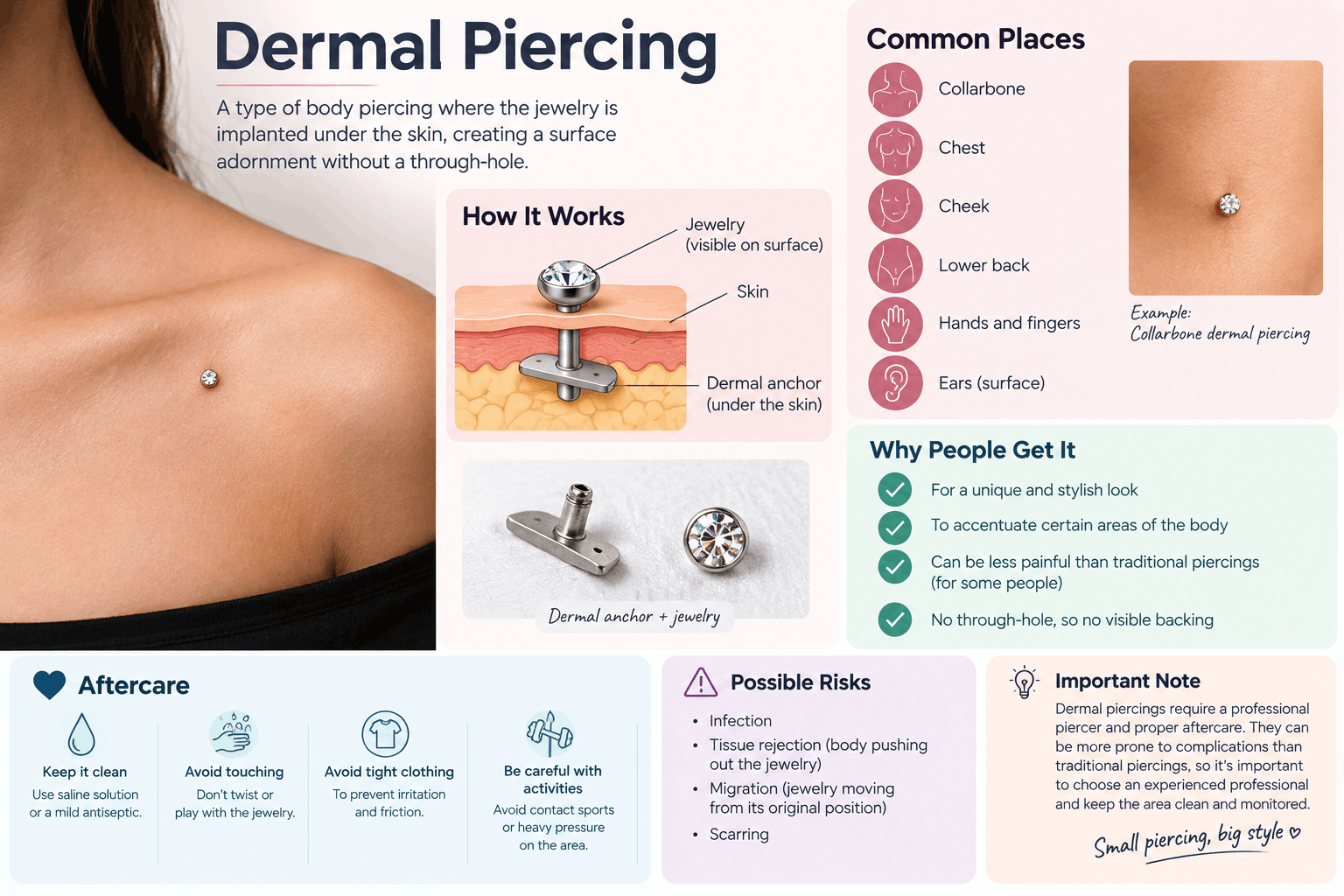
Dermal piercing is a type of body piercing that creates a single opening in the skin and anchors jewelry beneath the surface. Unlike traditional piercings, which usually have an entrance and exit point, a dermal piercing has one visible jewelry point. This gives it a distinctive appearance and allows people to place jewelry in areas where conventional piercings may not be practical.
Dermal piercings can be placed on areas such as the chest, cheek, collarbone, lower back, or other relatively flat areas of skin. Although they can look stylish and minimal, they require proper placement, hygiene, and aftercare because the jewelry is anchored within the skin.
Understanding the procedure, healing process, aftercare, and possible complications can help anyone considering a dermal piercing make an informed decision.
What Is a Dermal Piercing?
A dermal piercing, also called a dermal anchor or microdermal piercing, is a type of surface piercing in which a small anchor is inserted underneath the skin.
The visible part is usually a decorative top that sits on the surface. Beneath the skin, the anchor holds the jewelry in place.
Unlike a standard piercing, there is generally no separate exit hole. This is one of the features that makes dermal piercings different from conventional body jewelry.
How Does a Dermal Piercing Work?
A dermal piercing consists of two main components:
- Dermal anchor: The small base positioned underneath the skin.
- Jewelry top: The visible decorative piece attached to the anchor.
The anchor contains a small base or openings that allow surrounding tissue to hold it in position as the area heals.
Because the anchor is located under the skin, professional placement is important.
Common Dermal Piercing Locations
Dermal piercings can be placed in different parts of the body, depending on anatomy and the piercer’s assessment.
Popular locations include:
- Collarbone
- Upper chest
- Cheek
- Lower back
- Hip
- Thigh
- Abdomen
- Nape of the neck
Not every location is suitable for a dermal piercing. Areas that experience frequent friction, pressure, or movement may be more difficult to heal.
Dermal Piercing Procedure
The exact technique can vary depending on the piercer and the type of anchor being used.
1. Consultation
A professional piercer should first assess the intended location and discuss the jewelry, anatomy, risks, and aftercare.
2. Skin Preparation
The area is cleaned using appropriate skin-preparation methods. Maintaining a clean environment is important for reducing contamination.
3. Creating the Opening
A professional piercing technique is used to create an opening in the skin and create space for the dermal anchor.
4. Inserting the Anchor
The anchor is carefully positioned beneath the skin.
5. Attaching the Jewelry
The decorative top is attached to the anchor, leaving the visible portion above the skin.
The procedure is generally quick, but discomfort varies depending on the location and individual pain tolerance.
Does Dermal Piercing Hurt?
Some discomfort is expected because the skin is being pierced and an anchor is placed beneath it. The amount of pain varies according to the body location, technique, and individual sensitivity.
After the procedure, the area may feel tender, swollen, or irritated for a short period.
If pain becomes increasingly severe rather than gradually improving, it may indicate a complication and should be evaluated.
Dermal Piercing Healing Time
Healing varies from person to person and depends on the location, jewelry, aftercare, friction, and individual healing response.
Some dermal piercings may take several weeks or longer to heal fully.
A piercing can appear healed on the outside before the deeper tissue has completely recovered. For this reason, continued gentle aftercare is important even when the area looks normal.
Dermal Piercing Aftercare
Proper aftercare is one of the most important parts of maintaining a dermal piercing.
Keep the Area Clean
Clean the piercing according to the instructions provided by your professional piercer. A sterile saline solution is commonly recommended for routine piercing aftercare.
Avoid Touching It
Do not repeatedly touch, twist, or move the jewelry with unwashed hands.
Avoid Friction
Clothing, bags, towels, and other objects can catch on dermal jewelry. Try to minimize pressure and rubbing around the area.
Be Careful While Showering
Avoid aggressive scrubbing around the piercing. Pat the area gently dry rather than rubbing it.
Avoid Unnecessary Products
Perfumes, cosmetics, harsh cleansers, and other irritating products should generally be kept away from a healing piercing unless specifically recommended by a professional.
What Should You Avoid During Healing?
Several habits can interfere with healing.
Avoid:
- Picking at crusts or scabs
- Rotating the jewelry unnecessarily
- Pulling on the piercing
- Applying harsh chemicals
- Allowing dirty hands to touch the area
- Excessive friction
- Changing jewelry too early
- Using unapproved home remedies
Following professional aftercare instructions can help reduce irritation and complications.
Possible Risks of Dermal Piercing
Like other body piercings, dermal piercings have potential risks.
Infection
Bacteria can enter damaged skin and cause an infection. Possible signs include increasing redness, warmth, swelling, pain, pus-like drainage, or fever.
If an infection is suspected, seek medical advice rather than removing the jewelry without guidance.
Rejection
Rejection occurs when the body gradually pushes the anchor toward the surface of the skin.
Signs can include:
- Jewelry becoming increasingly visible
- Thinning skin around the anchor
- The anchor appearing closer to the surface
- Persistent irritation
A professional piercer or healthcare professional can assess the situation.
Migration
Migration occurs when the jewelry gradually moves from its original position.
It may result from pressure, friction, unsuitable placement, or the body’s response to the jewelry.
Scarring
Some people may develop a scar after a dermal piercing is removed or if significant irritation occurs.
People who are prone to raised scars may need to discuss the risks before getting a piercing.
Allergic Reaction
Some individuals can react to particular jewelry materials. Choosing appropriate, body-compatible jewelry can reduce the likelihood of a metal-related reaction.
Can a Dermal Piercing Be Removed?
Yes. Dermal piercings can be removed, but because the anchor is positioned beneath the skin, removal is different from simply taking out conventional jewelry.
A professional piercer or qualified healthcare professional should handle removal when appropriate.
Trying to remove an embedded anchor yourself can cause unnecessary tissue damage, bleeding, or scarring.
Can You Change Dermal Piercing Jewelry?
The visible top can sometimes be changed after the piercing has adequately healed. However, jewelry should not be changed prematurely.
Because dermal jewelry involves an anchor beneath the skin, it is best to have a professional assess the piercing before changing components.
Dermal Piercing vs. Traditional Piercing
The main difference is how the jewelry is held in the body.
Traditional piercing: Usually has an entrance and exit point, with jewelry passing through the tissue.
Dermal piercing: Usually has a single visible opening, with an anchor positioned beneath the skin.
Dermal piercings can therefore provide placement options that traditional piercings may not offer.
How Long Does a Dermal Piercing Last?
There is no guaranteed lifespan for a dermal piercing.
Some remain in place for years, while others may migrate or reject sooner. Factors such as placement, friction, jewelry quality, aftercare, and individual healing response can affect longevity.
Dermal piercings should generally be considered semi-permanent rather than guaranteed permanent body modifications.
Choosing a Professional Piercer
Selecting an experienced and reputable professional is extremely important.
Before getting a dermal piercing, consider whether the studio:
- Uses sterile, appropriate equipment
- Maintains good hygiene practices
- Provides clear aftercare instructions
- Has experience with dermal anchors
- Uses suitable body jewelry
- Explains potential risks and complications
- Is willing to answer questions about the procedure
Do not choose a piercer based solely on price.
When Should You Seek Medical Help?
Some redness and tenderness can occur shortly after piercing. However, medical evaluation may be appropriate if you develop:
- Increasing pain
- Severe swelling
- Spreading redness
- Significant warmth
- Pus-like discharge
- Fever or chills
- Red streaking from the piercing
- Skin becoming increasingly thin around the anchor
- Jewelry becoming embedded in the skin
Prompt evaluation can help identify infection or other complications.
Final Thoughts
Dermal piercing is a distinctive form of body modification that uses an anchor beneath the skin to hold a decorative jewelry top. Its unique appearance allows placement in areas where traditional piercings may not be suitable.
However, because a dermal anchor sits beneath the skin, professional placement and proper aftercare are particularly important. Cleaning the area appropriately, avoiding unnecessary pressure and touching, and watching for signs of infection or rejection can support safer healing.
Anyone considering a dermal piercing should choose an experienced professional, understand the potential risks, and seek medical attention if symptoms develop.
Frequently Asked Questions
1. What is a dermal piercing?
A dermal piercing is a body piercing in which an anchor is positioned beneath the skin and a decorative jewelry top remains visible on the surface.
2. Does a dermal piercing hurt?
Some pain or discomfort is expected, but the intensity varies depending on the piercing location, technique, and individual sensitivity.
3. How long does a dermal piercing take to heal?
Healing times vary. Some may heal within several weeks, while others can take longer depending on placement and individual healing.
4. Can a dermal piercing be removed?
Yes. Because the anchor is under the skin, removal should generally be performed by an appropriately trained professional.
5. Can dermal piercings be rejected?
Yes. The body can sometimes gradually push the anchor toward the skin surface, a process known as rejection.
6. How should I clean a dermal piercing?
Follow the aftercare instructions provided by your professional piercer. Sterile saline is commonly used, while harsh chemicals and unnecessary manipulation should be avoided.
7. Can I sleep on a dermal piercing?
It depends on its location. Direct pressure or repeated friction can irritate a healing piercing, so pressure on the area should be minimized.
8. Can I change the jewelry myself?
It is generally safer to have a professional assess and change dermal jewelry, particularly before the piercing has completely healed.
9. What are signs of an infected dermal piercing?
Increasing redness, warmth, swelling, worsening pain, pus-like drainage, or fever can indicate infection and warrant medical evaluation.
10. How long can a dermal piercing last?
There is no fixed lifespan. Some remain in place for years, while others may migrate or reject earlier depending on individual and environmental factors.