Permanent Eyeliner: Benefits, Risks and Aftercare
Introduction
Eyeliner is a popular part of many makeup routines because it can define the eyes, make lashes appear fuller, and create anything from a subtle everyday look to a dramatic wing. However, applying eyeliner regularly can take time, especially when creating a precise line on both eyes.
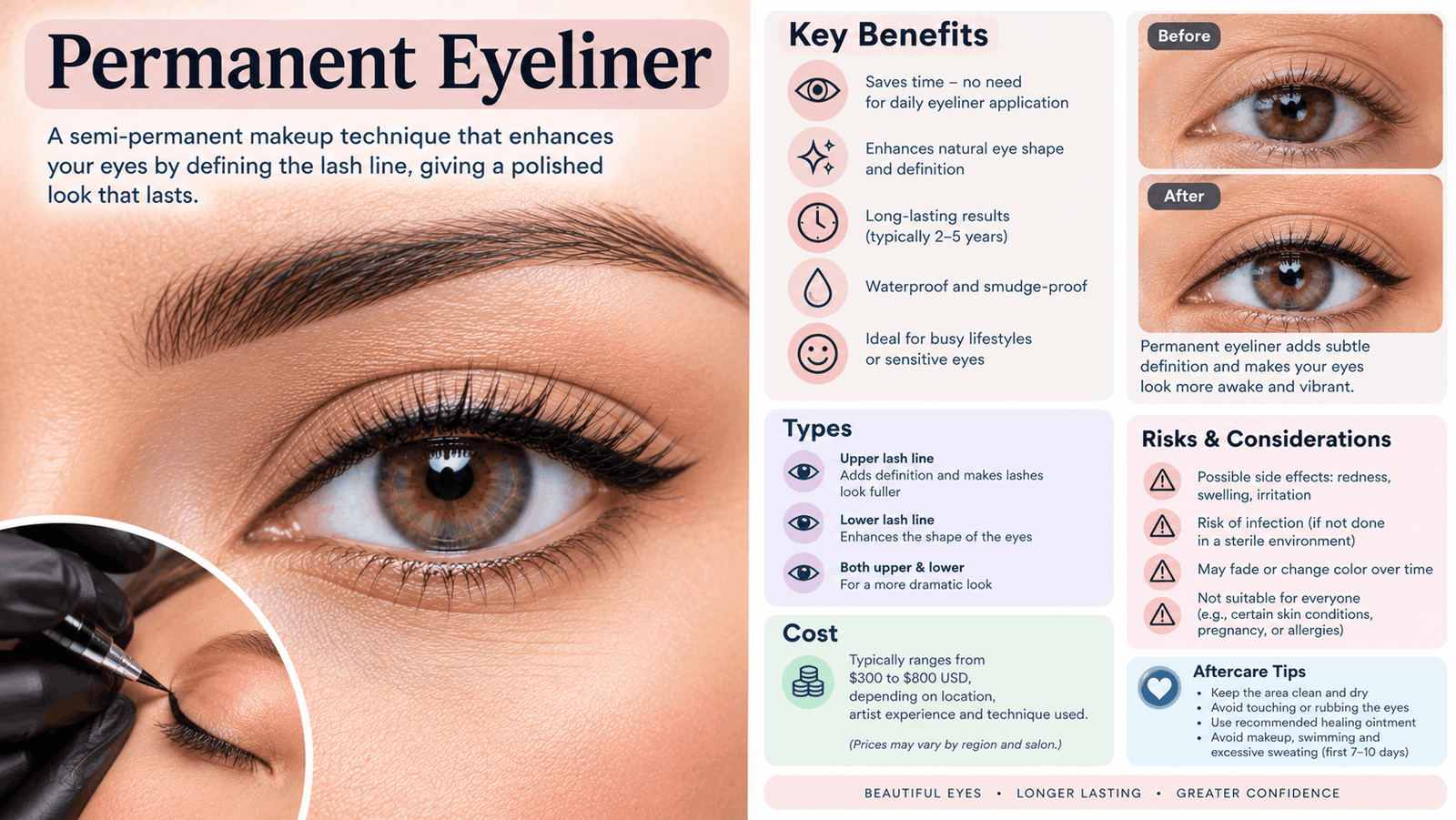
Permanent eyeliner offers a longer-lasting alternative. This cosmetic procedure deposits pigment along the lash line to create the appearance of eyeliner without needing to apply it every day. Depending on the technique, the result may be a natural lash enhancement, a classic line, or a softly shaded effect.
Despite its convenience, the treatment requires careful consideration. The skin around the eyes is delicate, and cosmetic tattooing carries potential risks. Understanding the procedure, healing process, cost factors, and safety precautions can help you decide whether it suits your needs.
What Is Permanent Eyeliner?
Permanent eyeliner is a cosmetic tattoo procedure in which pigment is placed into the skin along the upper or lower lash line using specialized equipment. It is also known as eyeliner tattooing or permanent makeup.
Although the name suggests a completely permanent result, the color often fades over time. Some pigment may remain for years, and complete removal is not always possible.
The purpose is to create lasting definition around the eyes. Some people choose a fine line close to the lashes, while others prefer a more noticeable effect.
The final appearance depends on the artist’s technique, pigment selection, eye shape, and the style agreed upon before treatment.
Popular Types of Permanent Eyeliner
1. Lash Line Enhancement
Lash line enhancement is a subtle option in which pigment is placed close to the base of the eyelashes. Rather than creating a thick, obvious line, it gives the impression of a darker, fuller lash line.
This style may suit people who prefer natural-looking makeup and want their eyes to appear more defined without a dramatic eyeliner effect.
2. Classic Permanent Eyeliner
Classic eyeliner creates a more visible line along the eyelid. Its thickness and shape are customized according to the person’s preferences and natural eye structure.
People who regularly wear pencil or liquid eyeliner may prefer this option because it resembles a familiar makeup style.
3. Winged Permanent Eyeliner
Winged eyeliner extends beyond the outer corner of the eye to create a lifted or elongated appearance. It requires careful planning because eyelids differ in shape, symmetry, and movement.
A wing that looks attractive when the eyes are open may look different when the eyelids are relaxed or closed. The artist should assess the eye anatomy carefully before recommending this style.
4. Soft or Smoky Eyeliner
Smoky eyeliner uses shading to create a softer, blended effect instead of a sharply defined line. It may appeal to people who prefer a diffused makeup look.
Because shaded pigment can be difficult to correct or remove, the desired intensity should be discussed thoroughly before treatment.
Benefits of Permanent Eyeliner
Less Time Spent on Daily Makeup
One of the main attractions is convenience. Once the treated area has healed, you may spend less time applying eyeliner in the morning or correcting uneven lines.
Consistent Eye Definition
Traditional eyeliner can smudge, transfer, or fade throughout the day. Cosmetic tattoo pigment remains within the skin, so the lash line does not need to be redrawn in the same way.
However, the pigment can fade or change appearance over time, so results are not guaranteed to remain identical.
Fuller-Looking Lashes
A fine line placed close to the lash roots can make the eyelashes appear more defined. It does not necessarily increase actual eyelash growth or thickness; the effect is visual.
Convenience for Some People With Limited Dexterity
People who have difficulty applying makeup because of reduced vision, unsteady hands, or certain physical limitations may appreciate the convenience of a professionally performed treatment. Suitability still depends on individual eye health and medical circumstances.
Personalized Appearance
The treatment can be customized from subtle lash enhancement to a more visible line. A conservative design may be easier to live with over time, particularly because facial features and makeup preferences can change.
How Does the Procedure Work?
The procedure generally involves several stages.
Step 1: Consultation
The practitioner discusses your preferred look, medical history, allergies, eye health, and previous cosmetic treatments. They should explain possible complications and the limits of the results.
If you have dry eyes, eyelid inflammation, an eye infection, or a history of complications involving the eyelids, consult an appropriate healthcare professional before proceeding.
Step 2: Design and Mapping
The desired eyeliner style is discussed and outlined. The practitioner should consider the natural contours of your eyelids and how the design appears when your eyes are open and closed.
Do not feel pressured to approve a shape you are unsure about. Permanent makeup is difficult to reverse, so the design should be agreed upon before pigment application begins.
Step 3: Cleaning and Preparation
The treatment area is cleaned using suitable products. A topical anesthetic may be used to reduce discomfort, but it does not eliminate all sensation or risk.
Step 4: Pigment Application
A specialized device deposits pigment into the skin along the planned line. The practitioner works carefully because the treatment area is close to the eyeball and delicate eyelid structures.
The duration depends on the design, practitioner, and whether additional sessions are needed.
Step 5: Aftercare Instructions
After the procedure, you should receive clear written instructions explaining how to care for the area, which products to avoid, and when to seek medical attention.
A follow-up appointment may be suggested after healing to assess the color and determine whether any refinement is appropriate.
Does Permanent Eyeliner Hurt?
The level of discomfort varies. Some people describe the sensation as scratching, pressure, or mild stinging, while others find the procedure more uncomfortable.
A topical anesthetic may help reduce sensitivity. However, the eyelid area is delicate, and the treatment should only be performed by a properly trained practitioner using appropriate precautions.
If you experience severe pain, sudden changes in vision, or significant eye discomfort during or after treatment, seek prompt medical assessment.
Permanent Eyeliner Healing Process
Healing differs from person to person. The following stages are general estimates rather than a fixed schedule.
First 24–48 Hours
The eyelids may feel tender, and mild swelling or redness can occur. The color may look darker or more pronounced than expected.
Avoid rubbing your eyes, touching the area unnecessarily, or applying products that have not been approved for aftercare.
Days 3–7
Some dryness, flaking, itching, or mild crusting may develop as the skin heals. Do not pick at the skin or pull away flakes, because this can interfere with recovery and affect pigment retention.
Avoid eye makeup and other products on the treated area until your practitioner confirms that they can be safely resumed.
Weeks 2–4
The visible color may soften as healing progresses. It may temporarily look lighter or less even than it did immediately after the procedure.
The skin can take several weeks to settle fully. Avoid judging the final result too early.
After the Initial Healing Period
Once healing is complete, the practitioner can assess the pigment and discuss whether a follow-up session is needed. Do not schedule additional tattooing while the skin remains irritated or incompletely healed.
Permanent Eyeliner Aftercare Tips
Appropriate aftercare helps support healing and reduces avoidable irritation.
- Follow the written aftercare instructions provided by your practitioner.
- Wash your hands before any permitted contact with the treated area.
- Avoid rubbing, scratching, or picking the eyelids.
- Do not apply mascara, eyeshadow, eyeliner, or other makeup to the healing area until cleared by your practitioner.
- Avoid swimming pools, saunas, and activities that expose the healing skin to excess moisture or contamination, according to your aftercare plan.
- Avoid unapproved ointments, oils, and skincare products near the treated area.
- Keep the area protected from direct sun exposure while healing.
- Do not use contact lenses until your eye-care professional or practitioner confirms it is appropriate for your situation.
Do not place products directly into the eye unless they are specifically intended for ophthalmic use. If you have questions about eye drops or medication, ask an eye-care professional.
Risks and Possible Side Effects
Permanent eyeliner involves needles and pigment close to the eye. Choosing a reputable practitioner can reduce some risks, but it cannot eliminate them.
Infection
Contaminated equipment, unsterile needles, or improperly handled pigment can cause infection. The practitioner should use sterile, single-use needles where appropriate and follow strict hygiene practices.
Allergic Reactions
Some people react to pigments, numbing products, or other materials used during treatment. Reactions can include redness, itching, swelling, or persistent inflammation.
A patch test may be discussed, but a negative result does not guarantee that an allergic reaction will never occur.
Swelling and Irritation
Temporary swelling and tenderness can occur after the procedure. Severe, worsening, or persistent symptoms should not be dismissed as normal healing.
Scarring and Pigment Changes
Cosmetic tattooing can sometimes cause scarring, uneven color, pigment spreading, or unwanted changes in appearance. Correcting these problems may be difficult.
Eyelash or Eyelid Problems
Improper technique can injure delicate eyelid structures and may contribute to eyelash loss or other eye-area complications. This is why experience and safety practices matter especially when working near the lash line.
Dry-Eye Concerns
People with existing dry-eye symptoms or eyelid disorders should discuss the procedure with an eye-care professional before treatment. The eyelid contains structures involved in maintaining a healthy tear film, and complications around this area deserve careful attention.
Difficulty With Removal
Permanent eyeliner is not easy to remove. Laser or other specialist removal methods may be considered in some circumstances, but they carry their own risks and may not remove all pigment.
Who Should Avoid or Delay the Procedure?
Permanent eyeliner may not be appropriate for everyone. You should postpone treatment if you have an active eye infection, irritated eyelids, or a skin infection around the treatment area.
Seek advice from a healthcare professional before proceeding if you:
- Have chronic dry eyes or an eyelid condition.
- Have a history of severe allergic reactions to cosmetics or tattoo pigments.
- Tend to develop keloid scars.
- Have a medical condition or take medication that may affect healing or bleeding.
- Are pregnant or breastfeeding.
- Have a weakened immune system or another condition that may increase the risk of complications.
These factors do not all have the same implications for every person. A healthcare professional can help assess individual risks. Do not stop prescribed medication without speaking to the clinician who manages it.
How Much Does Permanent Eyeliner Cost?
The price varies according to the country, city, practitioner’s experience, treatment style, studio standards, and whether follow-up sessions are included.
A subtle lash line may cost less than a more complex design, such as a winged or shaded effect. Additional appointments may involve separate fees.
Before booking, ask the practitioner:
- What is included in the quoted price?
- Is a follow-up session included?
- What are the charges for future touch-ups?
- What hygiene and sterilization procedures are followed?
- What happens if the result requires correction?
- What are the realistic options if you later want the pigment removed?
Rather than choosing a provider based on the lowest price, prioritize qualifications, hygiene, transparent communication, and healed examples of previous work.
How Long Does Permanent Eyeliner Last?
The result commonly fades over time, with many people noticing changes over approximately one to three years. Some pigment may remain for considerably longer.
Longevity depends on several factors, including:
- Pigment composition and color.
- The practitioner’s technique.
- Individual skin characteristics and healing.
- Sun exposure and skincare habits.
- The body’s response to the pigment.
- Previous cosmetic tattooing and touch-up treatments.
A touch-up may be considered when the pigment becomes lighter, but frequent repeated applications can cause pigment buildup. It is better to assess the healed result and discuss maintenance with a qualified practitioner than to follow a rigid schedule.
Permanent Eyeliner vs. Traditional Eyeliner
| Feature | Permanent eyeliner | Traditional eyeliner |
| Application | Cosmetic tattoo procedure | Applied to the skin or lash line |
| Longevity | Usually lasts for years, gradually fading | Usually lasts until removed or worn off |
| Daily effort | Less routine application | Requires regular application |
| Style flexibility | Limited once tattooed | Easy to change |
| Healing | Requires a healing period | Usually no tattoo-related healing |
| Risks | Infection, allergy, scarring, eye-area complications | Irritation or allergy; generally no tattoo-related risks |
| Removal or correction | Can be difficult | Usually removed with makeup remover |
Traditional eyeliner is often a better choice for people who enjoy changing colors, experimenting with wings, or adapting their makeup to different occasions. Permanent eyeliner may appeal to those who prefer a consistent look and understand the long-term commitment.
How to Choose a Qualified Practitioner
Because the treatment is performed near the eyes, choosing a qualified practitioner is essential.
Look for someone who:
- Has appropriate training and follows applicable local requirements.
- Uses sterile, single-use needles and maintains a hygienic workspace.
- Explains the procedure, risks, contraindications, and aftercare clearly.
- Asks about your medical history and eye-health concerns.
- Shows healed results rather than only freshly completed work.
- Discusses the proposed design before starting.
- Gives clear guidance on complications and follow-up care.
Be cautious if a practitioner guarantees a risk-free result, pressures you to choose a dramatic style, or cannot explain their infection-control practices.
When to Seek Medical Attention
Mild temporary tenderness may occur after treatment, but certain symptoms need prompt evaluation.
Seek urgent medical care if you develop vision changes, severe eye pain, significant light sensitivity, rapidly increasing swelling, or difficulty opening the eye.
Contact a healthcare professional promptly for worsening redness, warmth, discharge, fever, persistent irritation, or symptoms that are not improving as expected. Do not attempt to treat a suspected eye infection with unprescribed products.
Conclusion
Permanent eyeliner can provide lasting lash-line definition and reduce the need for daily makeup application. From subtle lash enhancement to more noticeable styles, the technique offers several cosmetic options. However, the pigment gradually fades, and some may remain in the skin for years.
Before choosing treatment, consider your eye health, desired style, budget, healing requirements, and the difficulty of reversing the result. Select a qualified practitioner who follows strict hygiene standards and explains the risks honestly. A careful consultation and realistic expectations are important for making an informed decision.
Frequently Asked Questions
1. What is permanent eyeliner?
Permanent eyeliner is a cosmetic tattoo procedure that deposits pigment along the upper or lower lash line to create lasting eye definition.
2. Is permanent eyeliner truly permanent?
The pigment usually fades over time, but it may not disappear completely. Some residual color can remain for years, and removal can be difficult.
3. How long does permanent eyeliner last?
Many results remain visible for approximately one to three years, although longevity varies. Some pigment may last longer.
4. Is permanent eyeliner painful?
Discomfort varies from person to person. A topical anesthetic may help, but the procedure can still cause pressure, scratching, or stinging sensations.
5. How long does healing take?
Initial swelling and tenderness may improve within days, while the skin and pigment can take several weeks to settle. Follow your practitioner’s aftercare advice.
6. Can I wear mascara after getting permanent eyeliner?
Avoid mascara and other eye makeup on the treated area until healing is complete and your practitioner confirms it is safe to resume.
7. Is permanent eyeliner safe for sensitive eyes?
Not necessarily. People with sensitive eyes, dry-eye symptoms, allergies, or eyelid conditions should discuss the risks with an eye-care professional before treatment.
8. Can permanent eyeliner be removed?
Specialist removal may be possible, but it can be expensive, may require multiple sessions, and may not remove all pigment. Removal can also cause complications.
9. What is the difference between lash line enhancement and permanent eyeliner?
Lash line enhancement is generally a subtle pigment application close to the lash roots, while classic permanent eyeliner creates a more visible line.
10. How can I reduce the risk of complications?
Choose a properly trained practitioner, confirm that strict hygiene and sterile-equipment practices are followed, disclose relevant health information, and follow the aftercare instructions carefully.