Skin Boosters: Benefits, Process, and What to Expect
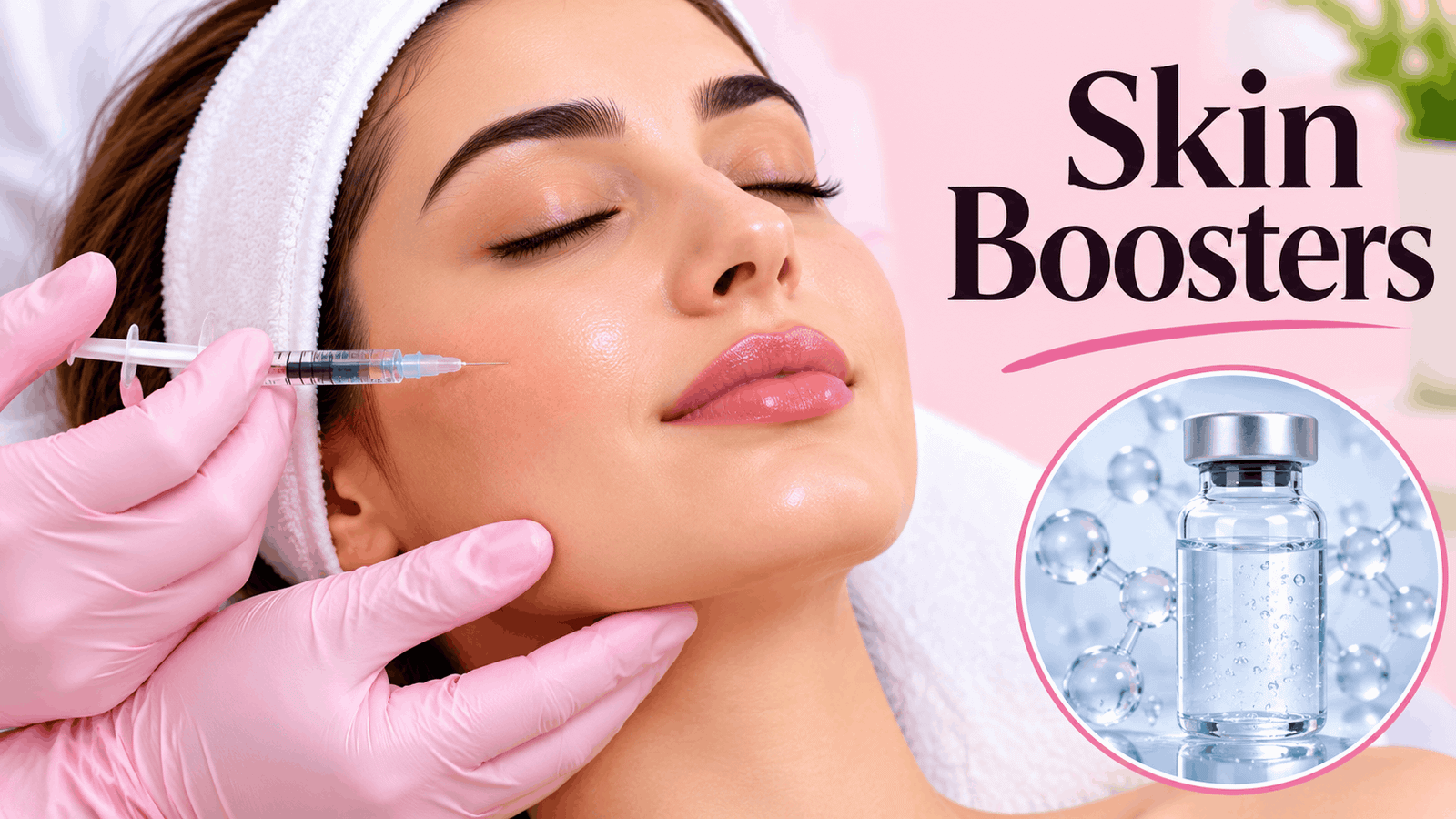
Introduction
Healthy, radiant skin is influenced by hydration, collagen production, elasticity, and the condition of the skin barrier. As we age, natural changes in collagen and elastin, environmental exposure, and lifestyle factors can contribute to dryness, fine lines, uneven texture, and reduced skin firmness. Although traditional skincare products help maintain skin health, some people look for professional treatments that target skin quality more directly.
Skin boosters have become a popular option in aesthetic dermatology because they focus on improving the appearance and condition of the skin rather than dramatically changing facial shape. Depending on the formulation, these treatments may help improve hydration, elasticity, smoothness, and the appearance of fine lines.
However, not all skin boosters contain the same ingredients or work in the same way. Understanding the available options, expected results, treatment process, and potential risks is important before considering a procedure.
What Are Skin Boosters?
Skin boosters are aesthetic treatments designed to improve overall skin quality. The term commonly refers to injectable products delivered into or beneath the skin, although some skincare brands also use the term for topical serums and moisturizing treatments.
Injectable skin boosters often contain hyaluronic acid, a substance naturally found in the body that attracts and retains water. Other formulations may contain polynucleotides, amino acids, peptides, or biostimulatory ingredients.
Their effects depend on the product, injection technique, treatment area, and individual skin characteristics.
Benefits of Skin Boosters
The potential benefits vary according to the formulation and the person’s skin condition. Common treatment goals include the following.
1. Improved Skin Hydration
Hyaluronic acid can bind water within the skin. When appropriately formulated and injected, hyaluronic acid-based boosters may improve skin hydration and help create a softer, more supple appearance.
This can be particularly appealing to people experiencing dryness or dehydration-related dullness.
2. Smoother Skin Texture
Some treatments may improve the appearance of rough or uneven skin texture. Better hydration and changes in the skin’s supportive structures can make the surface look smoother.
3. Improved Skin Elasticity
Certain formulations are intended to support skin quality and may influence processes involved in collagen and elastin maintenance. Improvements in elasticity can make skin appear healthier and more supple.
However, the degree of improvement depends on the treatment and available clinical evidence.
4. Reduction in the Appearance of Fine Lines
Dehydration can make fine lines more noticeable. By improving moisture levels, some boosters may soften the appearance of these lines.
They are not equivalent to treatments specifically designed to relax expression muscles or replace lost facial volume.
5. A Fresher-Looking Complexion
Hydrated skin often appears more luminous and refreshed. Some patients seek these treatments because they want to improve overall skin quality rather than make a major change to their facial features.
6. Support for Aging Skin
With increasing age, the skin gradually loses collagen, elasticity, and moisture-retaining capacity. Selected skin booster treatments may help address some visible signs of these changes.
Different Types of Skin Boosters
Skin boosters are not a single standardized treatment.
1. Hyaluronic Acid Skin Boosters
Hyaluronic acid-based boosters are among the best-known options. They are designed to improve hydration and skin quality by delivering hyaluronic acid into targeted skin layers.
Some products contain lightly cross-linked hyaluronic acid, while others use non-cross-linked formulations.
The product’s intended use and approved injection technique should always guide treatment.
2. Polynucleotide Skin Boosters
Polynucleotide-based treatments contain purified DNA-derived molecules used in certain aesthetic and regenerative medicine applications.
Clinical evidence is developing, and results should not be assumed to be identical across different products.
3. Amino Acid-Based Skin Boosters
Some injectable formulations contain amino acids and other compounds involved in normal cellular and tissue functions.
Their effectiveness depends on the formulation and the quality of supporting clinical evidence.
4. Collagen-Stimulating Treatments
These may contain biostimulatory materials rather than functioning primarily as simple hydration treatments.
Their effects, treatment intervals, and potential complications differ from those of hyaluronic acid-based boosters. Some can produce delayed results as collagen remodeling takes place.
5. Combination Skin Boosters
Some products combine ingredients such as hyaluronic acid, amino acids, vitamins, antioxidants, or peptides.
These formulations aim to address several skin-quality concerns at once. However, a longer ingredient list does not automatically mean a product is more effective. The safety, formulation, and clinical evidence behind each combination are important.
Which Areas Can Be Treated?
Depending on the specific product and its authorized indications, skin booster treatments may be considered for different areas.
Face
The face is a common treatment area. Patients may seek improvements in hydration, texture, and the appearance of fine lines on the cheeks and other selected facial regions.
Neck
The neck can develop visible dryness, fine lines, and changes in texture.
Décolletage
The upper chest is frequently exposed to sunlight and may develop uneven texture and fine lines.
Hands
The hands can show signs of aging through dryness, fine lines, and changes in skin quality.
Treatment suitability should always be assessed individually. Not every product is appropriate for every anatomical area.
Who Is a Suitable Candidate for Skin Boosters?
Skin boosters may be considered by adults who want to improve selected aspects of skin quality without pursuing major changes in facial volume or contour.
Potential candidates may include people who:
- Experience persistent skin dryness or dehydration.
- Notice fine lines associated with reduced skin hydration.
- Want to improve the appearance of uneven texture.
- Have early visible signs of skin aging.
- Prefer subtle improvements rather than dramatic facial changes.
- Understand the limitations, costs, and possible risks of injectable treatments.
A consultation with a qualified medical professional is necessary to determine whether the treatment is appropriate.
People with active skin infections, significant inflammation, certain allergies, bleeding disorders, or a history of serious reactions to injectable products may need to avoid or postpone treatment. Pregnancy and breastfeeding also require particular caution because safety information for many aesthetic injectables is limited.
Skin Booster Treatment Procedure: Step by Step
The exact procedure depends on the product and the practitioner’s treatment plan. A typical injectable session may involve the following stages.
1. Initial Consultation
The practitioner evaluates the patient’s skin condition, medical history, allergies, previous cosmetic procedures, and treatment expectations.
This is also the time to discuss the exact product, its ingredients, intended treatment area, and potential complications.
2. Skin Preparation
The treatment area is cleaned thoroughly. A topical anesthetic may be applied when appropriate to reduce discomfort.
Strict hygiene and appropriate infection-control measures are essential.
3. Injection Process
The practitioner administers the selected product using an appropriate needle or cannula technique, depending on the formulation and treatment plan.
The injection depth, amount, and placement must be selected according to the product’s instructions and the patient’s anatomy.
4. Immediate Assessment
After treatment, the practitioner checks the treated area and provides instructions for aftercare. Small injection marks or temporary raised areas may be visible immediately after some procedures.
5. Follow-Up
A follow-up appointment may be recommended to assess the response and decide whether additional sessions are appropriate.
Not every patient needs the same number of treatments. A standardized schedule should not be applied to every product or individual.
How Many Skin Booster Sessions Are Needed?
The number of sessions depends on the product, treatment goal, skin condition, and clinical protocol.
Some treatments are performed as a series of initial sessions followed by maintenance appointments. Others may use a different schedule.
Your practitioner should explain the expected number of sessions before treatment begins. Repeated injections should be based on an appropriate assessment rather than automatically scheduled at short intervals.
How Long Do Skin Booster Results Last?
The duration of results varies considerably. Factors include:
- The type and formulation of the product.
- The treated anatomical area.
- The number of sessions.
- Individual skin characteristics.
- Lifestyle and environmental exposure.
- The body’s response to the injected material.
Hyaluronic acid-based treatments are generally temporary because the material is gradually broken down by the body. Other formulations may have different mechanisms and durations.
Patients should avoid relying on guaranteed timeframes or comparing their results directly with another person’s experience.
Skin Boosters vs. Dermal Fillers
Although both treatments involve injectable products, they are designed for different aesthetic purposes.
| Feature | Skin Boosters | Dermal Fillers |
|---|---|---|
| Main purpose | Improve skin quality | Restore volume or enhance contours |
| Common goal | Hydration and texture | Facial shaping and wrinkle correction |
| Formulation | Varies by treatment | Commonly hyaluronic acid or other filler materials |
| Expected effect | Subtle skin-quality improvement | Volume or structural change |
| Treatment plan | Depends on the product | Depends on the area and desired correction |
Some products may overlap in their properties, so the distinction is not absolute. The intended use and formulation are more important than the marketing label.
Possible Side Effects and Risks
Skin booster injections are medical procedures and are not completely risk-free. The type and severity of possible complications depend on the injected material, injection site, technique, and patient characteristics.
Common Temporary Side Effects
Some people experience:
- Mild redness.
- Swelling.
- Bruising.
- Tenderness.
- Small raised injection points.
- Temporary discomfort.
- Itching around the treated area.
These reactions often improve over several days, although the recovery period varies.
Less Common Complications
Other possible complications include:
- Persistent lumps or nodules.
- Infection.
- Allergic or inflammatory reactions.
- Prolonged swelling.
- Post-inflammatory pigmentation changes.
- Uneven results.
Some complications may develop after a delay and require medical assessment.
Rare but Serious Complications
When injectable materials are accidentally introduced into a blood vessel, blood supply to surrounding tissue can become compromised. Depending on the material and injection site, this may cause tissue damage and, in rare cases, vision impairment or other serious complications.
Severe or rapidly increasing pain, unusual skin discoloration, vision changes, or sudden visual symptoms after an injectable treatment require immediate emergency medical assessment.
Aftercare Tips Following Skin Booster Treatment
Following the practitioner’s instructions can help reduce irritation and support recovery.
- Keep the area clean: Follow the recommended cleansing instructions and avoid unnecessary touching.
- Avoid excessive heat initially: Follow advice about hot showers, saunas, steam rooms, and intense heat exposure.
- Avoid strenuous exercise temporarily: Your practitioner may recommend avoiding intense physical activity for a short period.
- Use gentle skincare: Avoid introducing strong exfoliants or irritating products until the skin has settled.
- Protect your skin from sunlight: Use suitable broad-spectrum sunscreen and avoid excessive sun exposure.
- Do not massage the area unless advised: Massage is appropriate for certain products and techniques but not for every injectable treatment.
- Attend follow-up appointments: Report unusual symptoms and allow your practitioner to assess the results.
Do not attempt to correct lumps or other complications yourself.
How to Choose a Safe Skin Booster Treatment
Choosing an appropriate practitioner and product is one of the most important parts of the process.
Consider these points before booking:
- Choose a properly qualified and trained medical professional with experience in aesthetic injections.
- Ask for the exact product name, manufacturer, ingredients, and intended use.
- Confirm that the product is authentic and supplied through a reliable medical source.
- Discuss your medical history, allergies, and previous cosmetic treatments.
- Ask about expected results, treatment limitations, and possible complications.
- Make sure the clinic has an appropriate plan for managing adverse reactions and emergencies.
- Avoid unlicensed injectors, unverified products, and needle-free devices marketed as alternatives to proper injectable procedures.
Remember that an injectable skin treatment should be approached as a medical procedure, not simply as a beauty service.
Conclusion
Skin boosters are increasingly used in aesthetic dermatology to address concerns such as dryness, fine lines, uneven texture, and reduced skin elasticity. Different formulations, including hyaluronic acid and polynucleotide-based products, offer different approaches to improving skin quality.
Although these treatments may provide subtle improvements, their effectiveness and duration vary from person to person. Product selection, professional assessment, appropriate injection technique, and realistic expectations are essential for a safe treatment experience.
Anyone considering an injectable procedure should consult a qualified medical professional, understand the potential risks, and choose a treatment based on individual skin needs rather than marketing claims.
Frequently Asked Questions
1. What are skin boosters used for?
They are aesthetic treatments intended to improve skin quality, particularly hydration, texture, elasticity, and the appearance of fine lines. Their specific benefits depend on the formulation.
2. Are skin boosters the same as dermal fillers?
No. Many skin boosters primarily target skin quality and hydration, whereas traditional dermal fillers are commonly used to restore volume, enhance contours, or fill specific wrinkles.
3. How long do skin booster results last?
Results vary according to the product, treatment area, number of sessions, and individual response. Most injectable formulations are not permanent.
4. Are skin boosters suitable for all skin types?
Not necessarily. Suitability depends more on the individual’s skin condition, medical history, allergies, and the specific injectable product than on skin type alone.
5. Do skin boosters help with wrinkles?
Some may soften the appearance of fine lines, particularly those associated with dehydration. They are not a substitute for treatments designed specifically for deeper wrinkles or facial volume loss.
6. How many treatments are usually required?
The number varies by formulation and treatment goal. Some products are administered in a series of sessions, while others follow different protocols.
7. Are skin booster injections painful?
Discomfort varies depending on the injection technique, treatment area, and individual sensitivity. Topical anesthetic may be used when appropriate.
8. What are the common side effects of skin boosters?
Temporary redness, swelling, bruising, tenderness, and small injection-site bumps are among the possible side effects. Less common complications include infection, persistent nodules, and inflammatory reactions.
9. Can skin boosters be combined with other aesthetic treatments?
Some treatments may be combined as part of an individualized aesthetic plan. However, compatibility, timing, and safety should be assessed by a qualified practitioner rather than assumed.
10. Who should perform skin booster injections?
A properly qualified and trained medical professional with knowledge of facial anatomy, injectable products, sterile technique, and complication management should perform the procedure.