Medical Grade Skincare: Benefits and How to Build a Routine
Good skincare is not simply about having a shelf full of expensive products. The right routine should address your skin’s actual needs while using ingredients that are supported by evidence. This is where medical grade skincare comes into the conversation.
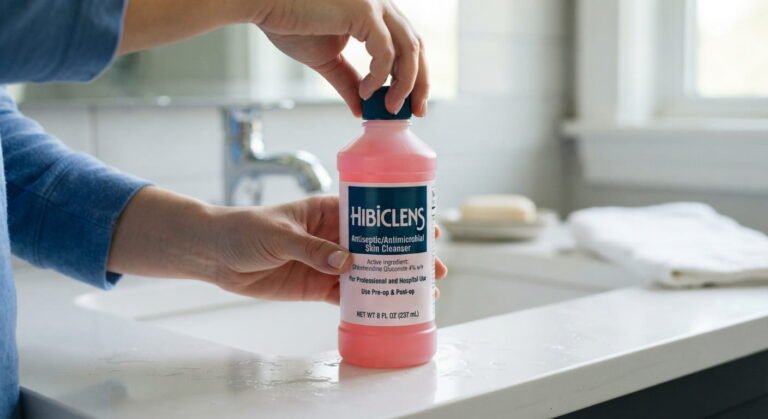
Medical grade skincare generally refers to products positioned between conventional over-the-counter cosmetics and prescription treatments. These products often focus on concentrated active ingredients and are commonly recommended or sold through dermatology practices, medical spas, and professional skincare providers.
But is medical grade skincare really better than ordinary skincare? Which ingredients should you look for? And do you actually need it?
This guide explains what medical grade skincare means, its potential benefits, commonly used ingredients, possible drawbacks, and how to create a practical routine.
What Is Medical Grade Skincare?
Medical grade skincare is a term commonly used in the beauty and dermatology industry for products formulated with active ingredients intended to provide more targeted skin benefits than basic cosmetic products.
The term itself does not have one universally standardized legal definition. Therefore, a product being labeled “medical grade” does not automatically mean that it is medically superior to every over-the-counter alternative.
What matters more is the ingredient, concentration, formulation, evidence, and suitability for your skin.
Medical grade products may target concerns such as:
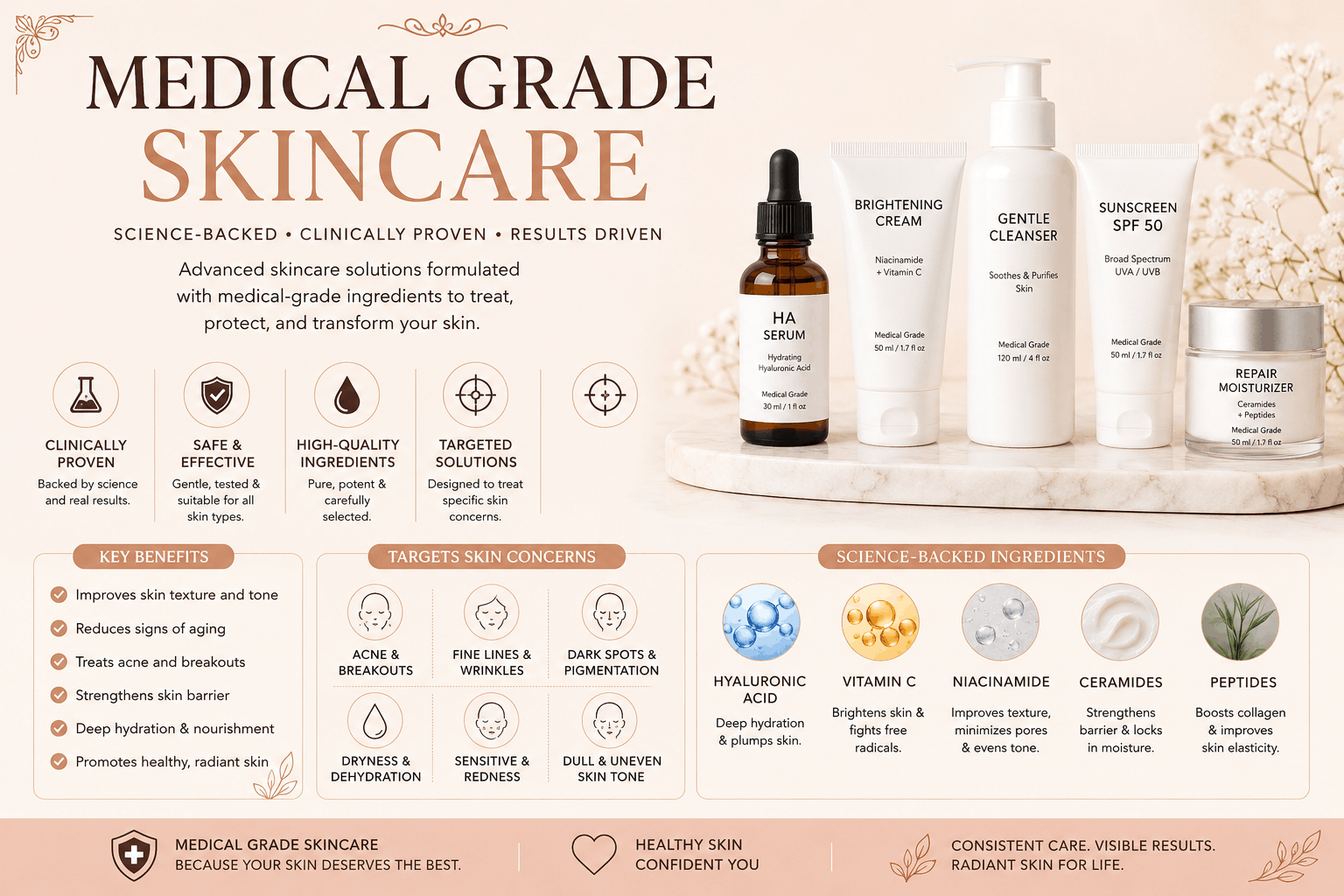
- Fine lines and wrinkles
- Uneven skin tone
- Hyperpigmentation
- Acne
- Dryness
- Sun-related skin changes
- Rough texture
- Dull-looking skin
- Loss of firmness
Some are available without a prescription, while others may contain ingredients or strengths that require professional guidance.
How Is Medical Grade Skincare Different?
The biggest difference is usually not the label but the formulation and intended use.
Traditional cosmetic skincare often focuses on cleansing, moisturizing, fragrance, appearance, and general skin conditioning. More advanced formulations may contain active ingredients designed to target particular concerns.
For example, a routine may include:
- Antioxidants to help protect against environmental stress
- Retinoids or retinol for skin renewal
- Vitamin C for antioxidant support and uneven tone
- Niacinamide for barrier and oil-management benefits
- Alpha hydroxy acids for exfoliation
- Salicylic acid for acne-prone skin
- Ceramides for supporting the skin barrier
- Sunscreen for UV protection
However, a higher price or professional branding does not necessarily guarantee better results.
Benefits of Medical Grade Skincare
When properly selected, active skincare can provide several useful benefits.
1. Targets Specific Skin Concerns
Instead of using a generic moisturizer for everything, targeted formulations can focus on individual concerns such as acne, pigmentation, or signs of aging.
This makes it easier to create a routine around your skin’s specific needs.
2. Supports a More Consistent Routine
A professional skincare routine does not need to contain ten or fifteen products. In many cases, a few well-selected products can provide a stronger foundation.
A simple routine may include:
- Gentle cleanser
- Targeted treatment
- Moisturizer
- Broad-spectrum sunscreen
Consistency is often more important than constantly changing products.
3. May Improve Skin Texture
Ingredients such as retinoids and exfoliating acids can encourage skin renewal and help improve the appearance of uneven texture over time.
Because these ingredients can sometimes cause irritation, they should be introduced gradually.
4. Helps Address Uneven Skin Tone
Vitamin C, niacinamide, retinoids, and certain exfoliating ingredients may help improve the appearance of discoloration when used appropriately.
Daily sunscreen is particularly important because UV exposure can worsen pigmentation.
5. Supports Long-Term Skin Health
Skincare is not only about correcting existing problems. Protecting the skin barrier and reducing unnecessary UV exposure can also support healthier-looking skin over time.
Common Ingredients in Medical Grade Skincare
Understanding ingredients is more useful than simply choosing products based on marketing claims.
Retinoids and Retinol
Retinoids are vitamin A derivatives widely used in dermatology and skincare.
They can help with:
- Fine lines
- Uneven texture
- Acne
- Skin renewal
- Some forms of pigmentation
Retinoids can cause dryness, peeling, or irritation, particularly when first introduced. Start slowly and use moisturizer and sunscreen consistently.
Vitamin C
Vitamin C is a popular antioxidant used in many advanced skincare formulas.
It may help:
- Brighten the appearance of skin
- Support a more even-looking complexion
- Protect against oxidative stress
- Complement daily sunscreen
Different vitamin C formulations vary considerably in stability and effectiveness, so formulation matters.
Niacinamide
Niacinamide, also called vitamin B3, is a versatile skincare ingredient.
It may support:
- Skin barrier function
- Oil control
- More even-looking skin tone
- Reduced appearance of redness
- Overall skin texture
It is often well tolerated, making it useful for many skincare routines.
Hyaluronic Acid
Hyaluronic acid is a humectant that helps attract and retain water.
It is commonly used in products designed to provide:
- Hydration
- Softer-feeling skin
- A smoother appearance
- Reduced feeling of dryness
It can be combined with moisturizers and other active ingredients.
Alpha Hydroxy Acids
AHAs such as glycolic and lactic acid exfoliate the surface of the skin.
They may help improve the appearance of:
- Dullness
- Rough texture
- Uneven tone
- Fine lines
Overuse can damage the skin barrier and increase irritation, so exfoliation should be approached carefully.
Salicylic Acid
Salicylic acid is a beta hydroxy acid commonly used for oily and acne-prone skin.
It can help remove excess oil and dead skin cells from pores, making it a popular ingredient in acne-focused products.
Medical Grade Skincare for Different Skin Types
There is no single routine that works for everyone. Your skin type and concerns should influence your product choices.
For Dry Skin
Focus on hydration and barrier support.
Look for ingredients such as:
- Ceramides
- Glycerin
- Hyaluronic acid
- Squalane
- Gentle moisturizing agents
Avoid excessive exfoliation, particularly if your skin is already irritated or peeling.
For Oily Skin
A lightweight routine may be more comfortable.
Ingredients such as niacinamide and salicylic acid can be useful for some people with oily or acne-prone skin.
However, completely stripping oil from the skin can increase dryness and irritation.
For Sensitive Skin
Keep the routine simple.
Choose gentle cleansers, fragrance-free moisturizers, and carefully selected active ingredients. Introduce one new active at a time so you can identify irritation more easily.
For Acne-Prone Skin
Acne routines may include ingredients such as salicylic acid, benzoyl peroxide, retinoids, or other dermatologist-recommended treatments.
Persistent, painful, or scarring acne deserves professional evaluation rather than relying exclusively on cosmetic skincare.
For Mature Skin
A routine may focus on sunscreen, hydration, antioxidants, and retinoids or other evidence-based ingredients appropriate for the individual.
The goal should be healthier-looking skin rather than trying to completely eliminate natural signs of aging.
How to Build a Medical Grade Skincare Routine
A complicated routine is not necessarily a better routine.
Morning Routine
A practical morning routine can be:
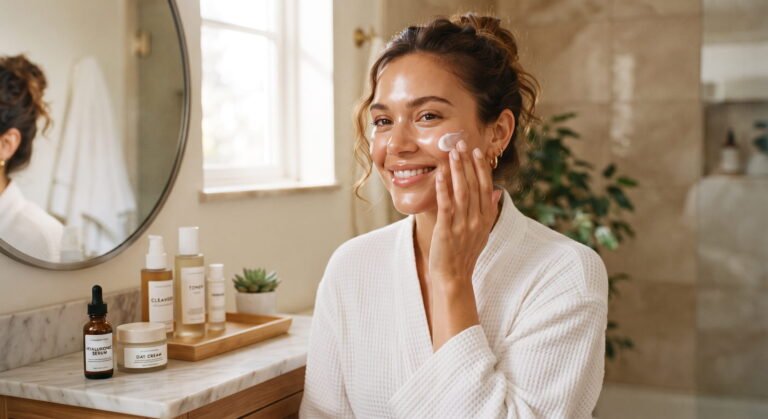
Cleanser → Treatment/Antioxidant → Moisturizer → Sunscreen
Vitamin C or niacinamide may be incorporated depending on your skin goals.
Evening Routine
An evening routine might be:
Cleanser → Targeted Treatment → Moisturizer
If using a retinoid, introduce it gradually rather than immediately applying it every night.
Sunscreen Is Essential
No advanced skincare routine is complete without sun protection.
UV exposure contributes to premature skin aging and can worsen pigmentation. A broad-spectrum sunscreen with appropriate SPF should be applied every morning and reapplied when necessary based on outdoor exposure.
This is especially important when using exfoliating acids or retinoid-based products.
Can Medical Grade Skincare Treat Acne?
Some professional skincare products can support acne management, but skincare is not always enough.
Mild acne may respond to ingredients such as salicylic acid or benzoyl peroxide. Retinoids can also play an important role in acne treatment.
If acne is severe, painful, persistent, or leaving scars, a dermatologist can determine whether prescription treatment or another medical approach is appropriate.
Can It Help With Hyperpigmentation?
Yes, certain ingredients may improve the appearance of uneven pigmentation.
Common options include:
- Vitamin C
- Niacinamide
- Retinoids
- Alpha hydroxy acids
- Azelaic acid
- Prescription treatments when appropriate
The most important step is still controlling UV exposure. Without consistent sun protection, pigmentation can be difficult to manage.
Possible Side Effects
Active skincare products can be effective, but stronger does not always mean better.
Possible reactions include:
- Dryness
- Redness
- Burning
- Peeling
- Increased sensitivity
- Irritation
- Breakouts after introducing certain products
Using several powerful ingredients simultaneously can make irritation more likely.
A good approach is to introduce products gradually and avoid changing the entire routine at once.
Who Should Consider Professional Guidance?
Professional advice can be especially useful if you have:
- Persistent acne
- Significant pigmentation
- Severe sensitivity
- Rosacea-like symptoms
- Eczema
- Scarring
- Unexplained skin changes
- A history of allergic reactions to skincare products
A dermatologist can help distinguish between a cosmetic concern and a medical skin condition and recommend appropriate treatment.
Is Medical Grade Skincare Worth the Money?
It can be—but not simply because the product carries a “medical grade” label.
A more useful way to evaluate a product is to ask:
What active ingredient does it contain?
Is there evidence supporting that ingredient?
Is the formulation appropriate for my skin?
Can I use it consistently without irritation?
Does it fit my actual skincare goals?
An affordable product with a well-formulated, evidence-supported ingredient can sometimes be a better choice than a very expensive product with impressive marketing.
Common Mistakes to Avoid
Using Too Many Actives
Combining retinoids, multiple acids, strong vitamin C products, and other treatments can overwhelm the skin.
Skipping Sunscreen
Treating pigmentation or signs of aging without protecting the skin from UV exposure can undermine your efforts.
Expecting Overnight Results
Most skincare ingredients require consistent use over time. Results vary depending on the ingredient, concentration, skin condition, and individual response.
Copying Someone Else’s Routine
A product that works beautifully for one person may irritate another person’s skin.
Ignoring the Skin Barrier
Redness, excessive dryness, burning, and persistent peeling can indicate that your routine needs to be simplified.
Final Thoughts
Medical grade skincare can be a valuable part of a well-designed skincare routine, particularly when products contain evidence-supported active ingredients selected for specific concerns. However, the “medical grade” label alone should not determine whether a product is right for you.
Start with the basics: gentle cleansing, appropriate moisturization, targeted treatment, and consistent sun protection. Add stronger active ingredients gradually and consider professional guidance when dealing with persistent or complex skin problems.
The best skincare routine is not necessarily the most expensive or complicated one—it is the one that suits your skin, addresses your concerns, and can be followed consistently.
Frequently Asked Questions
1. What is medical grade skincare?
Medical grade skincare generally refers to professional or dermatologist-oriented skincare products containing active ingredients designed to address specific skin concerns.
2. Is medical grade skincare better than drugstore skincare?
Not automatically. Product quality depends on its ingredients, formulation, evidence, and suitability for your skin rather than the label alone.
3. Can medical grade skincare help acne?
Certain active ingredients can help manage acne, but moderate or severe acne may require professional evaluation and prescription treatment.
4. Can it remove dark spots?
Ingredients such as vitamin C, niacinamide, retinoids, and azelaic acid may help improve the appearance of pigmentation. Consistent sunscreen is also essential.
5. Can beginners use medical grade skincare?
Yes, but beginners should start with a simple routine and introduce active ingredients gradually to reduce the risk of irritation.
6. Is retinol medical grade skincare?
Retinol is a vitamin A derivative commonly used in skincare. Whether a particular retinol product is considered “medical grade” depends on how the term is being used by the seller or provider.
7. How long does medical grade skincare take to work?
Results vary by product and skin concern. Some improvements may appear within weeks, while concerns such as pigmentation, acne, and fine lines may require longer consistent use.
8. Can sensitive skin use active skincare?
Yes, but sensitive skin generally benefits from gentle formulations and slower introduction of active ingredients.
9. Do I need a dermatologist?
You may benefit from professional advice if you have persistent acne, severe pigmentation, unexplained rashes, scarring, or significant irritation.
10. What is the most important skincare product?
For everyday skin protection, a broad-spectrum sunscreen is one of the most important products to include in a routine, alongside a suitable cleanser and moisturizer.