Skin Barrier Repair: How to Protect, and Maintain Healthy Skin
Introduction
Healthy skin depends on more than cleansers, moisturizers, and serums. One of its most important protective features is the skin barrier, which helps retain moisture and defend against irritants, allergens, and environmental stressors. When this barrier becomes weakened, the skin may feel tight, appear red, become flaky, or react to products that previously caused no problems.
Skin barrier damage can develop from excessive exfoliation, harsh cleansers, overuse of active ingredients, cold weather, or certain skin conditions. Fortunately, many cases of irritation improve when the skincare routine is simplified and the skin receives consistent, gentle care.
Understanding how the barrier works makes it easier to choose suitable products and avoid habits that interfere with recovery. This guide explains the signs of barrier damage, common causes, effective repair strategies, helpful ingredients, and ways to maintain healthier skin over time.
What Is the Skin Barrier?
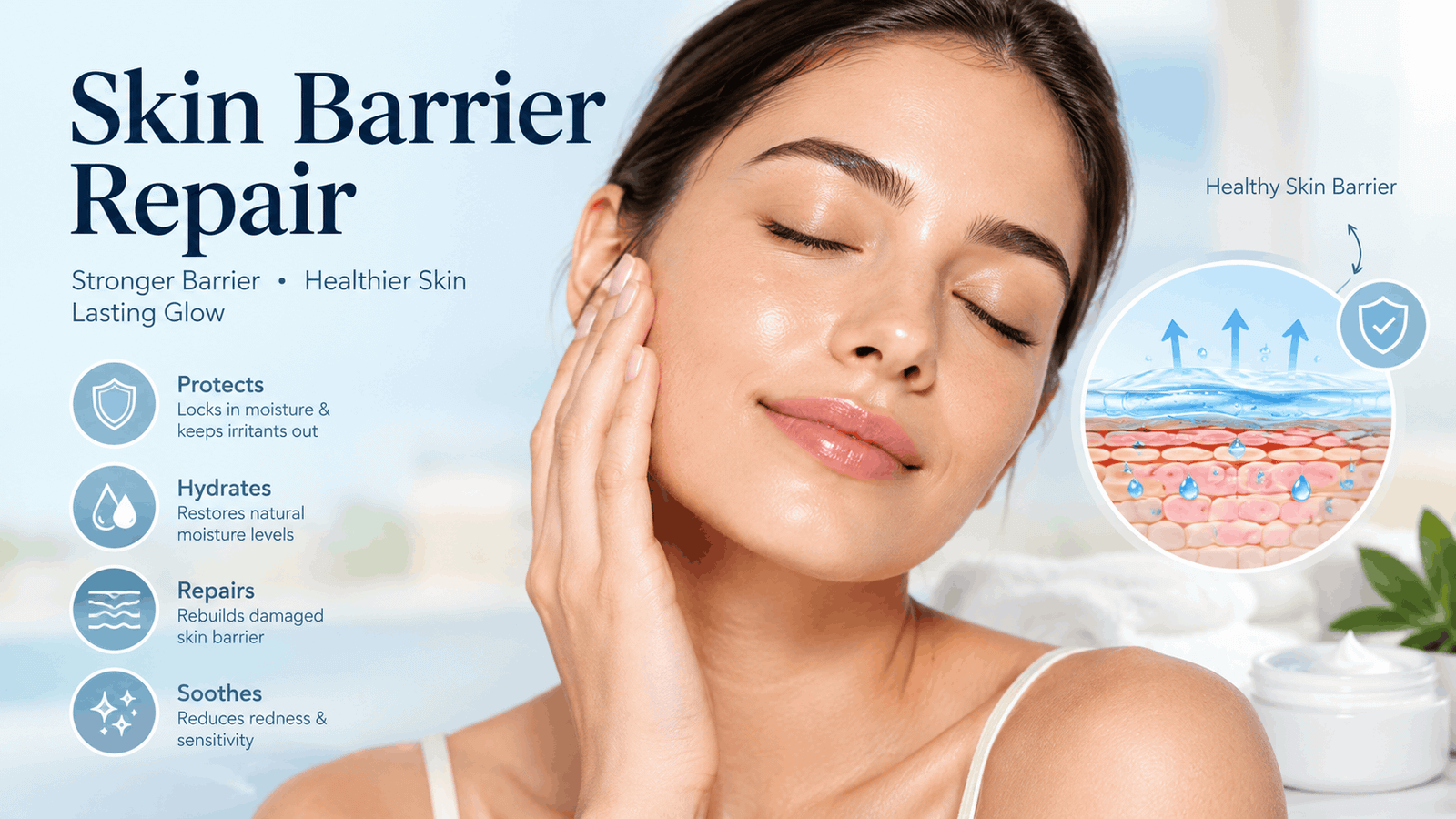
The skin barrier is the outermost protective layer of the skin, primarily associated with the stratum corneum. It consists of skin cells surrounded by lipids, including ceramides, cholesterol, and fatty acids.
A simple comparison is a brick wall: skin cells act like bricks, while the lipids between them function like mortar. Together, these structures help limit water loss and reduce the penetration of potentially irritating substances.
A healthy barrier performs several important functions:
- Helps retain moisture.
- Protects against environmental irritants.
- Supports normal skin comfort.
- Helps reduce excessive water loss.
- Contributes to the skin’s natural defense against external stressors.
When this protective structure is disrupted, the skin may become dry, sensitive, inflamed, and more vulnerable to irritation.
What Does a Damaged Skin Barrier Look Like?
Barrier impairment does not always produce the same symptoms. Some people experience dryness and flaking, while others develop redness, burning, or increased sensitivity.
1. Persistent Dryness
Skin may feel rough, tight, or uncomfortable, especially after washing. Ordinary moisturizers may seem less effective because water escapes from the skin more readily.
2. Redness and Irritation
The affected areas may appear pink or red and feel irritated. The cheeks, around the nose, and areas exposed to strong skincare products may be particularly uncomfortable.
3. Stinging or Burning
Products that were previously well tolerated may suddenly cause stinging. Even water can feel uncomfortable when the skin is significantly inflamed.
4. Flaking and Peeling
The surface may develop visible flakes or small areas of peeling. This can occur after overusing exfoliating acids, retinoids, or other irritating products.
5. Increased Sensitivity
The skin may react more easily to fragrances, cosmetics, cleansers, or changes in temperature.
6. Rough or Uneven Texture
When moisture levels decrease and irritation develops, the skin can feel rough and look less smooth.
7. Itching or Tightness
Some people experience itching or a stretched sensation, particularly after cleansing or exposure to dry weather.
These symptoms are not exclusive to barrier damage. Eczema, rosacea, contact dermatitis, infections, and other conditions can cause similar changes. Persistent or severe symptoms deserve medical assessment.
What Causes Skin Barrier Damage?
Several everyday habits and underlying conditions can interfere with the skin’s protective function.
Over-Exfoliation
Using exfoliating acids, scrubs, or peeling products too frequently can irritate the outer skin layer. Combining several exfoliating products may increase the risk.
Excessive Use of Retinoids
Retinol, tretinoin, and related ingredients can cause dryness, peeling, redness, and irritation, particularly when introduced too quickly or used more often than the skin can tolerate.
These ingredients are not inherently harmful, but application frequency and formulation matter.
Harsh Cleansers
Strong detergents, heavily fragranced cleansers, and frequent washing can remove surface lipids and worsen dryness.
Washing the face repeatedly throughout the day may also contribute to irritation.
Hot Water
Very hot water can increase dryness and discomfort. Lukewarm water is generally a better choice for sensitive or irritated skin.
Environmental Conditions
Cold weather, low humidity, wind, and excessive indoor heating can increase moisture loss and aggravate dryness.
Excessive Sun Exposure
Ultraviolet radiation can damage skin cells and contribute to inflammation and premature skin aging. Regular sun protection helps reduce this additional stress.
Fragrances and Irritating Ingredients
Some people react to fragrance, essential oils, certain preservatives, or other cosmetic ingredients. Repeated exposure can aggravate sensitive skin.
Underlying Skin Conditions
Atopic dermatitis, rosacea, seborrheic dermatitis, and contact dermatitis can cause symptoms that resemble barrier damage. These conditions may require targeted treatment rather than moisturizers alone.
How to Repair the Skin Barrier
The main goals are to reduce irritation, restore moisture, support the skin’s natural lipid structure, and prevent further damage. Recovery time varies according to the cause and severity.
1. Simplify Your Skincare Routine
Start by removing unnecessary products. A basic routine usually includes a gentle cleanser, a fragrance-free moisturizer, and sunscreen during the day.
Temporarily pause products that cause burning or significant irritation, including exfoliating acids, scrubs, strong retinoids, and unnecessary treatment serums.
Once the skin becomes comfortable, products can be reintroduced gradually when appropriate.
2. Use a Gentle Cleanser
Choose a mild, fragrance-free cleanser designed for sensitive skin. Avoid products that leave the face feeling tight or squeaky clean.
Cleanse with lukewarm water and use your fingertips rather than abrasive tools. In the morning, some people with very dry skin may find that rinsing with water is sufficient.
After washing, pat the skin dry instead of rubbing it with a towel.
3. Apply Moisturizer Regularly
Moisturizing is one of the most useful steps in supporting a weakened barrier. A suitable moisturizer reduces water loss and helps keep the outer skin layer flexible.
Apply it after cleansing while the skin is slightly damp. Repeat as needed, especially when the skin feels tight or dry.
Look for formulas that combine humectants, emollients, and occlusives.
- Humectants attract and hold water, helping improve hydration.
- Emollients soften rough areas and improve skin feel.
- Occlusives form a protective layer that reduces moisture loss.
A moisturizer containing several of these types of ingredients may offer more comprehensive hydration than a product that focuses on only one.
4. Consider Ceramide-Based Products
Ceramides are lipids naturally found in the skin’s outer layer. Moisturizers containing ceramides can help support the barrier and improve dryness.
Formulas that combine ceramides with cholesterol and fatty acids may more closely reflect important components of the skin’s natural lipid structure.
However, no single ingredient guarantees rapid recovery. The overall formulation and consistency of use also matter.
5. Use Petrolatum for Very Dry Areas
Petrolatum is an effective occlusive ingredient that reduces water loss. A thin layer can be useful on very dry patches, particularly at night.
It may be applied over moisturizer to help seal in hydration. People prone to certain types of acne or folliculitis should monitor how their skin responds and seek individualized advice if needed.
6. Wear Sunscreen
Choose a broad-spectrum sunscreen with SPF 30 or higher during daytime exposure. If sunscreen stings, try a fragrance-free formula intended for sensitive skin.
Mineral sunscreens containing zinc oxide or titanium dioxide may be more comfortable for some individuals, although tolerance varies.
Sun protection helps prevent additional UV-related inflammation while the skin recovers.
7. Avoid Picking and Scrubbing
Do not peel loose skin, scrub flaky areas, or use cleansing brushes on irritated skin. These actions can prolong inflammation and create additional damage.
Allow the surface to recover naturally while maintaining gentle cleansing and moisturizing.
Best Ingredients for Skin Barrier Repair
Ingredient selection should be based on skin type, sensitivity, and the specific problem being treated.
Ceramides
Ceramides help support the lipid structure of the outer skin layer. They are frequently included in moisturizers formulated for dry or sensitive skin.
Glycerin
Glycerin is a humectant that attracts water and helps improve skin hydration. It is commonly found in lotions, creams, and facial moisturizers.
Hyaluronic Acid
Hyaluronic acid helps attract and retain water in the skin. It can improve the feeling of hydration, especially when followed by a moisturizer that reduces water loss.
A hyaluronic acid serum alone may not be sufficient for very dry skin.
Petrolatum
Petrolatum reduces transepidermal water loss by forming a protective layer. It can be particularly helpful for severely dry or cracked areas when used appropriately.
Dimethicone
Dimethicone is a skin-protective ingredient that helps smooth the surface and reduce moisture loss. It is found in many moisturizers and barrier creams.
Panthenol
Panthenol, also known as provitamin B5, is used in skincare to support hydration and soothe dry or irritated skin.
Colloidal Oatmeal
Colloidal oatmeal can help soothe itching and discomfort associated with some forms of dry skin. It is used in products designed for sensitive or eczema-prone skin.
People with an oat allergy should check product ingredients and seek professional advice when uncertain.
Niacinamide
Niacinamide is a form of vitamin B3 that can support skin barrier function and help improve uneven tone. Lower concentrations may be better tolerated by some sensitive individuals, although irritation can still occur.
If a product causes persistent burning or redness, stop using it.
Ingredients to Avoid During Recovery
When the skin is inflamed, adding more treatment products may make symptoms worse. Consider temporarily avoiding ingredients that cause irritation.
Strong Exfoliating Acids
Glycolic acid, lactic acid, and salicylic acid can be useful for certain skin concerns, but frequent use may aggravate an already irritated barrier.
Retinoids
Retinol and prescription retinoids may cause dryness and peeling. If symptoms develop, discuss whether to pause or adjust treatment with your healthcare professional, especially when using a prescription product.
Physical Scrubs
Scrubs containing rough particles can create friction and worsen redness or discomfort.
Strong Cleansers
Products that leave the skin tight or dry may interfere with comfort and hydration.
Fragrance and Essential Oils
Fragrances and some essential oils can irritate sensitive skin or cause allergic contact dermatitis in susceptible individuals.
Multiple New Products at Once
Introducing several products together makes it difficult to identify which ingredient is causing a reaction. During recovery, a simpler routine is usually easier to tolerate.
A Simple Skin Barrier Repair Routine
A practical routine should focus on comfort and consistency rather than using many products.
Morning Routine
Step 1: Gentle cleansing
Rinse with lukewarm water or use a mild cleanser if needed.
Step 2: Moisturizer
Apply a fragrance-free cream or lotion that suits your skin type.
Step 3: Sunscreen
Finish with broad-spectrum SPF 30 or higher.
Evening Routine
Step 1: Remove sunscreen and makeup
Use a gentle cleanser that removes products without leaving the skin tight. Avoid aggressive rubbing.
Step 2: Apply moisturizer
Use a generous but comfortable layer over the face and neck.
Step 3: Protect dry areas if needed
For very dry patches, a small amount of petrolatum may help reduce moisture loss.
During recovery, there is generally no need to add exfoliants, masks, or multiple serums. Keep the routine stable until irritation settles.
How Long Does Skin Barrier Repair Take?
Recovery depends on the severity of irritation, the underlying cause, and whether the damaging trigger is removed.
Mild dryness caused by over-cleansing may improve within several days of gentle care. More significant irritation may take a few weeks or longer to settle.
Chronic conditions such as eczema or rosacea may require ongoing treatment and maintenance rather than a one-time repair routine.
If symptoms are not improving after one to two weeks of gentle care, or if they repeatedly return, consult a dermatologist. Seek care sooner if you experience severe pain, swelling, blistering, spreading redness, pus, or signs of infection.
Skin Barrier Repair for Different Skin Types
Dry Skin
Dry skin often benefits from a richer cream containing humectants, emollients, and occlusives. Reapply moisturizer when necessary and avoid long, hot showers.
Oily Skin
Oily skin can still experience barrier impairment. Choose a lightweight, fragrance-free moisturizer that provides sufficient hydration without feeling excessively heavy.
Avoid repeatedly washing away oil, as aggressive cleansing can worsen irritation.
Combination Skin
Use a balanced moisturizer across the face and adjust the amount according to how different areas feel. Drier areas may need a richer cream, while oilier areas may tolerate a lighter lotion.
Sensitive Skin
Choose simple formulas without unnecessary fragrance or harsh exfoliating ingredients. Introduce new products one at a time and discontinue anything that causes persistent irritation.
Acne-Prone Skin
Avoid assuming that every dry or flaky area needs stronger acne treatment. Overusing acne medications can increase irritation.
A suitable non-comedogenic moisturizer may help maintain comfort. If acne treatments are prescribed, ask your clinician how to adjust them when irritation develops.
Common Mistakes That Delay Recovery
Even well-intentioned skincare habits can prolong irritation.
- Continuing exfoliation despite burning: This may worsen inflammation.
- Using too many active ingredients: Multiple treatments can make the cause of irritation difficult to identify.
- Skipping moisturizer: Insufficient hydration may leave dry skin uncomfortable.
- Changing products too frequently: Constant experimentation can expose sensitive skin to more potential irritants.
- Using very hot water: Excessive heat may increase dryness.
- Expecting overnight results: The skin needs time to recover, and improvement may be gradual.
- Ignoring underlying conditions: Persistent symptoms may require medical diagnosis and targeted treatment.
A simple routine, consistent moisturizer use, and avoidance of known triggers are often more helpful than adding numerous products.
Lifestyle Habits That Support Healthy Skin
Skincare products are only one part of maintaining healthy skin.
Stay Hydrated
Drink enough fluids to meet your body’s needs. Drinking excessive amounts of water does not automatically repair the skin barrier, but avoiding dehydration supports normal body function.
Eat a Balanced Diet
Include a variety of foods containing protein, essential fats, vitamins, and minerals. Nutritional deficiencies can affect skin health, but supplements are not necessary for everyone.
Get Adequate Sleep
Regular sleep supports general health and may help the body maintain normal repair processes.
Manage Environmental Exposure
Use appropriate protection in cold, windy, or very dry conditions. A humidifier may improve comfort in an excessively dry indoor environment if maintained and cleaned properly.
Avoid Smoking
Smoking contributes to skin aging and can negatively affect overall skin health. Avoiding tobacco is beneficial for long-term health.
When to See a Dermatologist
Not every case of redness, dryness, or stinging is caused by a damaged barrier. A dermatologist can assess whether another condition is responsible.
Seek professional advice if you experience persistent redness, severe itching, recurring peeling, painful cracks, swelling, blisters, or symptoms that do not improve with gentle skincare.
Medical assessment is particularly important if the skin develops pus, increasing warmth, spreading redness, fever, or significant pain.
Avoid applying prescription steroid creams, antibiotics, or antifungal medicines without appropriate guidance. The wrong treatment can worsen certain skin conditions or delay the correct diagnosis.
Conclusion
Skin barrier repair begins with protecting the outer layer of the skin, reducing irritation, and restoring moisture. A gentle cleanser, a well-formulated moisturizer, and daily sun protection provide a practical foundation for recovery.
Ingredients such as ceramides, glycerin, petrolatum, dimethicone, and panthenol may help support hydration and barrier function. However, the best approach depends on the individual’s skin type, sensitivity, and underlying condition.
Avoid aggressive exfoliation, introduce new products gradually, and give the skin time to recover. If symptoms are severe, persistent, or repeatedly return, professional evaluation can help identify the cause and guide appropriate treatment.
Frequently Asked Questions (FAQs)
1. What is skin barrier repair?
Skin barrier repair refers to supporting the skin’s outer protective layer so it can retain moisture and better tolerate environmental exposure. It usually involves gentle cleansing, regular moisturizing, and avoiding irritating products.
2. How can I tell if my skin barrier is damaged?
Common signs include dryness, tightness, flaking, redness, itching, burning, and increased sensitivity to skincare products. These symptoms can also occur with eczema, rosacea, and contact dermatitis.
3. How long does it take to repair the skin barrier?
Mild irritation may improve within several days, while more significant damage can take weeks or longer. Persistent symptoms may indicate an underlying condition that needs professional treatment.
4. Which ingredients are best for skin barrier repair?
Ceramides, glycerin, petrolatum, dimethicone, panthenol, and suitable moisturizers containing hyaluronic acid may help support hydration and reduce moisture loss.
5. Should I stop using retinol if my skin barrier is damaged?
If retinol causes burning, marked redness, or peeling, pause it until the irritation settles and review the routine. If you use prescription retinoids, consult your prescribing clinician before making long-term changes.
6. Can oily skin have a damaged skin barrier?
Yes. Oily skin can become irritated and dehydrated due to harsh cleansers, excessive exfoliation, or acne treatments. A suitable moisturizer can help support the barrier without necessarily making the skin feel greasy.
7. Is hyaluronic acid enough to repair the skin barrier?
Hyaluronic acid can improve hydration, but it does not replace every component needed for barrier support. Pairing it with an appropriate moisturizer can help reduce moisture loss.
8. Should I exfoliate while repairing my skin barrier?
Avoid exfoliating acids and physical scrubs while the skin is actively irritated. Once the skin has recovered, exfoliation may be reintroduced gradually if appropriate for your skin and concerns.
9. Can sunscreen help protect a damaged skin barrier?
Sunscreen helps protect against ultraviolet radiation, which can contribute to skin damage and inflammation. Choose a broad-spectrum SPF 30 or higher that your skin tolerates comfortably.
10. When should I see a dermatologist for skin barrier problems?
Seek professional advice if symptoms are severe, repeatedly return, or fail to improve after one to two weeks of gentle care. Severe pain, blistering, spreading redness, pus, or fever warrants prompt medical assessment.