Fragrance Free Moisturizer for Itchy Skin: A Complete Guide
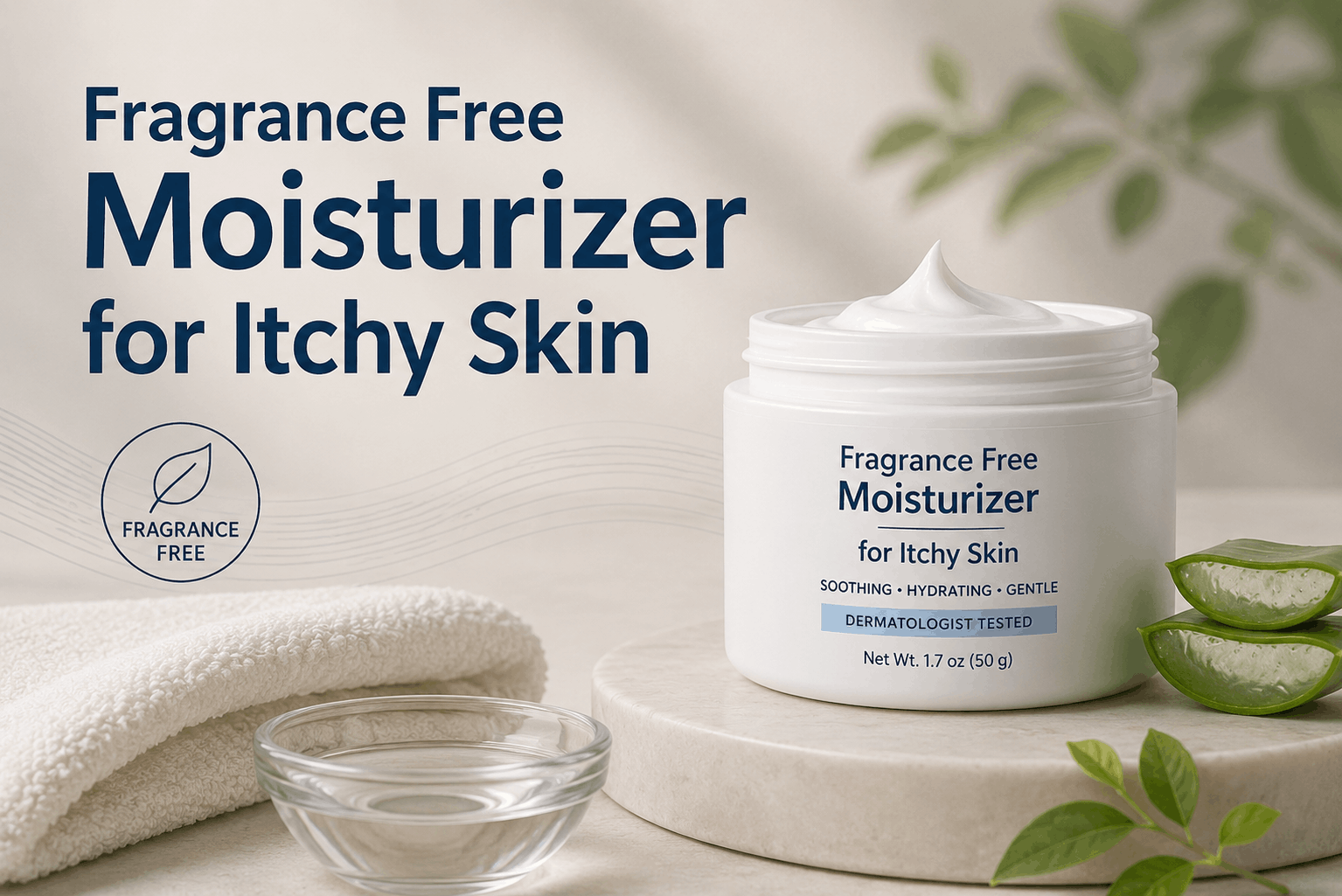
Itchy skin can be uncomfortable, distracting, and sometimes difficult to manage. When the skin becomes dry or irritated, scratching may provide temporary relief but can further damage the skin barrier. One simple step that can help is choosing the right fragrance free moisturizer for itchy skin.
Fragrance-free moisturizers are especially useful for people with dry, sensitive, or eczema-prone skin because fragrances can irritate already sensitive skin. Dermatologists commonly recommend fragrance-free creams or ointments rather than heavily scented products for people experiencing dryness and itching.
A good moisturizer does more than make the skin feel soft. It helps trap moisture, support the skin barrier, and reduce the dryness that can contribute to itching.
What Is a Fragrance Free Moisturizer?
A fragrance-free moisturizer is a moisturizing product formulated without added fragrance ingredients.
It is important to understand the difference between fragrance-free and unscented. A product labeled “unscented” may still contain fragrance ingredients that are used to mask the natural smell of other ingredients. For sensitive or eczema-prone skin, dermatologists recommend looking specifically for the words “fragrance-free.”
Fragrance-free moisturizers are available as:
- Creams
- Ointments
- Balms
- Lotions
- Facial moisturizers
- Body moisturizers
For very dry or itchy skin, thicker creams and ointments are often preferred because they provide more substantial moisture and barrier protection than lightweight lotions.
Why Does Dry Skin Become Itchy?
When skin loses too much water, it can become dry, rough, cracked, and irritated. A damaged skin barrier allows moisture to escape more easily and can make the skin more vulnerable to irritants.
Dryness is not the only possible cause of itching. Itchy skin can also occur with eczema, psoriasis, hives, insect bites, allergic reactions, fungal infections, and other conditions.
If itching is persistent or accompanied by a significant rash, swelling, pain, or other unusual symptoms, identifying the underlying cause is important.
How Does Moisturizer Help Itchy Skin?
A moisturizer helps replenish and retain water in the outer layers of the skin. This can improve dryness and support the skin barrier.
For eczema-prone skin, the American Academy of Dermatology recommends moisturizing regularly because maintaining hydration can help prevent cracks and worsening irritation.
Using a moisturizer may help:
- Reduce dryness
- Improve rough skin
- Support the skin barrier
- Reduce irritation caused by dryness
- Make skin feel softer
- Reduce the urge to scratch caused by dry skin
However, moisturizer is not a cure for every cause of itching. If itching is caused by an infection, allergy, inflammatory condition, or another medical problem, additional treatment may be necessary.
What to Look for in a Fragrance Free Moisturizer
Choosing a moisturizer can be confusing because there are countless products available. For itchy and sensitive skin, a simple formula is often a good starting point.
1. Fragrance-Free Formula
Look for a product clearly labeled fragrance-free. Avoid assuming that “unscented” means the same thing.
Fragrance can irritate sensitive or eczema-prone skin and may trigger flare-ups in some people.
2. Cream or Ointment Texture
If your skin is very dry and itchy, a cream or ointment may be more useful than a lightweight lotion.
The American Academy of Dermatology specifically recommends fragrance-free creams or ointments for people with atopic dermatitis.
3. Barrier-Supporting Ingredients
Depending on the formula, helpful moisturizing ingredients may include:
- Ceramides
- Glycerin
- Hyaluronic acid
- Petrolatum
- Colloidal oatmeal
- Shea butter
Not every ingredient works equally well for everyone. The most important factors are that the product is gentle, fragrance-free, and comfortable enough for you to use consistently.
4. Minimal Irritating Ingredients
If your skin is extremely sensitive, avoid products with unnecessary fragrance, strong exfoliating ingredients, or other ingredients that have previously caused irritation.
If you repeatedly react to skincare products, a dermatologist can help determine whether an allergy or another skin condition is involved.
Best Way to Apply Moisturizer for Itchy Skin
The timing of moisturizer application matters.
After bathing or showering, gently pat your skin dry instead of rubbing it aggressively. Apply your fragrance-free moisturizer while the skin is still slightly damp. This helps seal moisture into the skin.
A simple routine is:
- Take a lukewarm shower or bath.
- Use a gentle, fragrance-free cleanser when needed.
- Gently pat the skin dry.
- Leave the skin slightly damp.
- Apply a generous layer of fragrance-free moisturizer.
- Reapply whenever the skin becomes dry.
For eczema-prone skin, dermatologists recommend moisturizing regularly rather than waiting until the skin becomes severely dry.
Fragrance Free Moisturizer for Eczema
Eczema can cause dry, itchy, sensitive, and inflamed skin. Moisturizing is an important part of everyday eczema skin care.
People with eczema should generally look for:
- Fragrance-free products
- Creams or ointments
- Gentle formulas
- Products designed for sensitive skin
- Moisturizers that can be used consistently
The American Academy of Dermatology recommends fragrance-free rather than unscented products because “unscented” products can still contain fragrance used to mask odors.
Moisturizer can help manage dryness and support the skin barrier, but moderate or severe eczema may require treatment prescribed by a dermatologist.
Fragrance Free Moisturizer for Sensitive Skin
Sensitive skin can react to fragrances, preservatives, detergents, and other cosmetic ingredients.
If your skin is easily irritated, start with a basic moisturizer rather than a product containing multiple active ingredients. Apply a small amount to an area of skin first when trying a new product.
This is particularly useful if you have experienced reactions to skincare products before.
Can Moisturizer Stop Itching Immediately?
A moisturizer may provide relief when itching is primarily caused by dry skin, but it does not necessarily stop every type of itch immediately.
The American Academy of Dermatology recommends applying a fragrance-free moisturizer when the skin is damp after bathing or whenever itchy skin needs hydration.
If moisturizer alone does not improve the itching, the cause may require additional treatment.
A cool, damp cloth applied to itchy skin for several minutes may also provide temporary relief.
What Should You Avoid When Your Skin Is Itchy?
When skin is itchy, certain habits can make irritation worse.
Try to avoid:
- Heavily fragranced moisturizers
- Perfumed body washes
- Very hot showers
- Scrubbing the skin
- Harsh exfoliation
- Excessive scratching
- Strongly scented laundry products
- Tight or rough clothing
The AAD recommends fragrance-free products and notes that extreme temperatures can worsen itching for some people with eczema.
Fragrance Free Moisturizer vs. Regular Moisturizer
The primary difference is the presence or absence of added fragrance.
A regular moisturizer may contain perfume or fragrance compounds to create a particular scent. These ingredients are not necessary for hydration and may irritate sensitive skin.
A fragrance-free moisturizer focuses on hydration without added fragrance. For people with itchy, sensitive, or eczema-prone skin, this can make it a more suitable choice.
How Often Should You Use a Fragrance Free Moisturizer?
There is no universal number of applications that works for everyone. Very dry skin may need moisturizing several times throughout the day.
A practical approach is to apply moisturizer:
- After bathing
- After washing your hands
- Whenever your skin feels dry
- Before bed
- As recommended by your dermatologist
Consistent use is usually more useful than applying a large amount only occasionally.
Can Fragrance Free Moisturizer Be Used on the Face?
Yes, many fragrance-free moisturizers are suitable for facial skin. However, choose a product appropriate for your skin type.
If you have oily or acne-prone skin, look for a lightweight, non-comedogenic formula. If your face is extremely dry or eczema-prone, a richer cream may be more comfortable.
Avoid applying a new product directly to large irritated areas without first checking how your skin responds.
When Should You See a Dermatologist?
Moisturizer can be very helpful for dry skin, but persistent itching should not always be treated as simple dryness.
Consider seeing a dermatologist if:
- Itching continues despite regular moisturizing
- Your skin develops a persistent rash
- You have significant redness or swelling
- Skin becomes painful or cracked
- There is oozing or crusting
- You develop signs of infection
- The itching is severe or interferes with sleep
- The cause of the itching is unclear
Itchy skin can have many causes, including eczema, psoriasis, hives, infections, and other conditions. Proper diagnosis helps determine the appropriate treatment.
Tips for a Better Moisturizing Routine
For the best results, keep your routine simple and consistent.
Use lukewarm water: Very hot water can worsen dryness for some people.
Moisturize quickly after bathing: Apply moisturizer while your skin is still damp.
Choose fragrance-free: Do not rely on “unscented” labeling alone.
Use enough product: A very thin layer may not provide enough coverage for severely dry skin.
Avoid scratching: Scratching can further irritate the skin and damage the protective barrier.
Keep products simple: Sensitive skin often benefits from gentle skincare rather than complicated routines.
Final Thoughts
Finding the right fragrance free moisturizer for itchy skin can make a meaningful difference when dryness is contributing to discomfort. Fragrance-free creams and ointments are commonly recommended for sensitive and eczema-prone skin because they can provide hydration while minimizing exposure to fragrance, which may irritate some people.
The most effective routine is usually simple: use gentle cleansers, avoid very hot water, moisturize while the skin is damp, and reapply whenever necessary. If itching continues despite good skincare or is accompanied by a persistent rash, pain, swelling, or other concerning changes, consult a dermatologist to determine the underlying cause.
FAQs
1. What is the best moisturizer for itchy skin?
A fragrance-free cream or ointment is generally a good choice for dry, itchy skin, particularly when the skin is sensitive or eczema-prone.
2. Is fragrance-free better than unscented for itchy skin?
Yes. “Fragrance-free” means the product does not contain added fragrance, while “unscented” products may contain fragrance used to mask odors.
3. Can moisturizer reduce itchy skin?
Yes, moisturizer can reduce itching associated with dry skin by improving hydration and supporting the skin barrier. However, it may not treat itching caused by infections or other medical conditions.
4. Should I use lotion or cream for itchy skin?
Creams and ointments are generally preferred for very dry or eczema-prone skin because they provide more substantial moisturization than many lotions.
5. How often should I apply moisturizer?
Apply moisturizer after bathing and whenever your skin feels dry. People with very dry or eczema-prone skin may need to moisturize several times a day.
6. Can I use fragrance-free moisturizer on eczema?
Yes. Fragrance-free moisturizers are commonly recommended as part of eczema skin care. Creams and ointments are often preferred over lotions.
7. Why does my skin itch after using moisturizer?
Your skin may be reacting to an ingredient in the product. Stop using a product that consistently causes burning, worsening redness, or irritation and consider discussing the reaction with a dermatologist.
8. Should I moisturize immediately after showering?
Yes. Applying moisturizer while the skin is still damp can help retain moisture.
9. Can fragrance-free moisturizer be used every day?
Yes. Daily moisturizing is an important part of caring for dry and sensitive skin, and people with eczema may need to moisturize regularly throughout the day.
10. When should itchy skin be checked by a doctor?
See a healthcare professional if itching is persistent, severe, unexplained, or accompanied by a significant rash, pain, swelling, cracking, oozing, or other concerning symptoms.