French Braids: A Complete Guide to Styles, Techniques
Introduction
French braids are a timeless hairstyle that combines elegance, practicality, and versatility. Whether you are getting ready for school, work, a wedding, a casual outing, or a special celebration, this classic braided look can complement almost any occasion. It works on different hair lengths and textures, making it a popular choice for people who want a neat hairstyle without relying on complicated styling tools.
One of the best things about this hairstyle is its flexibility. You can wear a single braid down the back, create two braids for a sporty appearance, or experiment with side braids, messy finishes, and braided updos. With a little practice, you can create beautiful results at home.
In this guide, you will discover how French braiding works, which styles are worth trying, how to create the look step by step, and how to keep your hair healthy while wearing braids.
What Are French Braids?
A French braid is a traditional braiding technique in which three sections of hair are woven together while additional hair is gradually incorporated from the sides. Unlike a basic three-strand braid, which begins with all the hair gathered into three sections, a French braid starts near the crown and follows the shape of the head as more hair is added.
The result is a braid that sits close to the scalp and holds the hair neatly in place. Depending on the technique and tension, it can look sleek and polished or relaxed and slightly messy.
French braids have remained popular because they are practical, attractive, and adaptable. They can be worn by children, teenagers, and adults, and they suit casual outfits as well as formal clothing.
Why Are French Braids So Popular?
There are several reasons this hairstyle continues to be a favorite.
1. They Work for Different Occasions
A French braid can look simple enough for everyday activities while remaining elegant enough for parties and formal gatherings. You can adjust the finish according to the occasion.
2. They Keep Hair Organized
Braiding helps keep loose strands away from the face, making it useful during exercise, studying, traveling, and outdoor activities.
3. They Offer Numerous Styling Options
You can experiment with single braids, double braids, side-swept designs, ponytails, and braided buns without completely changing your basic technique.
4. They Require Few Tools
Most styles can be created with a comb, a few hair elastics, and your hands. Styling products are optional rather than essential.
5. They Can Be Worn on Many Hair Types
Straight, wavy, and curly hair can all be braided. The finished appearance may vary depending on texture, thickness, length, and the amount of layering.
10 Beautiful French Braid Styles to Try
1. Classic French Braid
The classic version begins at the crown and continues down the back of the head. It creates a clean, balanced appearance that works for everyday wear, school, the office, and casual events.
For a smooth finish, gently detangle your hair before starting. Keep the three sections similar in size and add small, even sections as you work downward.
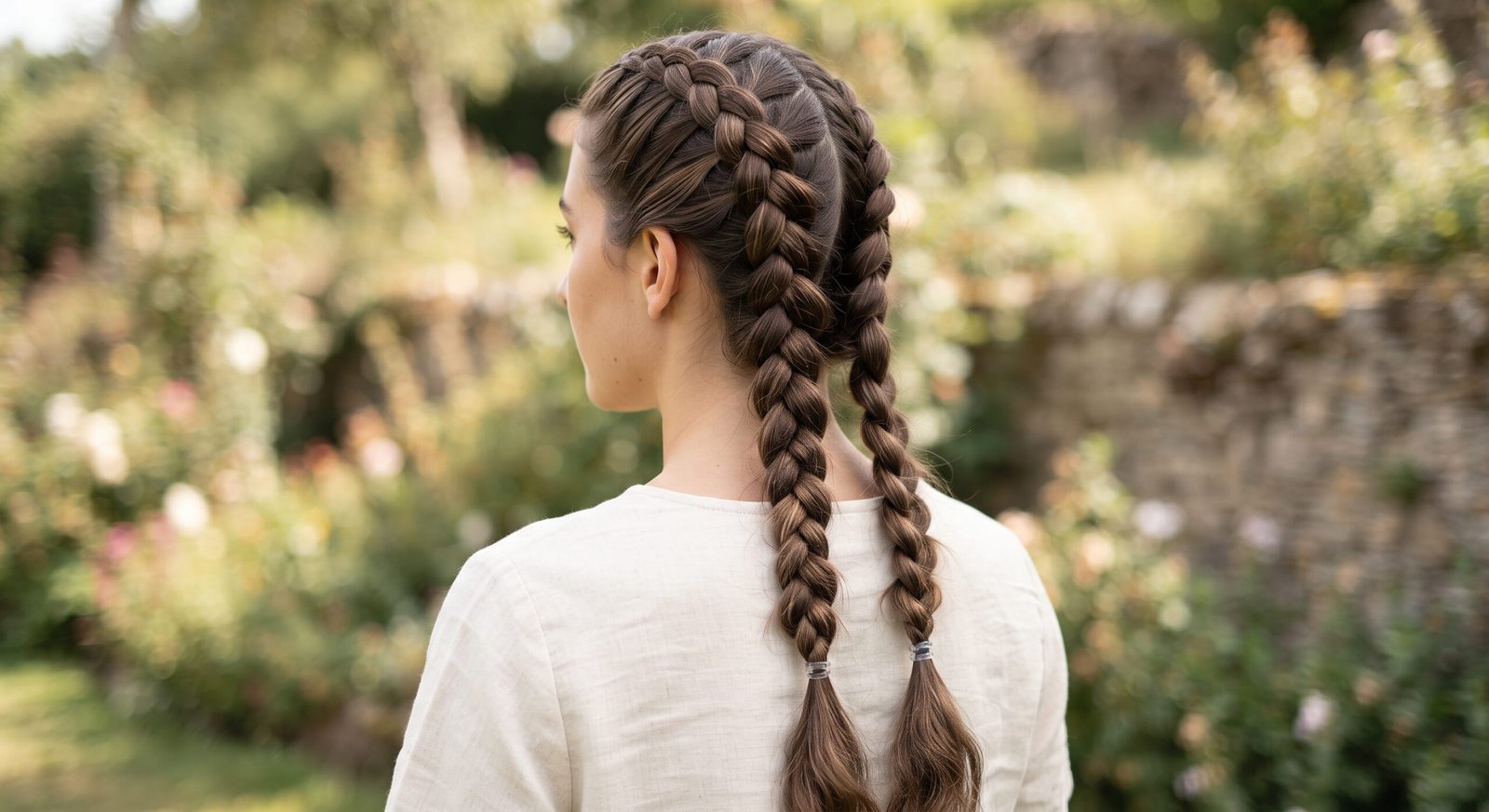
2. Double French Braids
Double braids divide the hair into two sections, creating a braid on each side of the head. This style is popular for sports, workouts, outdoor activities, and casual outfits.
To create the look, part your hair down the middle and secure one side temporarily. Braid the other side from the hairline toward the nape, then repeat on the opposite side.
You can keep both braids tight for a neat finish or loosen them slightly for a softer appearance.
3. Side French Braid
A side braid begins near one temple and travels diagonally across the head. Depending on the design, it can finish behind the opposite ear or continue over one shoulder.
This style is particularly attractive for dinners, parties, and romantic occasions. It also works well when you want a hairstyle that looks more detailed than a standard braid.
4. French Braid Ponytail
This hairstyle combines a braid at the top of the head with a ponytail at the back. You can braid the crown and gather the remaining hair into a high, medium, or low ponytail.
It offers a practical option for people who want their hair secured while still maintaining some movement and volume.
For a more polished appearance, wrap a small strand of hair around the elastic and secure it underneath with a bobby pin.
5. French Braid Bun
A braided bun combines the structure of a French braid with the elegance of an updo. You can begin braiding at the crown and gather the remaining hair into a bun, or create a braid that wraps around the bun itself.
This style is suitable for weddings, formal dinners, celebrations, and professional settings. Use bobby pins to secure the bun without pulling the scalp excessively.
6. Messy French Braid
A messy braid has a relaxed finish with a little extra texture and volume. It is an excellent choice for casual outings and effortless everyday styling.
Start with a regular French braid and secure it with an elastic. Then gently pull the outer edges of the braid to create a fuller appearance.
Avoid pulling too hard, as excessive loosening may cause the braid to unravel.
7. French Braid with Loose Front Pieces
Leaving a few soft strands around the face can create a relaxed and flattering look. This option works especially well for people who prefer a less structured hairstyle.
Begin with a center or side part, leave out a few face-framing sections, and braid the remaining hair. You can curl the loose strands lightly if desired.
8. Half-Up French Braid
A half-up braid gathers hair from the top and sides of the head while leaving the rest loose. It allows you to enjoy the detail of braiding without putting all your hair up.
This style looks lovely on straight, wavy, and curly hair. It is suitable for everyday wear, dates, family gatherings, and special occasions.
For extra detail, create two small French braids that meet at the back of the head and secure them together.
9. French Braids for Short Hair
Short hair can also be styled with French braids, provided there is enough length to weave the sections together. Small side braids, crown braids, and partial braids are particularly useful options.
Hair clips and small elastics can help secure shorter pieces. If your hair has many layers, a light styling cream may help reduce flyaways.
You do not need long hair to enjoy braided styles. Choosing a design suited to your length is the key to achieving a neat result.
10. French Braids for Special Occasions
For weddings, parties, and celebrations, French braids can be combined with curls, decorative pins, ribbons, or delicate accessories.
A braided crown creates a romantic appearance, while a braid incorporated into an updo looks elegant and structured. For a more modern finish, combine a side braid with loose waves.
Choose accessories that do not catch or pull on the hair, especially if you plan to wear the style for several hours.
How to Do a French Braid Step by Step
Learning the basic technique becomes easier when you follow the same sequence each time.
Step 1: Prepare Your Hair
Brush or comb your hair to remove tangles. Slightly textured hair can be easier to control than freshly washed, very slippery hair, although the technique works on clean hair too.
If your hair is curly or coily, gently detangle it using a suitable conditioner or leave-in product before styling.
Step 2: Take Three Sections
Gather a section of hair from the crown and divide it into three approximately equal strands: left, middle, and right.
Hold the sections separately so that they do not become tangled with one another.
Step 3: Begin a Regular Braid
Cross the right strand over the middle strand. Next, cross the left strand over the new middle strand.
This creates the foundation of the braid.
Step 4: Add Hair from the Right Side
Before crossing the right strand over the middle again, gather a small section of loose hair from the right side of your head and combine it with the right strand.
Cross the combined section over the middle.
Step 5: Add Hair from the Left Side
Repeat the same process on the left. Pick up a small section of loose hair, combine it with the left strand, and cross it over the middle.
Keep alternating between the two sides.
Step 6: Continue Down the Head
Continue adding hair as you move toward the nape of your neck. Try to use sections of a similar size so the braid looks balanced.
Keep your hands close to your head, but avoid pulling tightly. Excessive tension can cause discomfort and hair breakage.
Step 7: Finish with a Regular Braid
Once all the loose hair has been incorporated, continue braiding the remaining length using the standard three-strand technique.
Step 8: Secure and Adjust
Tie the end with a soft hair elastic. Smooth any flyaways with your fingers or a small amount of lightweight styling product.
If you prefer a fuller braid, gently loosen its outer edges without pulling the entire style apart.
French Braids vs. Dutch Braids
French and Dutch braids look similar because both involve adding hair as the braid progresses. The main difference is the direction in which the strands cross.
| Feature | French Braid | Dutch Braid |
|---|---|---|
| Technique | Side strands cross over the middle | Side strands cross under the middle |
| Appearance | Usually looks woven into the hair | Usually appears raised above the hair |
| Overall effect | Classic and subtle | Bold and defined |
| Best for | Elegant, everyday styling | Sporty, dramatic, textured styles |
Neither technique is better for everyone. The right choice depends on your preferred appearance and how comfortable you are with each method.
Tips for Making Your Braids Look Better
A few simple adjustments can make a noticeable difference in the finished hairstyle.
Use even sections: Similar-sized sections help create a balanced braid without large gaps.
Keep consistent tension: Try to maintain the same level of tension throughout the hairstyle. Avoid pulling tightly around the temples and hairline.
Practice with slightly damp or textured hair: Extremely slippery hair may be harder to control. Lightly textured hair can provide a little more grip, but avoid braiding hair when it is soaking wet or unusually fragile.
Choose the right elastic: Use a soft elastic that holds the braid securely without snagging the ends.
Use a mirror: If you are learning to braid your own hair, a second mirror can help you see the back of your head.
Be patient: Your first attempts may look uneven. Repeating the same technique will gradually improve your speed and control.
French Braids for Different Hair Types
Straight Hair
Straight hair can produce smooth, defined braids. If your hair slips out of your fingers easily, try a small amount of lightweight texturizing product.
Wavy Hair
Wavy hair adds natural texture and dimension. A slightly relaxed braid can highlight the movement of your hair without requiring extensive styling.
Curly Hair
Curly hair can create full, textured braids. Detangle gently beforehand, work with manageable sections, and use products that help maintain moisture.
Thick Hair
Thick hair often creates substantial braids with plenty of volume. Take your time separating the sections, and consider using a strong but comfortable elastic.
Fine Hair
Fine hair may produce smaller or flatter braids. Avoid heavy products that weigh the hair down, and gently loosen the braid if you want more fullness.
Layered Hair
Shorter layers may escape from the braid, particularly around the face. Small clips or a light styling product can help keep them in place without requiring excessive tension.
How to Maintain Hair Health While Wearing Braids
Braiding is generally a practical styling option, but the way you create and wear a braid matters.
- Avoid excessive tightness: Repeated pulling around the hairline can contribute to breakage and traction alopecia.
- Remove tangles gently: Use your fingers or a suitable comb to detangle the hair before braiding and after taking the style down.
- Do not force fragile hair into a style: If your hair is damaged, breaking, or unusually tender, choose a looser hairstyle.
- Protect your hair overnight: A satin or silk pillowcase or bonnet may reduce friction while sleeping.
- Keep the scalp comfortable: If a braid causes pain, headaches, or persistent pulling, loosen or remove it.
- Clean your scalp regularly: Your washing routine should suit your scalp and hair type. Do not leave a braid in place simply to avoid washing.
- Avoid excessive heat: If you straighten or curl your hair before braiding, use heat protection and limit repeated high-temperature styling.
A French braid is not automatically a protective hairstyle for everyone. Hair health depends on tension, hair condition, scalp health, and how frequently the style is worn.
Common French Braiding Mistakes
Taking Sections That Are Too Large
Large, uneven sections can make the braid look lopsided. Start with manageable sections and add hair gradually.
Changing the Direction of the Strands
Crossing strands over and under the middle inconsistently can produce an uneven result. Remember that a French braid uses the over-the-middle technique.
Pulling Too Tightly
A very tight braid may appear sleek, but it can cause scalp discomfort and damage around the hairline. Aim for a secure yet comfortable hold.
Forgetting to Add Hair Evenly
Adding much more hair on one side than the other can make the braid curve unexpectedly. Alternate between sides and use similar-sized sections.
Rushing the Final Steps
If the braid becomes loose near the nape, the lower portion may look uneven. Maintain a comfortable grip until all the hair has been incorporated.
Conclusion
French braids remain a favorite hairstyle because they are practical, versatile, and suitable for many occasions. From a classic braid to double braids, side-swept designs, half-up styles, and elegant buns, there are plenty of ways to personalize the look.
The secret to creating a beautiful braid is to work with manageable sections, maintain consistent tension, and practice the basic technique. Choosing a style that suits your hair texture and length can make styling easier and more enjoyable.
Most importantly, prioritize comfort and hair health. A braid should keep your hair organized without pulling painfully on your scalp. With patience and the right approach, you can create attractive braided hairstyles at home.
Frequently Asked Questions (FAQs)
1. What are French braids?
French braids are hairstyles created by weaving three strands together while gradually adding hair from the sides. The technique produces a braid that sits close to the scalp.
2. Are French braids easy for beginners?
They can take practice, especially when braiding your own hair. Start with three sections, learn the basic crossing motion, and add small sections gradually.
3. How long does it take to make French braids?
A simple braid may take around 5–15 minutes once you have practiced. Double braids or more elaborate designs can take longer, depending on your hair length and experience.
4. Can you create French braids with short hair?
Yes. Small side braids, partial braids, and crown styles can work with shorter hair, depending on the length and layering.
5. Are French braids suitable for curly hair?
Yes. Curly hair can create full, textured braids. Detangle gently, work in manageable sections, and use a suitable moisturizing product if needed.
6. What is the difference between French and Dutch braids?
In a French braid, the side strands cross over the middle strand. In a Dutch braid, they cross underneath, making the braid appear more raised.
7. How can I make my French braid look fuller?
After securing the braid, gently pull its outer edges to create a wider appearance. Use small adjustments so the braid does not unravel.
8. Do French braids damage hair?
They do not necessarily damage hair, but braiding too tightly or repeatedly pulling on the hairline can cause breakage and traction alopecia. Keep the style comfortable and avoid excessive tension.
9. Can I sleep with French braids?
Yes, if the braids are comfortable and not tight. A soft braid can help keep hair organized overnight, and a satin or silk pillowcase may reduce friction.
10. How long can I keep French braids in?
A simple French braid is commonly worn for a day or a few days, depending on comfort and appearance. Remove it sooner if it becomes painful, tangled, or irritating, and maintain your usual scalp-cleaning routine.
Meta Description
Explore beautiful French braids, from classic and double braids to elegant updos. Discover easy styling steps, practical tips, and hair care advice.